



Información del artículo
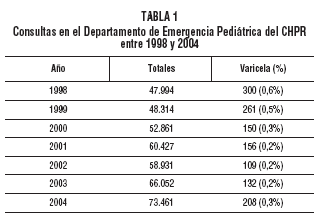
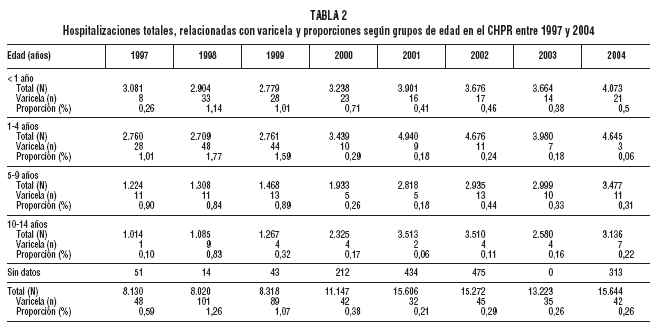
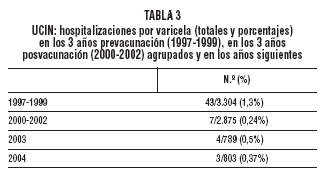
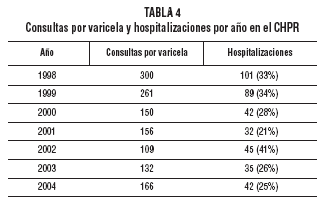
Objetivo. Evaluar la incidencia de consultas ambulatorias y hospitalizaciones por varicela en el Centro Hospitalario Pereira Rossell (CHPR) en los 3 años previos y los posteriores a la introducción de la vacunación universal con vacuna de varicela a los 12 meses de edad. Material y método. Análisis de base de datos y de historias clínicas de consultas externas y de hospitalizaciones por varicela y totales en el mayor Centro Pediátrico del país. Se analizan las consultas en el Departamento de Emergencia Pediátrico y las hospitalizaciones en Salas de cuidados mínimos y en la Unidad de Cuidados Intensivos de Niños (UCIN). Se tomaron como años prevacunación 1997 a 1999 (la vacuna se comenzó a aplicar en octubre de 1999). El diagnóstico de la enfermedad fue clínico. La vacuna utilizada fue Varilrix de GSK. Resultados. Hubo una reducción estadísticamente significativa en las consultas externas, en las hospitalizaciones generales y en la UCIN, comparando los años prevacunación con los años posvacunación. El grupo que redujo más las cifras fue el de 1 a 4 años; también fueron significativas las cifras en el grupo de 5 a 9 años y en el de los menores de 1 año. No hubo variaciones en el grupo de 10 a 15 años. Comentarios. Los altos índices de vacunación alcanzados (más del 90%) a los 12 meses de edad se acompañaron de importantes descensos en las cifras de consultas externas y en las hospitalizaciones. El hecho de que la vacuna sea obligatoria y gratuita explica las cifras de inmunización alcanzadas y los resultados obtenidos.
Palabras clave:
Vacunación antivaricela
Efectividad
Impacto
Aims. To evaluate the incidence of outpatient visits and hospital admissions due to varicella in the Pereira Rossell Hospital Center (CHPR) in the 3 years before and the
3 years after the introduction of routine varicella vaccination at 12 months of age. Material and methods. We analyzed the database and medical records of all outpatient visits and hospital admissions and those for varicella in the largest pediatric center in the country. Visits to the pediatric emergency department and hospital admissions to general wards and the pediatric intensive care unit (ICU) were analyzed. The prevaccination years studied were 1997-1999 (varicella vaccination began in October 1999). Varicella infection was diagnosed clinically. The vaccine used was Varilix (GSK). Results. In the 3 years after introduction of the vaccine there was a statistically significant reduction in outpatient visits, all hospital admissions, and admissions to the pediatric ICU compared with the 3 prevaccination years. The greatest reductions were found in the group aged 1-4 years, although there were also significant reductions in the group age 5-9 years and in infants under 12 months of age. There were no changes in the group aged 10-15 years. Conclusions. The high vaccination coverage achieved at 12 months of age (more than 90%) was accompanied by a significant reduction in outpatient visits and hospital admissions. The vaccination coverage achieved and the results obtained may be explained by the fact that vaccination is compulsory and free of charge.
3 years after the introduction of routine varicella vaccination at 12 months of age. Material and methods. We analyzed the database and medical records of all outpatient visits and hospital admissions and those for varicella in the largest pediatric center in the country. Visits to the pediatric emergency department and hospital admissions to general wards and the pediatric intensive care unit (ICU) were analyzed. The prevaccination years studied were 1997-1999 (varicella vaccination began in October 1999). Varicella infection was diagnosed clinically. The vaccine used was Varilix (GSK). Results. In the 3 years after introduction of the vaccine there was a statistically significant reduction in outpatient visits, all hospital admissions, and admissions to the pediatric ICU compared with the 3 prevaccination years. The greatest reductions were found in the group aged 1-4 years, although there were also significant reductions in the group age 5-9 years and in infants under 12 months of age. There were no changes in the group aged 10-15 years. Conclusions. The high vaccination coverage achieved at 12 months of age (more than 90%) was accompanied by a significant reduction in outpatient visits and hospital admissions. The vaccination coverage achieved and the results obtained may be explained by the fact that vaccination is compulsory and free of charge.
Keywords:
Varicella vaccination Effectiveness
Impact
Artículo
Opciones para acceder a los textos completos de la publicación Vacunas
Suscriptor
Suscribirse
Comprar
Contactar
Teléfono para suscripciones e incidencias
De lunes a viernes de 9h a 18h (GMT+1) excepto los meses de julio y agosto que será de 9 a 15h
Llamadas desde España
932 415 960
Llamadas desde fuera de España
+34 932 415 960
E-mail
