
metricas
covid
Spanish Journal of Psychiatry and Mental Health Assessment of prolactin levels and sexual dysfunction in patients on long-acting...
Journal Information
Share
Download PDF
More article options
Brief original
Available online 26 November 2025
Assessment of prolactin levels and sexual dysfunction in patients on long-acting risperidone ISM vs monthly paliperidone palmitate
Javier Labada,b,*
Corresponding author
jlabad@csdm.cat

Corresponding author.
, Vanesa Gálveza, Miriam Gregorioa, Ana Palacioa, Yolanda Manzanoa, Rosa Gaberneta, Mireia Borràsa, Marta Niubóa, Sara Sillesa, Alba Tolla, Alicia Ruizc, Miquel Ragulla, Rosa Hernández-Ribasa
a Department of Mental Health and Addictions, Consorci Sanitari del Maresme, Hospital Universitari de Mataró, Universitat Autònoma de Barcelona, Mataró, Spain
b Centro de Investigación Biomédica en Red de Salud Mental (CIBERSAM), Spain
c Laboratory Department, Laboratori de Referència de Catalunya, Mataró, Spain
Article information
Abstract
Full Text
Bibliography
Download PDF
Statistics
Tables (2)
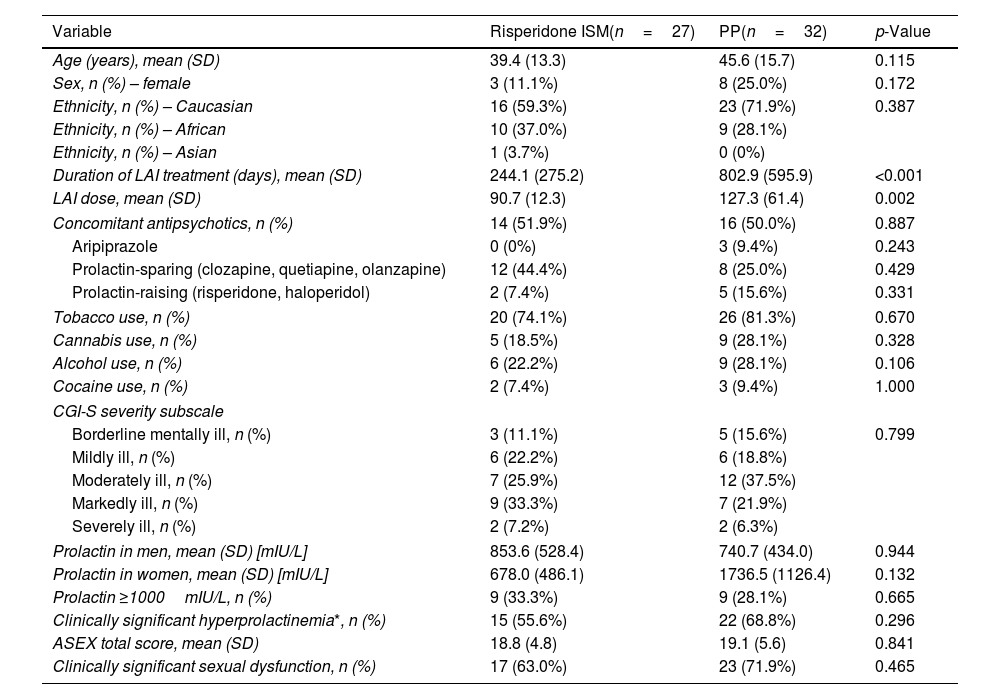
Table 1. Sociodemographic and clinical characteristics by treatment group.
Tables
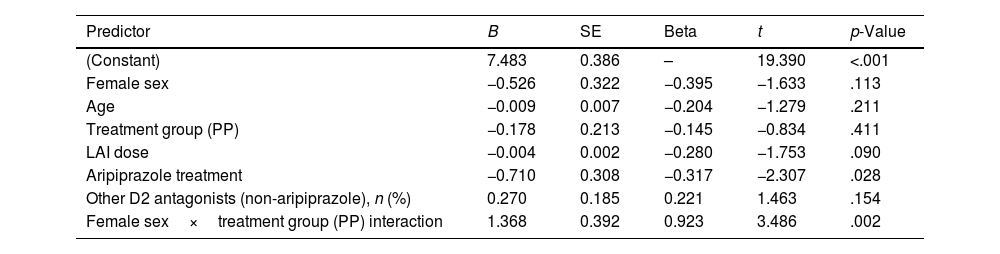
Table 2. Multiple linear regression analysis on prolactin concentrations.
Tables
Show moreShow less
Additional material (1)
Abstract
Introduction

Hyperprolactinaemia and sexual dysfunction are common adverse effects of antipsychotic drugs, particularly with dopamine D2 receptor antagonists. Long-acting injectables such as paliperidone palmitate (PP) and risperidone ISM may differ in their endocrine safety profiles, especially across sexes. We aimed to compare prolactin levels and clinically significant sexual dysfunction in patients treated with risperidone ISM vs monthly PP.

Methods

We conducted a cross-sectional study including 59 patients with psychotic disorders (27 on risperidone ISM, 32 on PP). Clinically significant hyperprolactinaemia was defined as prolactin levels above sex-specific thresholds along with hypogonadism and/or sexual dysfunction. The Arizona Sexual Experience Scale was used to assess sexual function. Hormonal assays included prolactin, testosterone, and oestradiol. Prolactin values were log-transformed for regression models. Multiple linear regression assessed predictors of prolactin, including treatment, sex, age, dose, co-treatment with aripiprazole or other antipsychotics, and sex-by-treatment interaction. An exploratory logistic regression examined predictors of clinically significant hyperprolactinemia (with either hypogonadism or sexual dysfunction).

Results

Women on PP showed significantly higher prolactin levels vs those on risperidone ISM (interaction between female sex and PP; p=0.002). Aripiprazole co-treatment was associated with lower prolactin levels (p=0.020). Clinically significant hyperprolactinaemia was present in 55.6% of the risperidone ISM group vs 68.8% of the PP group. The exploratory logistic regression model revealed no significant predictors of clinically significant hyperprolactinaemia.

Conclusion

Risperidone ISM may be associated with a more favourable prolactin profile in women vs PP. Findings support the relevance of sex and adjunctive strategies in managing antipsychotic-induced endocrine side effects.

Keywords:
Prolactin
Schizophrenia
Antipsychotic
Risperidone
Paliperidone
Sexual dysfunction

Article

These are the options to access the full texts of the publication Spanish Journal of Psychiatry and Mental Health
Member
Si es usted socio de SEPSM
(Sociedad Española de Psiquiatría y Salud Mental)
Diríjase al área de socios de la web de la SEPSM, (https://sepsm.org/revista/) y autentifíquese.

Subscriber
Subscriber

If you already have your login data, please click here .

If you have forgotten your password you can you can recover it by clicking here and selecting the option “I have forgotten my password”
Subscribe
Subscribe to

Spanish Journal of Psychiatry and Mental Health

Purchase
Purchase article

Purchasing article the PDF version will be downloaded

Purchase now
Contact
Phone for subscriptions and reporting of errors
From Monday to Friday from 9 a.m. to 6 p.m. (GMT + 1) except for the months of July and August which will be from 9 a.m. to 3 p.m.
Calls from Spain
932 415 960
Calls from outside Spain
+34 932 415 960
E-mail
Article options
Tools
Supplemental materials