




Presentamos el caso de una paciente de 35 años, nuligesta, con antecedentes de quistectomía ovárica bilateral hace 3 años por un teratoma monodérmico tipo struma ovarii en ovario derecho y quiste hemorrágico en ovario izquierdo. En revisiones periódicas se observa crecimiento progresivo de la tumoración anexial izquierda por lo que se le realiza una nueva laparoscopia y ante los hallazgos se le practica una quistectomía de ovario izquierdo, salpinguectomía derecha y exéresis de múltiples implantes peritoneales. El diagnóstico anatomopatológico fue de struma ovarii izquierdo y strumosis peritoneal.
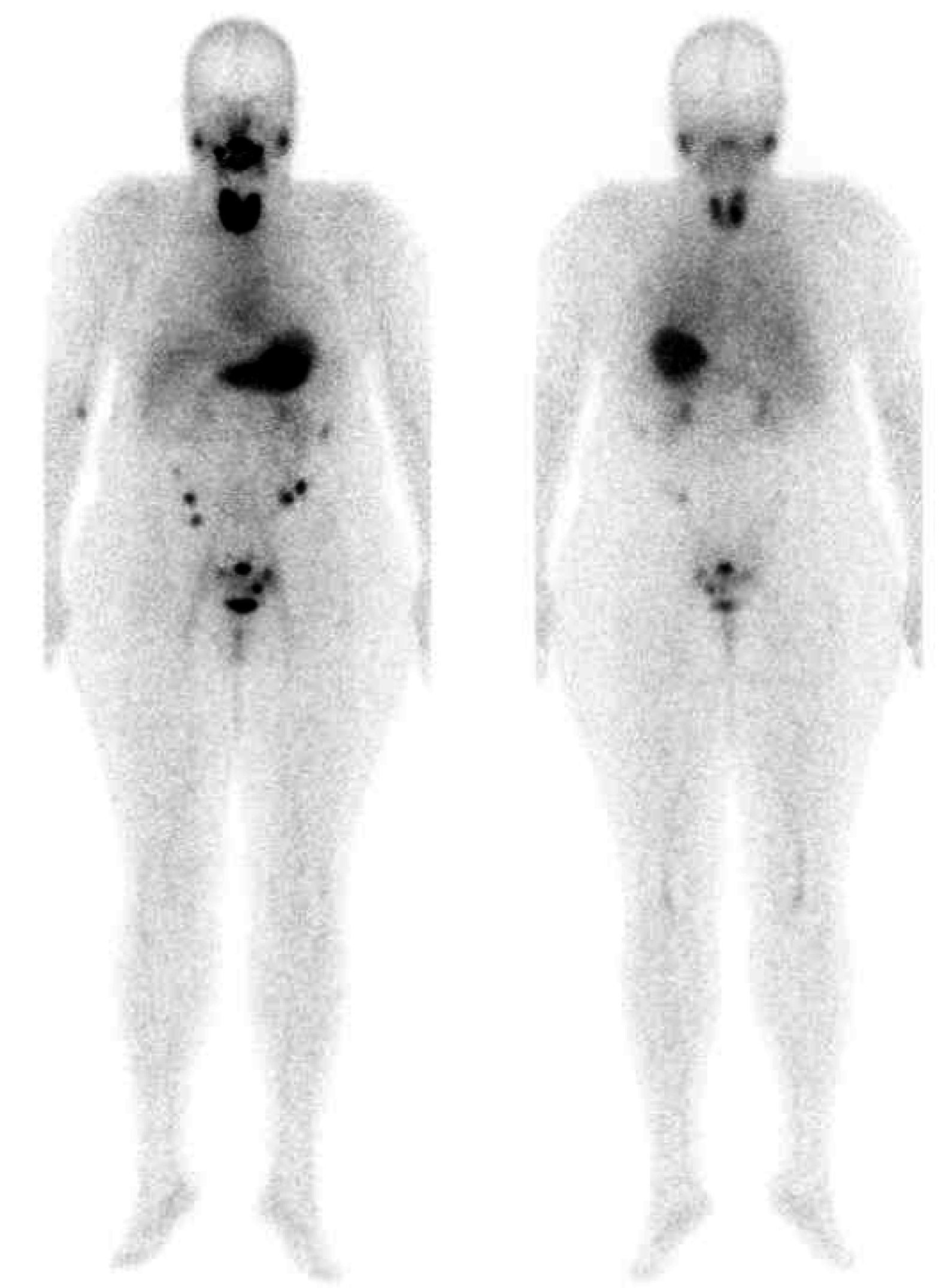
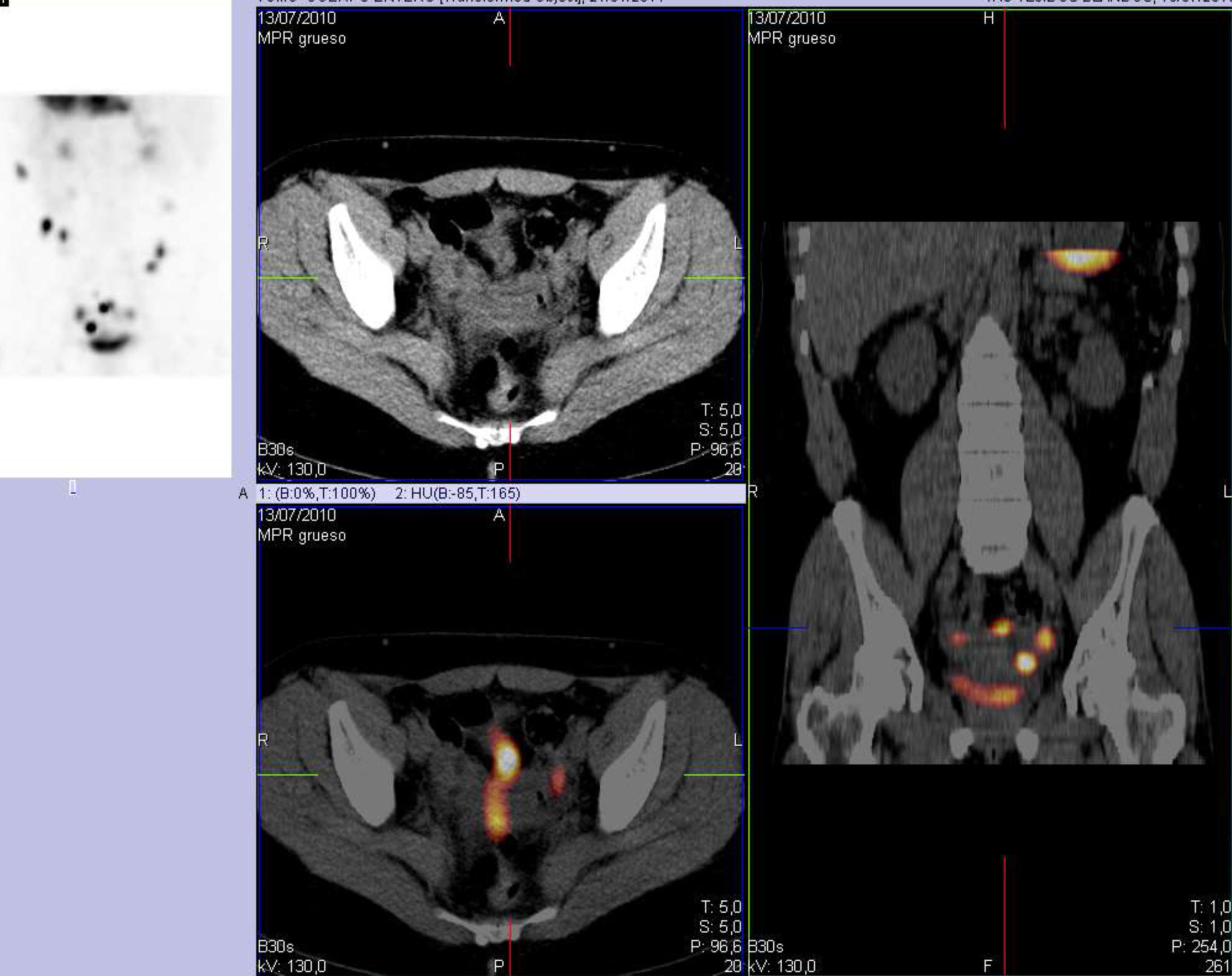
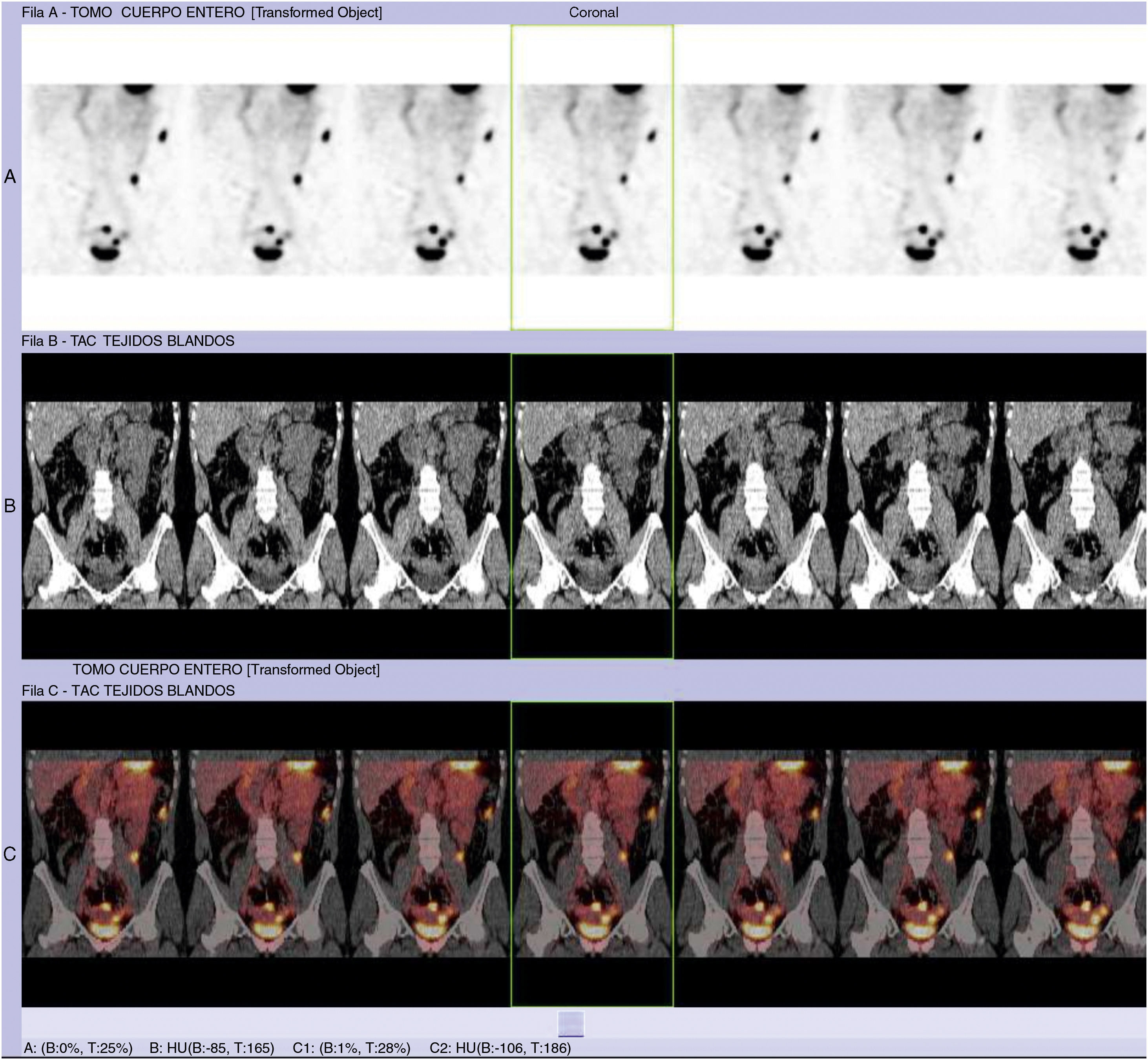
Posteriormente se le realiza rastreo corporal total con 99mTc-pertecnetato para detectar otros implantes peritoneales y SPECT-TAC para localizarlos anatómicamente. Esta exploración ayudó a tomar una decisión terapéutica.
We report the case of a 35-year-old nulliparous woman, with a previous history of ovarian cystectomy diagnosed 3 years earlier due a struma ovarii type of monodermal teratoma in the right ovary and a hemorrhagic cyst in the left ovary. Progressive growth of the left adnexal mass was observed in the periodic medical check-ups. Due to this, a second laparoscopy was performed and, based on the findings, a left ovarian cystectomy, right salpingectomy and resection of multiple peritoneal implants were carried out.
The pathology diagnosis was left struma ovarii and peritoneal strumosis. A whole body and SPECT/CT scan with 99mTc-pertechnetate was performed to detect possible peritoneal implants. This study helped to make the therapeutic decision.
Artículo
Si tiene problemas de acceso puede contactar con la Secretaría Técnica de la SEMNIM en el correo electrónico secretaria.tecnica@semnim.es o en el teléfono: + 34 619 594 780

