



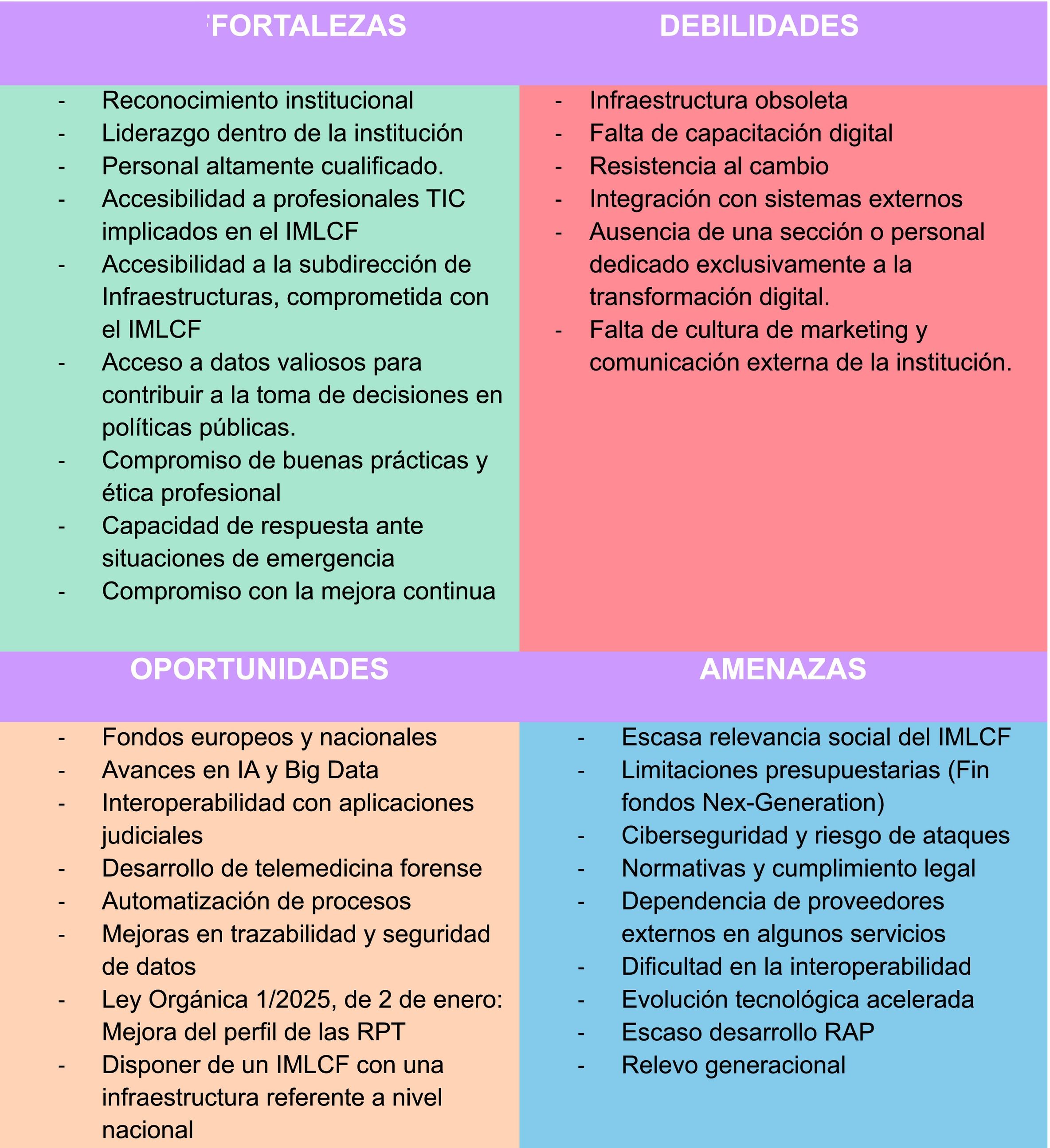
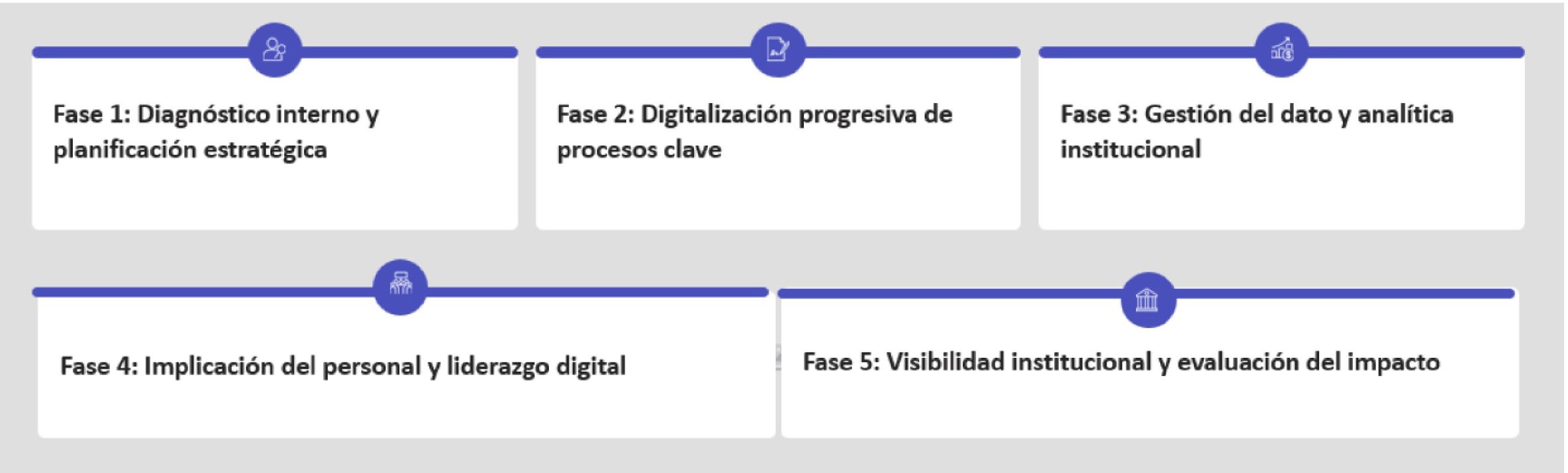
La transformación digital representa una oportunidad estratégica para modernizar los Institutos de Medicina Legal y Ciencias Forenses y alinearlos con los retos actuales de la Administración de Justicia. Este artículo propone un modelo generalizable para impulsar dicha transformación desde una perspectiva integral, no solo tecnológica, sino también organizativa, cultural y orientada al dato. Partiendo de un análisis interno y externo del entorno institucional que cada instituto debe realizar, se identificarán las principales fortalezas, debilidades, oportunidades y amenazas, así como las posibilidades que los avances tecnológicos ofrecen a la medicina legal y ciencias forenses. Este diagnóstico permite definir la visión estratégica digital de cada instituto. Se propone una hoja de ruta progresiva, basada en buenas prácticas, que pone el foco en el liderazgo, la participación del personal y la sostenibilidad de las acciones. La transformación digital no es un fin en sí mismo, sino una vía para ofrecer un servicio público forense más eficaz, humano, transparente y centrado en la ciudadanía.
Digital transformation represents a strategic opportunity to modernize the Institutes of Legal Medicine and Forensic Sciences (IMLCF) and align them with the current challenges of the Administration of Justice. This article proposes a generalizable model to drive such transformation from a comprehensive perspective, not only technological but also organizational, cultural, and data-oriented. Based on an internal and external analysis of the institutional environment, which each institute must undertake, the main strengths, weaknesses, opportunities, and threats can be identified, as well as the possibilities that technological advances offer to legal medicine and forensic sciences. This diagnosis enables the definition of the digital strategic vision of each institute. A progressive roadmap is proposed, grounded in best practices and focused on leadership, staff involvement, and sustainability of actions. Digital transformation is not an end in itself but a means to deliver a more effective, human, transparent, and citizen-centered forensic public service.
