



Weaning paediatric patients from mechanical ventilation (MV) often results in extubation failure (EF) (14%-22%) and 2% of patients will require tracheostomy (2%).
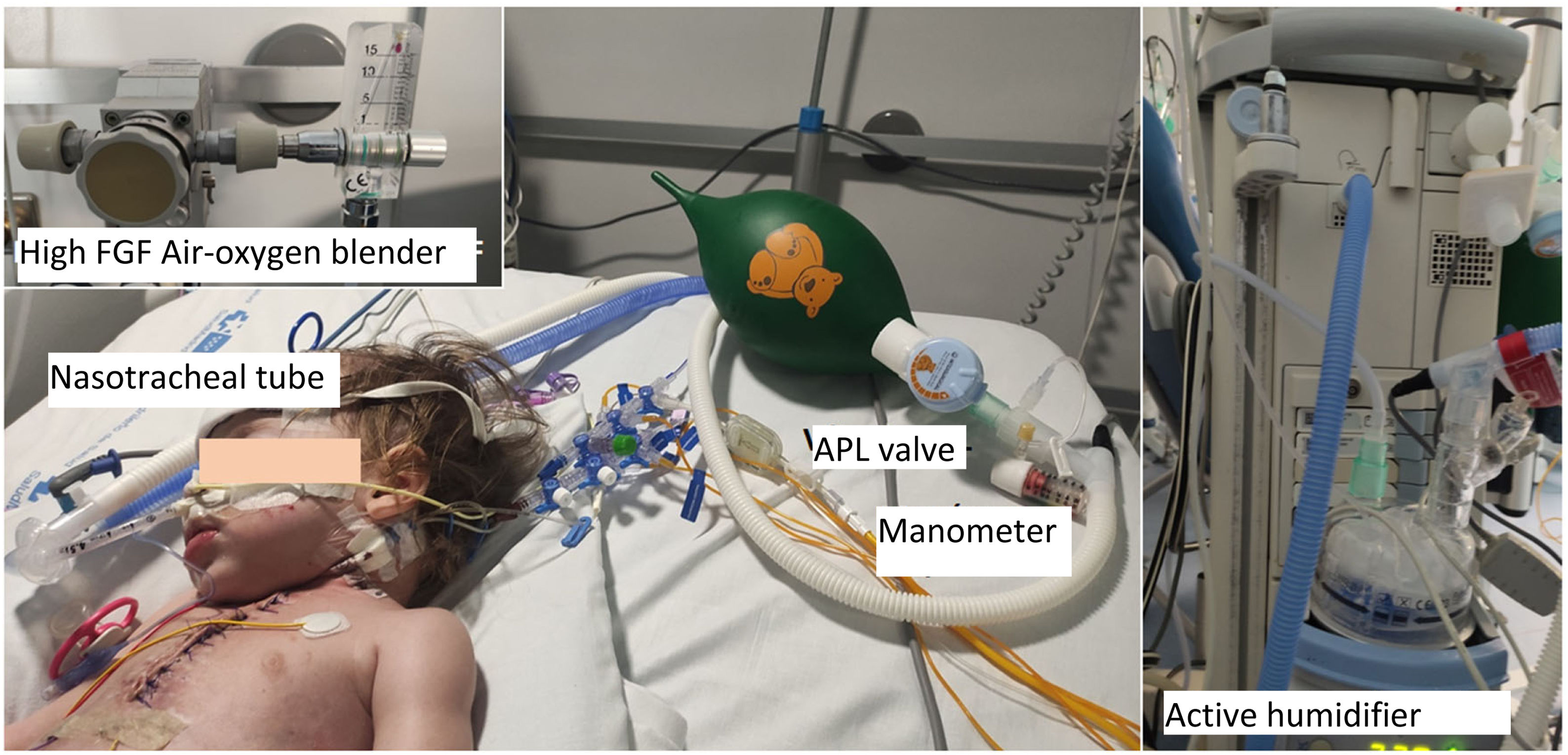
MethodsWe performed an observational study in 115 critically ill patients in whom a novel high-flow CPAP (CPAP-ANRI) system was connected to the tracheal tube during ventilation (CPAP + TI). After extubation, the same system was connected to various interfaces.
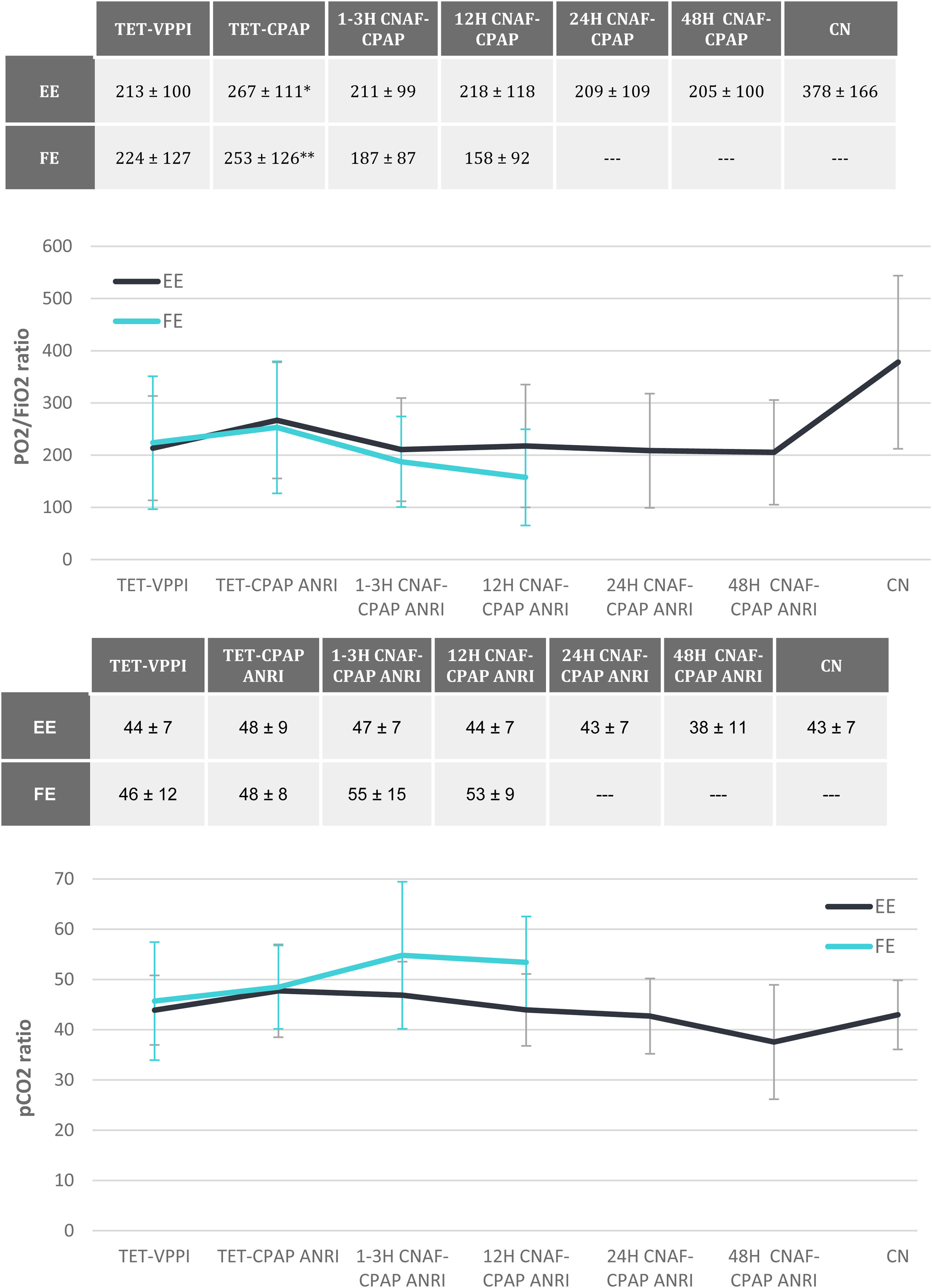
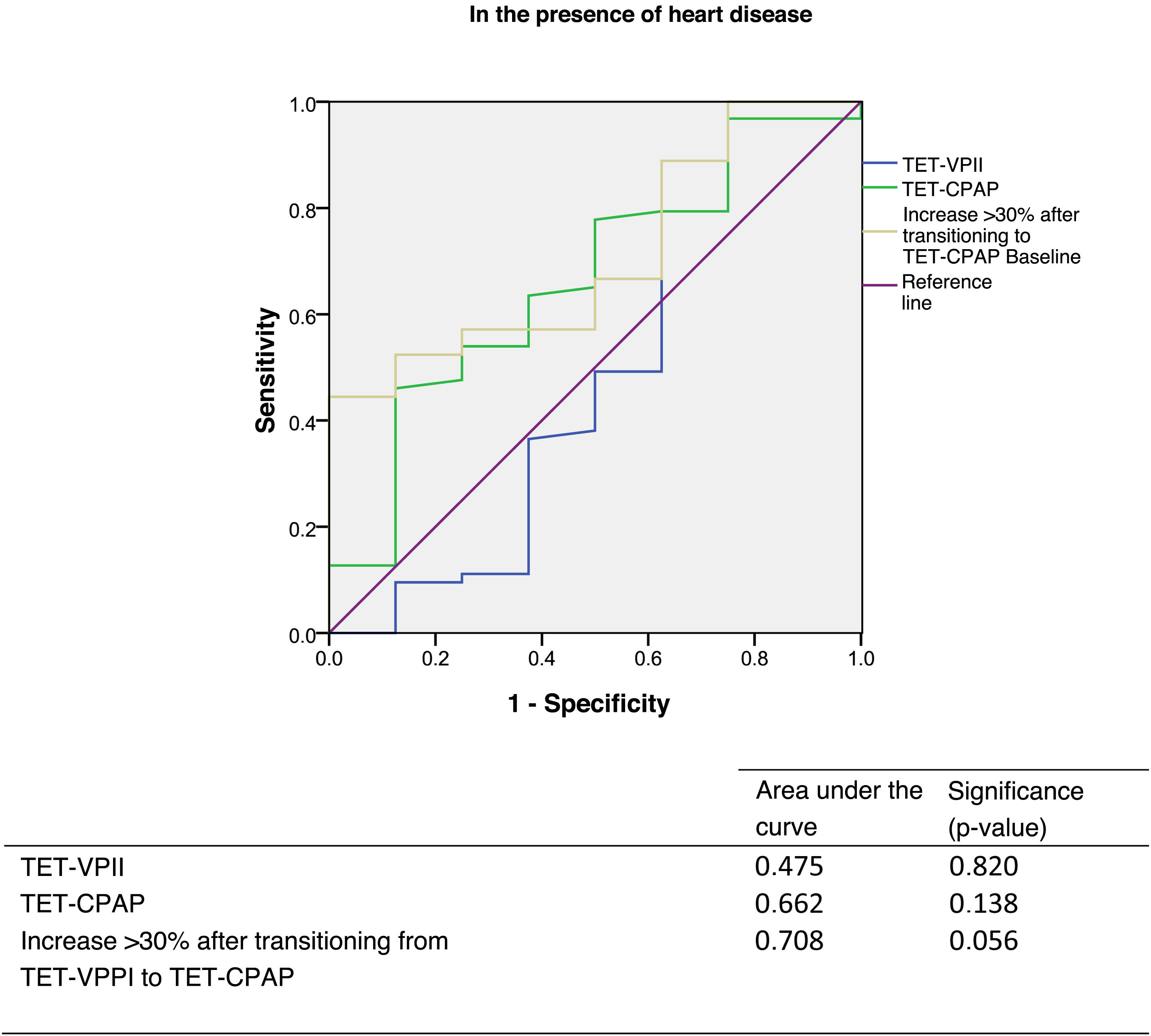
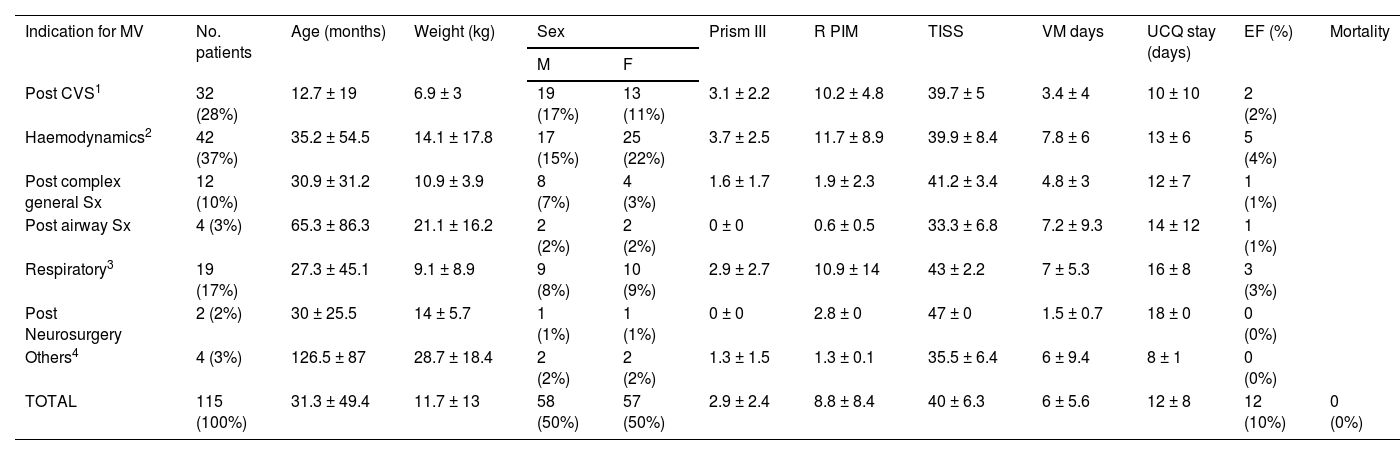
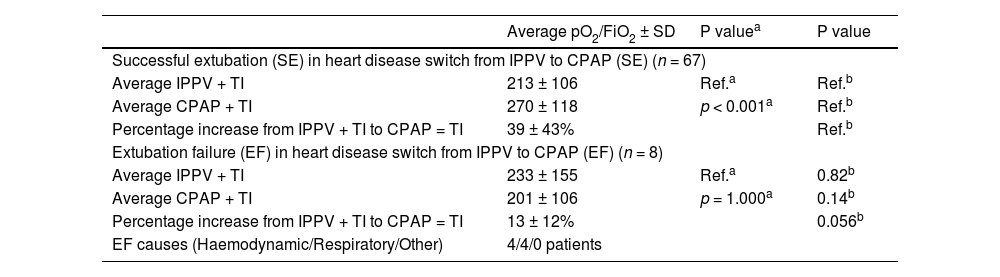
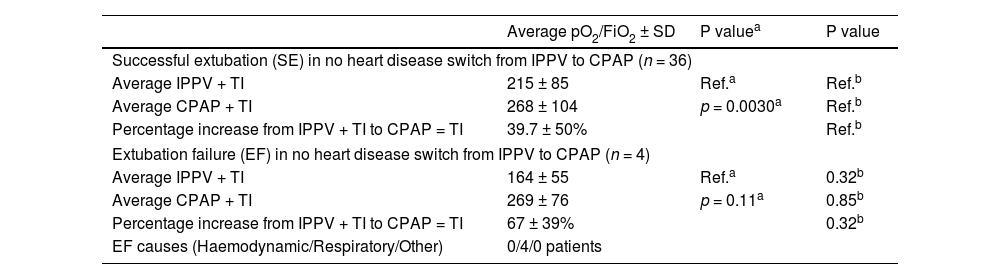
ResultsMean (± SD) age was 31 ± 49 months, PRISM-III score was 2.9 ± 2.4, and duration of intermittent positive pressure ventilation with tracheal intubation (IPPV + TI) was 6 ± 5.6 days followed by CPAP + TI for 1.4 ± 1.7 days. The initial rate of EF was 10.4% for either haemodynamic (n = 4) or respiratory (n= 8) reasons, although the final rate of EF requiring tracheostomy was only 0.8%. After progressing from IPPV + TI to CPAP + TI, PO2/FiO2 values in successfully extubated patients immediately increased by 27% (p < 0.0003) vs only 13% (p > 0.3) in patients presenting EF. Switching to CPAP + TI increased the percentage of patients with pO2/FiO2 > 200, particularly in patients with heart disease, in whom >30% increase in pO2/FiO2 over baseline had a positive predictive value for successful extubation (AUC = 0.708; p = 0.056).
ConclusionsThe CPAP-ANRI device is a simple respiratory aid that is highly effective in optimizing cardiopulmonary interaction to facilitate weaning from MV and identifying most cases in which extubation is likely to be successful.
El proceso de destete de la ventilación mecánica (VM) en pediatría enfrenta desafíos significativos, evidenciados por las elevadas tasas de fracaso de extubación (FE) que oscilan entre el 14% y el 22%, y las traqueostomías que se reportan en un 2%. El objetivo principal del estudio consistió en determinar la eficacia del sistema CPAP-ANRI como método para optimizar la oxigenación durante el proceso de destete y como objetivo secundario identificar la mejoría en la oxigenación como factor predictivo del éxito de extubación (EE). Se discute la tasa de FE y el tiempo de ventilación mecánica convencional (VMC) obtenidos en comparación con la literatura existente.
MétodosSe llevó a cabo un estudio observacional prospectivo en una cohorte de 115 pacientes críticos pediátricos. A estos pacientes se les aplicó un dispositivo original de CPAP de alto flujo (CPAP-ANRI) conectado al tubo endotraqueal (TET-CPAP) y, posteriormente, mediante diversas interfaces tras la extubación. el establecimiento de diferentes interfases.
ResultadosLos pacientes incluidos en el estudio presentaron una media de edad de 31 ± 49 meses, un valor de PRISM-III de 2,9 ± 2,4, y una duración media de la ventilación positiva presión intermitente con intubación endotraqueal (TET-VPPI) de 6 ± 5,6 días, seguido por un período con TET-CPAP de 1,4 ± 1,7 días. La tasa inicial de fracaso de extubación (FE) fue del 10,4%, debida tanto a motivos hemodinámicos (n = 4) como respiratorios (n = 8). No obstante, la tasa final de FE que requirió traqueostomía fue de tan solo el 0,8%. Al pasar de TET-VPPI a TET-CPAP, los pacientes con extubación exitosa (EE) presentaban un incremento inmediato del 27% del valor PO2/FiO2 (p < 0,0003), mientras que los pacientes con fracaso de extubación presentaron un menor aumento (+13%; p > 0,3). La transición a TET-CPAP consiguió incrementar el porcentaje de pacientes con un umbral pO2/FiO2 > 200; siendo especialmente marcado en pacientes con cardiopatía en los que un aumento de pO2/FiO2 > 30% sobre el basal presentaba un valor predictivo positivo de EE (AUC = 0,708; p = 0,056).
ConclusionesEl dispositivo CPAP-ANRI demostró ser una asistencia respiratoria sencilla de aplicar y altamente eficaz para optimizar la interacción cardiopulmonar, facilitando así el destete de la VM. Además, permitió identificar la mayoría de los pacientes en los que sería posible una extubación exitosa (EE).

