



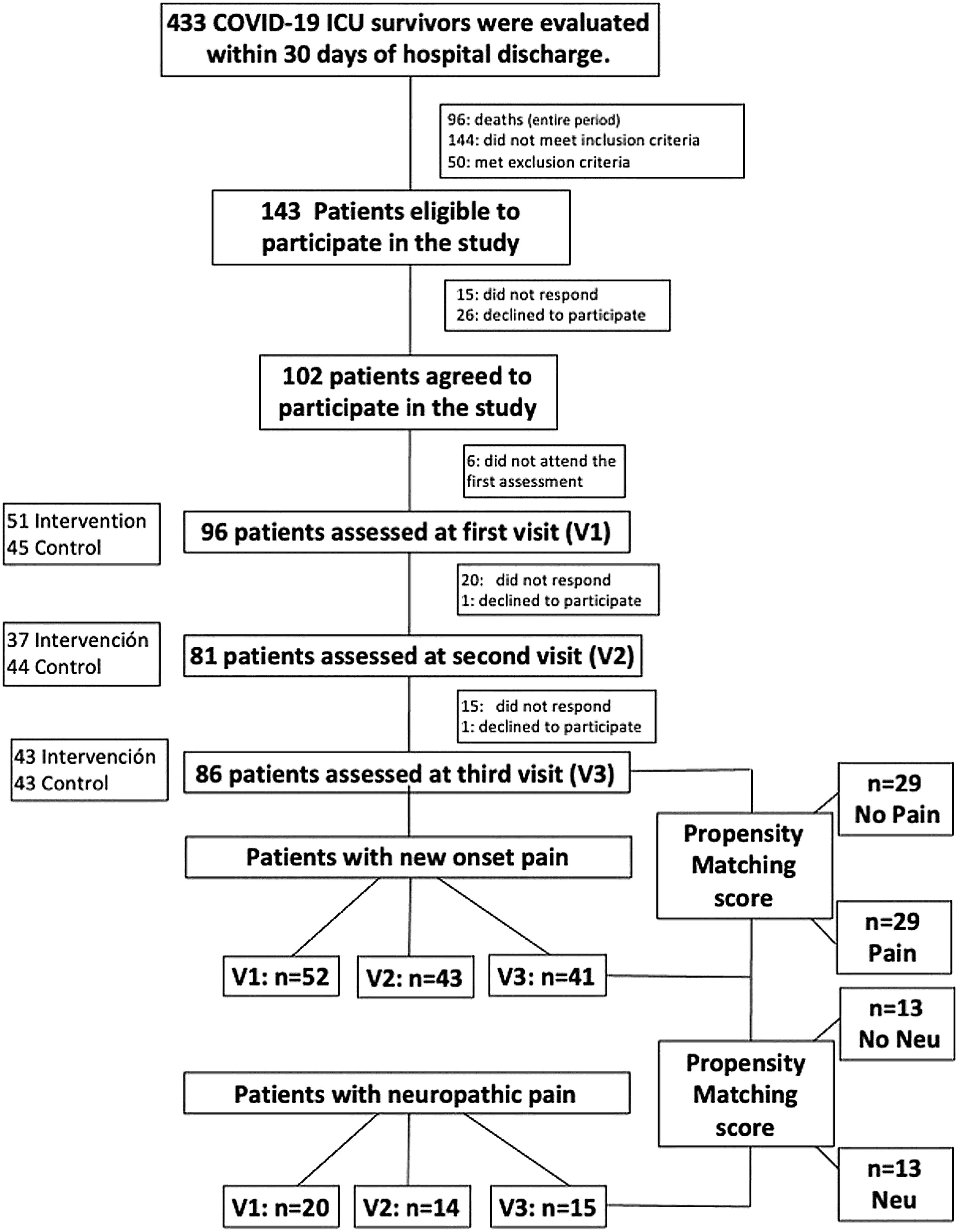


Survivors of critical illnesses, including COVID-19, are at risk of developing Chronic ICU-Related Pain (CIRP) and neuropathic pain (NP). This study evaluates the incidence of CIRP and NP 6 months after hospital discharge and their impact on pain intensity, functional status, and quality of life (QoL).
MethodsWe performed an observational prospective cohort analysis based on a secondary analysis of data from the existing PAIN-COVID randomized controlled trial, which included adult survivors of severe COVID-19 admitted to the ICU. CIRP and NP were assessed at 6 months post-discharge using validated scales (Brief Pain Inventory [BPI] and DN4-interview). Propensity score matching was used to control for confounding factors when comparing pain intensity, functional impact, and QoL between groups.
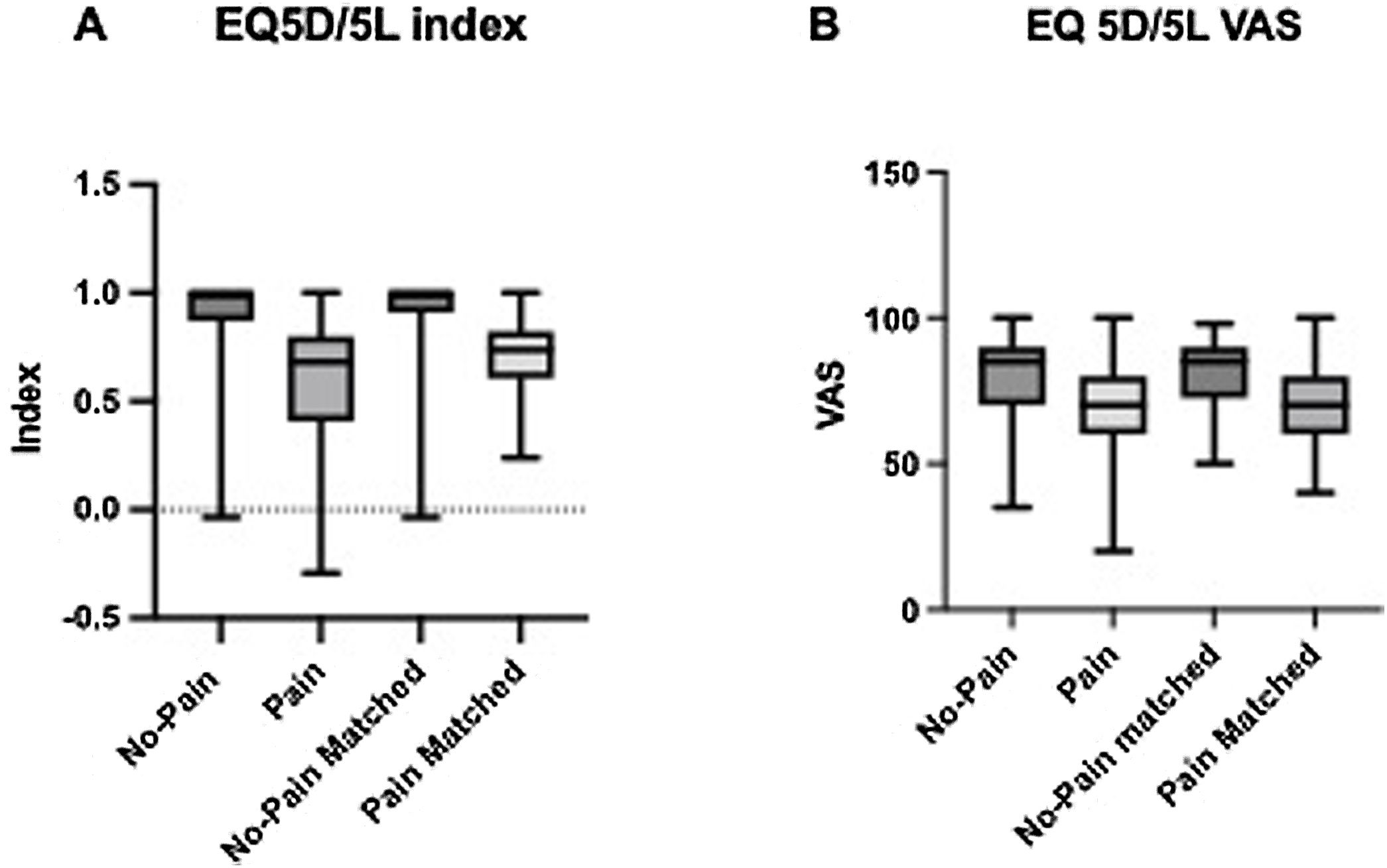
ResultsNew-onset CIRP was reported by 47.7% of patients. In matched cohorts, patients with CIRP had significantly lower EQ-5D-5L index (0.705 [0.613–0.818]; p < 0.001) and VAS (72 [60–80]; p = 0.019) scores compared to those without pain. NP affected 36.5% of patients. Patients with NP showed higher BPI-intensity (5.3 [2.5–6], p=0.002) and BPI-interference scores (4.5 [1.5–6.9], p=0.025). The EQ-5D-5L index (0.68 [0.36–0.81]; p = 0.29) and VAS scores (60 [47.5–85]; p = 0.032) were lower compared to those without NP.
ConclusionA substantial proportion of COVID-19 ICU survivors develop new-onset CIRP and NP within 6 months after discharge, resulting in significant impairment in QoL.
Trial registration# NCT04394169, registered on 5/19/2020.
Los supervivientes de todas las enfermedades críticas, incluyendo la COVID-19, tienen riesgo de desarrollar dolor crónico relacionado con la UCI (CIRP) y dolor neuropático (DN). Este estudio evalúa la incidencia de CIRP y DN transcurridos 6 meses del alta hospitalaria, así como su impacto en la intensidad del dolor, el estado funcional y la calidad de vida (CdV).
MétodosRealizamos un análisis de cohorte prospectivo observacional basado en un análisis secundario de los datos del ensayo controlado aleatorizado PAIN-COVID existente, que incluyó supervivientes adultos de COVID-19 grave ingresados en la UCI. Se evaluaron CIRP y DN transcurridos 6 meses del alta, utilizando escalas validadas (Brief Pain Inventory [BPI] – Inventario del dolor abreviado, y entrevista DN4). Se utilizó PSM (Propensity score matching – equiparación por puntuación de propensión) para controlar los factores de confusión al comparar la intensidad del dolor, el impacto funcional y la CdV entre los grupos.
ResultadosEl CIRP de nueva aparición fue reportado por el 47,7% de los pacientes. En las cohortes equiparadas, los pacientes con CIRP tuvieron un índice EQ-5D-5 L (0,705 [0,613–0,818]; p < 0,001) y puntuaciones EVA (72 [60–80]; p = 0,019) significativamente menores, en comparación con aquellos que no padecían dolor. El DN afectó al 36,5% de los pacientes. Los pacientes con DN reflejaron una mayor intensidad (5,3 [2,5–6], p = 0,002) y puntuaciones de interferencia en BPI (4,5 [1,5–6,9], p = 0,025). El índice EQ-5D-5L (0,68 [0,36–0,81]; p = 0,29) y la puntuación EVA (60 [47,5–85]; p = 0,032) fueron más bajos, en comparación con aquellos sin DN.
ConclusiónUna parte sustancial de los supervivientes de la UCI por COVID-19 desarrollan CIRP de nueva aparición y DN en el plazo de 6 meses tras al alta, originando un deterioro significativo de la CdV.

