


Los problemas mentales pediátricos han venido en aumento, especialmente después de la COVID-19, que llevó a que el juego activo fuera reducido. En la niñez y la adolescencia, el juego activo se ha reconocido como un factor protector frente a la psicopatología.
ObjetivoDeterminar la asociación entre el juego y los síntomas internalizantes o externalizantes en niños, niñas y adolescentes.
Material y métodosEstudio observacional analítico transversal, con una muestra de 1.533 niños, niñas y adolescentes, entre 6 y 18años, en la ciudad de Manizales, durante el segundo semestre de 2021. Se aplicó el Child Behavior Checklist 6-18 (CBCL/6-18) y se indagó por aficiones y juego activo, donde se realizaron análisis bivariados.
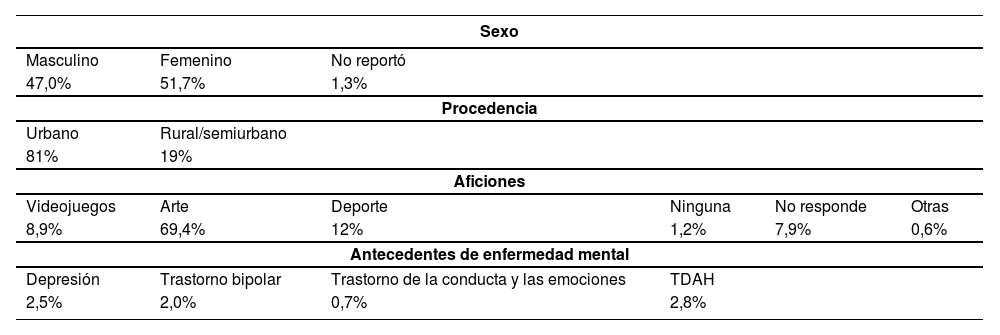
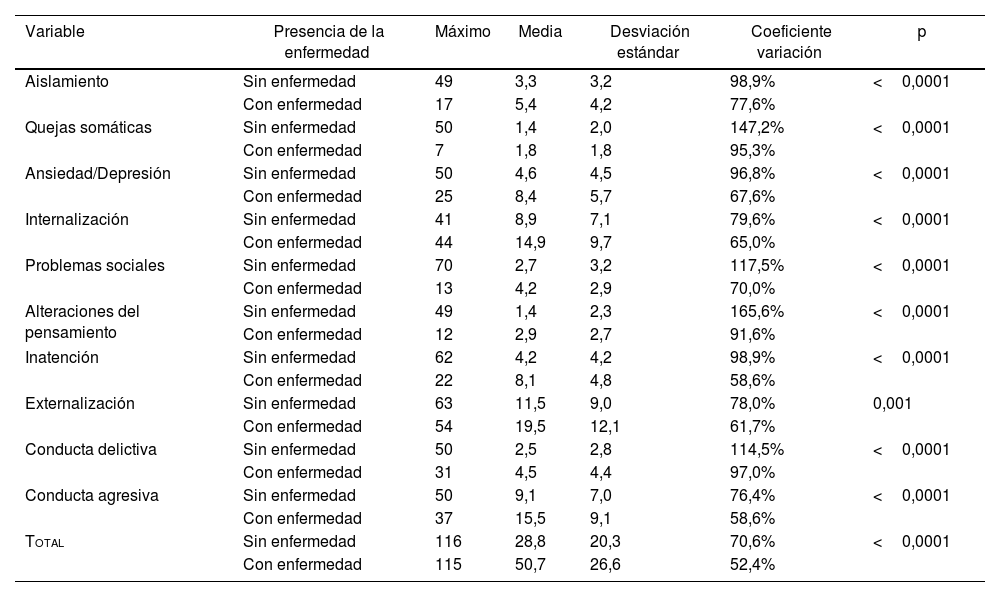
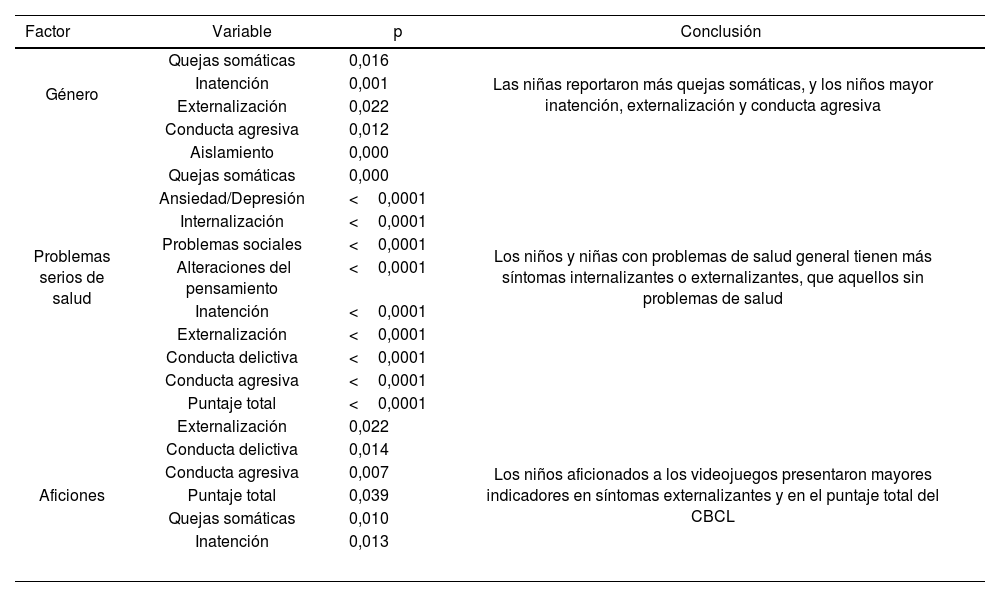
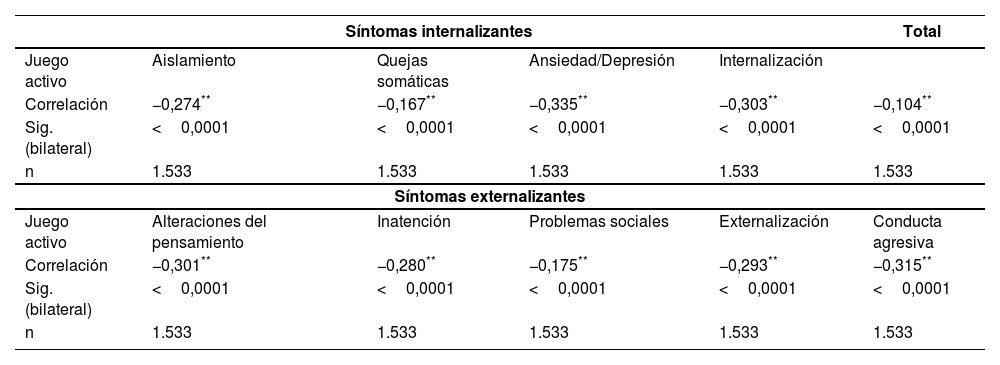
ResultadosEl 69,4% de los encuestados es aficionado al arte y el 12,0% al deporte. El 46,37% presentó síntomas significativos en el CBCL. Se encontraron correlaciones negativas estadísticamente significativas entre el juego activo y la presencia de síntomas en todos los dominios del CBCL, además de una correlación positiva entre alteraciones en la salud mental y el uso de videojuegos.
ConclusionesEl juego activo constituye un comportamiento relacionado con la salud mental infanto-juvenil, por lo que debe ser indagado y promovido desde los primeros niveles de atención en salud.
Pediatric mental problems have been increasing, especially after COVID-19, which led to reduced active play. In childhood and adolescence, active play has been recognized as a protective factor against psychopathology.
ObjectiveTo determine the association between gambling and internalizing or externalizing symptoms in children and adolescents.
Material and methodsCross-sectional analytical observational study, with a sample of 1533 children and adolescents, between six and 18years of age in the city of Manizales, during the second semester of 2021. The Child Behavior Checklist 6-18 (CBCL/6-18) and inquired about hobbies and active play, where bivariate analyzes were performed.
Results69.4% of those surveyed are fond of art and 12.0% of sports. 46.37% presented significant symptoms in the CBCL. Statistically significant negative correlations were found between active gaming and the presence of symptoms in all CBCL domains, as well as a positive correlation between alterations in mental health and the use of video games.
ConclusionsActive play is a behavior related to child and adolescent mental health, which is why it should be investigated and promoted from the first levels of health care.


