





The COVID-19 pandemic has spurred significant research into artificial intelligence (AI) applications in healthcare. This study analyzes the intellectual structure and knowledge flow in COVID-19 and AI research through descriptive citation and bibliographic coupling analysis.
PurposeThis study aims to explore the current research landscape on AI in the context of COVID-19, identify the most influential publications, and outline the conceptual framework of this research area.
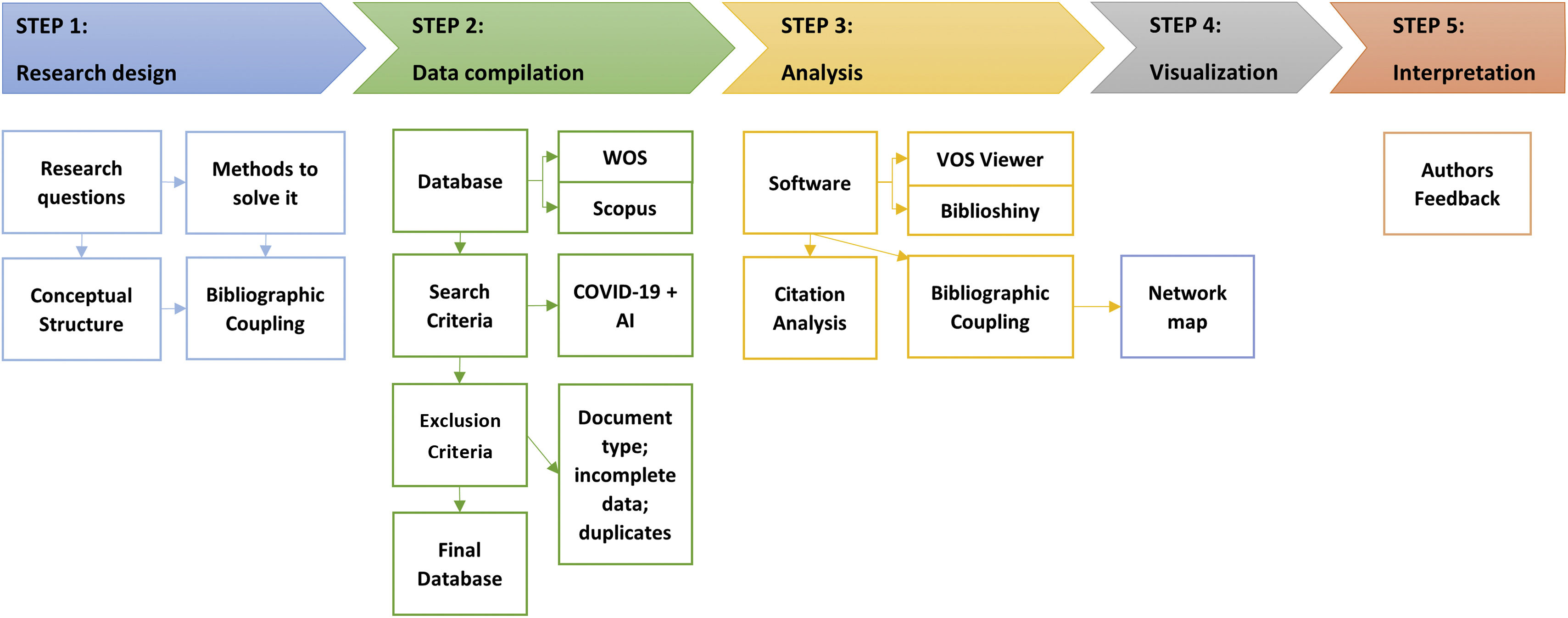
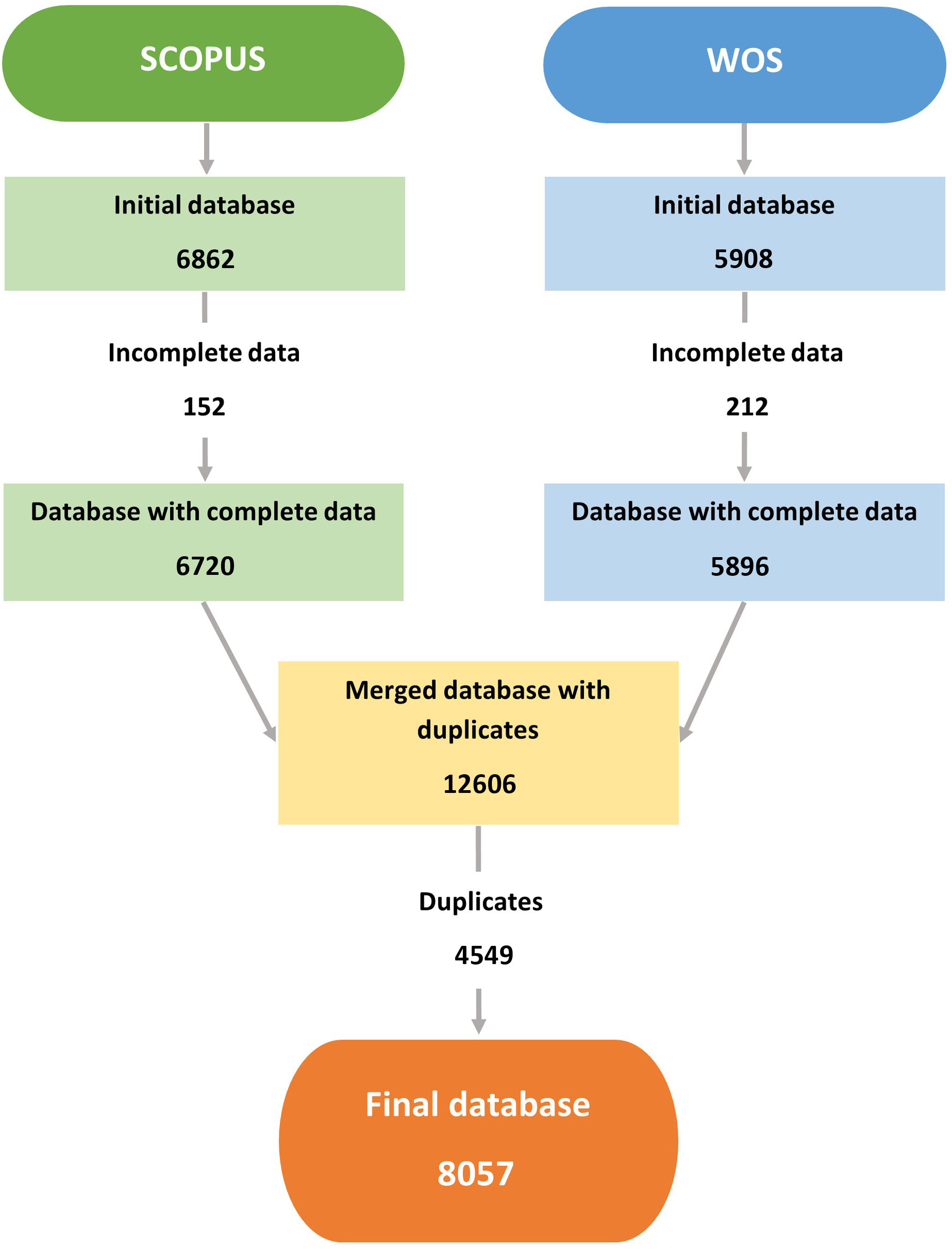
Material and methodsUsing the Web of Science (WoS) and Scopus databases, documents were collected with keywords such as “COVID-19,” “SARS-CoV-2,” “coronavirus,” “artificial intelligence” and “deep learning.” After merging results and removing duplicates, the final sample included 8057 documents. The top 1000 most cited papers were selected for descriptive citation analysis, while the entire sample was used for bibliographic coupling analysis. Data analysis and visualization were conducted using R Bibliometrix/Biblioshiny and VOSviewer.
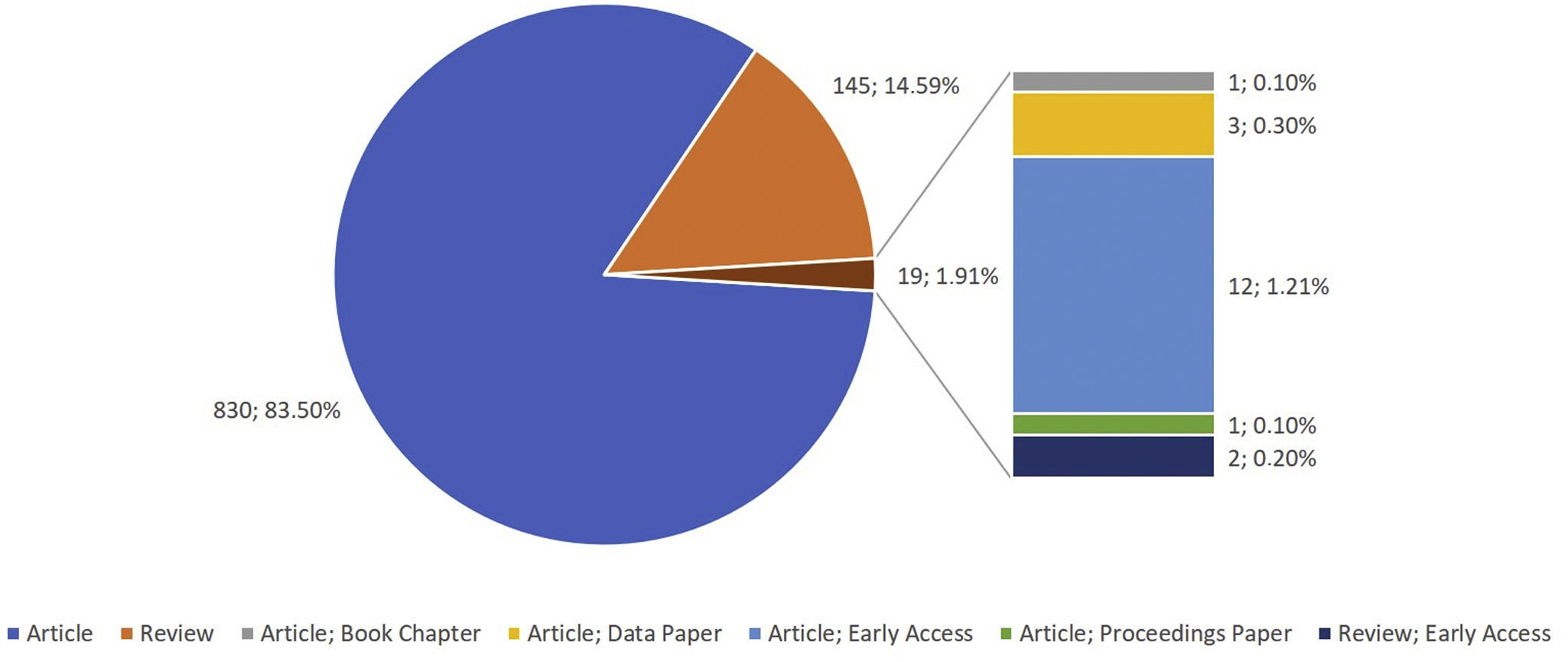
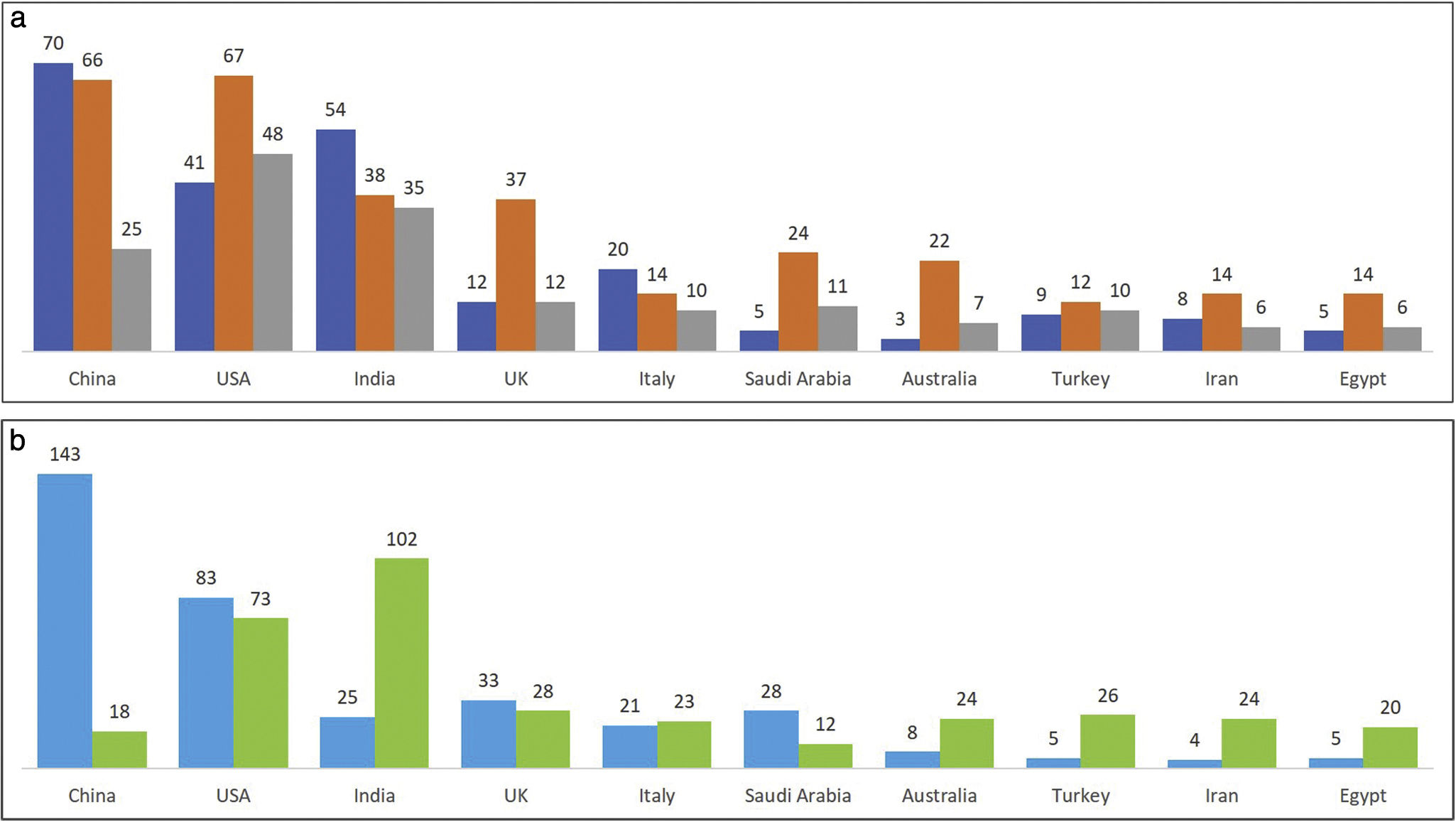
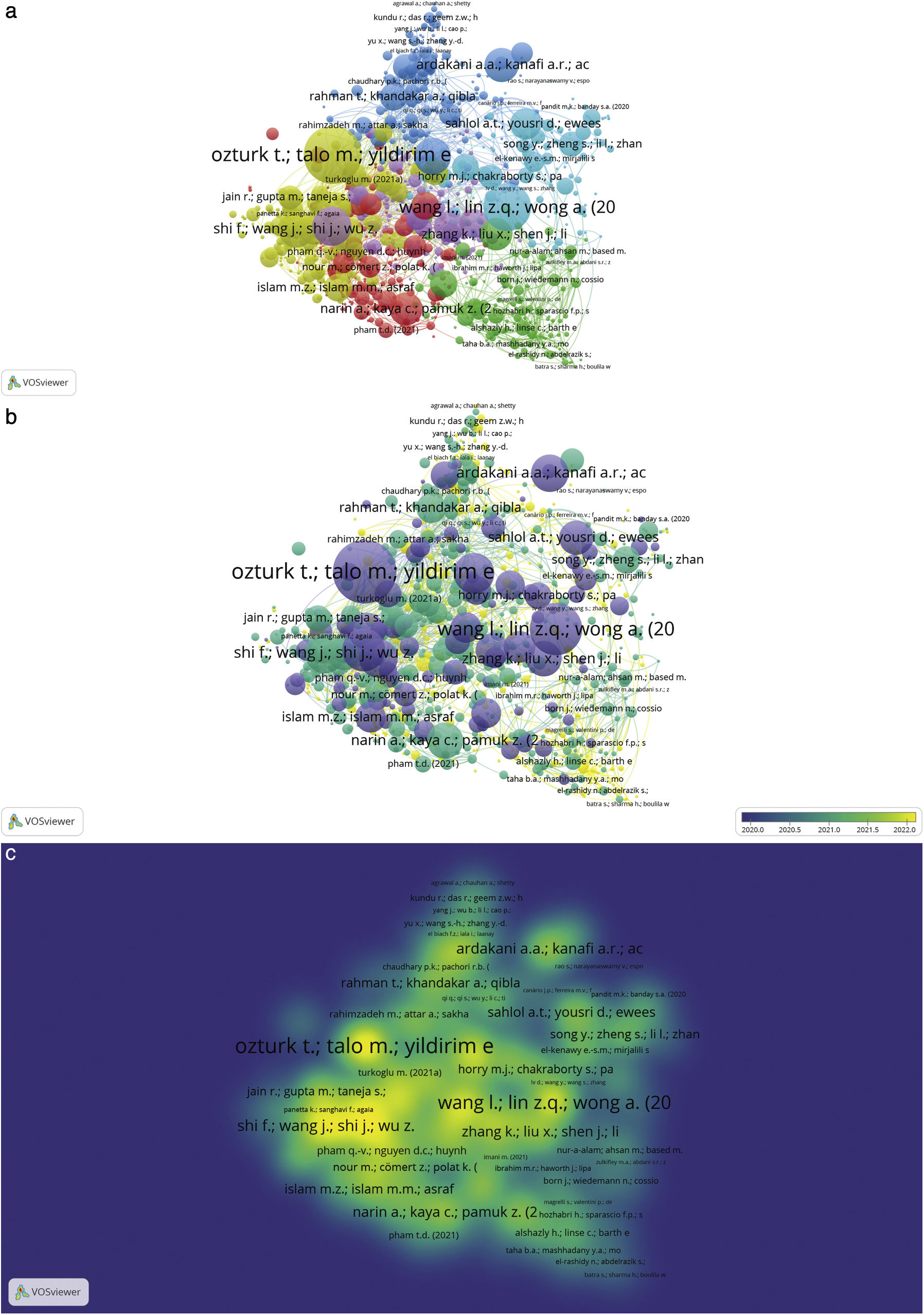
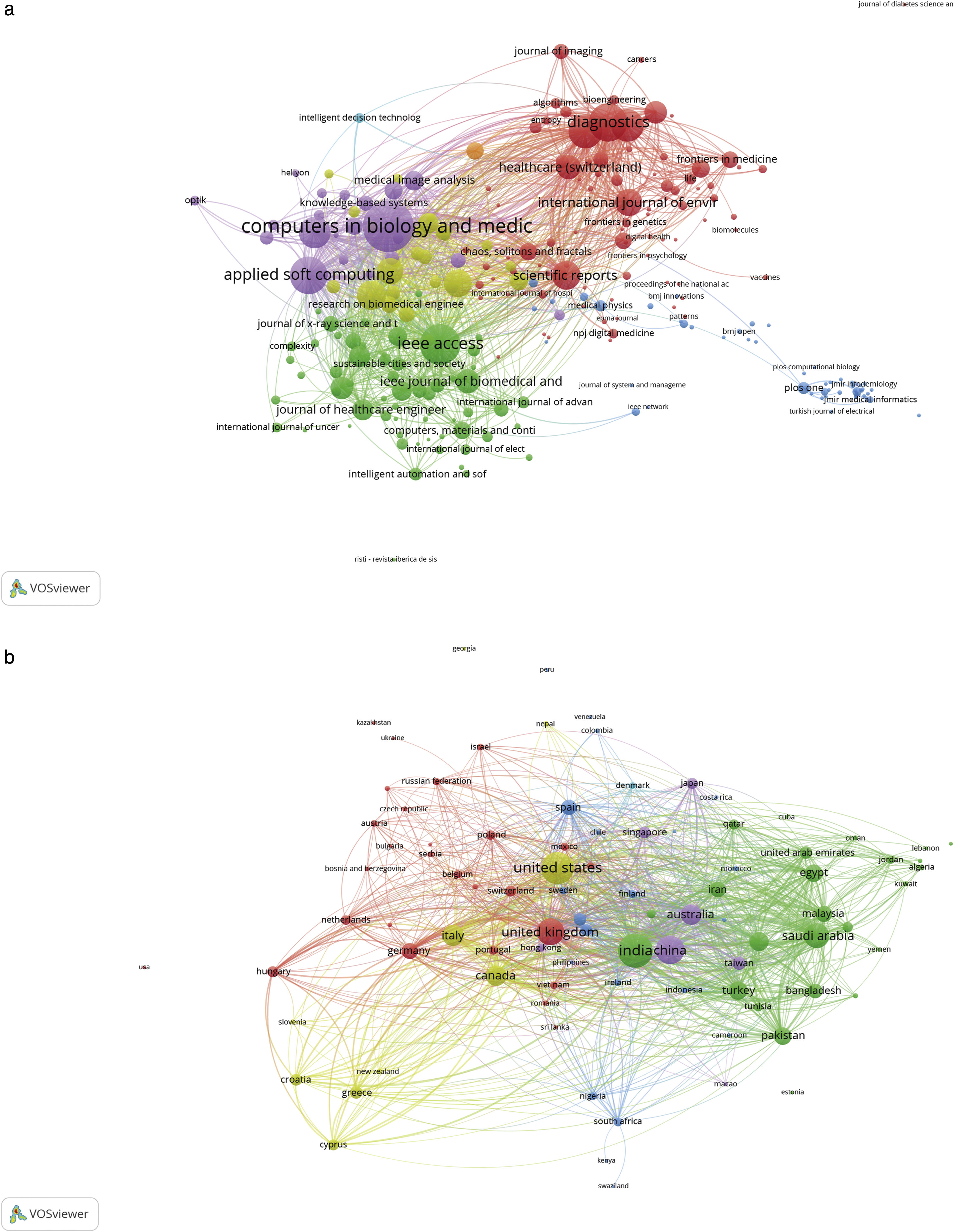
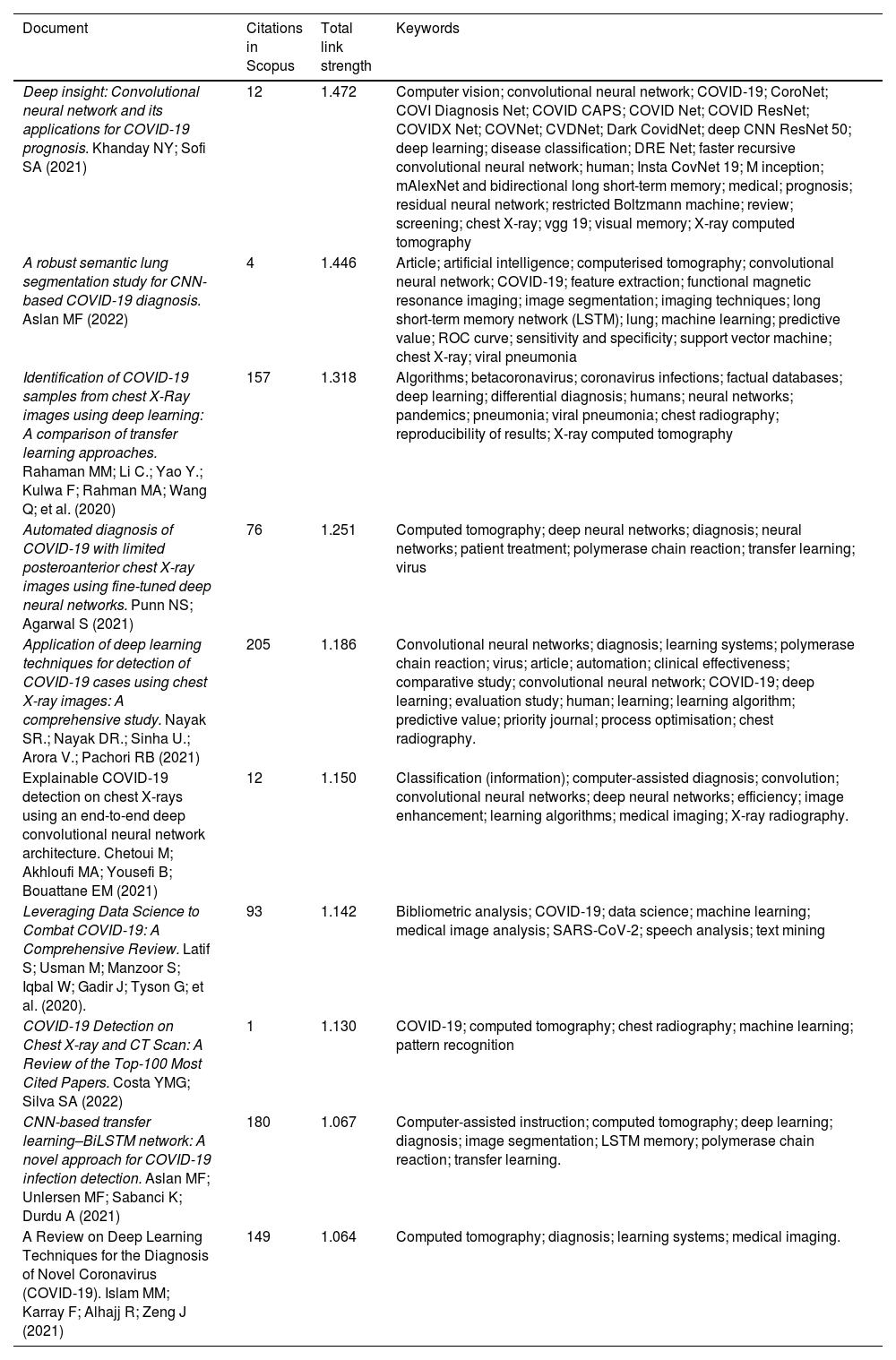
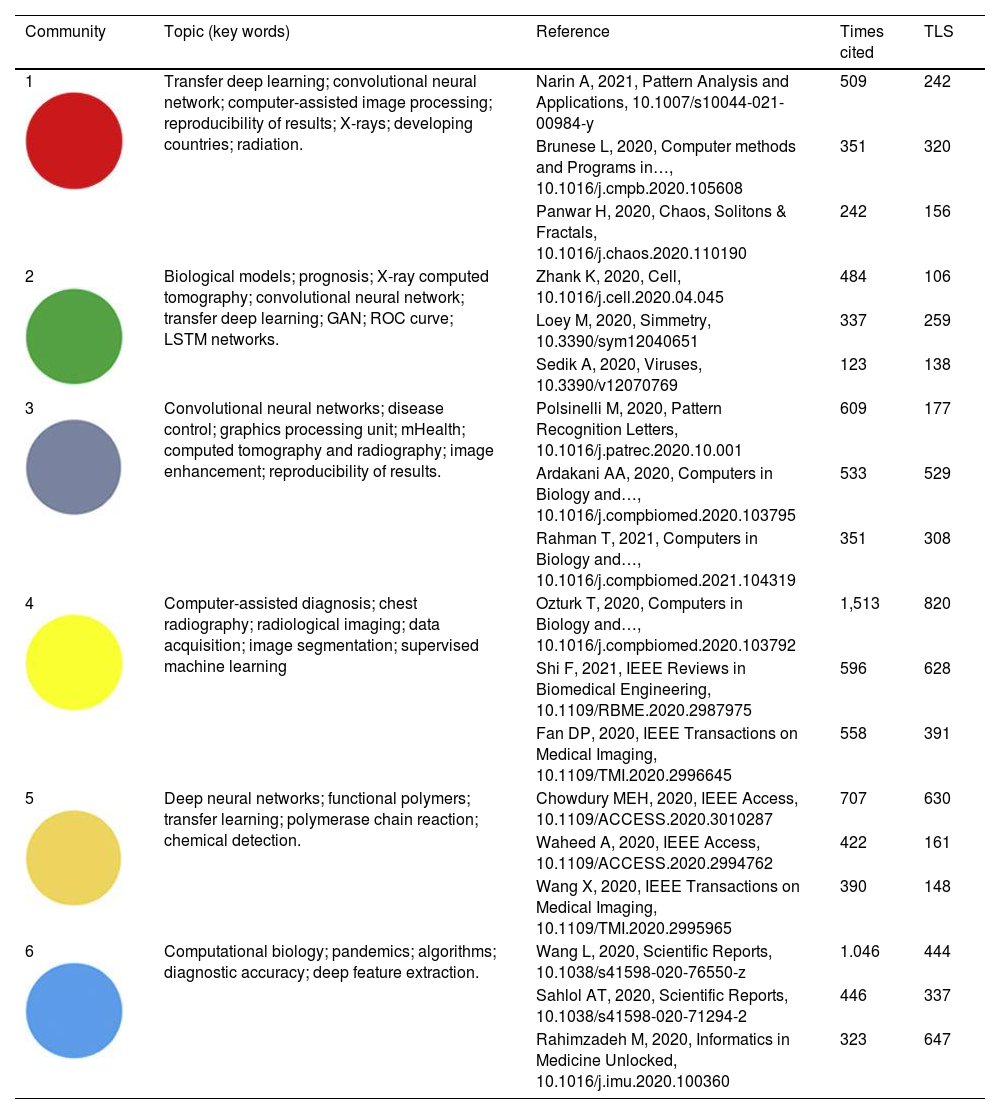
ResultsThe descriptive analysis revealed that original research papers were predominant (85.21%), with a substantial increase in publications on COVID-19 and AI since the pandemic began. China and the United States led in publication volume, with notable international collaborations. Network analysis identified research clusters such as AI-driven diagnostics and healthcare resource optimization. The bibliographic coupling analysis highlighted influential research themes, mainly focusing on diagnostic imaging and AI algorithms.
ConclusionAI has played a crucial role in addressing the COVID-19 crisis, especially in diagnostics and healthcare optimization. The bibliometric analysis provides insights into the research landscape, emphasizing AI's multifactorial contributions and suggesting areas for future research.
La pandemia de COVID-19 ha impulsado una importante investigación sobre las aplicaciones de la inteligencia artificial (IA) en la atención sanitaria. Este estudio analiza la estructura intelectual y el flujo de conocimientos en la investigación sobre COVID-19 e IA mediante un análisis descriptivo de citas y acoplamiento bibliográfico.
ObjetivosEste estudio pretende explorar el panorama actual de la investigación sobre IA en el contexto de COVID-19, identificar las publicaciones más influyentes y esbozar el marco conceptual de esta área de investigación.
Materiales y métodosUtilizando las bases de datos Web of Science (WoS) y Scopus, se recopilaron documentos con palabras clave como «COVID-19», «SARS-CoV-2», «coronavirus», «inteligencia artificial» y «aprendizaje profundo». Tras fusionar los resultados y eliminar los duplicados, la muestra final incluía 8057 documentos. Para el análisis descriptivo de citas se seleccionaron los 1000 artículos más citados, mientras que para el análisis de acoplamiento bibliográfico se utilizó toda la muestra. El análisis y la visualización de los datos se realizaron con R Bibliometrix/Biblioshiny y VOSviewer.
ResultadosEl análisis descriptivo reveló que predominaban los trabajos de investigación originales (85,21%), con un aumento sustancial de las publicaciones sobre COVID-19 e IA desde el inicio de la pandemia. China y Estados Unidos lideraron el volumen de publicaciones, con notables colaboraciones internacionales. El análisis de redes identificó grupos de investigación como el de diagnósticos impulsados por IA y el de la optimización de recursos sanitarios. El análisis del acoplamiento bibliográfico puso de relieve temas de investigación influyentes, centrados principalmente en el diagnóstico por imagen y los algoritmos de IA.
ConclusiónLa IA ha desempeñado un papel crucial para hacer frente a la crisis COVID-19, especialmente en el diagnóstico y la optimización de la atención sanitaria. El análisis bibliométrico ofrece una visión del panorama de la investigación, hace hincapié en las contribuciones multifactoriales de la IA y sugiere áreas para futuras investigaciones.


