

metricas
covid
Radiología (English Edition) Radiation-induced angiosarcoma of the breast: A rare but aggressive pathology wa...
Journal Information
Vol. 67. Issue 4.
(July - August 2025)
Visits
29
Vol. 67. Issue 4.
(July - August 2025)
Brief report
Radiation-induced angiosarcoma of the breast: A rare but aggressive pathology warranting ongoing attention
Angiosarcoma radioinducido de la mama: una patología rara pero agresiva que no debemos olvidar
Visits
29
F.L. Begliardo
Corresponding author
fbegliardo@gmail.com

Corresponding author.
, P. Cebrián Villar, J.C. Diez Hernández, D. Martin Hernández, M.E. Bonal González
Hospital Universitario de Salamanca, Salamanca, Spain
This item has received
Article information
Abstract
Full Text
Bibliography
Download PDF
Statistics
Figures (3)
Show moreShow less
Abstract

Radiation-induced angiosarcoma of the breast is a rare and highly aggressive malignant neoplasm. Its incidence is likely to rise in the coming years due to the increasing use of breast-conserving surgery techniques.

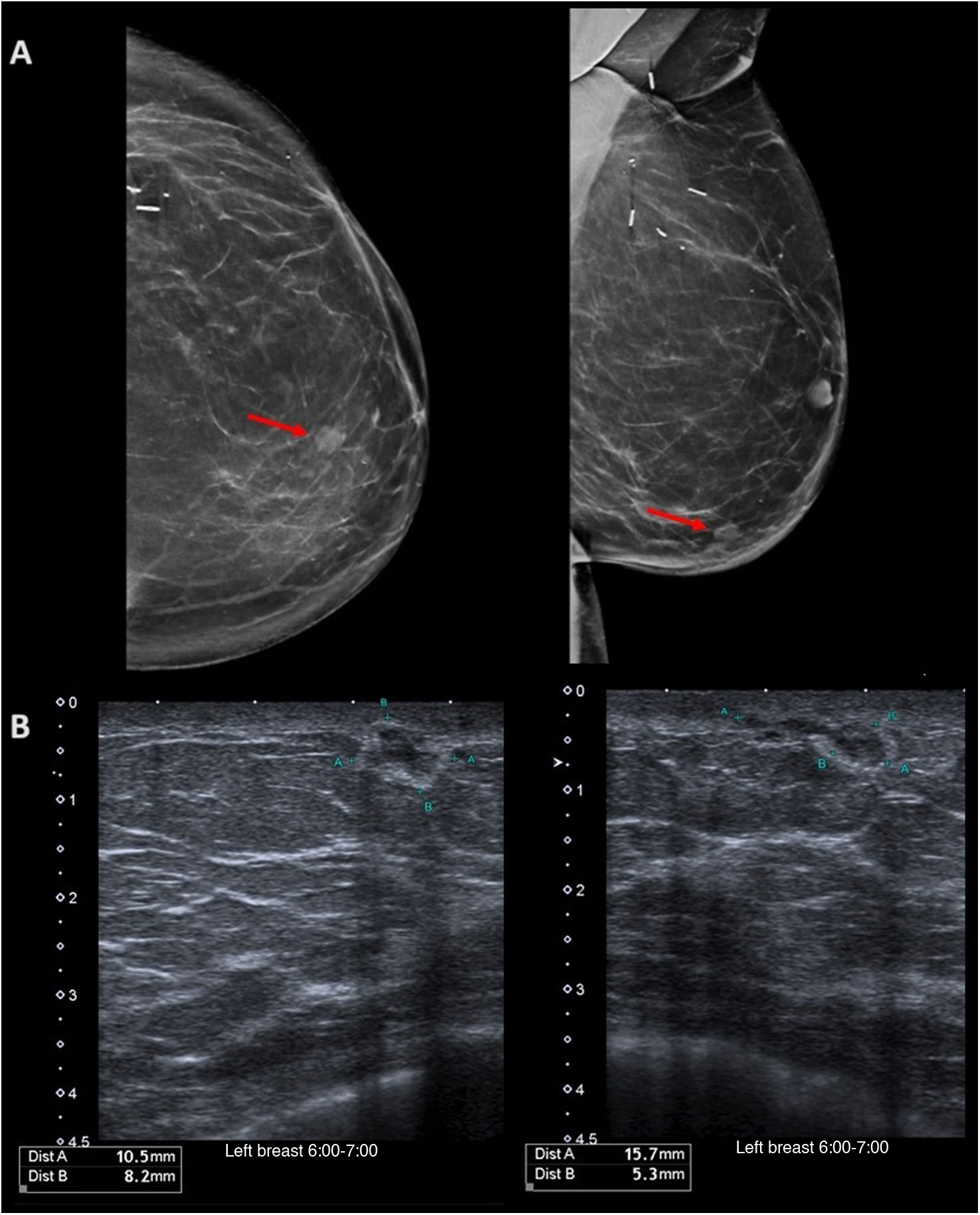
Changes in the skin colour of the irradiated area in a patient treated with conservative surgery should raise suspicion of this pathology. The diagnostic work‐up for this disease includes different imaging modalities including mammography, ultrasound, or magnetic resonance imaging. However, the most accurate diagnostic method is skin biopsy. Treatment typically involves surgical resection, while the role of chemotherapy and radiotherapy is not well established.

Keywords:
Breast
Radiation‐induced neoplasms
Angiosarcoma
Resumen

El angiosarcoma radioinducido de la mama es una neoplasia maligna, muy agresiva y poco frecuente. Sin embargo, se preveé que su incidencia aumente en los próximos años debido al creciente uso de las técnicas de cirugía conservadora mamaria.

Los cambios en el color de la piel del área irradiada en una paciente tratada con cirugía conservadora deben hacernos sospechar esta patología. El estudio diagnóstico incluye diferentes modalidades de imagen como la mamografía, la ecografía o la resonancia magnética. Sin embargo, el método más preciso para su diagnóstico es la biopsia de piel. El tratamiento de elección es la resección quirúrgica y el papel de la quimioterapia y la radioterapia no está bien establecido.


Palabras clave:
Mama
Tumores radioinducidos
Angiosarcoma

Article

These are the options to access the full texts of the publication Radiología (English Edition)
Subscriber
Subscriber

If you already have your login data, please click here .

If you have forgotten your password you can you can recover it by clicking here and selecting the option “I have forgotten my password”
Purchase
Purchase article

Purchasing article the PDF version will be downloaded

Purchase now
Contact
Phone for subscriptions and reporting of errors
From Monday to Friday from 9 a.m. to 6 p.m. (GMT + 1) except for the months of July and August which will be from 9 a.m. to 3 p.m.
Calls from Spain
932 415 960
Calls from outside Spain
+34 932 415 960
E-mail
Article options
Tools
