


The use of innovative teaching methodologies, such as collaborative work, constitutes a significant change for both teachers and students. This method requires greater autonomy from students, and significantly more effort from both students and teachers due to the importance of careful planning and the monitoring of learning. Thus, this teaching model promotes the development of various skills which include critical thinking and self-management.
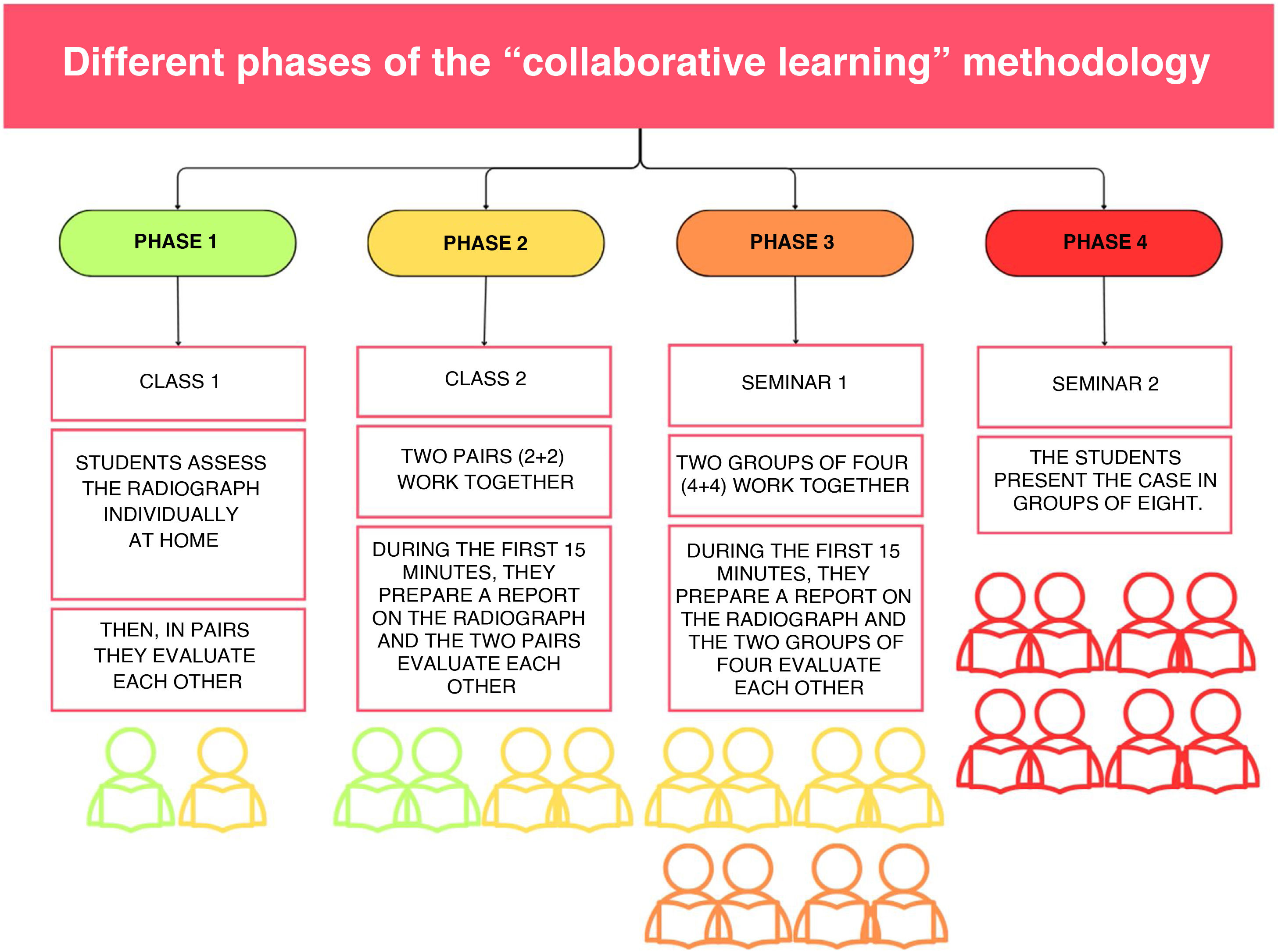
MethodWe carried out a cross-sectional observational study of a collaborative activity used in several classes in the subject ‘Diagnostic Imaging and Physical Medicine’ in the third year of an undergraduate medicine degree. The students were divided into 13 groups of 8 people, separated using the order of the class list to avoid grouping friends. Each group was given a different clinical case with a radiological image of a bone tumour, and the students were asked to describe it individually at home applying the theory they had been taught in previous ‘Semiology of bone tumours’ classes. Subsequently and autonomously, they then had to describe it to a classmate from the same group. Later, they described it in groups of two and four during class time before the group of eight students finally had to describe it in front of the whole class and try to provide a diagnosis. During the preparatory classes, the teacher went around the groups answering questions. After the final description, the teacher provided feedback. The activity was evaluated through a questionnaire filled out by the students.
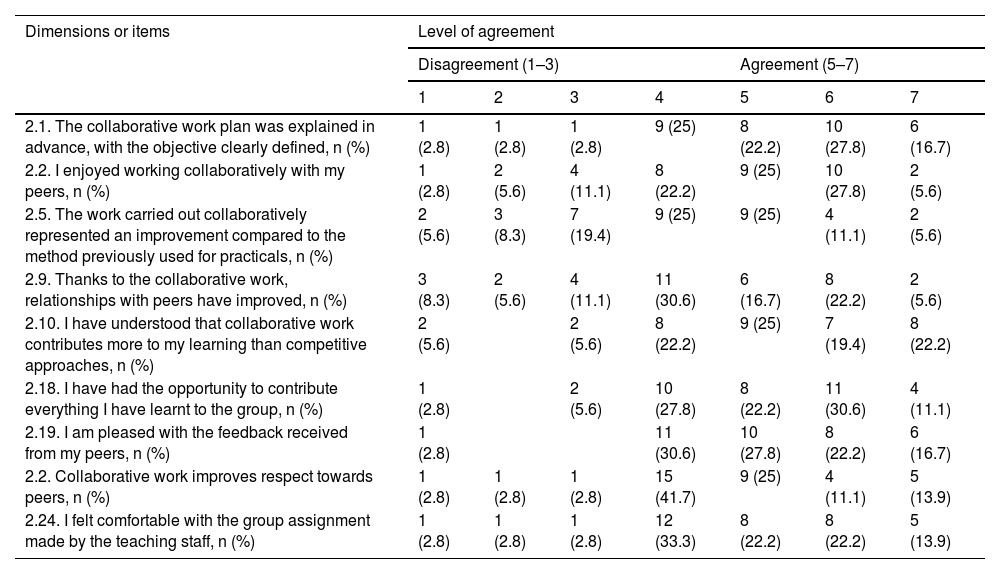
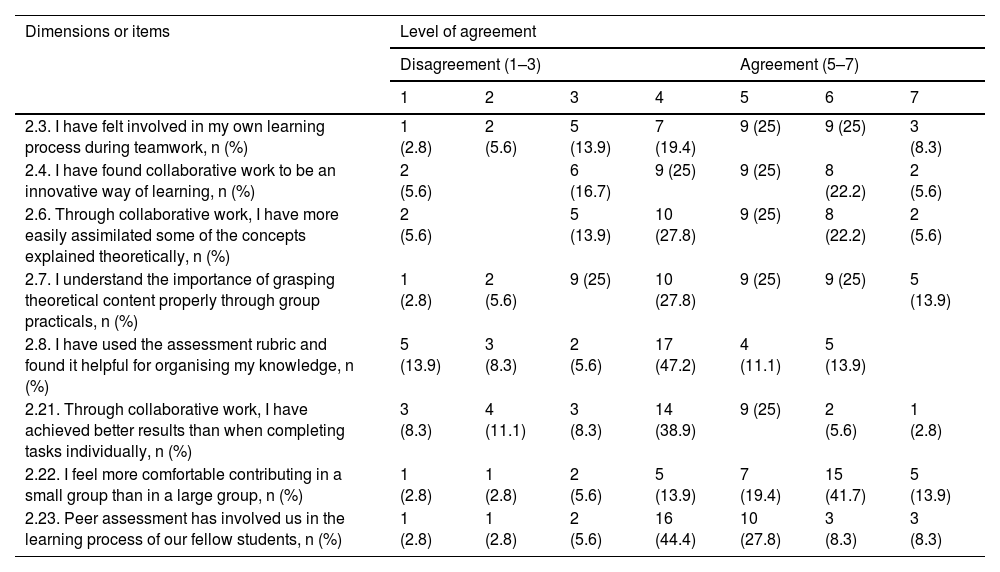
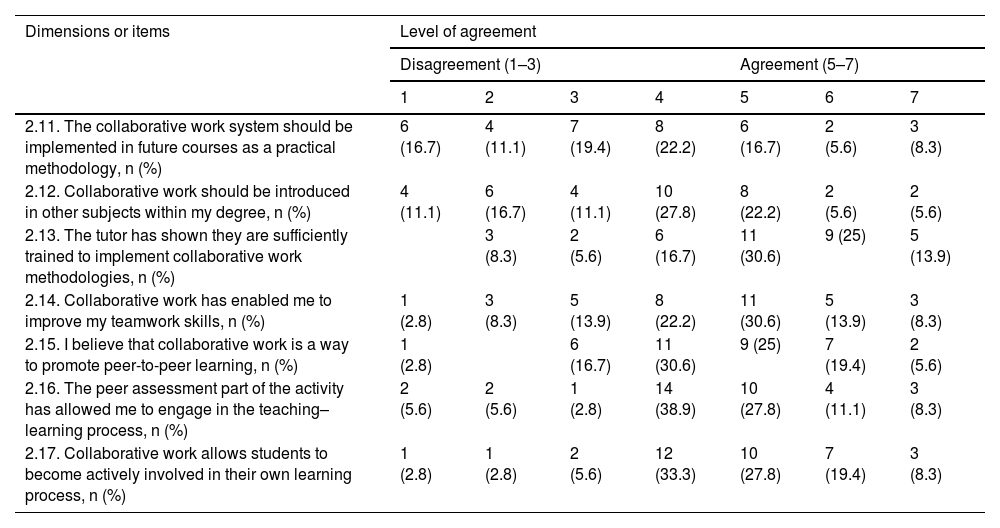
ResultsThe results of the survey reveal the opinions of the students. Overall, they found the methodology to be appropriate, and 60% of those surveyed said that it facilitated the acquisition of knowledge, is an innovative form of self-learning, increased their level of involvement and improved their relationships with their colleagues. Likewise, more than 50% of the participants believe that collaborative work is an appropriate method for their training, providing them with a greater sense of participation.
ConclusionCollaborative work is found to be an appropriate methodology to improve the acquisition of knowledge. However, it requires greater effort and involvement from both teachers and students, which means that students are not keen on applying it to other subjects. Students consider as a drawback the potential for imbalances of participation.
La metodología de enseñanza usando técnicas de innovación docente como es el trabajo colaborativo, supone un cambio significativo tanto para el profesor como para el estudiante. Este método implica una mayor autonomía por parte de los estudiantes, así como mayor esfuerzo tanto del estudiante como del docente, siendo muy importante una adecuada planificación y seguimiento del aprendizaje. Este modelo de enseñanza favorece de esta forma el desarrollo de habilidades tales como el pensamiento crítico y la autogestión.
MétodoEstudio observacional transversal para la implementación de una actividad colaborativa en varias clases impartidas en la asignatura “Diagnóstico por Imagen y Medicina Física” en el curso de tercero de Medicina. Los alumnos se dividieron en 13 grupos de 8 personas siguiendo el orden de lista, para evitar grupos de amigos. Se repartió a cada grupo un caso clínico diferente con la imagen radiográfica de un tumor óseo, y se les pidió que lo describieran de manera individual en casa, aplicando la teoría recibida en las clases previas, de “Semiología de los tumores óseos”. Posteriormente y de manera autónoma, la descripción se la debían de hacer a un compañero de su mismo grupo, para posteriormente en las clases siguientes hacer lo mismo en grupos de 2, 4 y finalmente, el grupo de 8 alumnos debía de describir e intentar dar un diagnóstico frente al resto de la clase. En las intervenciones realizadas en las clases, la profesora fue por los grupos resolviendo dudas, y en la última descripción realizó aportaciones como “feedback”. La evaluación de la práctica se realizó por un test autocumplimentado por el alumnado.
ResultadosLos resultados de la encuesta muestran la opinión de los alumnos. Estos encuentran la metodología adecuada, opinando el 60% de los encuestados, que facilita la adquisición de conocimientos, suponiendo una forma innovadora de autoaprendizaje, aumentando su implicación y mejorando la relación con sus compañeros. Asimismo, más del 50% de los participantes asumen el trabajo colaborativo como un método adecuado para su formación, haciéndoles sentir partícipes de ella.
ConclusiónEl trabajo colaborativo ha sido evaluado como metodología adecuada para mejorar la adquisición de conocimientos, aunque requiere un mayor esfuerzo e implicación por parte del docente y del estudiante, lo que hace que los alumnos no quieran aplicarla en otras asignaturas. Como aspecto negativo, los alumnos consideran que puede generar desequilibrios en la participación.


