




la alopecia areata (AA) constituye la tercera dermatosis más frecuente en niños. Existen pocos estudios acerca del impacto en la calidad de vida (CDV) que produce en los pacientes y sus familiares.
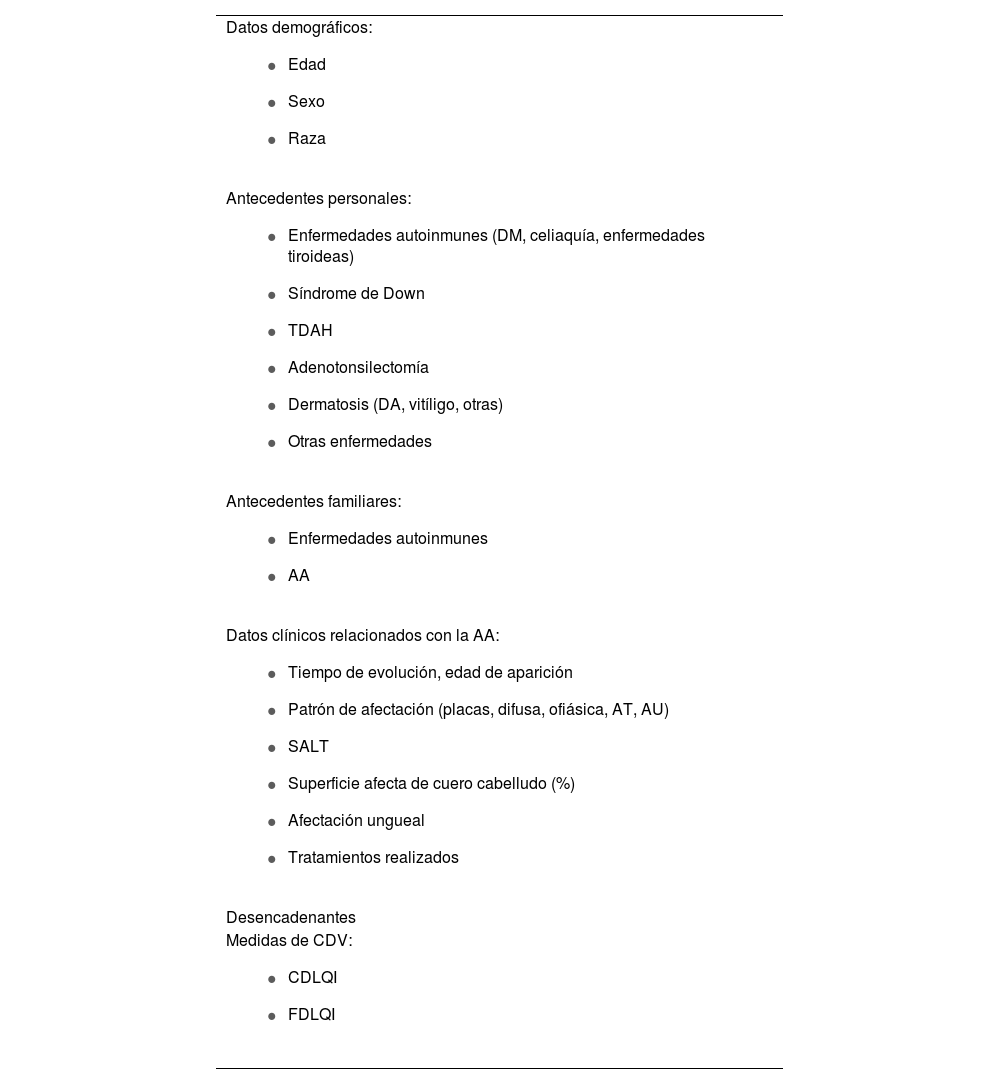
Material y métodosse realizó un estudio transversal para describir las características clínicas y demográficas de pacientes pediátricos con AA y el impacto en la CDV en estos y sus progenitores, en un hospital de tercer nivel, de enero a junio de 2023. Los datos fueron recogidos mediante un cuestionario que incluía variables clínicas, demográficas y de afectación de la CDV empleando los cuestionarios Children Dermatology Life Quality Index (CDLQI) y Family Dermatology Life Quality Index (FDLQI). Los datos se analizaron mediante SPSS (versión 25.0, IBM Corp.®).
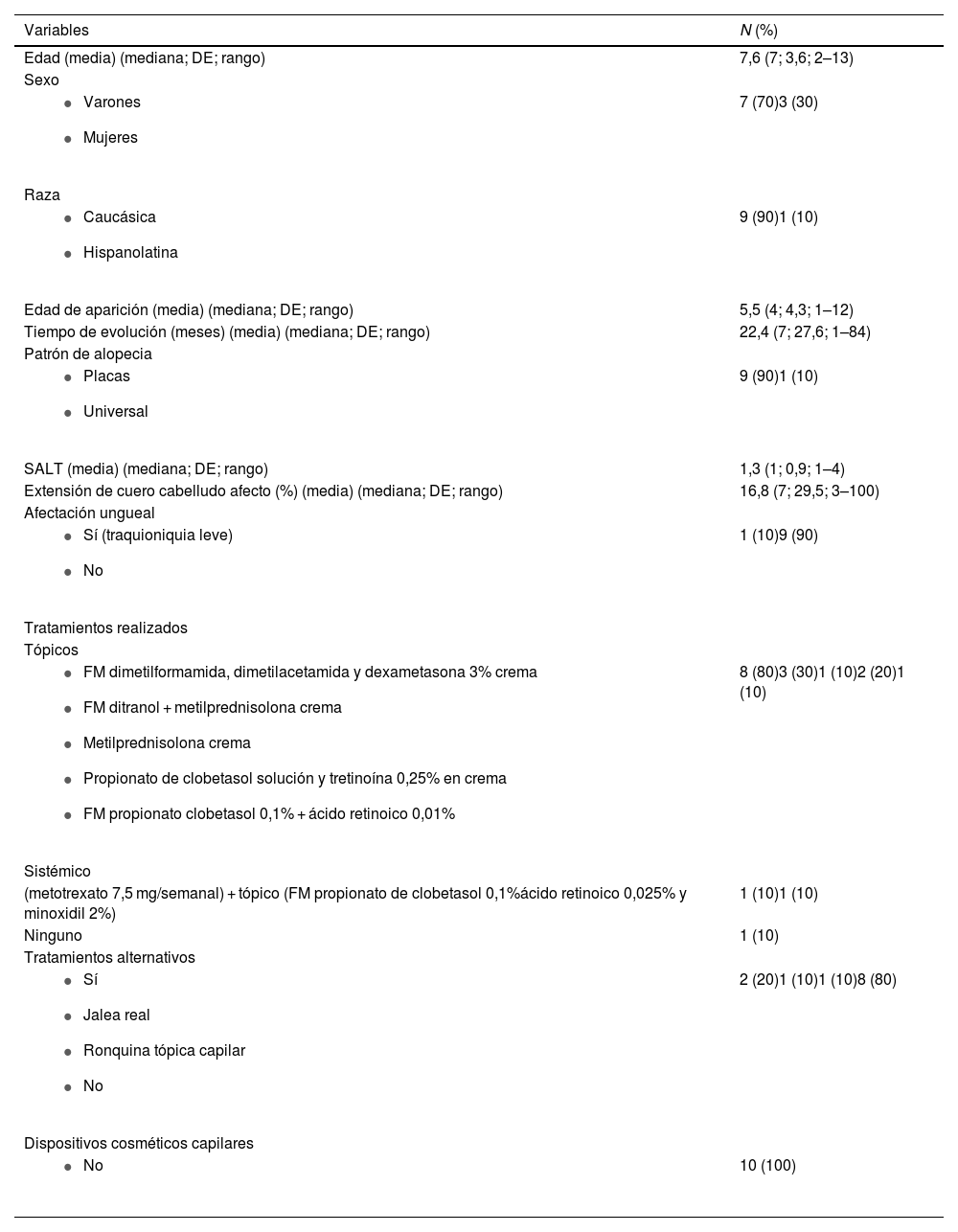
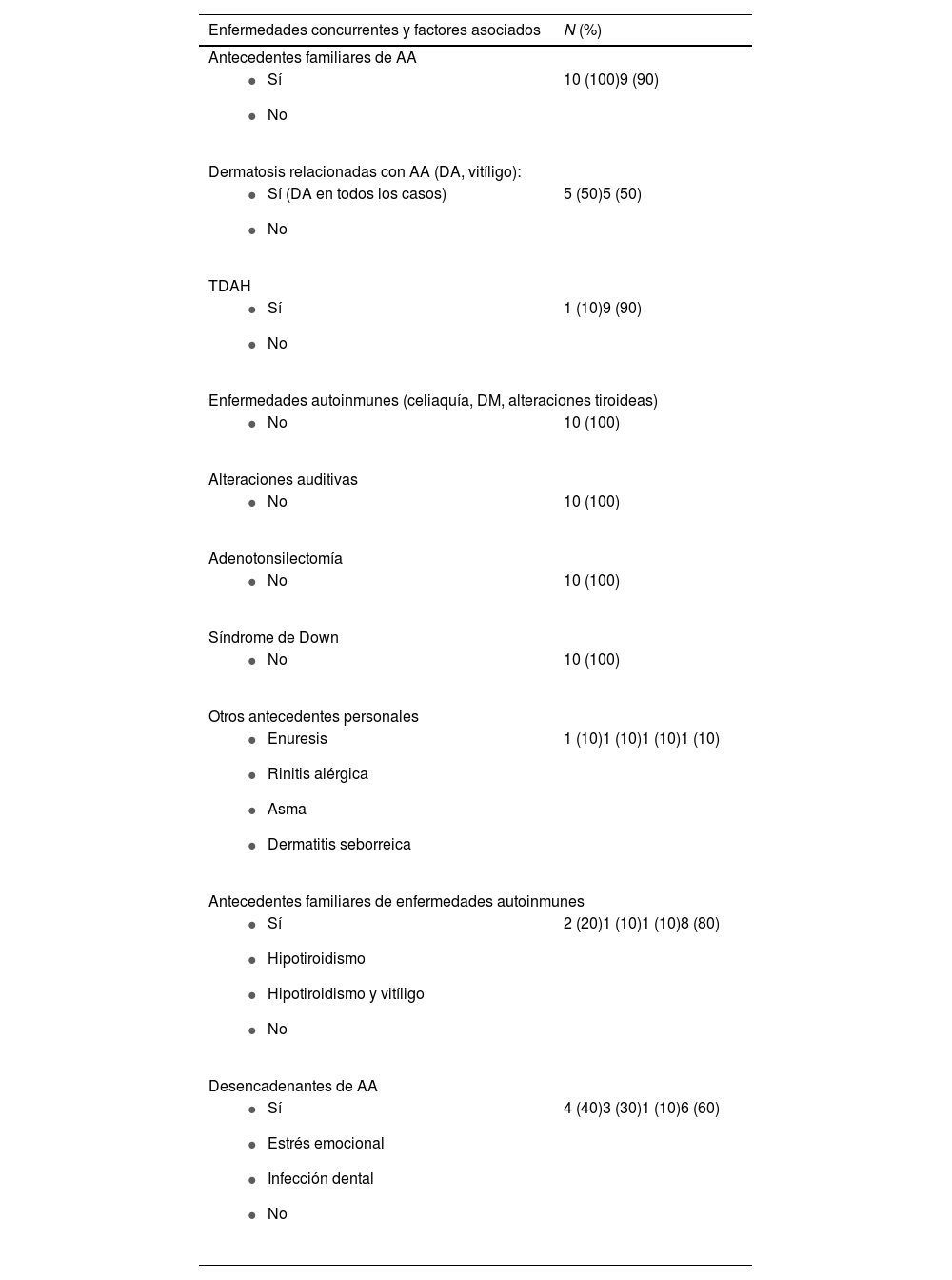
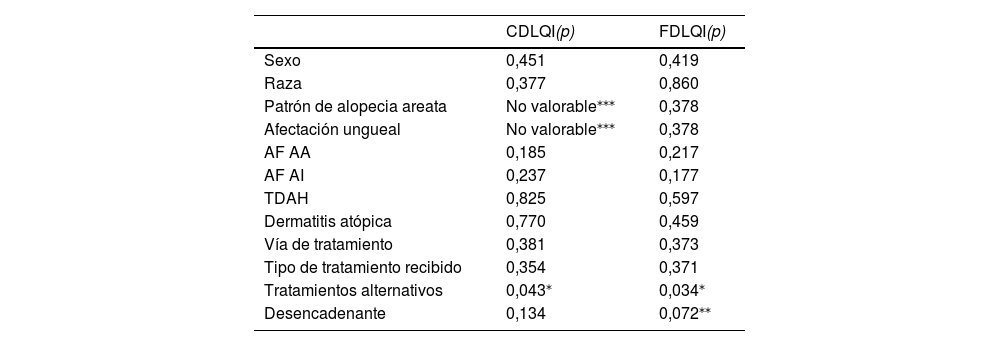
Resultadosse incluyeron 10 pacientes, con predominio masculino (70%), edad media de 7,6 años (DE 3,6) y dermatitis atópica como principal comorbilidad (50%). El impacto en la CDV fue leve en los pacientes (CDLQI 3,8 [DE 3,5]), y moderado en sus progenitores (FDLQI 7,2 [DE 3,8]), asociándose significativamente al uso de tratamientos alternativos no farmacológicos (p = 0,043 y p = 0,034), sin relación con la clínica o comorbilidades asociadas.
Conclusioneses fundamental indagar de forma activa sobre el impacto en la CDV en los pacientes con AA o sus familiares dada su falta de asociación con parámetros de gravedad clínica. Sería necesaria la mejora de los cuestionarios actuales sobre la CDV en pacientes pediátricos con esta enfermedad para comprender su verdadero impacto.
Alopecia areata (AA) is the third most common dermatosis in children. There are few studies on the impact on the quality of life (QOL) of patients and their families.
Material and methodsA cross-sectional study was conducted to describe the clinical and demographic characteristics of pediatric patients with AA and the impact on the QOL of these patients and their parents in a tertiary hospital from January to June 2023. Data were collected using a questionnaire including clinical, demographic and quality of life variables using the Children Dermatology Life Quality Index (CDLQI) and Family Dermatology Life Quality Index (FDLQI) questionnaires. Data were analyzed using SPSS (version 25.0, IBM Corp.®).
ResultsTen patients were included, with male predominance (70%), mean age 7.6 years (SD 3.6) and atopic dermatitis as main comorbidity (50%). The impact on QOL was mild in patients (CDLQI 3.8 [SD 3.5]), and moderate in their parents (FDLQI 7.2 [SD 3.8]), significantly associated with the use of alternative non-pharmacological treatments (p = 0.043 and p = 0.034), unrelated to clinical or associated comorbidities.
ConclusionsIt is essential to actively investigate the impact on QOL in patients with AA or their relatives given its lack of association with clinical severity factors. Improvement of the current QOL questionnaires in pediatric patients with this disease would be necessary to understand its true impact.
