


A 75-year-old male with multiple comorbidities, including hypertension, dyslipidemia, rheumatoid arthritis, and mild chronic kidney disease, presented with four days of progressive dysphagia while on a Mediterranean cruise. It begins with difficulty swallowing solids and then progresses to include liquids. It was accompanied by nausea, vomiting, and mild dyspnea that did not improve with antiemetic therapy. In addition, there was a history of dysphagia due to esophageal stenosis for the past five years, suggesting the possibility of a digestive disorder.
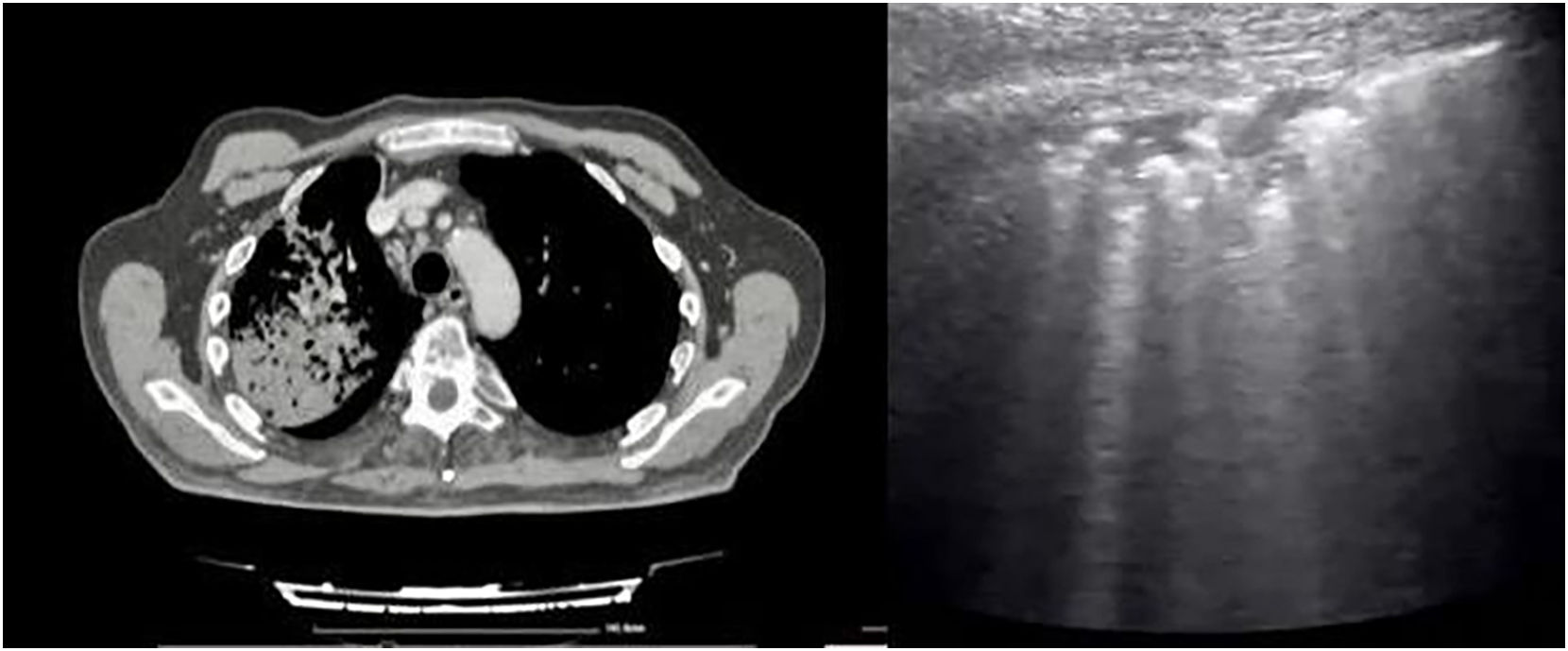
Upon arrival at the hospital, the patient presented with hypoxemic respiratory failure. A bedside lung ultrasound performed under the BLUE protocol revealed right bilobar pneumonia, which was confirmed by thoracoabdominal CT 24 hours later. Treatment was promptly initiated Fig. 1.

Although the initial progress was slow, after three days of treatment, the patient still exhibited elevated acute-phase reactants, prompting a broadening of antibiotic coverage. Dysphagia began to improve, allowing dietary progression from liquids to pureed foods and eventually to soft solids, while renal function showed concurrent improvement.
After ten days of antibiotic treatment, the patient was able to discontinue oxygen support, maintaining baseline oxygen saturation levels above 96%. A follow-up lung ultrasound showed complete resolution of the pulmonary infiltrates, leading to the decision to discharge the patient with home care.
FundingNo funding was received for its preparation.
ConsentWritten informed consent was obtained from the patient for the acquisition of the images presented.


Medicina Clínica Práctica sigue las recomendaciones para la preparación, presentación y publicación de trabajos académicos en revistas biomédicas