



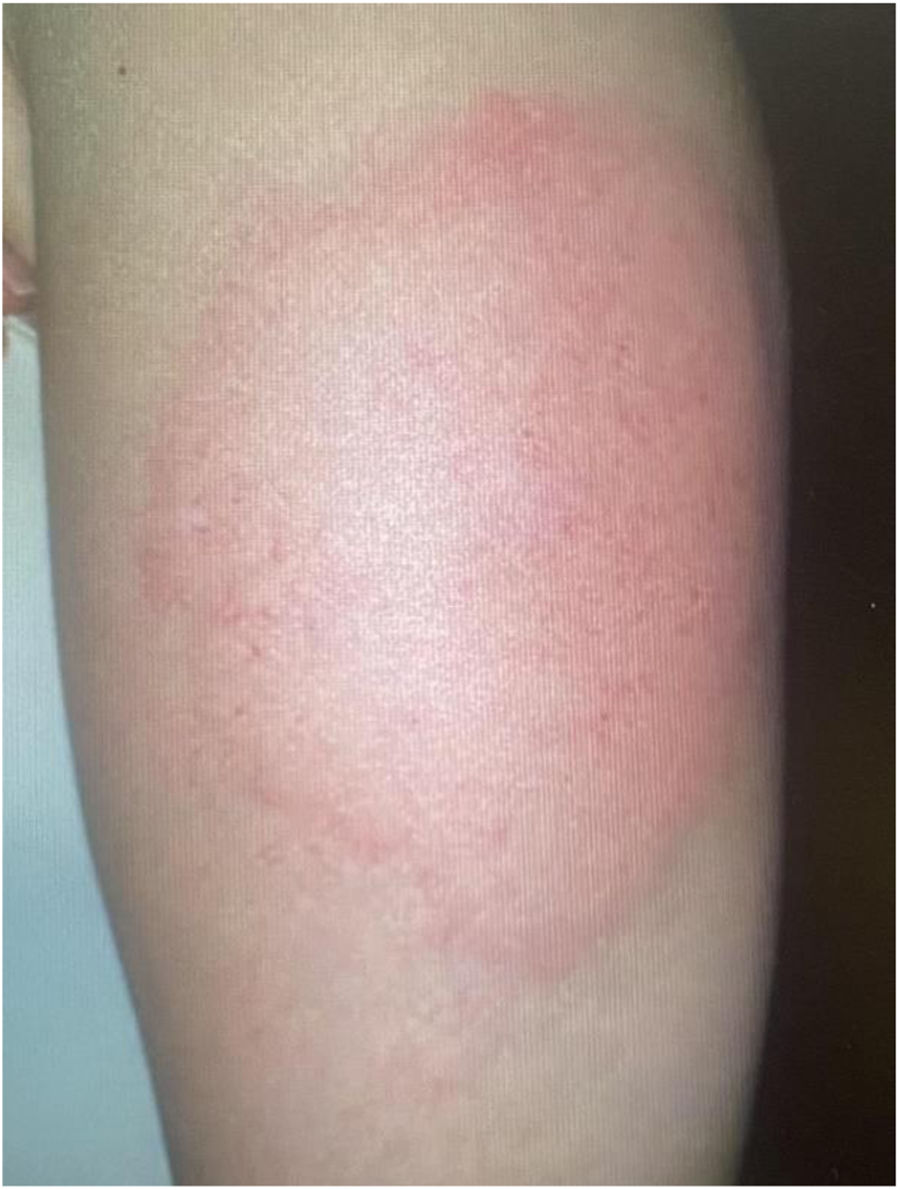
Hymenoptera stings (Hs) can cause allergic reactions to Hymenoptera venom (HV), both local and systemic. There is controversy regarding the risk of developing an HV-systemic reaction (HV-SR) after one or several previous extensive local allergic reactions (ELAR) due to HV.
ObjectivesTo evaluate the risk of HV-SR in patients who have suffered at least one previous ELAR due to HV, the relevance of sensitization to HV for suffering from SR-HV in the future, and the prevalence of sensitization to inhalants and foods.
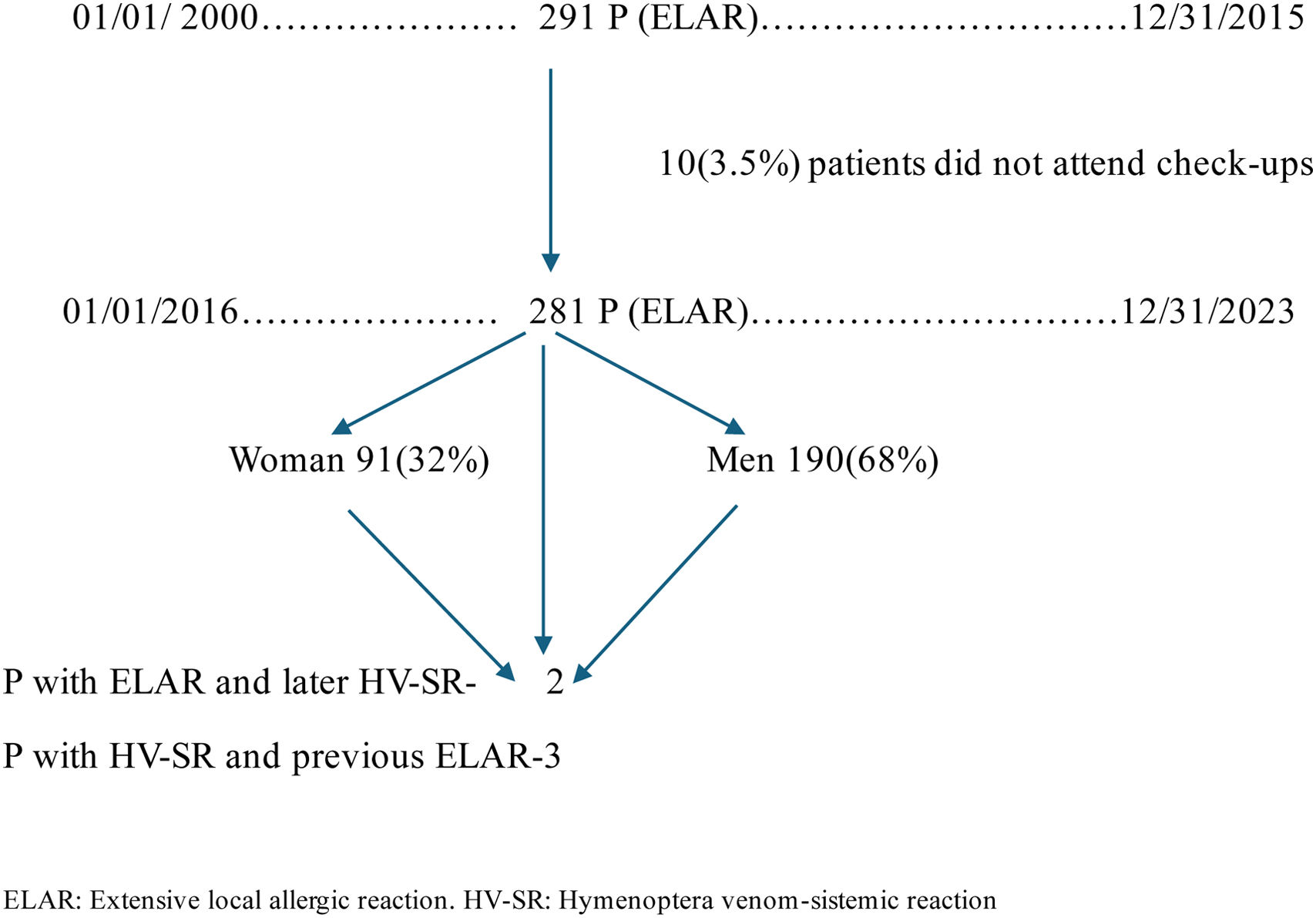
MethodsA descriptive retrospective (first phase, years: 2000–2015) and prospective (second phase, years: 2016–2023) study were conducted with patients ELAR. We periodically reviewed the patients to detect HV-SR, sensitizations, and personal histories of ELAR.
ResultsWe examined 281 patients with ELAR to see if they had had HV-SR but detected only 2 patients with HV-SR. In the second phase, only 3 patients with HV-SR had a history of ELAR. HV-specific IgE was determined in 224 patients, of which 146 were sensitized to at least one HV. Using skin prick tests, we detected 54 patients sensitized to pollen and sensitized food to 8 patients.
ConclusionPatients with ELAR due to an Hs have little chance of developing SR-HV, even though 2/3 of patients are sensitized to at least one HV. Atopic load is irrelevant for suffering a future HV-RS.
Las picaduras de himenópteros (PH) pueden producir reacciones alérgicas al veneno de himenópteros (VH) tanto locales como sistémicas. Existe controversia respecto al riesgo de desarrollar una reacción alérgica sistémica por VH (RAS-VH) tras una o varias reacciones alérgicas locales extensas (RALE) previas.
ObjetivosEvaluar el riesgo de RAS-VH en pacientes que han experimentado al menos una RALE previa por VH, la relevancia de la sensibilización a VH para presentar RAS-VH en el futuro y la prevalencia de sensibilización a inhalantes y alimentos.
MétodosSe realizó un estudio descriptivo retrospectivo (primera fase, años: 2000-2015) y prospectivo (segunda fase, años: 2016-2023) con pacientes RALE. Se revisó periódicamente a los pacientes para detectar RAS-VH, sensibilizaciones y antecedentes personales de RALE.
ResultadosExaminamos 281 pacientes con RALE para ver si habían tenido RAS-VH, pero detectamos solo 2 pacientes con RAS-VH. En la segunda fase, solo 3 pacientes con RAS-VH tenían antecedentes de RALE. Se determinó IgE específica de VH en 224 pacientes, de los cuales 146 estaban sensibilizados a por lo menos un VH. Mediante pruebas cutáneas, detectamos 54 pacientes sensibilizados al polen y 8 pacientes sensibilizados a alimentos.
ConclusiónLos pacientes con RALE debido a una PH tienen pocas posibilidades de desarrollar RAS-VH, a pesar de que dos tercios de los pacientes están sensibilizados a por lo menos un VH. La carga atópica es irrelevante para presentar un futuro RAS-VH.

