



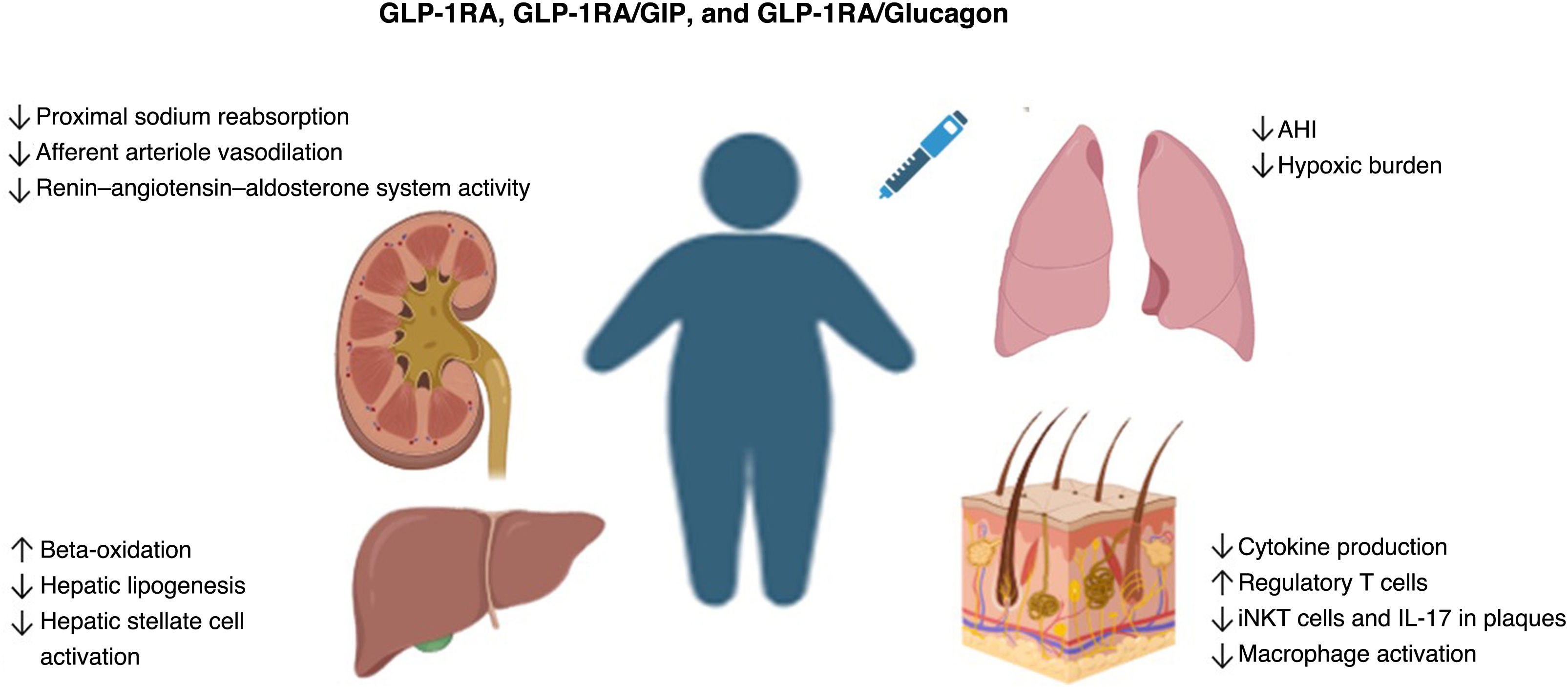
Agents targeting the glucagon-like peptide-1 receptor (GLP-1R) are effective in managing metabolic conditions associated with obesity, such as obstructive sleep apnea (OSA), metabolic dysfunction-associated steatotic liver disease (MASLD), and chronic kidney disease (CKD). In OSA, studies with first generation GLP-1R agonists (ArGLP-1) and co-agonists (GLP-1/GIP) have demonstrated significant improvements in the apnea-hypopnea index and weight reduction. In MASLD, GLP-1RAs and co-agonists (GLP-1/GIP or GLP-1/glucagon) have shown efficacy in reducing hepatic fat, improving fibrosis, and resolving steatohepatitis, with promising results from trials such as ESSENCE and SYNERGY-NASH. In CKD, semaglutide has been associated with a reduction in renal events and slower disease progression. Beyond their metabolic and cardiovascular benefits, these agents represent a comprehensive approach to treating obesity and its complications, with ongoing research exploring their potential indications in chronic inflammatory diseases such as psoriasis and hidradenitis suppurativa.
Los fármacos con acción sobre el receptor del péptido similar al glucagón tipo 1 (GLP-1) son efectivos en el tratamiento de enfermedades metabólicas asociadas a obesidad como la apnea obstructiva del sueño (AOS), la enfermedad hepática metabólica (EHMET) y la enfermedad renal crónica (ERC). En AOS, estudios con agonistas del receptor del GLP-1 (ArGLP-1) de primera generación y coagonistas (GLP-1/GIP) han mostrado mejoría significativa en el índice apnea-hipopnea y en la reducción de peso.
En EHMET, ArGLP-1 y coagonistas (GLP-1/GIP o GLP-1/glucagón) han mostrado reducir la grasa hepática, mejorar la fibrosis y resolver esteatohepatitis, con resultados prometedores en ensayos como ESSENCE y SYNERGY-NASH. En ERC, semaglutida ha demostrado reducir eventos renales y la progresión de la enfermedad. Estos fármacos, además de los beneficios metabólicos y cardiovasculares, representan un enfoque integral para tratar obesidad y sus complicaciones inflamatorias, con datos prometedores en psoriasis y la hidrosadenitis supurativa.

