



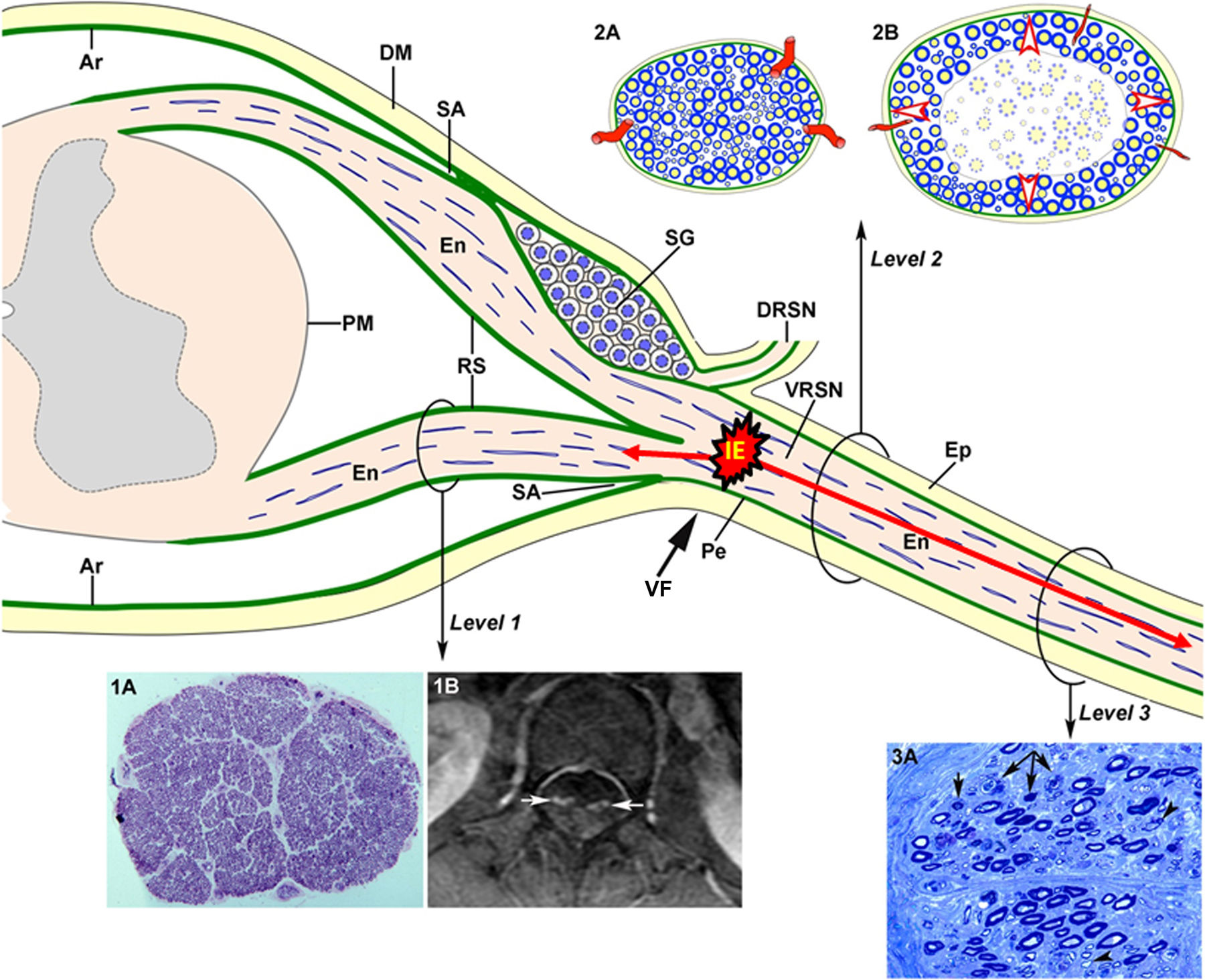


Classic Guillain-Barré syndrome is an acute, post-infectious, immune-mediated polyneuropathy with a variable degree of flaccid tetraparesis. It includes demyelinating and axonal forms. Numerous nosological advances are reviewed, largely driven by the IGOS Consortium (International Guillain-Barré Outcome Study) after having compiled 2000 patients from multiple nationalities including Spanish, which has made it possible to promote scales that facilitate its diagnosis and prognosis. Special emphasis has been placed on the pathological substrate of autopsy, and particularly in the very early phase of the syndrome (≤4 days after onset), when the fundamental lesion is inflammatory edema of proximal nerve trunks and particularly of spinal nerves. This notion opens new pathogenic, diagnostic and therapeutic perspectives, helping to better understand why serum axonal biomarkers of axonal damage are elevated, in both axonal and demyelinating forms.
El síndrome de Guillain-Barré clásico es una polirradiculoneuropatía aguda, post-infecciosa, e inmuno-mediada que cursa con un grado variable de tetraparesia flácida. Incluye formas desmielinizantes y axonales. Se revisan los numerosos avances nosológicos en buena medida impulsados por el Consorcio IGOS (International Guillain-Barré Outcome Study) tras haber recopilado 2000 enfermos de múltiples nacionalidades incluyendo la española, lo cual ha posibilitado elaborar escalas que facilitan el diagnóstico y pronóstico. Especial énfasis se ha hecho en el substrato anatomo-patológico de autopsia, y particularmente en la fase muy temprana del síndrome (≤4 días del inicio), cuando la lesión fundamental es el edema inflamatorio de troncos nerviosos proximales y sobre todo de los nervios espinales. Esta noción abre nuevas perspectivas patogénicas, diagnósticas y terapéuticas, ayudando a comprender mejor el porqué de la elevación de biomarcadores séricos de daño axonal, tanto en las formas axonales como en las desmielinizantes.

