



This study explores the potential of artificial intelligence (AI) in advancing sustainability within business practices. It focuses on three key areas: optimising energy efficiency, developing sustainable products and services, and improving waste and resource management. By integrating AI into these domains, companies can achieve significant advancements in operational efficiency, market competitiveness, and environmental responsibility.
FindingsOptimisation of Energy Efficiency
AI-powered systems enable real-time monitoring and management of energy usage in businesses. Machine learning algorithms can forecast energy demand, automate adjustments, and optimize operational processes to minimise excessive consumption. These systems lead to substantial reductions in energy costs and carbon emissions, contributing to financial savings and environmental sustainability.
Development of Sustainable Products and Services
AI can process vast quantities of market data and consumer behaviour to detect trends and preferences related to sustainability. This allows companies to design products that meet these demands, incorporating environmentally friendly materials and processes. AI-driven innovation facilitates the creation of products that meet consumer needs while minimising environmental impact, thereby increasing market share and enhancing brand reputation.
Improvement of Waste and Resource Management
Effective waste and resource management is crucial for sustainable business practices. AI technologies can optimise these processes by analysing material flows and identifying opportunities for recycling and reuse. Predictive analytics can anticipate waste generation patterns, allowing proactive measures to reduce them. AI also enhances resource allocation and utilisation, promotes more efficient use of materials and reduces waste.
DiscussionIntegrating AI into business operations boosts efficiency and profitability while aligning activities with global sustainability objectives. AI systems provide tools for significant operational improvements, helping companies meet environmental and social expectations. Furthermore, the development of sustainable products through AI positions companies as leaders in responsible innovation, enhancing their competitiveness in the market.
OriginalityThis study is innovative in its comprehensive approach to using AI across multiple aspects of business sustainability. The combination of energy efficiency, sustainable product development, and waste management represents a novel perspective that offers a holistic strategy for corporate sustainability. Its originality lies in the simultaneous application of these technologies to achieve both positive environmental outcomes and significant operational improvement.
Practical ImplicationsThe implementation of AI in business sustainability has several practical implications. Companies can significantly reduce operational costs and their carbon footprint through energy optimisation. AI-driven sustainable products development can increase customer satisfaction and market share. Moreover, advancements in waste and resources management can generate substantial cost savings and improved operational performance. These applications not only strengthen sustainability but also offer competitive advantages and enhance corporate reputation. Artificial intelligence provides a robust platform for companies to achieve sustainability. Adopting these technologies can transform business operations, align them with global sustainability goals, and foster competitiveness and innovation.
Artificial Intelligence (AI) is increasingly recognised as a transformative driver of sustainability in the business sector. With its capacity to process and analyse vast volumes of data in real time, AI equips firms with robust tools to enhance operational efficiency, develop sustainable products and services, and optimise resource management (Gavrila et al., 2023; M. Ahmad et al., 2024; Vomberg et al., 2024). This technological capacity is not merely instrumental—it constitutes a strategic asset that aligns business operations with the United Nations Sustainable Development Goals (SDGs), offering competitive advantages across sectors and firm sizes (Bouncken et al., 2022; Quttainah & Ayadi, 2024; Radicic & Petković, 2023).
Existing research has examined AI´s potential to drive environmental and operational improvements (Khan et al., 2023; Murugamani et al., 2022), its applications in product innovation (Nguyen et al., 2021), and its role in advancing the circular economy (Oluleye et al., 2023; Rita & Ramos, 2022). However, despite this growing body of work, integrated and systematic analyses connecting AI functionalities with specific dimensions of sustainability—namely, carbon footprint reduction, sustainable product development, and resource circularity—within a coherent business strategy framework remain limited. Furthermore, prior studies often overlook of AI´s role in embedding sustainability across different phases of business decision-making, particularly in relation to the SDGs (Dana et al., 2022; Dzhunushalieva & Teuber, 2024; Nyagadza, 2022).
This paper addresses this gap by offering a structured review of how AI contributes to the strategic integration of sustainability in business. The adoption of AI can transform business models by enhancing knowledge generation, supporting environmentally conscious decision-making, and enabling predictive capabilities that facilitate sustainable operations (Beerepoot et al., 2023; Mohammad & Mahjabeen, 2023). In doing so, AI functions not only as technological tool but also as a facilitator of long-term value creation aligned with economic, social, and environmental goals (Gómez Gandía et al., 2025).
Specifically, we analyse three critical domains where AI exerts a measurable impact: (1) the reduction of carbon emissions and energy use (Chien et al., 2021; Delanoë et al., 2023), (2) the development of sustainable and competitive products (Kiba-Janiak et al., 2021; Olabi et al., 2023), and (3) the optimisation of resource management and waste reduction within circular economy models (Arman & Mark-Herbert, 2022; Rakha, 2023). By synthesising these contributions, this study offers an updated and focused understanding of how AI supports sustainability across multiple levels of business practice.
Accordingly, the main objectives of this study are twofold:
- 1.
To examine the extent to which artificial intelligence has contributed to sustainability in business operations and strategic management.
- 2.
To identify emerging trends and future directions for AI in promoting sustainable practices aligned with global development goals.
We formulate the following research questions to address these objectives:
- •
RQ1: How has artificial intelligence contributed to improving sustainability in the management and operation of companies?
- •
RQ2: What are the future prospects and directions for artificial intelligence in promoting sustainability in business strategies?
By answering these questions, the article aims to provide conceptual and empirical foundation for understanding the evolving role of AI in shaping sustainable business ecosystems. It offers relevant implications for scholars, practitioners, and policymakers engaged in designing AI-driven strategies to achieve long-term sustainability targets.
Literature reviewThe integration of AI into organisational processes has become a central theme in advancing sustainability, particularly in alignment with SDGs. Adopted in 2015, these 17 goals provide a global policy framework for addressing environmental, economic, and social challenges (Biermann et al., 2022; Raman et al., 2024; Xiao et al., 2023). In this context, both public and private sectors are increasingly required to report and demonstrate measurable contributions towards sustainability objectives (Kim, 2023; Leal Filho et al., 2024).
Amid intensifying concerns over climate change, energy inefficiencies, and unsustainable production models (Guo et al., 2022), digital technologies—particularly AI—are being deployed as enablers of systemic transformation (Abulibdeh et al., 2024; Balsalobre-Lorente et al., 2023). Recent studies highlight AI's capacity to enhance operational efficiency, reduce emissions, and foster innovation through real-time data analysis and intelligent decision-making (Gavrila et al., 2023; Pisoni et al., 2023). These developments position AI as a strategic tool in corporate sustainability transitions, particularly in relation to SDG 9 (industry, innovation, and infrastructure), SDG 12 (responsible consumption and production), and SDG 13 (climate action).
The intersection between AI and sustainable product design is also gaining momentum. AI is increasingly applied in life cycle assessment (How & Cheah, 2024), eco-design (Ogundipe et al., 2024), and predictive consumer analytics (Dash & Kar, 2024), allowing firms to tailor their offerings to shifting environmental preferences (Oke et al., 2024). Similarly, AI-driven optimisation is emerging as a cornerstone of the circular economy, facilitating resource efficiency, waste minimisation, and closed-loop production systems (Madzík et al., 2024; Mukherjee et al., 2021; Munir et al., 2023).
Despite these contributions, the literature remains fragmented. While individual studies document technological impacts on sustainability, few offer integrated models that systematically map the mechanisms through which AI drives sustainable outcomes. Constructs such as digital transformation, Industry 4.0, and the circular economy are frequently referenced in isolation (Arman & Mark-Herbert, 2022; Sjödin et al., 2020), without a cohesive explanatory framework. This highlilghts a conceptual gap that this present study aims to address.
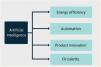
Theoretical frameworkTo bridge the conceptual, disconnect identified in the literature, this study proposes a model in which AI supports sustainability through three core mechanisms: knowledge generation, automation, and predictive analytics. This responds to recent calls for integrative models that unify digital transformation and environmental innovation for sustainability (Pricopoaia et al., 2024). These mechanisms enable measurable progress in three strategic domains: (1) reduction of carbon emissions and operating costs; (2) sustainable product and service design; and (3) process optimisation for circularity (Al Dhaheri et al., 2024). The model is presented in Fig. 1 and theoretically substantiated through the development of specific hypotheses in the following subsections.
Hypothesis developmentReduction of carbon footprint and operating costs
AI technologies enable real-time optimisation of energy consumption through intelligent energy management systems (Shah et al., 2022). When integrated with predictive maintenance algorithms, they allow early detection of faults, minimising unnecessary energy use and extending equipment lifespan (Chidolue & Iqbal, 2023; Hamdan et al., 2024). These functionalities significantly contribute to SDG 13, which targets urgent action on climate change, while also reducing operational expenditure (Ghobakhloo et al., 2023).
H1 The integration of AI into operational processes significantly reduces the carbon footprint and operating costs of companies.
AI enables organisations to conduct life cycle assessments and evaluate the environmental footprint of products during the design phase (How & Cheah, 2024). Furthermore, AI-powered consumer analytics facilitate the development of offerings that align with environmentally conscious market preferences (Dash & Kar, 2024; Oke et al., 2024). This dual capability enhances sustainable innovation in line with SDG 9 and promotes responsible consumption per SDG 12 (Fritz et al., 2021; Ogundipe et al., 2024).
H2 AI contributes to the design of sustainable products and services by facilitating life cycle optimisation and aligning offerings with sustainability-oriented consumer preferences.
AI’s predictive analytics capabilities allow firms to monitor material flows, identify inefficiencies, and implement reuse or recycling strategies (Munir et al., 2023; Mukherjee et al., 2021). These functionalities foster the implementation of circular economy models that minimise waste and maximise material value throughout the lifecycle (Balogun et al., 2024; Pathan et al., 2023). These practices directly support SDG 12 and indirectly enhance industrial resilience.
H3 AI optimises material flows and promotes circular economy practices by identifying inefficiencies and enabling data-driven reuse and recycling strategies.
The conceptual model (see Fig. 1) synthesises the role of AI in driving sustainability through three core mechanisms: knowledge generation, automation, and predictive analytics. Each mechanism corresponds to distinct sustainability outcomes—energy efficiency, product innovation, and circularity. These relationships are empirically testable and grounded in prior empirical and theoretical research (Gandía et al., 2025; Sliż et al., 2024; Strielkowski et al., 2023). The framework underscores AI not merely as a technological enabler, but as a strategic force in corporate sustainability transitions.
MethodologyThis study employs a bibliometric methodology to examine the scientific landscape at the intersection of AI and business sustainability. Bibliometric analysis is a quantitative approach used to map the structure and evolution of academic research in a given domain Passas (2024). It provides empirical insights into scholarly production, influential authors, citation patterns, thematic trends, and intellectual foundations relevant to the research questions formulated in this paper.
To enhance methodological rigour, the search strategy was executed using a predefined set of logical expressions and carefully selected keywords, grounded in prior literature and aligned with the study’s conceptual model. The analysis was performed using VOSviewer, which facilitates the construction of co-occurrence networks and thematic clusters based on bibliographic metadata (Van Eck & Waltman, 2013). The time frame was restricted to 2010 - 2025, ensuring both relevance and longitudinal coverage.
Given concerns about database scope, we acknowledge the limitation of relying exclusively on ScienceDirect. To address this, all results were subjected to manual screening to ensure alignment with the research themes. Only peer-reviewed articles from Q1 and Q2 journals were retained. Future iterations of this research will integrate additional databases to improve coverage diversity.
While the inclusion of a qualitative phase, such as semi-structured interviews could enrich the interpretative depth of the findings, this study remains exclusively bibliometric due to time and scope constraints at the stage. Given the breadth of the bibliometric mapping and the complexity of thematic clustering, the present work is conceived as the first phase of a broader mixed-method research design. A subsequent qualitative phase—currently under planning—will be conducted in a follow-up study to validate and contextualise the trends identified herein. This staged approach ensures methodological coherence and preserves analytical focus in the present contribution.
Search processThe bibliometric dataset was constructed using two sets of search queries corresponding to each research question. Logical combinations of keywords were designed to ensure specificity and thematic alignment. A minimum threshold of five keyword co-occurrences was applied to optimise network clarity in VOSviewer visualisations, following established bibliometric standards.
For Research Question 1, the following search logic was applied in ScienceDirect:
- •
AI
- •
Corporate sustainability
- •
Sustainable operational management
- •
Resource optimisation
- •
Energy efficiency
- •
Carbon footprint reduction
- •
Environmental impact
- •
Predictive models
Logical Expression:
“AI” AND (“Corporate sustainability” OR “Sustainable operational management” OR “Resource optimisation”) AND (“Energy efficiency” OR “Carbon footprint reduction” OR “Environmental impact” OR “Predictive models”)
Result: 1904 articles (2010–2025)
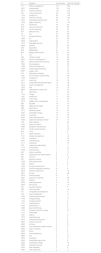
The outcome of this logical expression and related keyword combinations is summarised in Table 1, which shows the number of occurrences relevant to Research Question 1
Number of occurrences and link to the first question.
For Research Question 2, the search focused on AI’s prospective role in future sustainable business strategies:
- •
Sustainable strategies
- •
Green economy
- •
Innovation in sustainability
- •
Sustainable digitalisation
- •
Environmental responsibility
- •
Adoption of renewable energy
- •
Business transformation
Logical Expression:
“AI” AND (“Sustainable strategies” OR “Green economy” OR “Sustainability innovation”) AND (“Sustainable digitalisation” OR “Environmental responsibility” OR “Adoption of renewable energy” OR “Business transformation”)
Result: 281 articles (2010–2025)
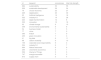
The number of relevant articles and their association with Research Question 2 are presented in Table 2.
Number of occurrences and link to the second question.
The keywords reflect the core content of the article, capturing the latest topics and development trends in the field, particularly in the application of AI to business management and sustainability. In both cases, co-occurrence analyses were conducted to identify and visualise relationships between the select keywords.
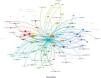
Research question 1A threshold of five words was applied, and 50 terms were retained.
The number of occurrences and the strength of the links between terms are presented in Table 3.
Summary of emerging clusters and themes.
The resulting co-occurrence map is displayed in Fig. 2:
Research question 2
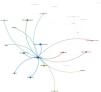
A minimum of five keyword occurrences was applied with 23 keywords retained.
The number of occurrences and the strength of the links between terms are presented in Table 2.
The co-occurrence map generated for this set is displayed in Fig. 3:
Analysis and resultsOverview of the dataset
A total of 2185 peer-reviewed articles published between 2010 and 2025 were included to provide a comprehensive profile of the analysed documents. These articles were retrieved from ScienceDirect and filtered for relevance through manual screening, ensuring alignment with the study’s conceptual framework. The selection comprised contributions from Q1 and Q2 journals in the fields of sustainability, technology management, and AI.
In terms of temporal distribution, publications grew steadily across the examined period, with a marked acceleration after 2018, coinciding with the global policy emphasis on digital and green transitions. The most frequent sources include Journal of Cleaner Production, Technological Forecasting and Social Change, and Sustainable Production and Consumption, reflecting the interdisciplinary nature of this research area.
Descriptive analysis and mappingThe bibliometric maps generated via VOSviewer identified core thematic clusters based on keyword co-occurrence. A minimum threshold of five occurrences per keyword was applied to enhance network clarity and interpretability.Table 3 summarises the principal clusters and their associated themes.
Thematic interpretation of resultsEnergy management and optimisationThe analysis reveals strong interlinkages between AI and concepts such as energy efficiency, resource allocation, and smart grid, highlighting AI's role as a catalyst for operational sustainability (Dalal et al., 2024; N. L. Rane et al., 2024). AI-driven technologies enable precise control over energy-intensive systems, including data centres and supply chains (Cai & Gou, 2023; R. Singh & Subramanian, 2024).
Integration of AI and IoTA robust connection between AI and IoT is evident, supported by high co-occurrence with terms such as cloud computing and edge computing. These technologies provide the digital backbone for real-time decision-making and sustainability monitoring (Benfradj et al., 2024; Regona et al., 2022). Their applications include predictive maintenance, emissions reduction, and process automation (Hauashdh et al., 2024; Scaife, 2024).
Sustainability and circular economySustainability, circular economy, and environmental sustainability form a tightly interwoven conceptual triad. Their linkage with Industry 4.0 and digital transformation illustrates how AI underpins the development of closed-loop systems and low-impact industrial models (Bibri et al., 2024; Rigó et al., 2024; Tao et al., 2024).
Waste management and resource reuseThe prominence of waste management and its connection with systematic literature review suggests an emerging research focus. AI applications in this domain include reverse logistics and lifecycle analysis, supporting material circularity and cost reduction (Akhtar et al., 2024; Fu et al., 2023; Sinha et al., 2023).
Strategic directions of AI for sustainabilityDigital transformation and industry 5.0The convergence of digital transformation, AI, Big Data, and Industry 5.0 marks a paradigm shift in sustainable business models. These technologies facilitate agile, data-informed decision-making and optimise value chains for environmental performance (Khan et al., 2024; N. L. Rane et al., 2024).
Green innovation and economic growthThe co-occurrence of green innovation, natural resources, and economic growth reflects increasing interest in AI-driven business models that balance profitability with ecological responsibility (Islam, 2025; Safitri, 2024).
Carbon neutrality and climate mitigationCarbon neutrality emerges as a strategic anchor within the cluster associated with climate change and sustainable development. AI facilitates emissions monitoring, renewable energy integration, and ecosystem protection (Chen et al., 2024; Ma et al., 2024).
Corporate social responsibility and ESG metricsAI applications are increasingly embedded in CSR initiatives, enabling firms to track, report, and optimise performance across ESG dimensions (D’Cruz et al., 2022; Du & Xie, 2021; N. Rane et al., 2024).
Sustainable supply chains and logisticsThe evolution of sustainable supply chains is illustrated by the integration of AI in logistics optimisation and ethical procurement (Dalal et al., 2024; Edunjobi, 2024). Links with the circular economy are particularly pronounced in this cluster.
Renewable energy integrationThe connection between renewable energy and economic growth positions AI as a critical enabler of low-carbon transitions. AI supports forecasting, storage management, and grid integration of renewables (Evro et al., 2024; Li et al., 2024).
Validation of research questionsThe bibliometric evidence robustly confirms the relevance of AI as a multi-dimensional enabler of sustainability. AI is shown to connect directly with critical constructs such as Industry 5.0, circular economy, and digital transformation, thereby validating RQ1. Regarding RQ2, the mapping of forward-looking clusters around green innovation, CSR, and renewable integration underscores the AI´s transformative role in future business strategy.
Synthesis of key findingsThe results affirm that AI operates within a broader digital ecosystem that includes IoT, Big Data, and cloud infrastructures. Its contributions span both operational and strategic dimensions of sustainability. Interpretive analysis of the co-occurrence patterns provides nuanced insights into the evolving discourse around AI and sustainability, offering a roadmap for future empirical validation and policy alignment.
DiscussionComparison with existing researchThe findings of this study reinforce and extend the current body of knowledge on the role of AI in advancing business sustainability. Prior research has consistently highlighted AI´s relevance in enhancing operational performance and enabling sustainable transitions (Chen et al., 2024; Khan et al., 2024). Our results corroborate these insights by identifying energy optimisation, predictive maintenance, and real-time monitoring as dominant clusters within the bibliometric landscape. These observations align closely with the empirical work of Dalal (2024) and Regona (2022), who illustrate the efficiency gains derived from AI-enabled infrastructure.
However, this study also contributes novel perspectives. While the integration of AI and IoT has been explored in existing literature (Benfradj et al., 2024), our analysis reveals how these technologies form a central technological axis in achieving circular economy goals, thus extending the findings of Akhtar (2024) and Bibri (2024). Moreover, this research expands the conceptual understanding of AI’s multidimensional influence across several SDGs by systematically mapping clusters associated with digital transformation, sustainable product design, and carbon neutrality..
The prominence of AI in resource circularity and green innovation, and its interconnection with Industry 5.0 and digital twins, reflects a clear advancement from earlier descriptive analyses (Rigó et al., 2024; M. Singh & Khan, 2024). The study moves beyond thematic repetition by offering structured interpretations of how these concepts are converging into a coherent strategic agenda for sustainable transformation. In doing so, it addresses a gap noted by Islam (2025) and Safitri (2024), who called for more integrated, system-level analyses.
Theoretical contributions and implicationsThis study advances theoretical discourse by proposing a multi-mechanism model through which AI drives business sustainability: knowledge generation, automation, and predictive analytics. These mechanisms are empirically supported through bibliometric evidence and conceptually grounded in sustainability and innovation theories. By integrating digitalisation and circular economy principles into one cohesive model, this study enriches theoretical frameworks that have hitherto remained siloed. It also introduces a structured mapping methodology that may be replicated in future bibliometric research examining technology-driven sustainability.
Implications for practiceThe results hold several practical implications for business managers and policymakers. First, the identification of dominant thematic clusters can guide strategic investment in AI applications most aligned with sustainability goals, such as energy efficiency, lifecycle analysis, and ESG monitoring. Second, the findings suggest that firms should adopt AI not as a standalone tool, but as a component of a broader digital infrastructure involving IoT, Big Data, and edge computing. SMEs, in particular, may benefit from leveraging cloud-based AI platforms powered by renewable energy to reduce operational emissions and lower infrastructure costs (Chidolue et al., 2024; Morgan, 2023).
Moreover, expanding AI implementation to include participatory approaches such as citizen science offers a promising avenue for real-time sustainability monitoring and stakeholder engagement (Fraisl et al., 2025).
In practice, companies that integrate AI into sustainable strategies are likely to gain environmental benefits as well as market differentiation. This reinforces the idea that sustainability should not be approached solely as a matter of regulatory compliance or social responsibility, but as a source of competitive advantage.
Limitations and future research directionsWhile this study provides a comprehensive bibliometric overview, it is not without limitations. The exclusive reliance on ScienceDirect, despite manual curation, may restrict the diversity of perspectives captured. Moreover, the absence of a qualitative component limits interpretative depth regarding user experiences and organisational behaviour.
Future research should consider triangulating bibliometric data with expert interviews or case studies to validate the observed thematic patterns and their real-world implications. Longitudinal bibliometric studies could also assess how AI´s contribution to sustainability evolves in response to technological breakthroughs or regulatory developments. Additionally, future work should address the environmental impact of AI itself, including the energy consumption associated with algorithm training and data storage, thereby ensuring a holistic assessment of AI’s role in sustainability transitions.
Lines to followFuture research on the impact of AI on business sustainability can explore diverse and promising directions that encompass both the technical challenges and ethical considerations of AI implementation. First, developing energy-efficient AI models is crucial. Optimizing algorithms and utilising specialised hardware can lower the energy consumption involved in training and deploying AI models, thereby reducing their environmental impact.
In addition, the integration of AI with the circular economy represents an innovative direction for promoting efficient management of resources and waste. AI can identify opportunities to reuse and recycle materials throughout supply chains, fostering more sustainable business operations.
These research paths address not only the technical obstacles related to AI implementation but also the ethical and sustainability considerations, providing a comprehensive framework to fully leverage the potential of AI in the business context.
ConclusionsThis study demonstrates the pivotal role of AI in advancing business sustainability through a systematic bibliometric analysis. By identifying and interpreting key thematic clusters across more than two thousand peer-reviewed articles, the research empirical validates AI’s multifaceted impact on operational efficiency, environmental performance, and strategic innovation.
Unlike prior studies that have often treated digitalisation, circular economy, and AI as isolated phenomena, this study offers a unified conceptual framework grounded in three interdependent mechanisms: knowledge generation, automation, and predictive analytics. These mechanisms were shown to intersect with strategic domains such as green innovation, renewable integration, and corporate responsibility, thereby addressing the research questions with precision and depth.
A distinctive contribution of this work lies in its comprehensive mapping of how AI technologies are embedded across multiple sustainability pathways—from energy optimisation to ESG metrics—and how these technologies are shaping forward-looking business strategies. The study also advances bibliometric methodology by illustrating the added value of co-occurrence interpretation beyond surface-level trend analysis.
For practitioners, the findings highlight where strategic investment in AI is most likely to yield sustainability dividends, particularly when integrated with complementary technologies such as IoT and Big Data. For scholars, the study identifies critical thematic gaps and invites future research to explore the contextual and organisational factors that mediate the AI-sustainability nexus.
By framing AI not merely as a technical tool but as a systemic enabler of sustainability, this paper contributes to a more nuanced understanding of digital transformation in contemporary business ecosystems. It offers actionable insight for firms seeking to embed sustainability into their digital strategies and establishes a foundation for more integrative, empirically grounded research in this domain.
CRediT authorship contribution statementJosé Andrés Gómez Gandía: Writing – review & editing, Writing – original draft. Antonio de Lucas Ancillo: Writing – review & editing, Writing – original draft. María Teresa del Val Núñez: Writing – review & editing, Writing – original draft.
