





Generative artificial intelligence (GenAI) transforms the entrepreneurial landscape by providing contextual information, identifying viable opportunities, and facilitating entrepreneurial decision-making. Despite the growing acknowledgment of its use in entrepreneurial activities, this field lacks a robust theoretical framework and practical implementation. This study seeks to fill this gap by drawing on information behavior literature to explore the effect of GenAI across the entrepreneurial spectrum. By leveraging large language models and prompt engineering patterns, we examined how GenAI could generate accurate, relevant, and inspiring content through various interaction scenarios. Our findings suggest that GenAI significantly mitigates early-stage entrepreneurial information asymmetry and supports sophisticated problem-solving when coupled with appropriate domain knowledge and prompt engineering techniques. However, GenAI’s task complexity limits its use in late-stage entrepreneurial exploitation activities. Finally, this study provides insight into research avenues and practical applications.
Artificial intelligence (AI) is rapidly gaining popularity and is transforming business operations, economies, and social norms (Ferreira et al., 2025). This shift is exemplified by ChatGPT, a cutting-edge generative artificial intelligence (GenAI) application that uses sophisticated language models to generate text, images, and videos. Since its launch in late 2022, it has sparked a cultural sensation (Thorp, 2023). OpenAI, its developer, has reached $13 billion in annualized revenue and surpassed 700 million weekly active users (Sigalos, 2025). Recent projections indicate that the global generative AI market will reach US$66.89 billion in 2025, expanding at a compound annual growth rate of 36.99 % from 2025 to 2031, to reach US$442.07 billion by 2031 (Statista, 2025). This surge demonstrates that consumers and businesses increasingly depend on GenAI for rapid problem-solving, which in turn has generated unprecedented challenges and opportunities for organizations. (Berg et al., 2023; Felicetti et al., 2024; Grimes et al., 2023; Lévesque et al., 2022; Obschonka et al., 2025; Shepherd & Majchrzak, 2022; Short & Short, 2023). Therefore, this study explores GenAI's ability to synthesize vast amounts of information and empower individuals to start and grow businesses.
Entrepreneurs and small business owners stand to gain significantly (Chalmers et al., 2021) from the multifaceted advantages offered by GenAI. Since entrepreneurs must successfully utilize information to analyze the market during launch and as business operations are being scaled (Alvarez & Barney, 2008; Davidsson & Honig, 2003; Stuart & Abetti, 1990), various large language models and the burgeoning ecosystem of custom GenAI could pave the way for many innovative startups spanning a broad spectrum of industries. This trend is exemplified by "thin wrappers" AI startups like Jasper, Copy.AI, and Synthesia, building on the application layers of these language models as well as those arising from a large AI provider's platform, such as OpenAI's GPT Store. Thus, entrepreneurs outside the technology sector with limited resources can harness GenAI to acquire insights and streamline their daily operations. Such technologies have the potential to enhance entrepreneurial prospects by reducing information asymmetry and minimizing the time and costs associated with entrepreneurial exploration, thereby transforming ideas into tangible businesses. In particular, entrepreneurs and those aspiring to become entrepreneurs in turbulent, uncertain, complex, and ambiguous environments (Bennett & Lemoine, 2014) can fully use GenAI for brainstorming, information analysis, decision-making, cognitive growth, knowledge construction, and gaining competitive advantages for their ventures (Di Vaio et al., 2020).
Entrepreneurship is marked by uncertainty due to information asymmetry (Tajaddini & Gholipour, 2021), which prompts entrepreneurs to seek ways to reduce it. During these attempts, entrepreneurs often encounter the information paradox – "a surfeit of information and a paucity of useful information" (Edmunds & Morris, 2000). Despite the abundance of information sources in the current environment, entrepreneurs frequently find themselves overwhelmed by data that lacks credibility, relevance, and timeliness. Consequently, there is a growing demand for personalized and valuable information to meet these needs. However, conventional information channels, such as search engines and online forums, often fail to address these requirements (Aggarwal et al., 2023). Additionally, existing information-gathering tools fail to refine search queries to meet the personalized needs of users using advanced supporting features. By contrast, GenAI prevails, especially when leveraged through prompt engineering, a process of structuring text that can be easily interpreted and understood using large language models (Korzynski et al., 2023; Short & Short, 2023). GenAI-powered chatbots outperform traditional tools by leveraging vast datasets and dynamic algorithms, enabling entrepreneurs to tailor their inquiries for the desired insights. Furthermore, GenAI can facilitate the creation of entrepreneurial knowledge and aid in decision-making (Chalmers et al., 2021).
AI has advanced significantly and has attracted substantial interest from entrepreneurship scholars, leading to an increase in AI-driven entrepreneurship research. For example, a comprehensive literature review conducted by Kusetogullari et al. (2025) identified five thematic clusters of GenAI in entrepreneurship research: GenAI-driven behavioral models, GenAI-enhanced education and learning systems, GenAI-enabled innovation and collaboration, GenAI-driven business models, and various uses of GenAI for entrepreneurial endeavors. While noting the rise of GenAI-related entrepreneurship studies employing diverse contexts, theories, and methods, we echo Nambisan (2017) and Obschonka and Audretsch (2020) in underscoring the need for more research to fully comprehend the implications of AI in entrepreneurial practices. As Obschonka et al. (2025) state, "there is a dearth of theories to guide research and practice on AI's importance for entrepreneurship; there is ambiguity surrounding relevant research methods for studying the entrepreneurial mobilization of AI, and there is a general lack of evidence-based knowledge on the changing entrepreneurial practices that AI enables."
Therefore, this study examines the utility of GenAI in entrepreneurial endeavors, grounded in the rich literature on information behavior, and explores new research avenues at the intersection of entrepreneurship and emerging technologies. It not only integrates entrepreneurial information behaviors, an important but rarely examined concept in the current literature, across both conventional information channels and the most recent AI-driven channels, but also extends entrepreneurship information behaviors across the entire lifecycle of entrepreneurial endeavors. This perspective allows entrepreneurs to strategically select the most appropriate use of GenAI across different phases and contexts. Our novel perspective, based on information behavior theories and an exhaustive examination of common entrepreneurial questions using multiple large language models (LLMs) and prompt patterns, offers actionable and practical guidance for entrepreneurs eager to explore, harness, and translate disruptive technologies into real-world practices. Accordingly, the primary research questions of this study are as follows:
- 1)
How can GenAI be leveraged in entrepreneurial information-gathering throughout the entrepreneurial lifecycle?
- 2)
How does GenAI perform in entrepreneurial data retrieval, information processing, and knowledge construction?
The remainder of this article lays the theoretical groundwork by introducing information-gathering behaviors and their relevance to entrepreneurship. We investigated how GenAI and prompt engineering could enhance entrepreneurial information gathering. Subsequently, we demonstrate the application of GenAI across the entrepreneurial life cycle through various contextual simulations and interactions with GenAI using prompt engineering techniques. Our analysis assessed and compared the effectiveness of GenAI in addressing information-gathering problems in different entrepreneurial phases. Finally, we discuss burgeoning research opportunities and practical implications of GenAI for entrepreneurial ventures.
Literature reviewThis section reviews the concepts pertaining to AI and examines the literature across the domains of entrepreneurship and information behavior. We integrated these areas of scholarly and practical activity to develop a model explaining how GenAI may affect entrepreneurial information-gathering behaviors, both currently and in the future.
Artificial intelligence and entrepreneurshipRapid advancements in AI and big data, along with their potentially profound yet unpredictable implications for the real world (Grace et al., 2018), coincide with prevailing transitions in entrepreneurship influenced by evolving external factors and institutional frameworks. GenAI, a category of AI, has become the fastest adopted consumer product in history. GenAI refers to "a system's ability to interpret external data correctly, to learn from such data, and to use this learning to achieve specific goals and tasks through flexible adaptation" (Haenlein & Kaplan, 2019, p.5).
Although consumer adoption of GenAI tools is recent, companies have been incorporating GenAI into their operations, such as personalized customer services. Major tech companies, such as Google, Microsoft, and Meta, integrate GenAI into their offerings, illustrating how GenAI technologies are reshaping the business landscape (New York, 2023). GenAI technologies such as ChatGPT have the potential to bolster revenues, differentiate products and services, cut costs, manage risks, drive innovation, and bring about societal transformations (Dwivedi et al., 2023). Thus, GenAI systems can learn, improve, adapt, and make autonomous decisions, enabling them to perform complex tasks that require human intelligence and reasoning (Obschonka & Audretsch, 2020).
GenAI is an overarching concept encompassing several technologies such as machine learning, computer vision, neural networks, natural language processing, and virtual agents of all types (Truong et al., 2023). Envisaging GenAI to fundamentally change entrepreneurial activities, entrepreneurship scholars have started to pay attention to this important phenomenon, resulting in an increasing number of publications at the nexus of GenAI and entrepreneurship (e.g., Chalmers et al., 2021; Obschonka & Audretsch, 2020; Shepherd & Majchrzak, 2022). For example, AI enablement is argued to bring non-trivial transformations to the business environment through interconnections with other environmental changes, such as social, economic, political, and regulatory (Chalmers et al., 2021; Shepherd & Majchrzak, 2022). Earlier research portrays AI as having a broad scope and radical onset (Obschonka & Audretsch, 2020) and it impacts entrepreneurial activities and success through mechanisms such as compression, resource conservation and generation (Schiavone, Pietronudo, Sabetta and Bernhard, 2023; Truong et al., 2023), uncertainty reduction (Townsend & Hunt, 2019), demand expansion (Shepherd & Majchrzak, 2022), and creative exploration (Chalmers et al., 2021; Hisrich & Soltanifar, 2021). Similarly, there is some discussion on GenAI's potential to trigger new entrepreneurial activities (Chalmers et al., 2021), shape existing activities (Garbuio & Lin, 2021; Shepherd & Majchrzak, 2022), and help in the scaling and growth of ventures (Giuggioli & Pellegrini, 2022). Obschonka et al. (2025) state that GenAI may be used as a "toolkit" to assist with idea generation, prototype development, conducting market research, creating content for marketing materials, innovating business models, and conducting feasibility analyses. Entrepreneurs can also use GenAI to improve everyday but essential tasks, such as writing professional emails, developing work summaries, and assisting with coding activities. This implies that enhancing entrepreneurial endeavors using GenAI holds value.
Information seeking, searching, and foraging modelsFor decades, studies on information-seeking behaviors have flourished in information science and management research. Wilson (1999) proposed a hierarchical model that delineates the information-seeking and information-searching research domains, positioning information-seeking behavior as a subset of broader information behavior, whereas information searching is a more focused subset of information-seeking behavior. Specifically, information-seeking behavior focuses on the various strategies individuals use to discover and access information resources. In contrast, information-searching behavior deals with how users interact with computer-based information systems, such as digital libraries, database management systems, search engines, and the latest developed GenAI applications.
Information-seeking behavior begins with the information needs that an individual recognizes and tends to fulfill. Case (2002) categorizes information needs into three main groups: seeking answers, reducing uncertainty, and sense-making. Seeking answers is the most straightforward form of information need, driving individuals toward information seeking. Taylor's seminal work (1968) outlined a four-stage seeking-answer process: visceral need, conscious need, formalized need, and compromised need. A vital aspect of this process is an individual's capability to articulate and "negotiate" questions through interactions with informants such as librarians. As to uncertainty reduction, Belkin and colleagues (1982a; 1982b) introduced the notion of an "anomalous state of knowledge" as a fundamental driver of information-seeking behavior. They argued that when a person identifies a knowledge gap or uncertainty in their state of knowledge regarding a particular topic or situation, they may seek to mitigate this uncertainty by immediately soliciting and consulting information. This perspective suggests that individuals not only seek information but also construct meaning and acquire a better understanding of the world around them. This process involves integrating the latest information with one's existing knowledge base while promoting sense-making within a personal frame of reference (Kuhlthau, 1991).
Based on the prior theoretical foundation of information-seeking behavior, Kuhlthau (1993) developed an information search process model that underscores the three dimensions of human experience: affective (emotions), cognitive (thoughts), and physical (actions) across six stages: initiation, selection, exploration, formulation, collection, and presentation. In the initiation stage, individuals often encounter uncertainty, anxiety, and apprehension, which leads them to identify problems and search for pertinent information. During selection, optimism prevails as individuals aim to refine the scope of the problem and continue searching for information. Exploration emerges as a challenging yet critical phase characterized by heightened confusion, frustration, and doubt, underscoring the importance of persistent information seeking and a deep understanding of the problem. During this phase, Kuhlthau identified two main uncertainties: the conceptual clarity sought and difficulties in navigating information search tools, such as information retrieval technologies. The formulation stage marks a critical moment in the information-searching process, in which uncertainty wanes as individuals' confidence increases. The objective was to develop a clear focus based on the information gathered during the exploration. The collection stage involves more efficient and targeted interactions with information systems, focusing on accumulating information related to the defined problem. The culmination of the information search process is the presentation stage, during which individuals achieve a more personalized understanding of the problem. Kuhlthau (1993) highlighted the distinction between access to information sources and guidance needed in knowledge construction. In conclusion, the outcomes of information searching extend beyond merely seeking answers and reducing uncertainty; they also include sense-making and generating knowledge on a specific topic of interest.
Information foraging theory provides a sophisticated framework for understanding how individuals navigate and make information search choices (Pirolli & Card, 1999), particularly in the context of online information searches (Dennis & Taylor, 2006; McCart et al., 2013; Moody & Galletta, 2015). Information foraging aims to maximize the rate of acquiring valuable information, while minimizing the costs associated with finding and comprehending information (Pirolli & Card, 1999). At its core, information-foraging behavior is shaped by three key assumptions: decisions related to selective choices and time issues in scanning the information environment; currency, which includes the costs and benefits of a decision; and constraints imposed by factors beyond the control of information foragers, such as their knowledge base, skill set, and external environment.
Another important concept in the information foraging theory is information patches, analogous to links or sources on the Internet, and decisions about when to leave a current patch for potentially more fruitful patches (Pirolli, 2005; Pirolli & Card, 1999). This decision-making process is heavily influenced by the "information scent," which refers to proximal environmental cues that indicate the value of following a particular path (Pirolli, 2005). For example, while using the Internet, information paths manifest through multiple sources such as websites, hyperlinks, search engine results, social media feeds, and forum posts. Each of these pathways is imbued with distinct information scents, such as specific keywords and descriptions, as well as rankings and reviews from online platforms and forums (cf., McCart et al., 2013; Shi et al., 2020). Instead, in the context of GenAI, prompts play a critical role in leveraging information scents and navigating information paths (Albashrawi, 2025). Well-crafted prompts, which serve as information scents, can efficiently guide individuals and GenAI toward optimal information acquisition and exchange.
Entrepreneurial information-gathering behaviorsHowever, information seeking, information searching, and information foraging have appeared in the entrepreneurship literature (e.g., Cooper et al., 1995; Kuechle, 2011; Lang et al., 1997; Moore, 1986; Orrensalo et al., 2024). To better understand how these information behaviors affect the entire entrepreneurial life cycle and different information demands and channels, we use "information-gathering" as an overarching concept that includes information seeking, searching, and foraging behaviors.
One of the earliest studies on entrepreneurial information-seeking behavior was conducted by Moore (1986), who proposed that identifying business ideas and opportunities relies on effectively seeking and using relevant information alongside personal characteristics. Kaish and Gilad (1991) also emphasized the critical role of information seeking in discovering opportunities and resources for entrepreneurial exploitation. Lang et al. (1997) posit that a fundamental goal of entrepreneurial information seeking is to reduce the uncertainties encountered during entrepreneurial ventures. They argued that simplifying the complexity and reducing uncertainty in these "domain-offensive actions," such as new market entry, relies on the information (cf., McGee & Sawyerr, 2003; Packard et al., 2017; Townsend et al., 2018). They further explained that entrepreneurial uncertainty usually comes from inefficient information systems, the concentration of information-seeking tasks in the hands of a few people, limited resources, and the variable quantity and quality of environmental information.
In entrepreneurship studies, researchers often draw upon established models of information seeking and searching in information science (Orrensalo et al., 2024). However, they also incorporate economic and managerial perspectives from a resource-based view (Barney, 1991) and unbounded rationality. These perspectives shed light on how entrepreneurs leverage available resources and decision-making processes to navigate the complexities of information gathering and utilization within entrepreneurial contexts. For example, as a venture grows, acquiring critical literacy and competencies becomes imperative to search for, aggregate, and leverage limited resources (Zahra et al., 2009). Given the constraints of resources and bounded rationality, entrepreneurs demand intelligent information-seeking tools to facilitate access to high-quality information and enhance their cognitive heuristics and venture knowledge. Thus, despite being nascent, GenAI appears to assist entrepreneurs in efficiently sourcing pertinent information and facilitating knowledge creation.
GenAI, prompt engineering, and entrepreneurial information-gatheringThe advent of LLMs, such as OpenAI's GPTs, marked a significant milestone in revolutionizing the way tasks are executed and responses are generated through near-human conversational capabilities. Although many have recognized the dark sides of GenAI, such as disinformation, deep fake content, algorithmic bias, security and privacy concerns, and unemployment (Fui-Hoon Nah et al., 2023; Kim, 2023; Wach et al., 2023), GenAI is poised to dramatically change the landscape of entrepreneurial activities, education, and research (cf. Bell & Bell, 2023; Short & Short, 2023; Tran & Murphy, 2023; Winkler et al., 2023).
While interacting with LLMs, such as ChatGPT, a prompt plays a significant role in setting the context of a conversation, such as an entrepreneurial context (Davidsson & Sufyan, 2023; Short & Short, 2023; Wang, Attal, Rafiq, & Hubner-Benz, 2022). A prompt also instructs LLMs to generate responses in a desired content and format. Prompt engineering has become essential for harnessing LLMs' power while maximizing their utility in accomplishing various tasks. A prompt is a set of instructions provided to an LLM by customizing or refining its capabilities to understand and respond to queries (Liu et al., 2023; White et al., 2023). A prompt can influence subsequent human-AI interactions and the content created by the LLM by providing specific rules and guidelines. A growing body of literatur are exploring and enhancing prompt engineering and patterns (Oppenlaender, 2023; Oppenlaender et al., 2025). White et al. (2023) defined prompt engineering as "the means by which LLMs are programmed via prompts and prompt patterns as a knowledge transfer method analogous to software patterns since they provide reusable solutions to common problems faced in a particular context, i.e., output generation and interaction when working with LLMs." Therefore, we argue that the definition should include the objective of prompt engineering to bridge the gap between user intention and model comprehension in a synergistic and recursive manner. For example, White et al. (2023) classified prompt patterns into input semantics, output customization, error identification, prompt improvement, interaction, and context control; in addition to these categories, we believe that there are more under development. While GenAI has attracted increasing attention in organizational and entrepreneurial research (Berg et al., 2023; Chalmers et al., 2021), few studies have investigated the specific aspects of GenAI and its applications, such as prompt engineering, in facilitating entrepreneurial information seeking and knowledge creation.
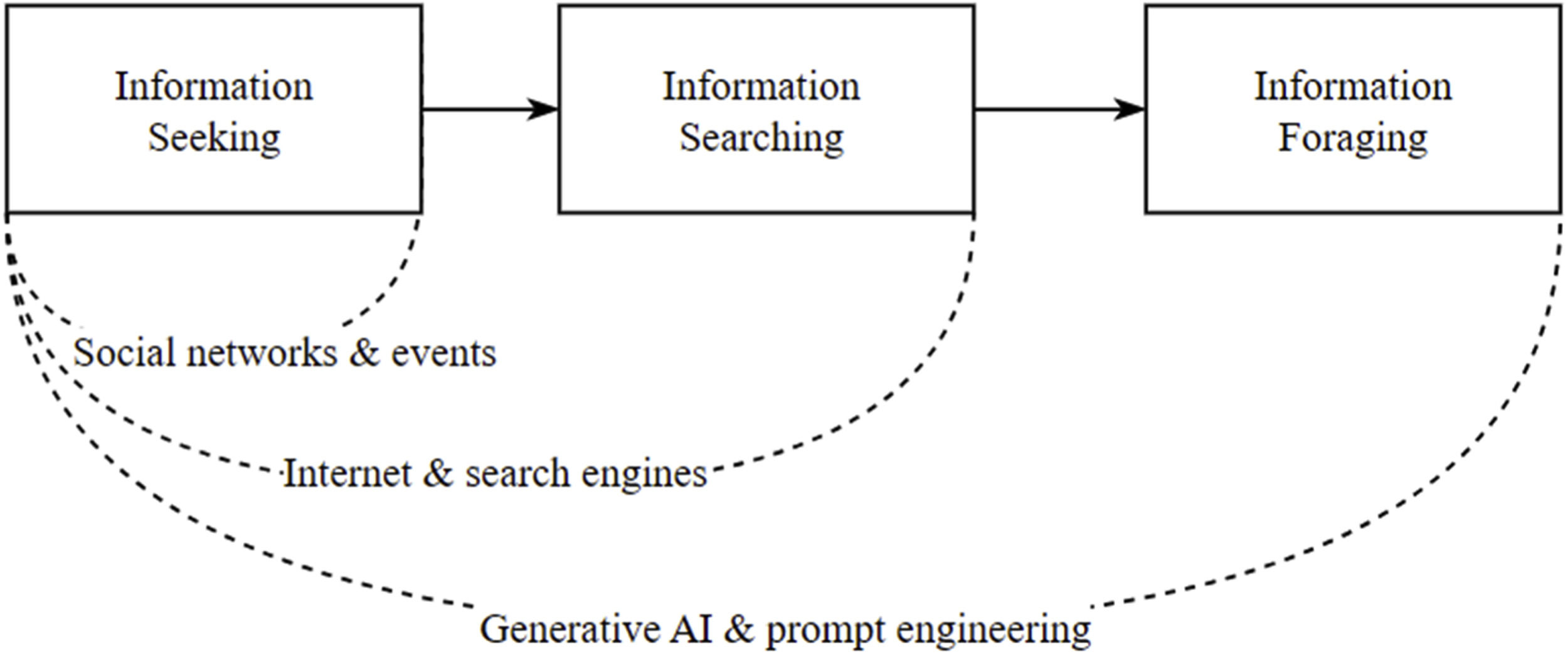
The concept of information-gathering behavior has evolved, with various information sources and media available to entrepreneurs seeking market insights. We classify these information sources and media into three categories: traditional entrepreneurial social networks, online platforms, and emerging AI tools. As detailed in Table 1, conventional social networks encompass entrepreneurs' personal connections and professional consulting services, such as small business administrators and local chambers of commerce. While these networks promote valuable in-person interactions and provide rich entrepreneurial experience, expertise, and potential business opportunities, their effectiveness often depends on availability and robustness, favoring more vibrant metropolitan areas. Novice entrepreneurs may find them less accessible owing to their limited experience and network access.
Entrepreneurial information sources, characteristics, and quality.
| Information sources & medium | Characteristics | Efficiency of information provided | Effectiveness of information provided | Relevant studies |
|---|---|---|---|---|
| Traditional social networks (e.g., family and friends, small business administration, chambers of commerce, business consultants) | Advantages in providing context-rich information and entrepreneurial expertise and experience (information depth) | Low to medium:Depending on the availability of the source (e.g., the existence and closeness of the relationship) and the capability of the network (e.g., the expertise and experience of the information provider) | Low to high:Information accuracy and relevancy depend on the information provider's willingness to share, coupled with their expertise and experience | E.g., Aldrich and Zimmer (1986); Greve and Salaff (2003); Kuhn et al. (2016); Ozgen and Baron (2007); Ruiz-Palomino and Martínez-Cañas (2021) |
| Internet and search engines(e.g., business news sites, industrial websites, online forums, SBA websites, social media platforms, and podcasts) | Advantages in providing tremendous information from highly specialized to general topics(information breadth) | Medium to high:Depending on the availability of the source (e.g., related websites and topics) and the performance of searching technologies (e.g., search engine, forum features, functionalities) | Low to high:Information accuracy and relevancy depend on the credibility of the source, the user's domain knowledge, and Internet searching skills | E.g., Batjargal (2007); Reuber and Fischer (2011); Shoham et al. (2006); Tan and Li (2022); Yu, Roy, Quazi, Nguyen, and Han (2017) |
| GenAI(e.g., general GenAI & custom GenAI applications) | Advantages in providing information for customized demands, interactive learning mechanism, and support for decision-making(information focus) | High:Given that the responses are instantaneous and the training database is large, the user's domain knowledge and prompting skills are important | Medium to high:Information accuracy and relevancy depend on the performance of various GPTs' trained data and algorithms as well as the user's domain knowledge and prompting skills | E.g., Davidsson and Sufyan (2023); Goel and Nelson (2025); Liu and Wang (2024); Rezazadeh et al. (2025); Short and Short (2023), Wang, Attal, Rafiq, & Hubner-Benz, 2022 |
Online platforms and forums constitute the second category of information sources, and are particularly beneficial for those without robust personal networks. The Internet offers extensive information on many business aspects, outperforming traditional channels in terms of speed, accessibility, and scope. However, concerns regarding misinformation persist across platforms. Entrepreneurs lacking domain knowledge and digital literacy may find it challenging to extract valuable information from the Internet.
GenAI, the latest entrepreneurial information source, provides tailored interactions for specific needs. In contrast to passive information consumption from personal networks or online sources, GenAI enables active querying through near-instantaneous responses. Comparing the two scenarios, one involves quick responses from GenAI, facilitating further inquiries or moving on, whereas the other entails waiting for feedback from venture experts or entrepreneurial forum participants, which might be slow or unreliable. GenAI can reduce information asymmetry costs and accelerate entrepreneurial ventures; however, it requires technical acumen in prompt engineering to obtain accurate and relevant insights.
Next, we outline the critical roles of prompt engineering in the entrepreneurial information-gathering process (Fig. 1) following an input-process-output model. At the input stage or the "questioning" section, prompt engineering can contextualize queries through techniques such as persona patterns (White et al., 2023). Question refinement and cognitive verifier patterns can further refine initial questions, verify their logic, and instruct GenAI to formulate additional relevant questions. Instead of conducting a single random query, users and GenAI can collaborate to define a set of critical questions on a topic of interest. Following the questioning section, GenAI can facilitate various tasks, including executing analyses, supporting individuals' analyses and decision-making, and verifying analysis results. In the final phase of response generation, individuals can utilize prompt patterns such as template patterns to instruct GenAI to generate personalized content. Thus, a structured approach based on different prompt patterns can enhance the utility of GenAI in supporting entrepreneurial information gathering and bridging the gaps between queries and actionable insights.

Together, GenAI and prompt engineering enable entrepreneurs to access and leverage vast data repositories of LLMs. These technologies improve information processing through interactive conversations and foster education and inspiration as entrepreneurs actively engage with them. This requires entrepreneurs to gather background information to formulate effective questions and critically evaluate the GenAI responses. Incorporating the Socratic learning method (e.g., Ang et al., 2023) into conversational patterns can further stimulate learning interest and deepen the understanding of entrepreneurial topics.
In addition to explaining how GenAI affects information-gathering behaviors, our study delineates its distinct roles across the entrepreneurial lifecycle: exploration, development, and exploitation (Cantner et al., 2021). In the exploration phase, entrepreneurs scan the environment to identify business opportunities and assess their viability with GenAI aiding in brainstorming and feasibility testing through information searches and simulations. The development phase focuses on refining initial ideas into viable business models and facilitating business processes across primary functions (Brynjolfsson et al., 2018). Here, GenAI can support entrepreneurial information processing and decision-making, offering insights for business formulation, such as marketing strategies, financial resource acquisition and allocation, business formation, and organizational structuring. Although GenAI still plays a key role in the development phase, there is increasing demand for entrepreneurs' domain knowledge and intuition. As ventures mature into exploitation, the demand for contextual information and common sense from GenAI diminishes, shifting toward supporting strategic decision-making and entrepreneurial knowledge construction, such as business growth. Despite the cognitive limitations of LLMs, GenAI remains valuable for self-reflection and learning. This can encourage the discovery of new insights and motivate entrepreneurs to surpass bounded rationality and GenAI. Entrepreneurs can use Socratic methods to develop custom GPTs for their emerging entrepreneurial tasks. As AI technology evolves and entrepreneurs become more adept (e.g., training, instructing, learning from GenAI, and iterative refinement), GenAI's effectiveness is set to advance significantly.
Simulating entrepreneurial inquiry with LLMs and prompt engineering patternsTo evaluate our framework and the effectiveness of GenAI in supporting entrepreneurial decision-making, we used multiple LLMs and prompt engineering techniques to simulate entrepreneurial information behavior. Simulation is an efficient method for modeling real-world scenarios, particularly under conditions of uncertainty and complexity (Davis et al., 2007; Harrison et al., 2007). Our simulation focused on a hypothetical case: launching and operating a nontraditional seafood restaurant in New Orleans. This context allowed us to explore diverse entrepreneurial challenges and questions. LLMs were treated as agent-like participants, not only simulating entrepreneurs seeking information, but also playing roles such as visitors, local chefs, business consultants, and professionals (see Table 2). The inquiry tasks were grounded in entrepreneurship literature and practical entrepreneurial needs. We assessed the GenAI-generated outputs using qualitative content analysis by applying rating criteria such as content richness, personalization, and relevance (Appendix A, Table 1). The findings offer insights into the potential of GenAI to support entrepreneurial inquiry and decision-making across various contexts.
Entrepreneurial inquiry through GPT and prompt engineering.
* Most contextual prompts on entrepreneurial exploration, development, and exploitation are based on or inspired by Hisrich et al. (2017). The audience can examine the results by evaluating the textual statements provided with various GenAI tools or by referring to the supplementary documents for further details.
Following Hisrich et al. (2017), our simulated entrepreneurial inquiries spanned four themes: entrepreneurial exploration, development, exploitation, contingency, and risk management. Entrepreneurial exploration, theme recognized for its high potential, includes trend analysis (e.g., business opportunities), problem analysis (e.g., problem inventory analysis), and creative problem-solving (e.g., brainstorming, reverse storming, and idea formulation using the Gordon Method). Persona patterns can enrich this process by offering varied perspectives, similar to those of sophisticated entrepreneurs and business specialists, to inspire initial business concepts (cf. Short & Short's entrepreneurial rhetoric, 2023). Likewise, flipped conversations and Socratic patterns can stimulate individuals to actively engage with GenAI for deeper inquiry and to refine entrepreneurial objectives and ideas.
Addressing business planning and venture funding is crucial during the development phase. Entrepreneurs, especially those lacking a business background, can benefit from using prompt patterns such as persona, question refinement, flipped interaction, and cognitive verifier patterns to contextualize their inquiries. For example, combining persona and flipped interaction patterns allows for dialogue with LLM-enabled professionals such as CPAs or attorneys, aiding in selecting suitable business structures while considering taxation, ownership, control, and legal liabilities. Additionally, GenAI can play a significant role in evaluating business plans and strategies at this stage, thus providing a reliable tool for entrepreneurs.
During exploitation, GenAI's impact appears to be relatively constrained, as entrepreneurs face more strategic decision-making related to business growth and long-term goals. Again, while GenAI may not offer deep, specific business recommendations, flipped conversation patterns, or Socratic dialogue, it can foster self-reflection and a deeper understanding of entrepreneurial ventures.
Finally, we address contingency planning questions, which, although not traditionally included in the typical life cycle of entrepreneurship, are critical to the survival of startups and entrepreneurship in its preliminary stages (cf., Shore et al., 2024). This theme explores the role of GenAI in incident response, disaster recovery, and business continuity planning, offering valuable support for navigating unforeseen challenges and ensuring venture sustainability. Given that most entrepreneurs lack experience in these areas, GenAI can serve as a virtual risk management consultant by offering ideas and recommendations for emergency preparedness. This approach enables entrepreneurs to effectively leverage GenAI to craft comprehensive risk-management strategies tailored to their needs and circumstances.
Consequently, different LLMs offer unique features and strengths in various aspects of interaction and content generation (see Appendix A). Gemini and Llama provided detailed explanations for content verification while prioritizing personalized interactions. ChatGPT stands out for its scenario creation and analysis capabilities, which effectively leverage persona patterns and the Socratic learning method. Understanding these distinctions can help entrepreneurs choose the most suitable LLM according to their needs and preferences. Additionally, the multi-LLM test results shed light on the diminishing effect of GenAI across various phases of the entrepreneurial life cycle, as depicted in Fig. 2. The advantages of GenAI in databases and algorithms play a crucial role in the entrepreneurial exploration and development phases, where data retrieval and information processing are paramount. However, as entrepreneurs progress to the exploitation phase, which requires knowledge-oriented strategic analysis and decision-making, GenAI's output tends to be simplistic, ambiguous, and monotonous. This highlights the need for significant progress in the technological improvement of GenAI to address the complexity of entrepreneurial exploitation. Thus, GenAI cannot replace entrepreneurs' information-gathering actions and must instead be used collaboratively (Raisch & Krakowski, 2021). Nevertheless, we expect the diminishing utility trend to be reversed with breakthrough advances in AI technologies and enhancements in entrepreneurs' domain knowledge and expertise in leveraging AI.
Discussion
This study examined how entrepreneurial information behaviors, specifically information seeking, searching, and foraging activities, might affect the entrepreneurial life cycle via the continued development of GenAI technologies. Our conceptual model, which was created by integrating the entrepreneurship and information behavior literature, demonstrates how GenAI can assist in the entrepreneurial exploration phase. However, the complexity of entrepreneurial exploitation necessitates significant technological advancements in GenAI. We believe that our work has important theoretical and practical implications and highlights avenues for future research.
Theoretical implicationsAI can revolutionize entrepreneurship and relevant business practices. Unlike conventional information channels, such as social networks and online platforms, AI extends beyond basic information retrieval to significantly enhance decision-making and knowledge creation for entrepreneurs. In acknowledging the Janus face of AI, it is imperative to deepen our understanding, engage with it thoughtfully, and use it both wisely and ethically. This study presents an early exploration of GenAI as a significant socio-technical phenomenon by examining its properties and transformative effects on entrepreneurial information-gathering behaviors across various stages of the entrepreneurial lifecycle. We chart the progression of entrepreneurial information-gathering behaviors, evolving from conventional personal networks to Internet technologies, to the most recent GenAI applications. By reclarifying information seeking, searching, and foraging activities in entrepreneurship, we develop a comprehensive theoretical framework to explain how GenAI influences entrepreneurial exploration, development, and exploitation. Furthermore, we propose GenAI as an emerging factor that can address many enduring entrepreneurial challenges, such as resource constraints, environmental uncertainties, information asymmetry, and bounded rationality, thus providing directions for examining and extending existing entrepreneurial theories by incorporating the effects of GenAI, such as the resource-based view (Barney, 1991), knowledge-based view (Grant, 1996; Wiklund & Shepherd, 2003), and opportunity identification theory (Ardichvili et al., 2003).
Practical implicationsThe results of this study have several practical implications. First, they offer practical guidelines for entrepreneurs to effectively leverage GenAI in their activities, including designing, prototyping, and validating business ideas, models, and processes across different entrepreneurial phases. GenAI provides many examples of prompt engineering patterns and techniques for gathering and processing information, to address specific entrepreneurial questions and cover common areas such as idea generation, business planning, marketing and branding, and contingency planning. Testing various LLMs and discussing their applicability offers suggestions for entrepreneurs to choose the most suitable tools while warning of their limitations.
This study also highlights the opportunities and challenges associated with integrating GenAI into entrepreneurial practice. On the one hand, GenAI can significantly enhance entrepreneurs' ability to access information and streamline decision-making processes across various stages of venture development. Its utility in tasks such as business planning, market research, and content creation offers time and cost efficiency, particularly for resource-constrained startups. On the other hand, however, entrepreneurs must be aware of GenAI's limitations. Issues, such as hallucinations, bias, lack of algorithmic transparency, and domain-specific accuracy, can lead to flawed insights and suboptimal decisions (Ferreira et al., 2025; Ji et al., 2023). Meanwhile, overreliance on AI-generated outputs also poses a risk to the development of entrepreneurs' creative and critical capacities, traits that are essential for innovation and adaptability. As GenAI becomes more embedded in entrepreneurial workflows, maintaining a balance between automation and human judgment becomes necessary. However, ethical concerns have complicated the practical use of GenAI. Entrepreneurs must also navigate challenges related to content ownership, authenticity of AI-assisted branding, and potential labor displacement resulting from automation (Fui-Hoon Nah et al., 2023). These challenges are not merely technical but carry broader implications for socially responsible entrepreneurship. To support effective adoption, we recommend that GenAI developers enhance tools by improving content quality, model transparency, and responsiveness. Moreover, partnerships between developers, educators, and entrepreneurship support organizations can foster training programs that promote not only technical proficiency in prompt engineering but also the ethical and reflective use of GenAI in real-world situations.
Finally, while this study aims to address a wide range of entrepreneurial questions across different entrepreneurial phases using various LLMs and prompting techniques, it is also essential to recognize that entrepreneurs have distinct needs depending on their type and status. Nascent entrepreneurs, still in the learning phase, can benefit the most from GenAI's strengths in information gathering and idea validation. Through interactive dialogues, they can refine business concepts and simulate early-stage models. Small-scale or established business owners often need support with marketing content, branding, and operational documents, and GenAI efficiently generates practical outputs. GenAI tools serve as powerful engines for content creation and refinement across social and lifestyle entrepreneurs, such as influencers, activists, and creators. Meanwhile, high-growth and scalable entrepreneurs use GenAI not only for content or marketing research but also as decision-support systems to manage complexity, reduce cognitive load, and accelerate strategic planning. Increasingly, these tools also support internal knowledge sharing and onboarding, as evidenced by the growing use of customized small language models within scaling firms for specific domain tasks (Whiting, 2025).
Limitations and future researchAlthough this study presents a novel theoretical framework for AI-driven entrepreneurial information behavior, it has not yet been empirically validated. Hence, future research should test the interesting constructs emerging from this study, such as information sources and media, collaboration models between entrepreneurs and LLMs, and the efficiency and effectiveness of these interactions, which can be investigated through qualitative interviews, surveys, or experiments. Similarly, variables such as the entrepreneurs' domain knowledge and AI literacy, including prompt engineering skills, may play important moderating roles and deserve further exploration. Given our integration of the entrepreneurial lifecycle and information behaviors, longitudinal studies would offer valuable insights into how entrepreneur-AI collaboration evolves over time. Such research could also shed light on potential challenges, including hallucinations, data bias, privacy concerns, and overreliance on GenAI.
Specifically, this research offers several avenues for the future exploration of AI-driven entrepreneurial landscapes. First, there should be more studies on entrepreneur-AI interactions regarding the efficiency of information foraging and knowledge construction in different scenarios, such as cross-LLM collaboration and interpersonal collaboration in leveraging GenAI to accomplish entrepreneurial tasks. Additionally, it is crucial to focus on the key factors that enhance GenAI use, including entrepreneurs' digital literacy, domain knowledge, creativity, and critical thinking skills. The unbounded rationality of individuals and GenAI can be another research avenue, necessitating an in-depth investigation of optimal human-AI collaboration. Moreover, future research should examine the emotions and perceptions of entrepreneurs that influence their adoption and utilization.
In considering future research directions within entrepreneurship, the application of GenAI has emerged as a transformative force across various domains, including social entrepreneurship, intrapreneurship, and emerging markets. GenAI is a powerful tool for social entrepreneurs to identify and address complex social issues. Andreassen et al. (2018) suggest the potential of AI to craft innovative business models for social impact. In the context of intrapreneurship, which focuses on fostering innovation within existing organizations, GenAI can catalyze creativity and process optimization. Nambisan (2017) highlight the role of digital technologies, including AI, in empowering intrapreneurs with tools for advanced problem-solving and ideation.
Additionally, GenAI offers unique opportunities for entrepreneurs to address resource constraints and market information gaps in emerging markets. George et al. (2016) illustrate how technological innovation, including AI, can unlock entrepreneurial opportunities by facilitating market analysis and product customization to meet local demands. Therefore, exploring GenAI in these varied entrepreneurial contexts not only augments current entrepreneurial ventures but also opens up new pathways for research, innovation, and growth in diverse entrepreneurial settings.
Another area for future research is utilizing the knowledge-based view (KBV; Grant, 1996) to explain how GenAI might assist entrepreneurial firms in combining tacit and explicit knowledge through prompt engineering patterns. Entrepreneurial firms often depend on their absorptive capacity to create a competitive advantage, whereby they rapidly adapt to changing environments by acquiring and absorbing new knowledge (Zahra & George, 2002). Considering our theoretical model of the effect of GenAI on different phases of entrepreneurship, how might KBV help explain the shift from potential to realized absorptive capacity, where realized absorptive capacity focuses on the transformation and exploitation of new knowledge? How can KBV be leveraged to explain how prompt engineering can be improved to assist in knowledge construction during the entrepreneurial exploitation phase? Finally, knowledge investments are valuable because they facilitate the recognition of tacit knowledge and help firms develop their learning capabilities (Belitski et al., 2021). How can our analysis of prompt engineering in various entrepreneurial activities (see Table 2 for sections on idea generation, business planning, growth strategies, and contingency planning) be studied further through the lens of the KBV, where the development and application of prompt engineering patterns are viewed as a new way of acquiring tacit knowledge? Similar to previous works on different types of knowledge and their use for developing absorptive capacity, prompt engineering patterns within GenAI present a new area of study.
ConclusionWith the rise of GenAI and its associated applications, AI is changing the information-seeking, searching, and foraging processes of individuals. Our study is an initial attempt to examine the effect of GenAI on the gathering of entrepreneurial information at various stages. Through a comprehensive theoretical analysis and forefront insights into this emerging technology, we reveal new avenues for entrepreneurial research and practice.
Compliance with ethical standardsFundingThe authors received no financial support for this article's research, authorship, or publication.
Ethical approvalEthical approval was not required for this secondary research study.
Data availabilityThe datasets generated during and/or analyzed during the current study are available from the corresponding author upon reasonable request.
CRediT authorship contribution statementYaojie Li: Writing – original draft, Visualization, Validation, Supervision, Software, Resources, Project administration, Methodology, Investigation, Formal analysis, Data curation, Conceptualization. John Kirk Ring: Writing – review & editing, Validation, Investigation, Funding acquisition, Conceptualization. Dan Jin: Writing – review & editing, Methodology, Investigation, Formal analysis, Conceptualization. Saleh Bajaba: Writing – review & editing, Visualization, Validation, Resources, Investigation, Funding acquisition.
The authors declared that they have no conflict of interest.
The transparency of the data and algorithms behind the LLMs is a concern regarding the accuracy and relevance of their generated responses. For nontechnical users, such as most entrepreneurs, scrutinizing the working processes of LLMs is challenging. However, there are at least two methods for validating LLM-generated results. The first method relies on entrepreneurs' critical thinking to assess the facts and content produced by GenAI, with embedded features that can provide source references for verification. Additionally, other information sources, such as traditional social networks and online platforms, can serve as supplementary validation tools. Another method involves validating the responses across different LLM applications, given their different training data and algorithms. In this study, we initially used ChatGPT-4o to explore entrepreneurial problems, followed by verification using Anthropic Claude 3.7, Google Gemini 2.5, Meta Llama 4, and xAI Grok 3, the most recent versions. As summarized in Appendix A of Table 1, the multi-LLM analysis results are evaluated based on three criteria: 1) LLM-generated content, including content breadth, depth, uniqueness, and resourcefulness; 2) user engagement, including inspiration, personalization, comprehension, and interpretation; and 3) other application functionalities, including responsiveness and adaptive scenario analysis functions. These evaluation results reflect the authors' average assessment of each LLM's performance in addressing the set of common entrepreneurial questions presented in Table 2.
Whereas most LLMs can provide rich and detailed information to address common entrepreneurial questions, ChatGPT-4o, Llama 4, and Grok 3 stand out for their content conciseness and coherence. Gemini and lama appear to be superior in terms of content depth and uniqueness. For example, for the problem inventory analysis, both generated up-to-date resources and demonstrated "strong familiarity" with New Orleans' traditional seafood culture, customer demographics, and local business landscape. Both show unique datasets and algorithms by referencing specific terms and concepts, considering that most tested LLMs provide more generic information. Resourcefulness varies significantly among LLMs, as highlighted by their unique tools and references, such as ChatGPT's coding illustration while solving complex analysis problems, and Gemini's smooth integration with other Google applications, such as Google Sheets and Docs. These LLMs differ in their user-engagement capabilities. Gemini and Llama inspired further inquiries through proactive suggestions and detailed follow-up advice, which are particularly beneficial for entrepreneurs new to business domains. For instance, Gemini often automatically enriches its responses with motivational guidance, providing suggestions like "what you should do next" and strategies for "how to achieve that." Most LLMs can accurately understand and/or predict user queries regardless of minor grammatical and logic issues. Furthermore, Claude, Gemini, and Grok provided deeper explanations to enhance content verification, offering insights into the rationale behind their generated content. Additionally, certain LLMs, such as Gemini and Llama, prioritize personalized interactions and adopt proactive and user-friendly tones. ChatGPT excels in scenario creation and analysis among these LLMs, particularly in effectively applying persona patterns and Socratic learning methods.
Comparison of multiple LLMs in generating entrepreneurial responses.
