
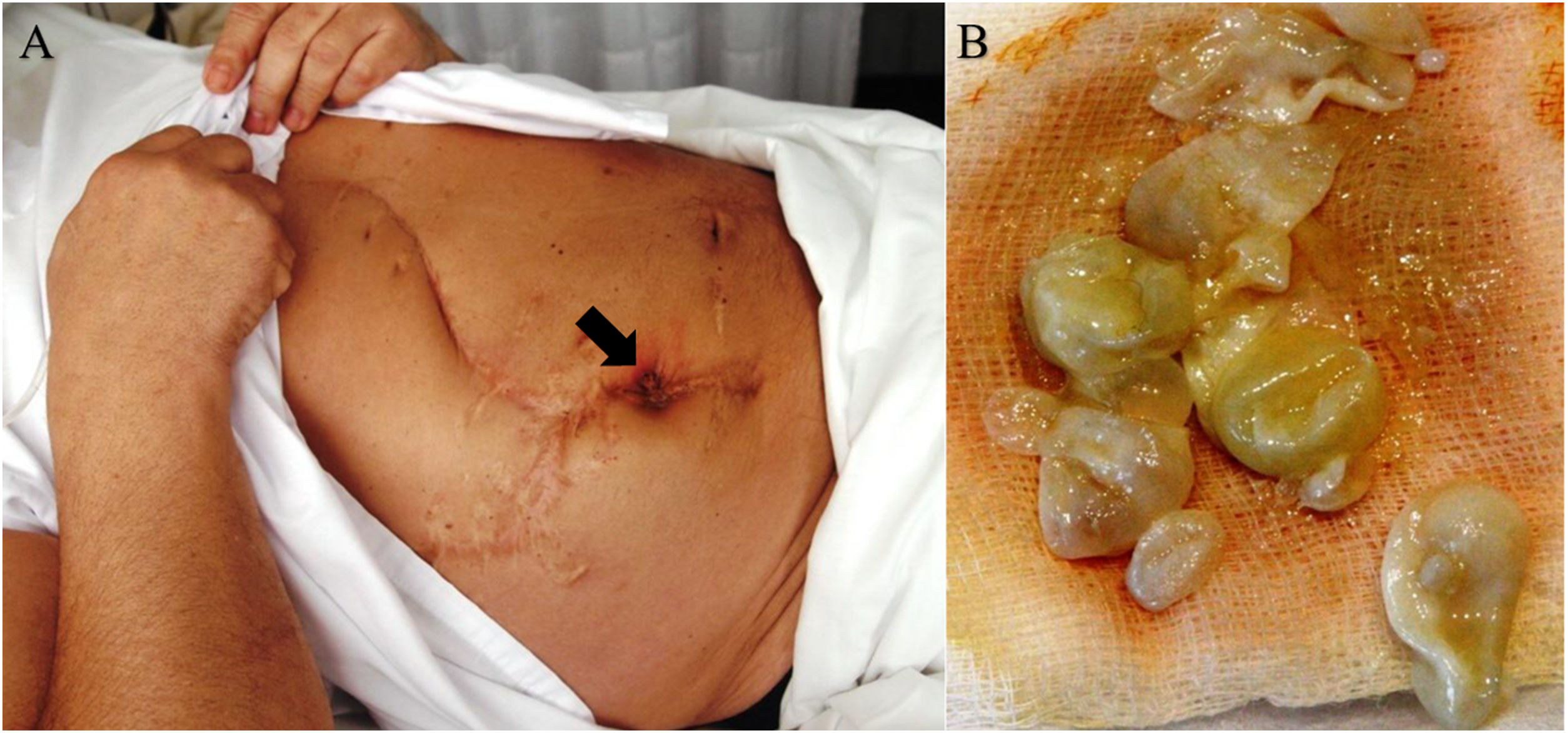

A 63-year-old man with a history of cystectomies due to hepatic hydatidosis presented to the emergency department with a 5-day history of abdominal pain, fever, and reddish swelling on the abdominal wall. On physical examination, there was tenderness in the right upper quadrant, an abdominal wall fistula (Fig. 1A, arrow) draining grape-like bodies (Fig. 1B). Laboratory testing revealed: C-reactive protein 24.8mg/dl (normal value, <1), total leucocyte count of 18.6×10E9/L (normal value, 4.8–10.8) with 75% neutrophils, total eosinophil count 0.52×10E9/L (normal value, <0.4), total bilirubin 0.71mg/dl (normal value, <1.2), gamma-glutamyl transpeptidase 152IU/L (normal value, <0.38), alkaline phosphatase 85IU/L (normal value, 28–86). Computed tomography of the abdomen revealed multiple cystic formations in the segment V of the liver. A fistulous communication between the abdominal wall and the hydatid vesiculation was observed (Fig. 2, arrow). The serology was positive for Echinococcus. The patient was treated with oral albendazole (400mg bid) three months before surgery. This patient did well after the right hepatectomy and was discharged on postoperative day 5. Histopathology confirmed the clinical diagnosis. No problem occurred over the 3-month follow-up.


None declared.
Conflicts of interestJosé Luis del Pozo has been a consultant for Pfizer, MSD, Gilead, and Novartis. Other authors: No reported conflicts.