

Mantle cell lymphoma (MCL) is a type of B-cell non-Hodgkin's lymphoma that is characterized by atypical small lymphoid cells within the mantle zone that surrounds normal germinal center follicles.1 Represents 2.5% of lymphoid neoplasms in United States and 7–9% of lymphoid neoplasms in Europe.2 MCL is usually diagnosed in adults with a median age of 68 years with male predominance.3 The gastrointestinal tract is the most frequent secondary extranodal location, and colon is the most involved site.1 Multiple lymphomatous polyposis is one of the most common primary gastrointestinal presentations of MCL.1
Intussusception caused by malignant lymphoma is unusual, accounting for less than 10% of all cases of colonic intussusception.3 Colonic involvement of gastrointestinal lymphomas is observed in 9–27%, although MCL represents only 1.2% of these lesions.4 We present the case of a patient with a diagnosis of MCL relapse manifested as left colo-colonic intussusception.
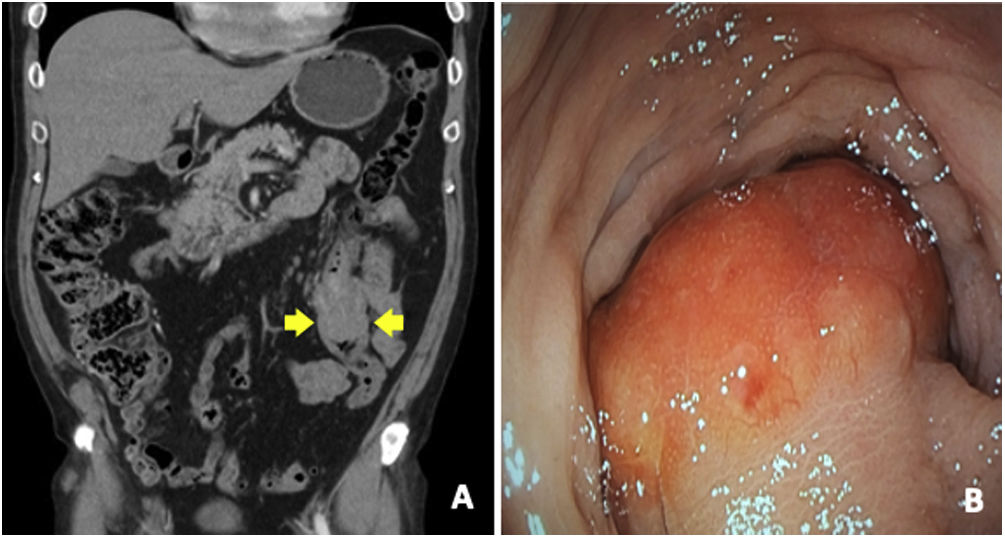
A 65-year-old man with a diagnosis of MCL 8 years ago treated with chemotherapy and autologous transplantation of hematopoietic precursors with good response and without evidence of recurrence in the later control (4 months before) presented with intermittent abdominal pain in the left lower quadrant without fever, weight loss, or diarrhea. On physical exam there were no significant findings. The blood count an biochemical study were within normal limits. Abdominal computed tomography (CT) identified a colo-colonic intussusception in descending colon associated with an endoluminal lesion that showed homogeneous enhancement (Fig. 1A). A colonoscopy was performed and identified a 50mm pedunculated lesion in the descending colon (Fig. 1B). Biopsies of this lesion showed a lymphoproliferative infiltration (chromatin positive lymphocytes and positive immunostaining for CD20 and cyclin) in the lamina propria compatible to MCL. A multidisciplinary evaluation was carried out and treatment with oral ibrutinib 560mg qd was started with initial good response. After 6 months of follow up, ibrutinib was finished and a new allogeneic transplantation of hematopoietic precursors was performed with good response after 3 months of follow-up.

The main proportion of patients with MCL relapse after combined therapy (chemotherapy and hematopoietic stem cell transplantation) have a median survival of 3–5 years.2 In the present case, MCL relapse was manifested as a single polypoid lesion of the descending colon causing colonic non-obstructive intermittent intussusception. Intussusception in adults is infrequent and represent less than 1% of bowel obstruction.3 In the colon, 60% of intussusception cases are related to malignancy.2 After reviewing the literature related to clinical manifestations of MCL, no case of left colonic intussusception was described as MCL presentation and few cases presenting ileocecal or right colo-colonic intussusception were described.5
In conclusion, we present a case of left colo-colonic intussusception associated with MCL relapse. This presentation has not been previously reported. This case reinforces the importance of differential diagnosis of MCL recurrence in adult patients with history of MCL and left colon obstruction.
Authors’ contributionMathius Soruco García, Mariano Higa and Domingo Balderramo wrote the manuscript. All authors approved the submitted version.
DisclosuresNone of the authors have any potential conflicts (financial, professional, or personal) to disclosure.
FundingThe present manuscript was performed without any financial support or grant.