





To predict the emotional responses and coping strategies of Moroccan professional nurses and nursing students during COVID-19 pandemic.
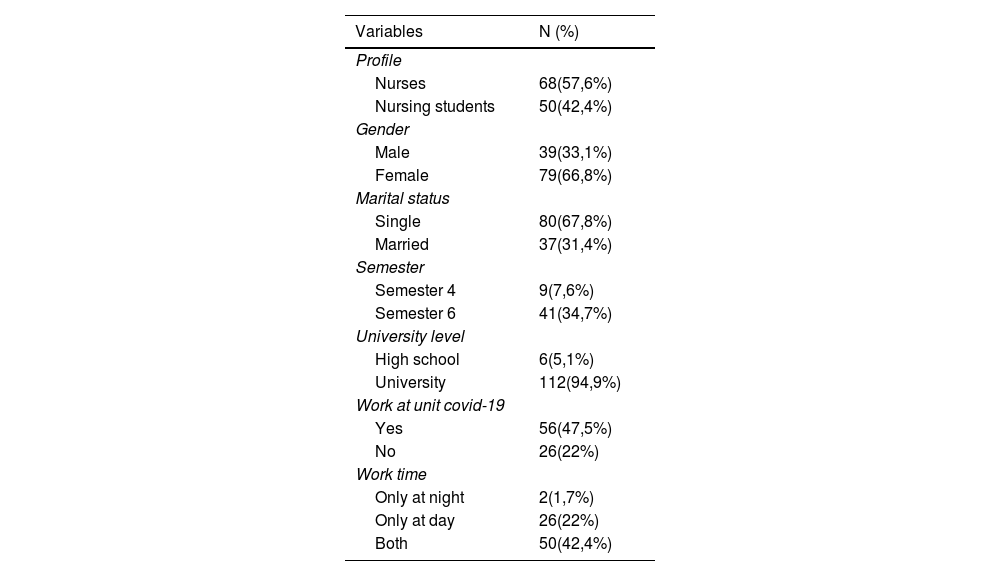
MethodsFrom April 2021 to June 2021, a quantitative comparative study was conducted with 68 professional nurses and 50 nursing students. Participants' responses were based on a self-administered questionnaire that included sociodemographic variables, the Positive and Negative Affect Schedule Scale (PANAS), and the brief Coping Orientation to Problems Experienced Inventory (COPE).
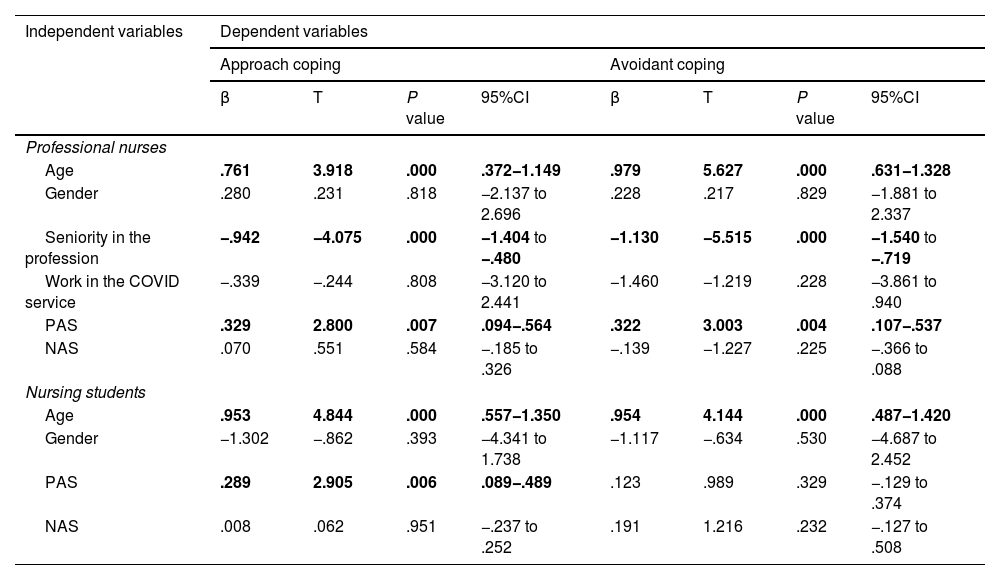
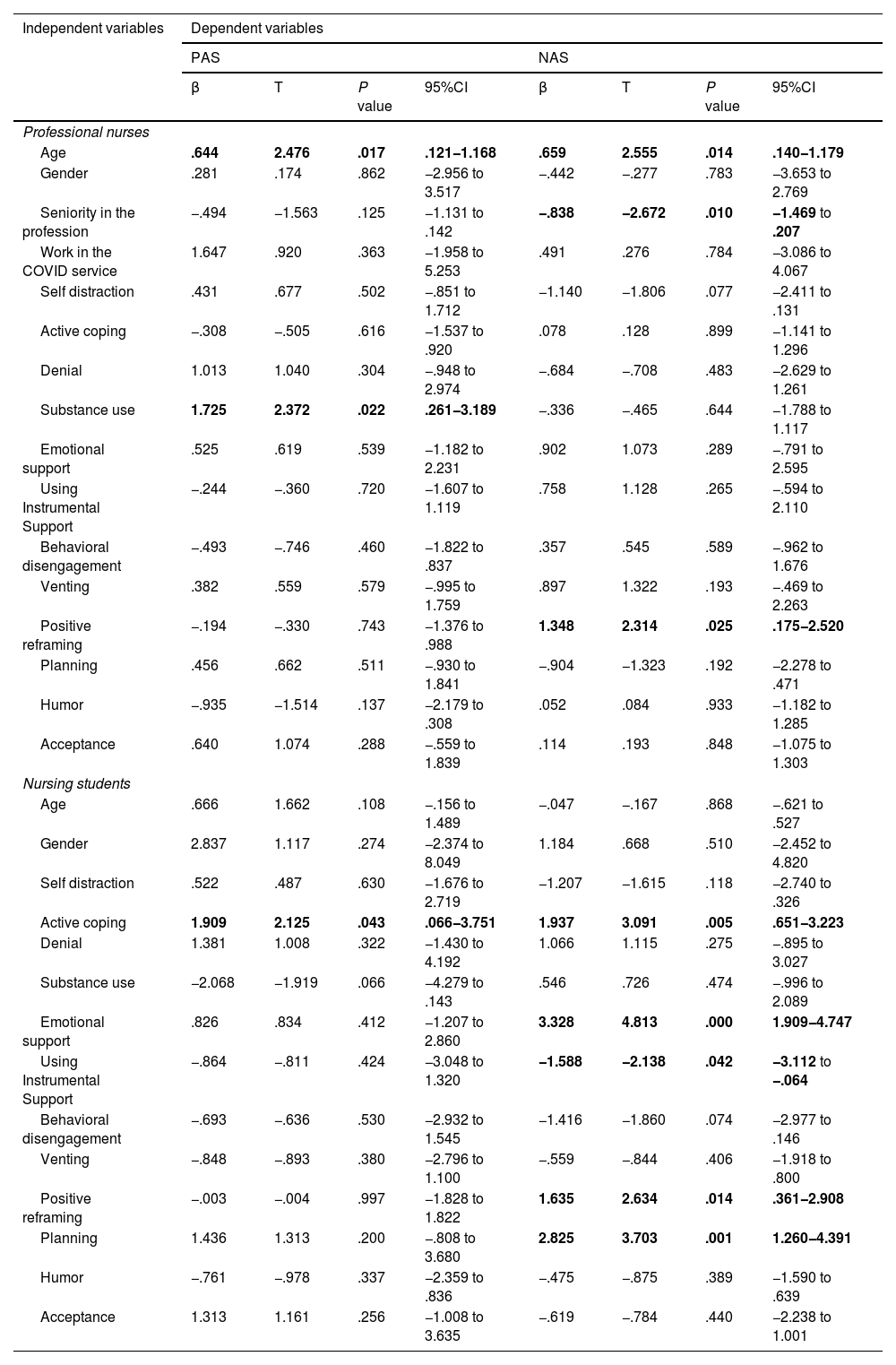
ResultsA total of 118 participants complete responses, with mean ages ranging from 19 to 58 (M = 27.59, SD ± 8.98), and majority were female (n = 79, 66.9%). In terms of avoidance coping, male professional nurses reported significantly higher mean score (27.73, SD ± 3.69) than female nurses (25.71, SD ± 3.98) (t = −2.085, P = .041). The result of multiple regression showed that for professional nurses, approach and avoidance coping are associated with age (β = .76, P < .001; β = .98, P < .001; respectively), seniority in the profession (β = −.94, P < .001; β = −1.13, P < .001; respectively), and positive affect scores (β = .33, P < .01; β = .32, P < .01; respectively). Conversely, nursing students revealed a different profile, with age significantly associated with approach coping (β = .95, P < .001) and avoidance coping (β = .95, P < .001). Notably, in contrast to avoidance coping, approach coping increased significantly with a positive affect score (β = .29, P < .01).
ConclusionThe use of various coping strategies by nurses in challenging situations highlights the crucial need for training in effective coping techniques for managing emotional reactions, as they have a considerable impact on mental well-being and the quality of nursing care.
Para predecir las respuestas emocionales y estrategias de afrontamiento de enfermeras profesionales y estudiantes de enfermería marroquíes durante la pandemia de COVID-19.
MétodosDe abril de 2021 a junio de 2021, se llevó a cabo un estudio comparativo cuantitativo con 68 enfermeras profesionales y 50 estudiantes de enfermería. Las respuestas de los participantes se basaron en un cuestionario autoadministrado que incluía variables sociodemográficas, la Escala de Afecto Positivo y Negativo (PANAS) y el Inventario Breve de Orientación para Afrontar Problemas Experimentados (COPE).
ResultadosUn total de 118 participantes completaron las respuestas, con edades medias que oscilan entre 19 y 58 años (M = 27.59, DE ± 8.98), y la mayoría eran mujeres (n = 79, 66.9%). En cuanto al afrontamiento evitativo, los enfermeros profesionales masculinos presentaron una puntuación media significativamente superior (27,73, DE ± 3,69) que las enfermeras (25,71, DE ± 3,98) (t = −2,085, P = ,041). El resultado de la regresión múltiple mostró que, para las enfermeras profesionales, el afrontamiento por aproximación y evitación se asociaron con la edad (β = .76, P < .001; β = .98, P < .001; respectivamente), la antigüedad en la profesión (β = −.94, P < .001; β = −1.13, P < .001; respectivamente), y las puntuaciones de afecto positivo (β = .33, P < .01; β = .32, P < .01; respectivamente). Por el contrario, los estudiantes de enfermería revelaron un perfil diferente, con la edad significativamente asociada al afrontamiento por aproximación (β = .95, P < .001) y al afrontamiento por evitación (β = .95, P < .001). Es notable que, en contraste con el afrontamiento por evitación, el afrontamiento por aproximación aumentó significativamente con una puntuación de afecto positivo (β = .29, P < .01).
ConclusionesEl uso de diversas estrategias de afrontamiento por parte de las enfermeras en situaciones desafiantes destaca la necesidad crucial de capacitación en técnicas de afrontamiento efectivas para manejar las reacciones emocionales, ya que tienen un impacto considerable en el bienestar mental y la calidad de la atención de enfermería.

