





To describe the role of Executive Nurse Leaders (ENLs) in the response to the COVID-19 pandemic in Spain.
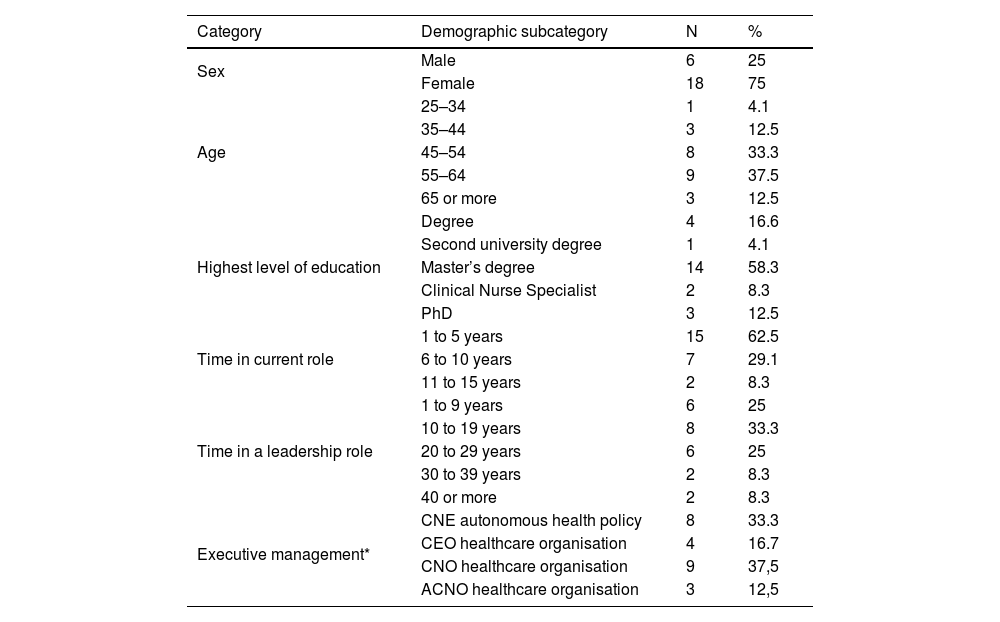
MethodA qualitative descriptive study with an ethnographic approach and direct qualitative content analysis was designed. Twenty-five semi-structured interviews were conducted with ENLs who held senior management positions in one of the two management areas: autonomous health policy and healthcare organisation. The study includes the following executive roles: Chief Nurse Executive in autonomous government policy, Chief Executive Officer, Chief Nurse Officer, and Assistant Chief Nurse Officer in healthcare organisations. The sample includes most autonomous communities in Spain.
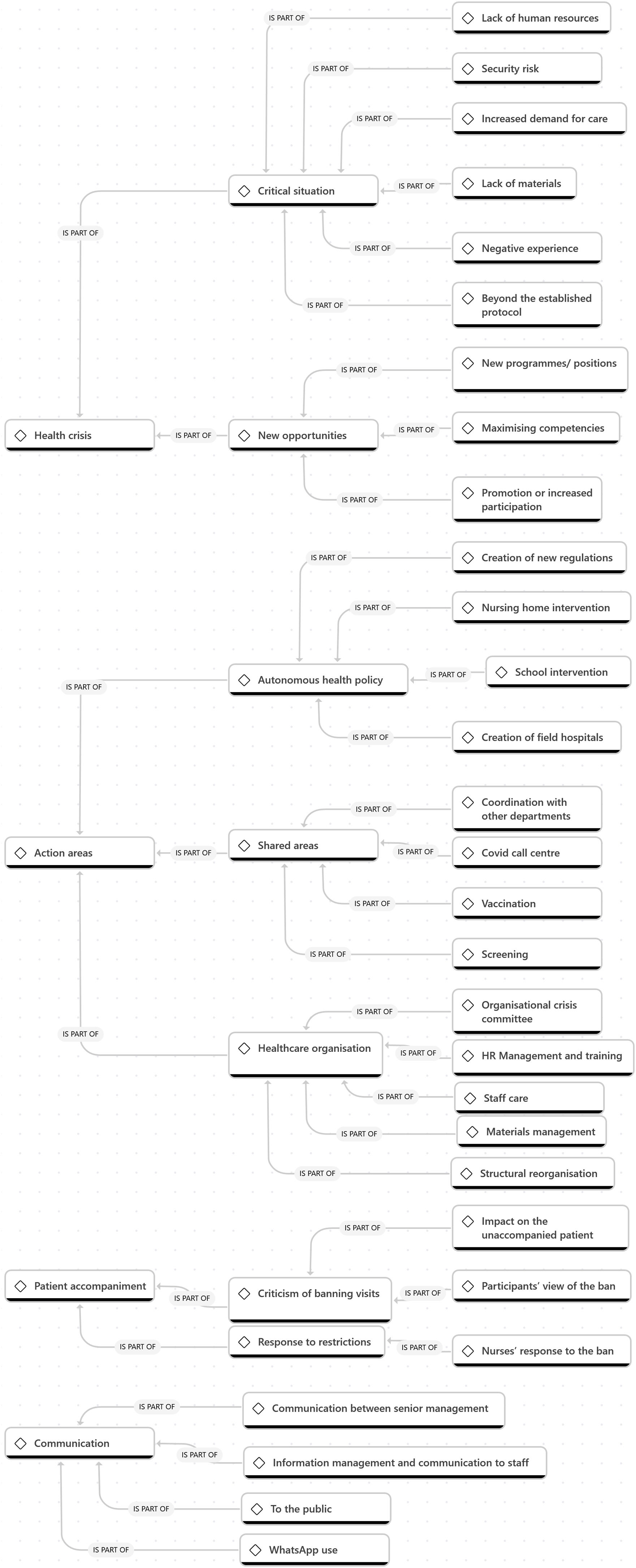
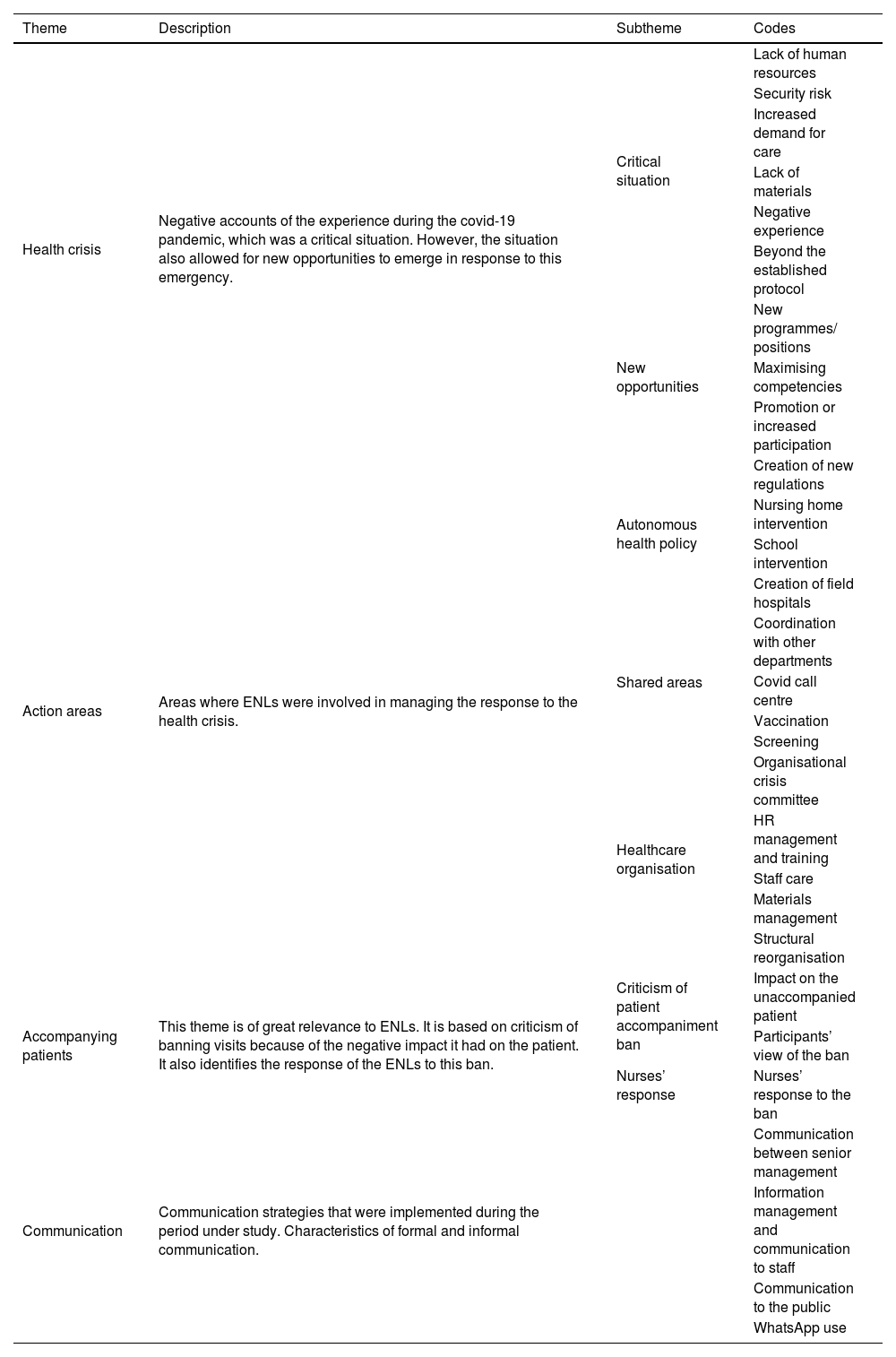
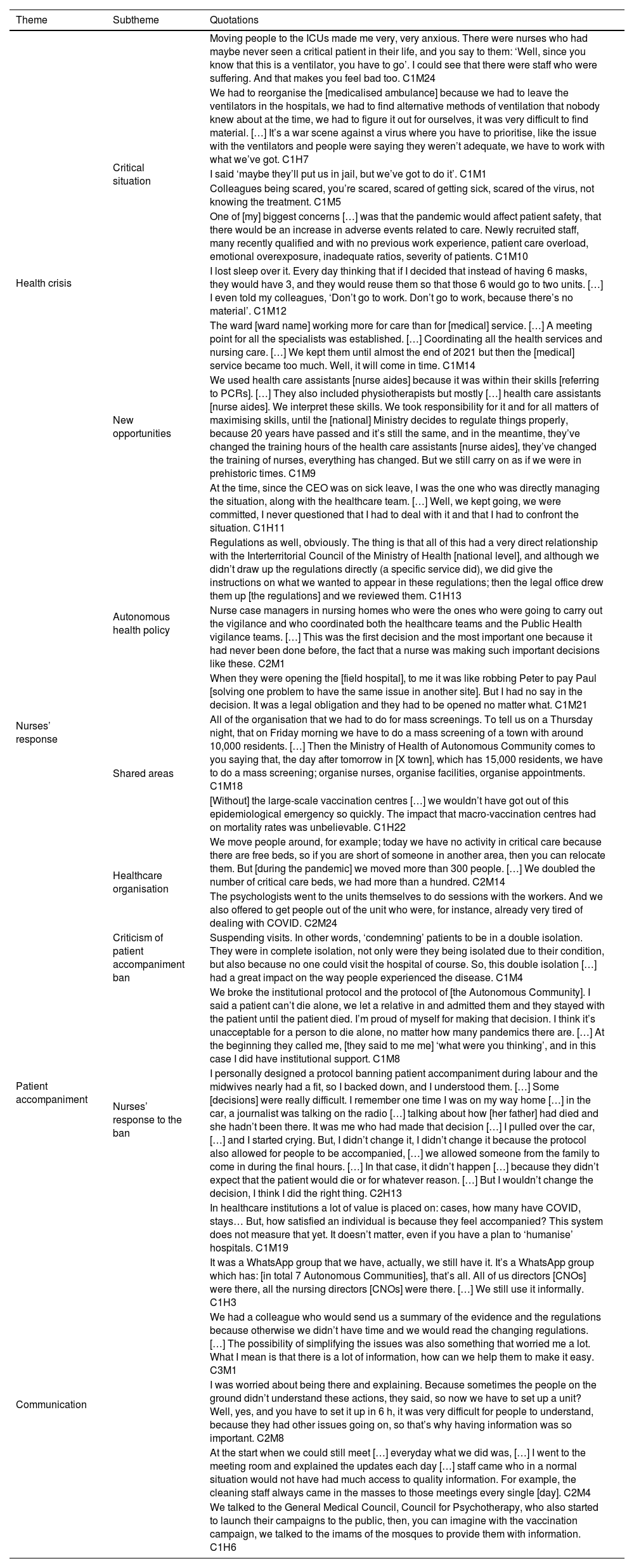
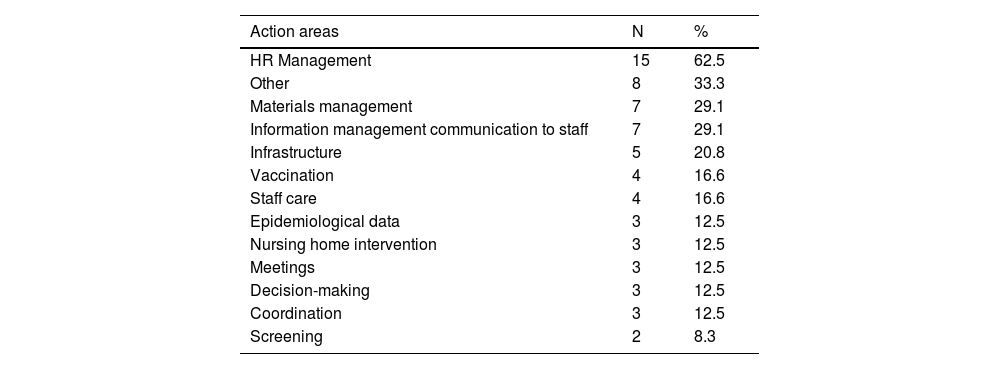
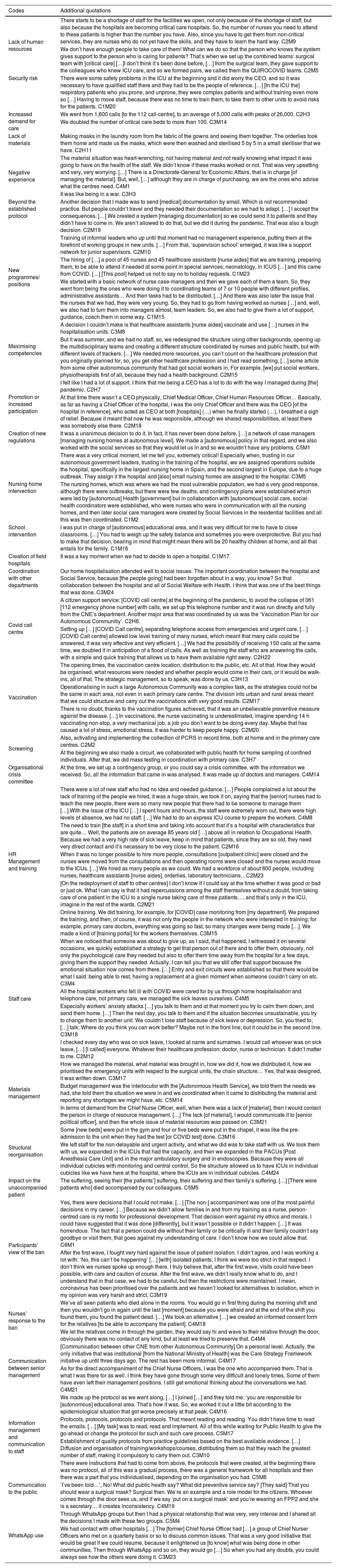
ResultsFour themes and seven subthemes were identified. Theme 1. Health crisis: Negative outlook on the situation despite the new opportunities made possible by the pandemic. Theme 2. Action areas: The ENLs were involved in areas of management: autonomous policy, healthcare organisation and shared areas. Theme 3. Accompanying patients: Widespread criticism of visitation bans and the nurses’ response to the restrictions. Theme 4. Communication: Characteristics’ communication description, information management and communication strategies towards staff or the public.
ConclusionsThe results demonstrate the vital role that ENLs played in managing the response to the pandemic. In the context studied, the interviewees’ scope and degree of participation differed in each autonomous community. Understanding the role of ENLs helps respond to major healthcare challenges, raises their leadership visibility and facilitates social and institutional recognition. Advocating for the involvement of ENLs at the executive levels studied will help to improve the country’s preparedness for future health crises.
Describir el rol de los/as Directivos/as de Enfermería de Nivel Ejecutivo (DENE) en la respuesta a la pandemia de COVID-19 en España.
MétodoEstudio descriptivo cualitativo con enfoque etnográfico y análisis directo de contenido cualitativo. Se realizaron veinticinco entrevistas semiestructuradas a DENE que ocuparon un alto cargo en una de las áreas de gestión establecidas: política autonómica sanitaria u organización sanitaria. Se incluyen: Cargo directivo de enfermería en el gobierno autonómico, Dirección gerencia, Dirección y Subdirección de enfermería en instituciones sanitarias. La muestra incluye la mayoría de las comunidades autónomas españolas.
ResultadosSe identificaron cuatro temas y siete subtemas. Tema 1. Crisis sanitaria: Perspectiva negativa de la situación y en contraposición las nuevas oportunidades que posibilitó la pandemia. Tema 2. Ámbitos de actuación: Áreas de gestión donde participaron los/as DENE de ámbito político autonómico, ámbito organizativo asistencial y las áreas compartidas. Tema 3. Acompañamiento a los pacientes: crítica generalizada a la prohibición de visitas y la respuesta enfermera a la restricción. Tema 4. Comunicación: Características de la comunicación, gestión de la información y las estrategias comunicativas hacia el personal o la población.
ConclusionesLos resultados demuestran el papel crucial que los/as DENE desempeñaron en la gestión de la respuesta a la pandemia. En el contexto estudiado, el ámbito y grado de participación de los/as entrevistados/as difiere en función de la comunidad autónoma. Conocer el rol de los/as DENE ayuda a dar respuesta a los grandes retos asistenciales, visibiliza su liderazgo y posibilita su reconocimiento social e institucional. Fomentar la participación de los/as DENE en los niveles ejecutivos estudiados mejorará la preparación del país ante futuras crisis sanitarias.

