




To analyse benefits of tele-monitoring to promote adherence to a home-based physical activity for patients under hematopoietic stem cell transplantation.
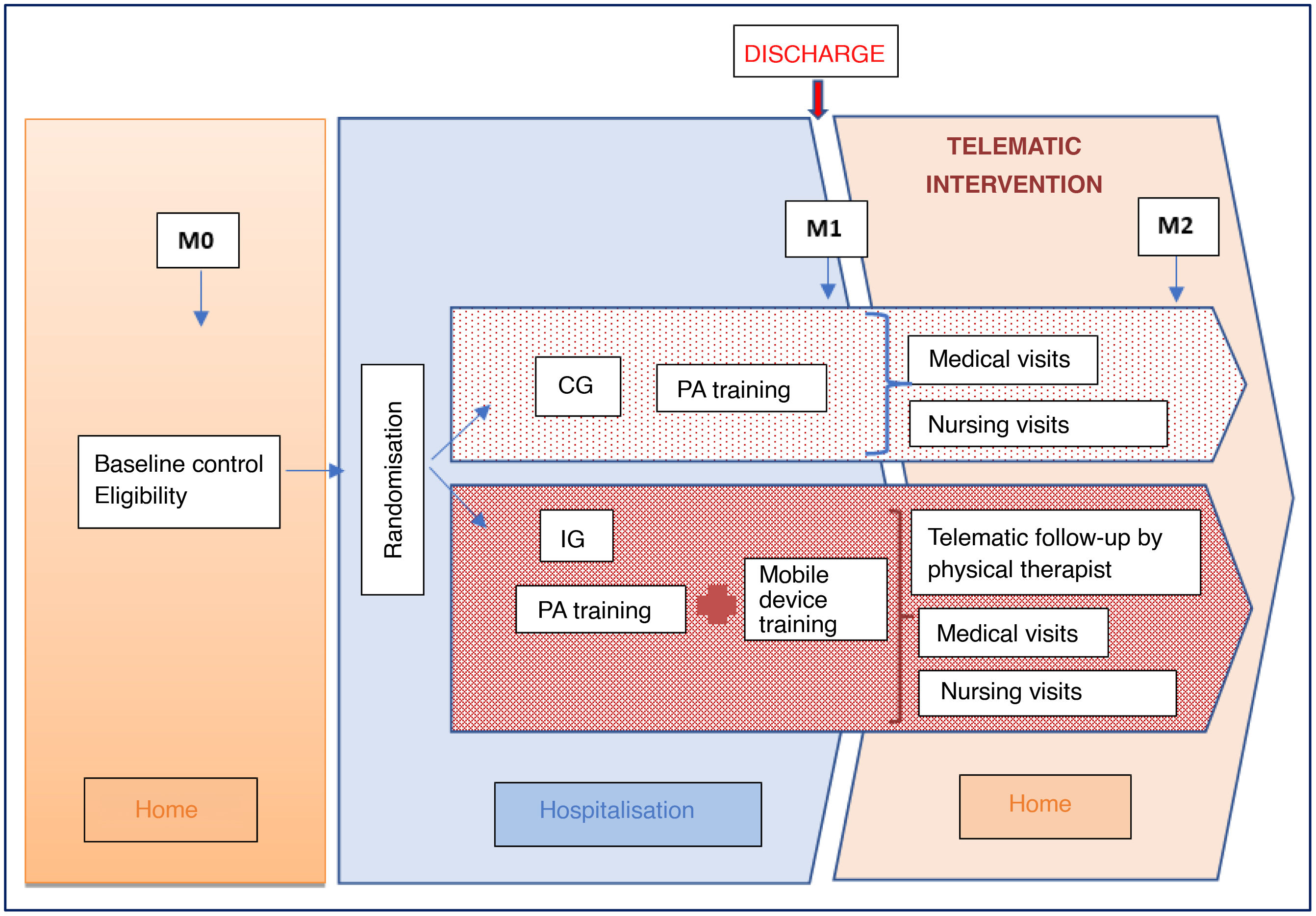
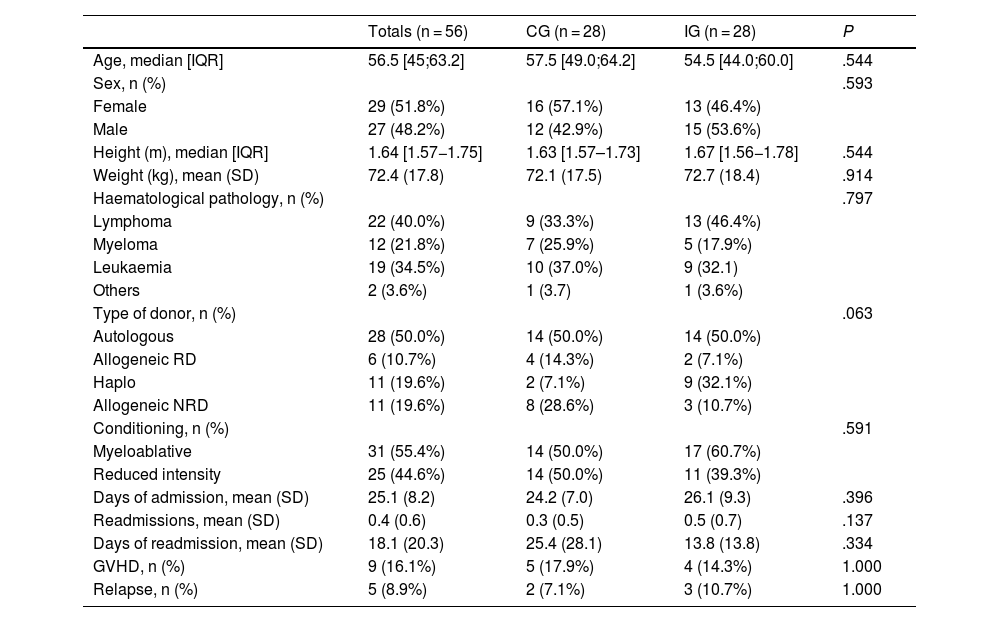
MethodsA randomized clinical trial controlled. Patients, in total 56 with 28 in control group (CG) and 28 intervention group (IG). Autologous and allogeneic transplant patients in ratio 1:1. Both groups received advice on physical activity recommendations to be performed at home, based on walking and squats. The intervention IG consisted in physical activity monitored with a pedometer and tele-monitoring by physiotherapist weekly, during 3 months. Variables as: Exercise tolerance, muscle strength, fatigue, dyspnoea, and quality of life were measured presently with validated scales, at hospital admission, discharge and, 3 months after discharge. P value was stablished ≤0.05. Comparative analysis was performed using R software v.4.1.
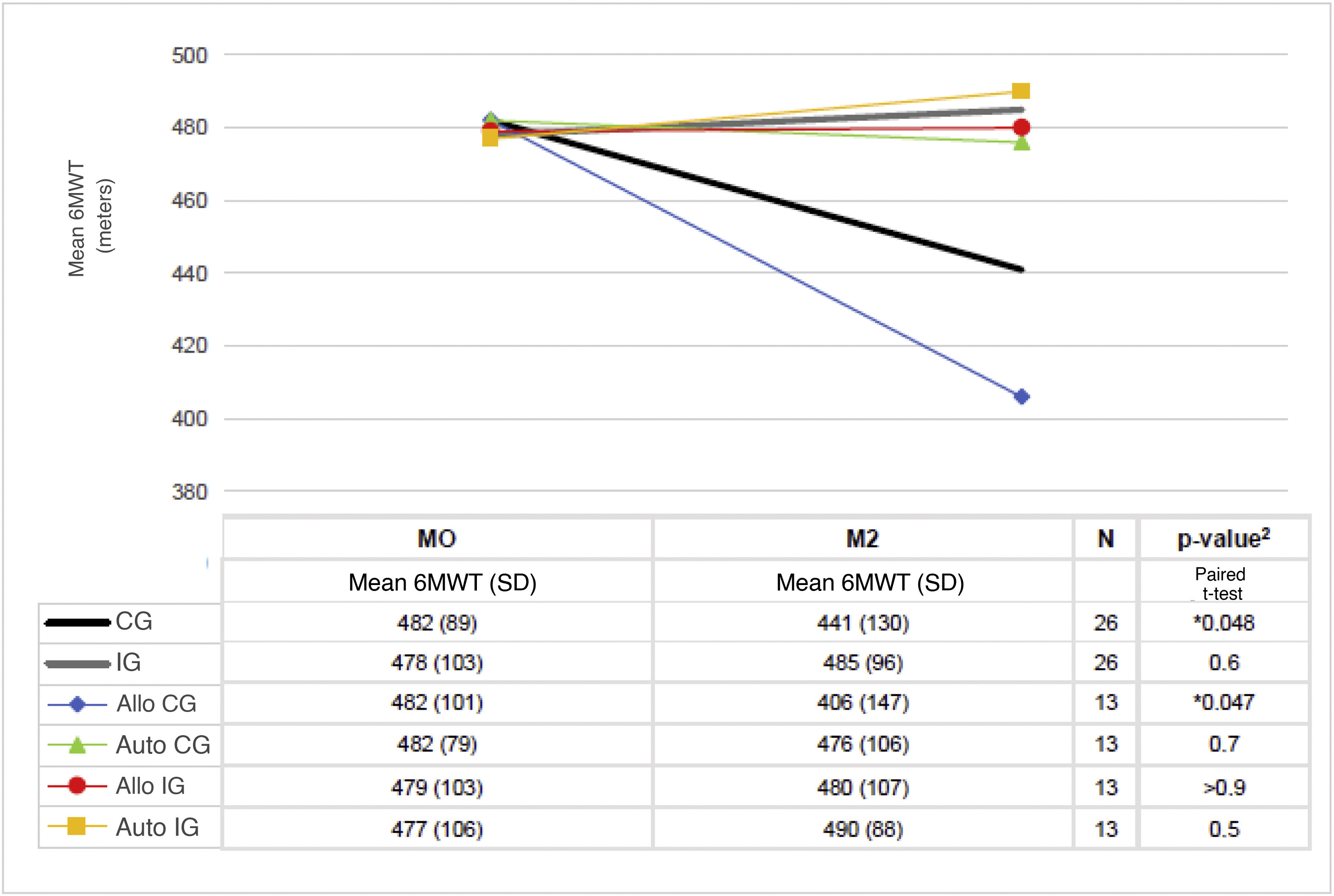
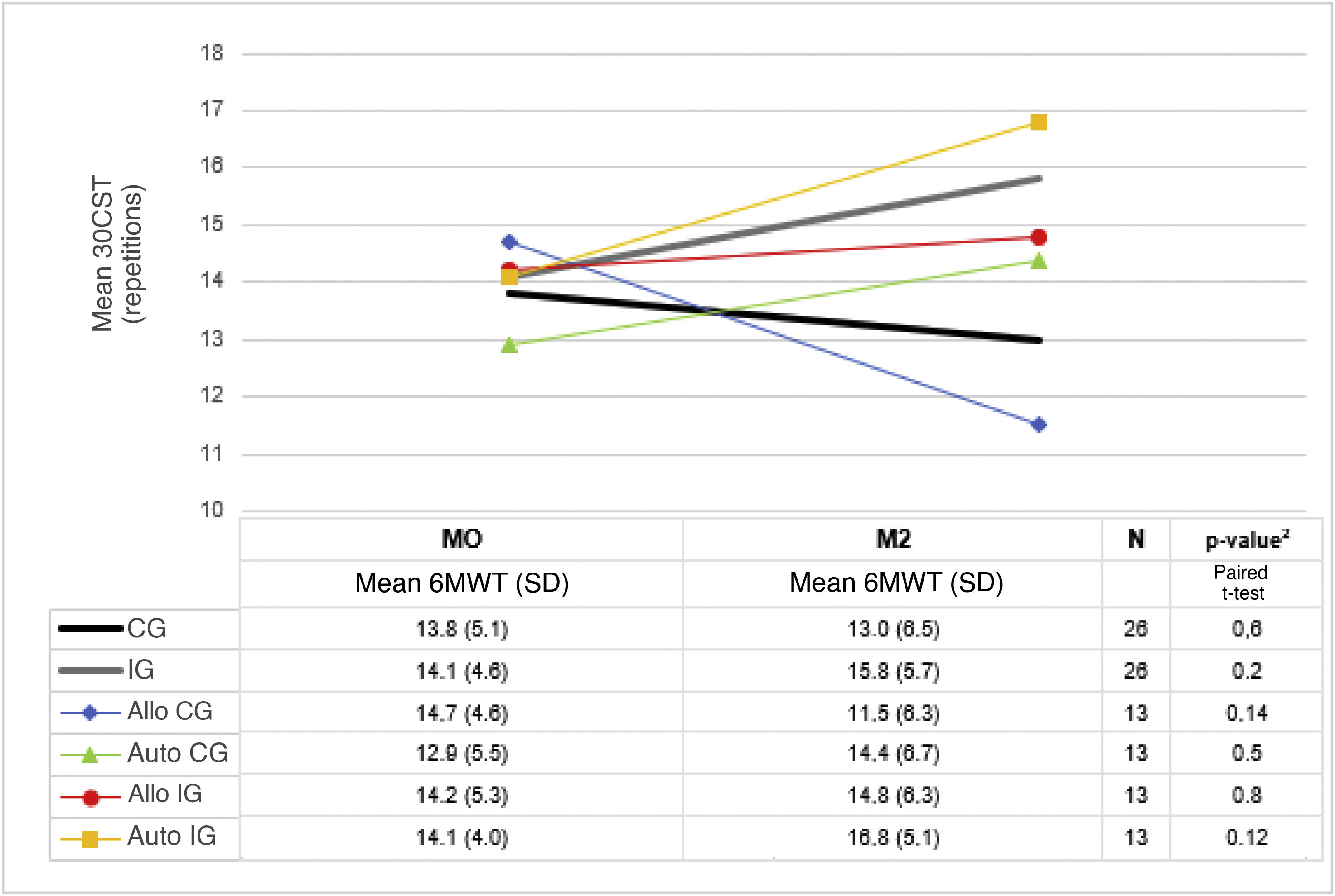
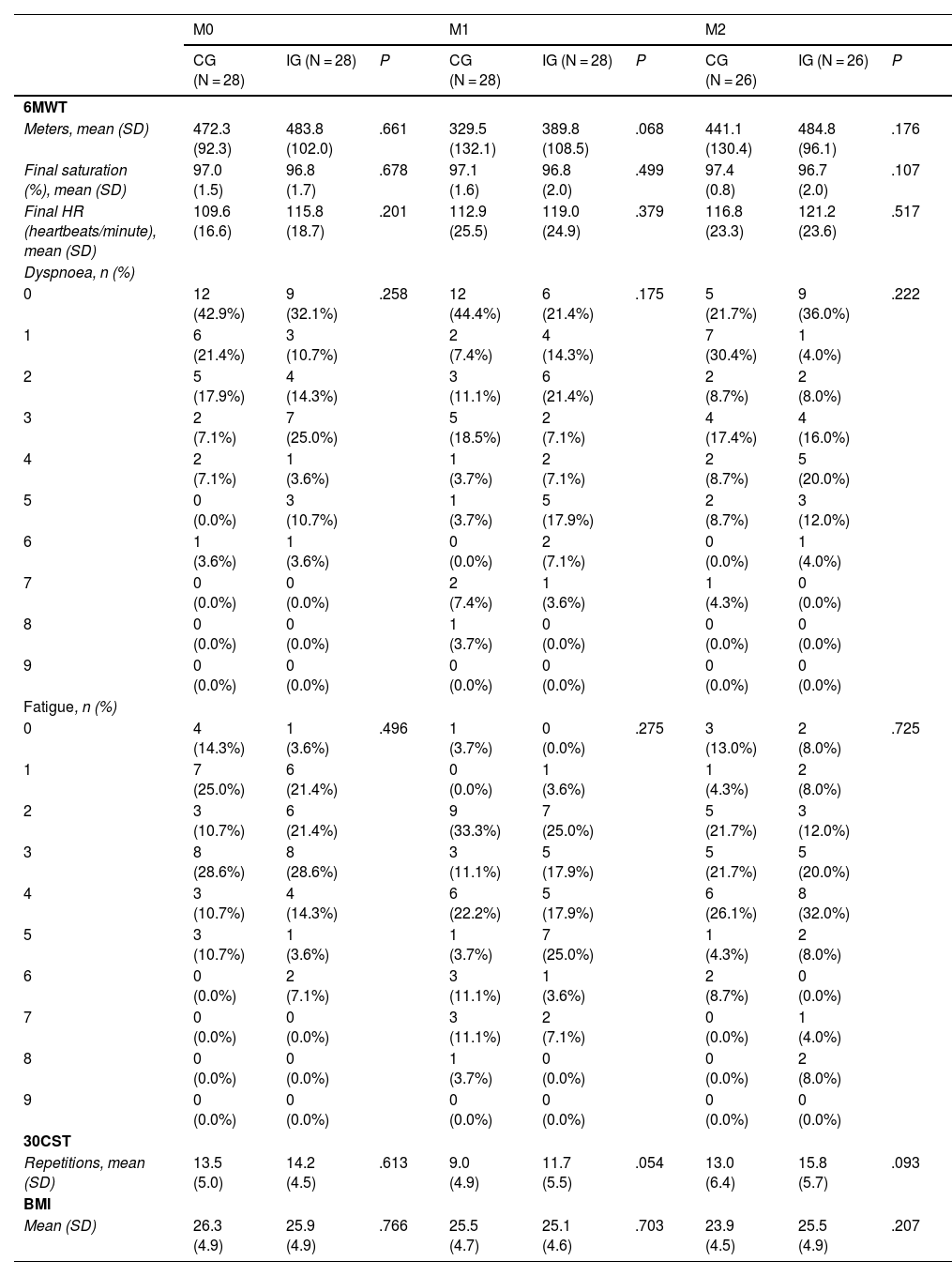
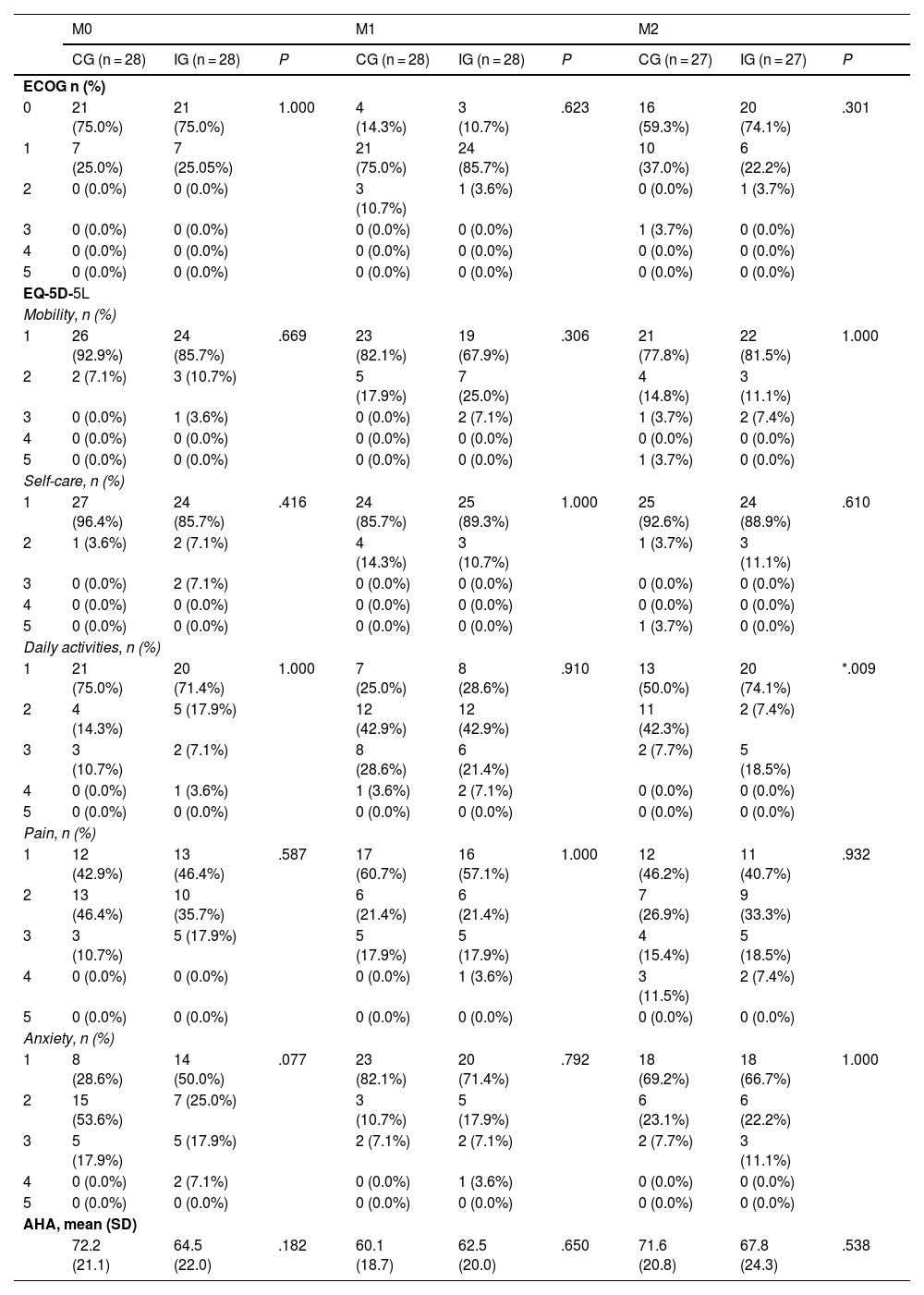
ResultsIn terms of quality of life (EQ-5D-5L), at 3 months after discharge, the IG showed better ability to perform daily activities than the CG (p: .009). In the 6-minute walk test, the GI recovered the meters they had made before admission, but the GC was 41 m below (p: .048). In the 30-second chair stand test: IG recovered baseline and performed 1.7 but CG performed 0.8 repetitions below baseline. These differences between groups were more pronounced in patients who underwent allogeneic transplant compared to patient under autologous transplant.
ConclusionThe results indicate that physical telematic support improves the functional capacity and adherence of patients undergoing transplantation to perform physical activity at home
Analizar los beneficios del seguimiento telemático para promover la adherencia del paciente con trasplante hematológico a un programa de actividad física domiciliario.
MétodosEnsayo clínico, controlado y aleatorizado. 56 pacientes fueron asignados aleatoriamente 28 al grupo control (GC) y 28 al grupo intervención (GI) manteniendo una relación 1:1 según trasplante autólogo o alogénico. Ambos grupos recibieron recomendaciones de actividad física en domicilio basadas en andar y sentadillas. La intervención del GI consistió en monitorización con un podómetro y refuerzo telemático por el fisioterapeuta semanalmente, durante 3 meses. La tolerancia al ejercicio, fuerza muscular, fatiga, disnea y calidad de vida, se midieron con escalas validadas, al ingreso, al alta y a los 3 meses del alta. El valor de la p se estableció en <0,05. El análisis comparativo se realizó con el software R v.4.1.
ResultadosEn calidad de Vida (EQ-5D-5L), a los 3 meses del alta, el GI presentó mejor capacidad de realizar las actividades cotidianas que el GC (p: 0,009). En la prueba de la marcha de 6 minutos, el GI recuperó los metros basales, mientras que el GC quedó 41 m por debajo (p: 0,048). En la prueba Levantarse de una silla en 30 segundos, GI recuperó valores basales y realizó 1,7 repeticiones más, mientras que GC realizó 0,8 repeticiones menos. Estas diferencias fueron más evidentes en alotrasplantados que en autotrasplantados.
ConclusiónLos resultados indican que el soporte telemático mejora la capacidad funcional y adherencia del paciente sometido a trasplante a realizar actividad física en su domicilio.

