



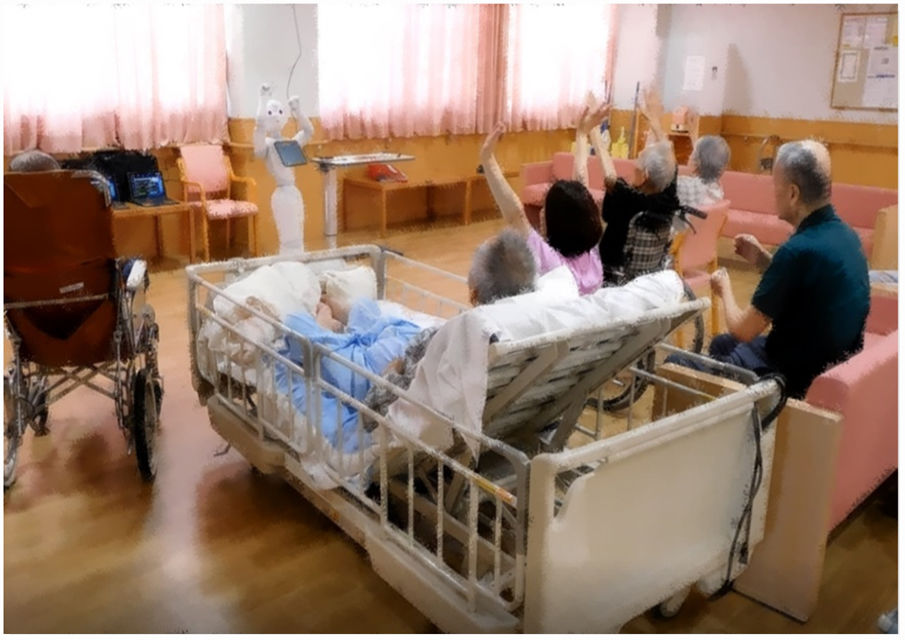
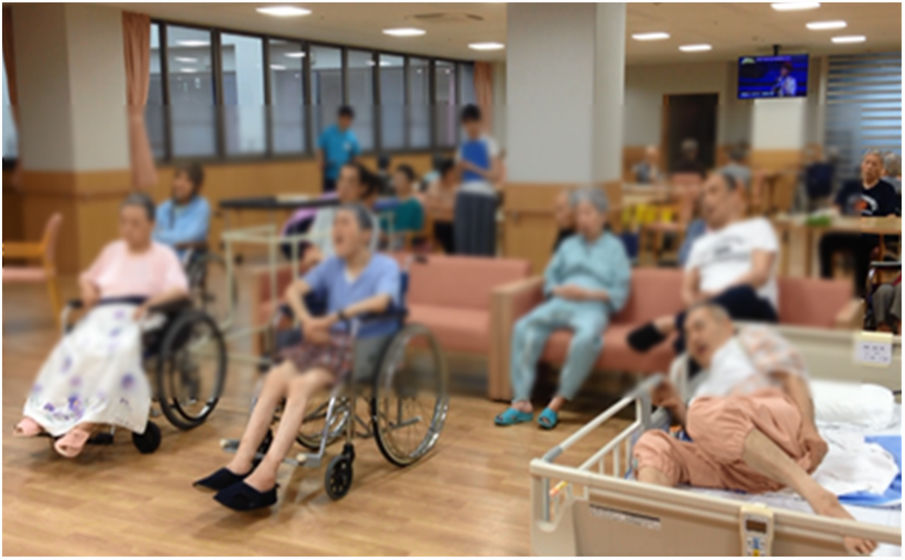
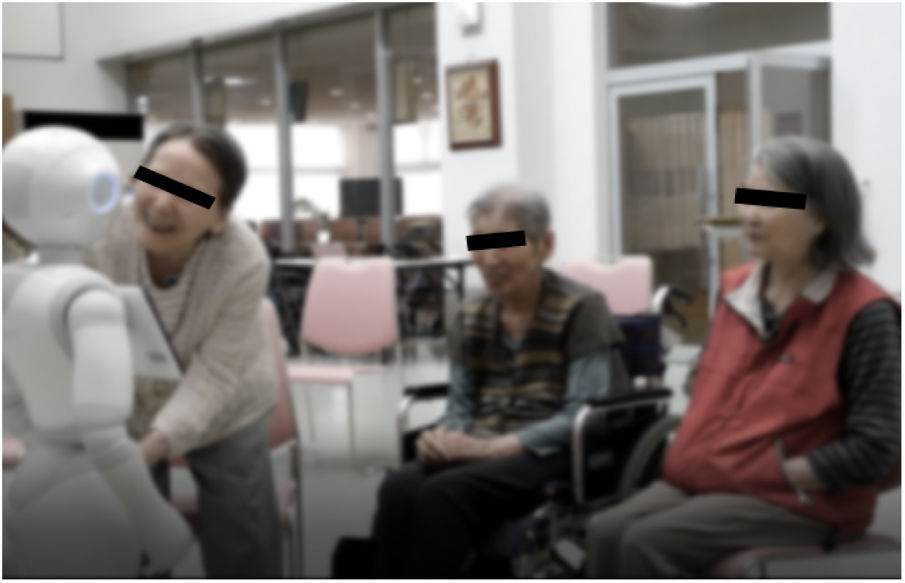
Humanoid robots are increasingly deployed in various health facilities to complement long-term care in Japan. Although this technology influx is still in its infancy, many health providers are optimistic about its capabilities. Thus, it is crucial to investigate its preliminary utilization and effects as precautionary measures in understanding the use of humanoid technology in healthcare. The study intends to describe the rehabilitation care experience for older patients with schizophrenia and/or dementia in the use of Pepper humanoid robot. A qualitative case study was conducted to explore the rehabilitation recreational activities of older patients with schizophrenia and/or dementia (n=9) in geriatric health facilities. After securing ethical clearance, observational data were recorded and analyzed using a case-oriented understanding and framework of reaction, interaction, and benefaction. Reaction focuses on their attitudes and impressions toward Pepper. During the rehabilitation and recreational sessions, interaction deals with the relationship between older patients with schizophrenia and/or dementia, Pepper, and providers. Lastly, benefaction reflects the actual health outcome of the reaction and interaction with Pepper. As observed, humanoid robots can elicit simple and individual instructions for simple activities (e.g. exercise) and start the simple conversation (question–answer loop) with its subjects. However, deploying humanoid robots in long-term care requires numerous improvements in robotic technology to elicit an increase in communication and other physical activities, motivation, and a sense of calmness from its clients.
El factor de impacto mide la media del número de citaciones recibidas en un año por trabajos publicados en la publicación durante los dos años anteriores.
© Clarivate Analytics, Journal Citation Reports 2025
SJR es una prestigiosa métrica basada en la idea de que todas las citaciones no son iguales. SJR usa un algoritmo similar al page rank de Google; es una medida cuantitativa y cualitativa al impacto de una publicación.
Ver másSNIP permite comparar el impacto de revistas de diferentes campos temáticos, corrigiendo las diferencias en la probabilidad de ser citado que existe entre revistas de distintas materias.
Ver más
