


metricas
covid
Enfermedades Infecciosas y Microbiología Clínica (English Edition) Epidemiology, diagnosis and treatment of Mayaro and Oropouche virus infections: ...

Journal Information
Share
Download PDF
More article options
Visits
16
Review article
Available online 5 January 2026
Epidemiology, diagnosis and treatment of Mayaro and Oropouche virus infections: implication for clinical practice and public health
Epidemiología, diagnóstico y tratamiento de las infecciones por virus Mayaro y Oropouche: implicaciones para la práctica clínica y la salud pública
Visits
16
Jaime R. Torresa, Wilmer Villamil Gómezb, Octavio Arce Garcíac, Francisco Javier Membrillo de Novalesc,
Corresponding author
fmemnov@oc.mde.es

Corresponding author.
a Instituto de Medicina Tropical, Universidad Central de Venezuela, Caracas, Venezuela
b Centro de Investigaciones en Ciencias de la Vida, Universidad Simón Bolívar, Barranquilla, Colombia
c Unidad NRBQ-Infecciosas, Hospital Central de la Defensa “Gómez Ulla”, Madrid, Spain
This item has received
Article information
Abstract
Full Text
Bibliography
Download PDF
Statistics
Figures (4)
Show moreShow less
Tables (4)
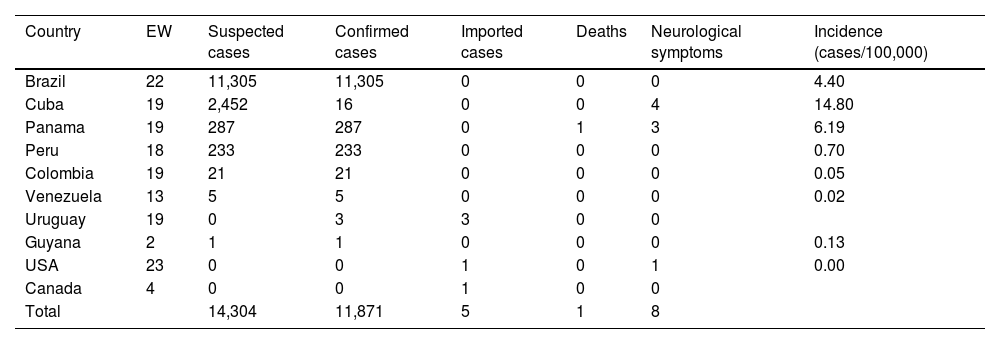
Table 1. Cumulative cases of OROV infection in 2025 by country (adapted from PAHO, https://www.paho.org/es/arbo-portal/arbo-portal-oropouche). EW: epidemiological week.
Tables
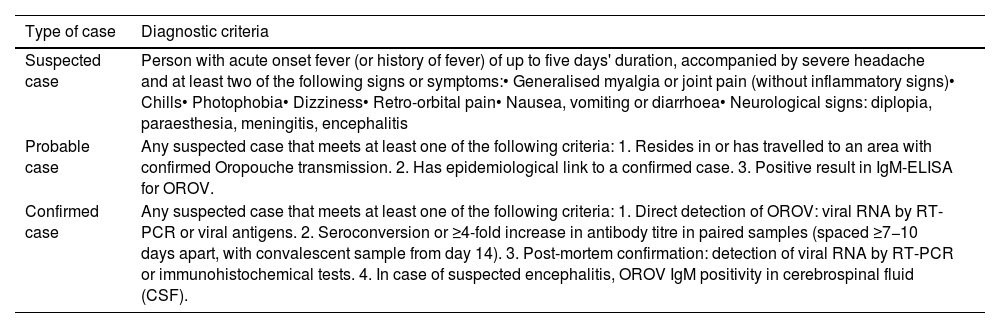
Table 2. Case definition of OROV infection (adapted from PAHO, https://www.paho.org/es/temas/enfermedad-por-virus-oropouche#definicion-caso).
Tables
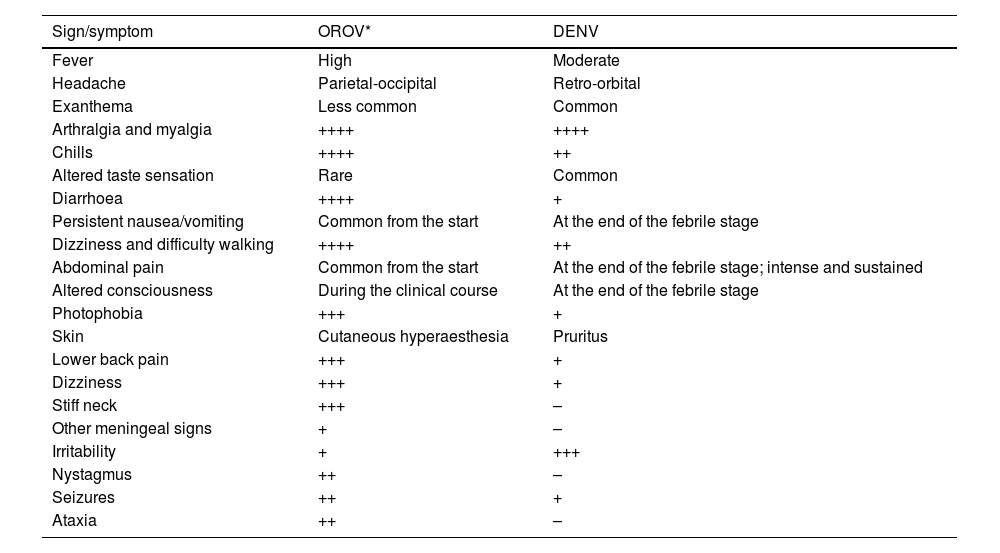
Table 3. Similarities and clinical differences between OROV and DENV. Source: Instituto de Medicina Tropical "Pedro Kouri" ["Pedro Kouri" Institute of Tropical Medicine], Ministry of Public Health, Cuba. * Recurrence of symptoms in up to 60% of cases between one and 10 days after initial improvement.
Tables
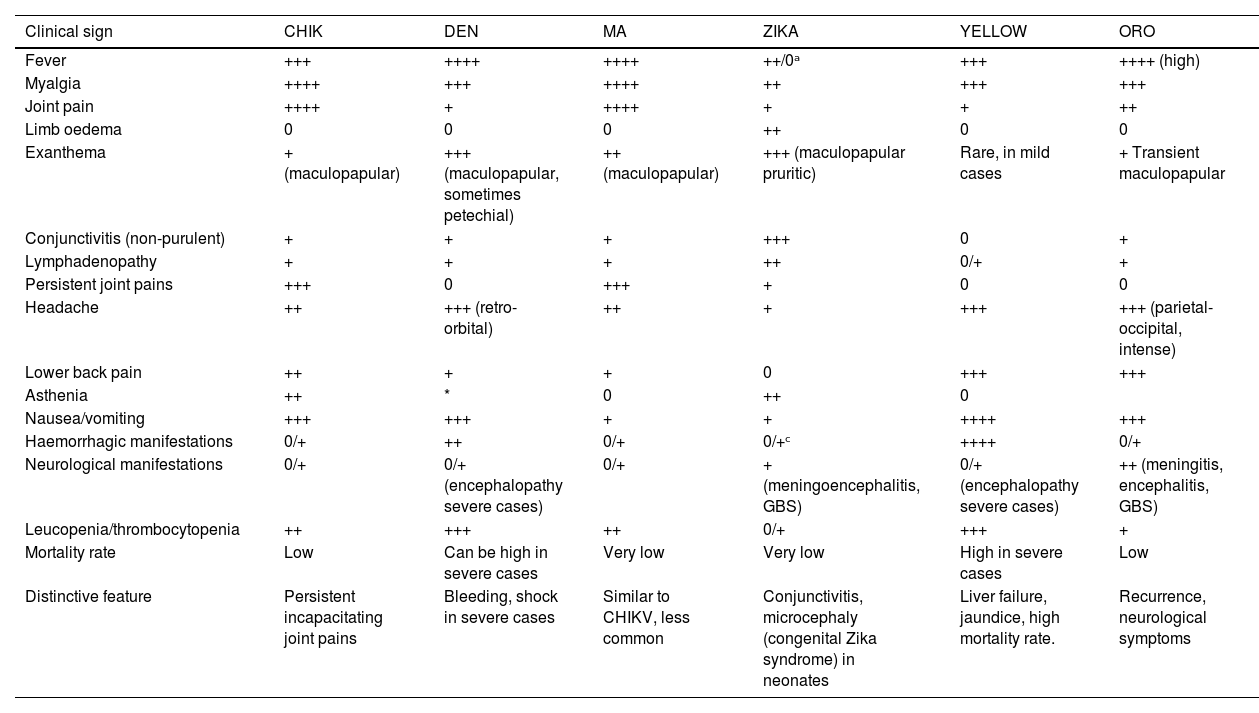
Table 4. Clinical and analytical aspects of the arboviruses that make up the "ChikDenMaZikaYellowOro" mnemonic. CHIK: Chikungunya; DEN: Dengue; MA: Mayaro; YELLOW: Yellow Fever; ORO: Oropouche. a: depending on the geographical region and phylogeny of the virus, some patients do not have fever. Sources: doi: 10.1186/s12941-016-0157-x; doi: 10.1016/j.nmni.2025.101596; doi: 10.35434/rcmhnaaa.2022.153.1678.
Tables
Show moreShow less
Abstract

Mayaro virus (MAYV) and Oropouche virus (OROV) cause emerging infections in Latin America. They represent an increasing public health threat in this and other regions due to their geographic spread, rising case numbers, and the identification of complications and fatal cases. This review, developed by specialists from Latin America and Spain, addresses the epidemiology, pathophysiology, clinical manifestations, diagnosis, and treatment of both infections, aiming to provide valuable information for the diagnosis and management of these diseases based on updated scientific evidence. The diagnostic challenges are emphasized, particularly the clinical overlap with other arboviral infections, the lack of commercial diagnostic tools, and the urgent need for active epidemiological surveillance. The risk of undetected outbreaks is highlighted, along with the importance of including these viruses in clinical algorithms—especially in residents or travellers to endemic areas and, specifically for OROV, in pregnant women with suspected arboviral infection.

Keywords:
Mayaro
Oropouche
Arboviruses
Emerging viruses
Diagnostics
Epidemiology
Treatment
Latin America
Resumen

Los virus Mayaro (MAYV) y Oropouche (OROV) ocasionan infecciones emergentes en Latinoamérica. Representan una amenaza creciente para la salud pública en esta y otras regiones debido a su expansión geográfica, aumento de casos y detección de complicaciones y casos fatales. Esta revisión, desarrollada por especialistas de Latinoamérica y España, aborda la epidemiología, fisiopatología, manifestaciones clínicas, diagnóstico y tratamiento de ambas infecciones, con el objetivo de ofrecer información valiosa para el diagnóstico y manejo de estas infecciones, basándose en evidencia científica actualizada. Se enfatiza la dificultad diagnóstica por su solapamiento clínico con otras arbovirosis/arboviriasis, la falta de herramientas diagnósticas comerciales y la necesidad urgente de vigilancia epidemiológica activa. Se destaca el riesgo de brotes no detectados y la importancia de incluir estos virus en los algoritmos clínicos, especialmente en residentes y viajeros en zonas endémicas y, específicamente para OROV, embarazadas con sospecha de arbovirosis.

Palabras clave:
Mayaro
Oropouche
Arbovirosis
Arboviriasis
Virus emergentes
Diagnóstico
Epidemiología
Tratamiento
Latinoamérica

Article

These are the options to access the full texts of the publication Enfermedades Infecciosas y Microbiología Clínica (English Edition)
Member

Socio de la Sociedad Española de Enfermedades Infecciosas y Microbiología Clínica

Para acceder a la revista

Es necesario que lo haga desde la zona privada de la web de la SEIMC, clique aquí

Para realizar los cursos formativos

La actividad estará abierta para socios de la SEIMC. IMPORTANTE, recuerde que requiere registro previo gratuito. Empezar aquí


Subscriber
Subscriber

If you already have your login data, please click here .

If you have forgotten your password you can you can recover it by clicking here and selecting the option “I have forgotten my password”
Subscribe
Subscribe to

Enfermedades Infecciosas y Microbiología Clínica (English Edition)

Purchase
Purchase article

Purchasing article the PDF version will be downloaded

Purchase now
Contact
Phone for subscriptions and reporting of errors
From Monday to Friday from 9 a.m. to 6 p.m. (GMT + 1) except for the months of July and August which will be from 9 a.m. to 3 p.m.
Calls from Spain
932 415 960
Calls from outside Spain
+34 932 415 960
E-mail