



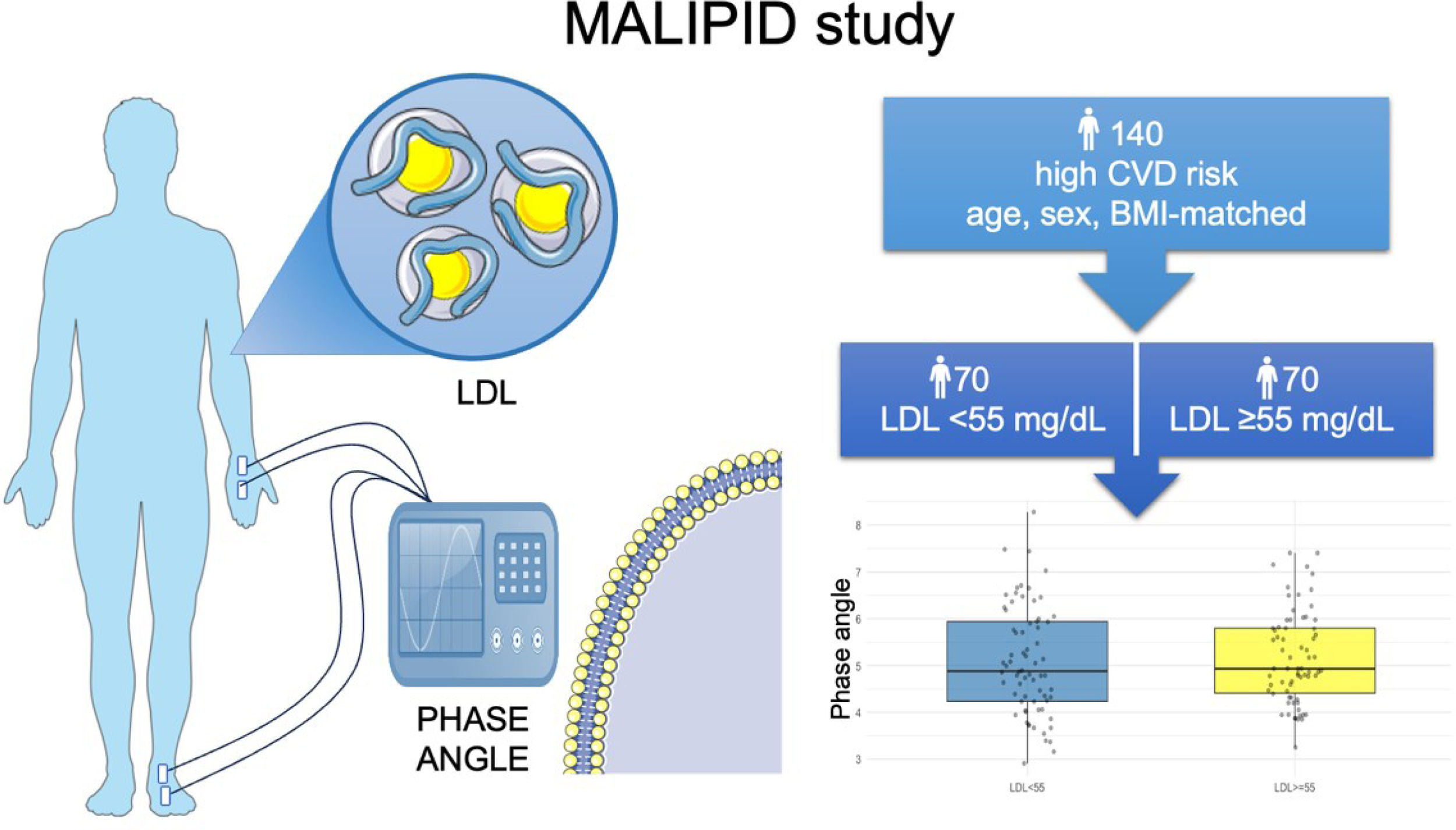

Although aggressive low-density lipoprotein cholesterol (LDL-C) reduction has demonstrated significant cardiovascular benefits, concerns have emerged regarding potential adverse effects of very low LDL-C on cellular functions, particularly membrane integrity as cholesterol constitutes an essential component of cellular membranes. The phase angle (PhA), derived from bioelectrical impedance analysis (BIA) reflects cellular membranes integrity and nutritional status. The MALIPID study aimed to assess if LDL-C levels are associated with PhA in high cardiovascular risk patients.
MethodsA cross-sectional study was conducted in 140 patients matched 1:1 for age, sex, and body mass index, stratified by LDL-C levels (<55 vs. ≥55mg/dL). Laboratory parameters, anthropometry, and BIA measurements were collected with PhA at 50kHz as the primary outcome.
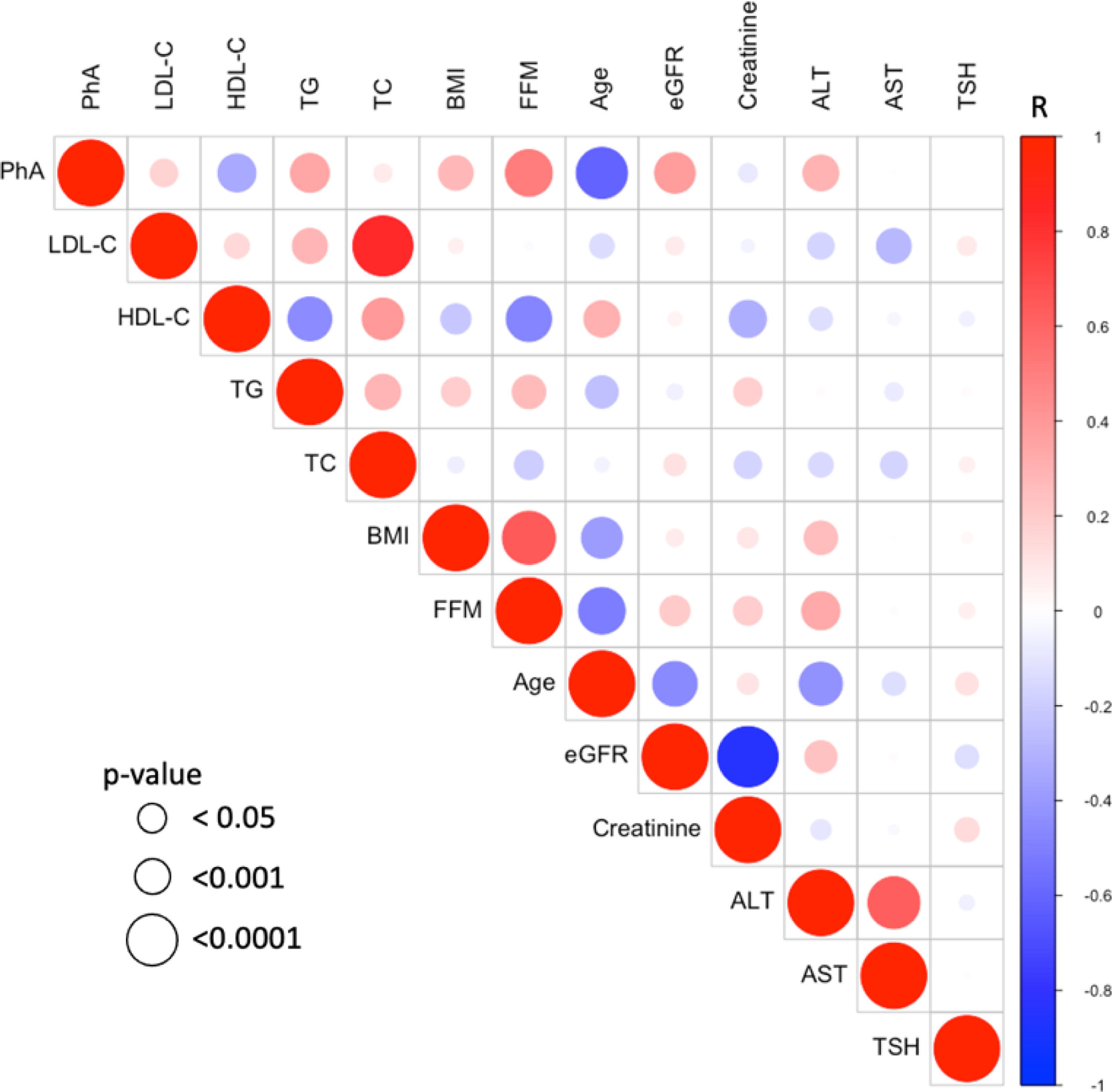
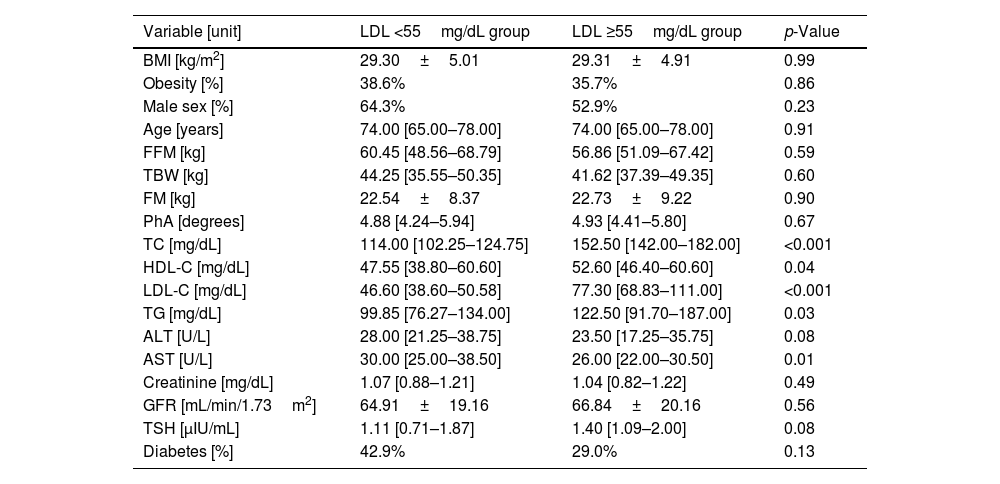
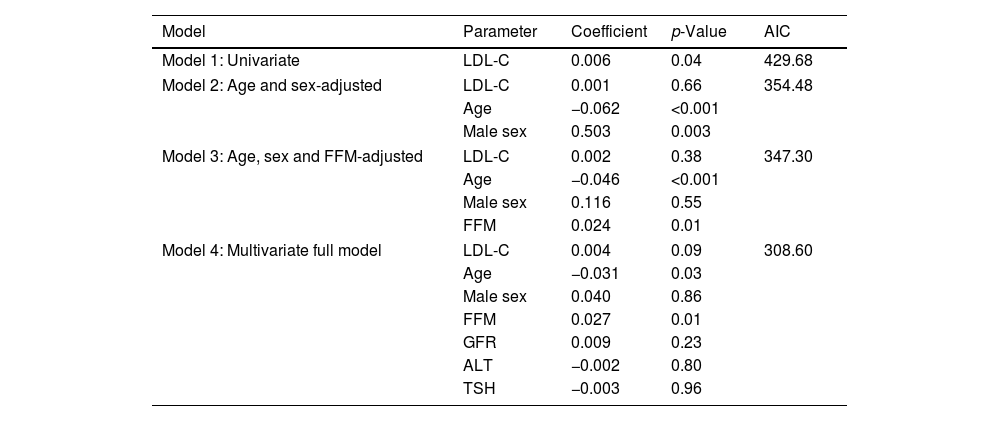
ResultsMedian PhA values were comparable between LDL-C groups (4.88 vs. 4.93; p=0.67). LDL-C was not significantly associated with PhA multivariable regression models adjusted for age, sex, fat-free mass, and biochemical parameters. PhA significantly inversely correlated with age (R=−0.60, p<0.0001) and positively with eGFR (R=0.38, p<0.0001), but not with LDL-C. Subgroup analyses in patients aged >75 years also presented lack of relationship between LDL-C and PhA.
ConclusionsNo association was found between LDL-C levels and cellular membrane integrity assessed by PhA. These findings potentially support the physiological safety of intensive LDL-C reduction and highlight the dominant role of age and body composition in determining PhA. Larger, prospective studies are needed to confirm these results.
Aunque la reducción intensiva del colesterol unido a lipoproteínas de baja densidad (LDL-C) ha demostrado beneficios cardiovasculares significativos, han surgido preocupaciones sobre posibles efectos adversos de niveles muy bajos de LDL-C en funciones celulares, particularmente en la integridad de las membranas, dado que el colesterol es un componente esencial de las membranas celulares. El ángulo de fase (PhA), derivado del análisis de impedancia bioeléctrica (BIA), refleja la integridad de las membranas celulares y el estado nutricional. El estudio MALIPID tuvo como objetivo evaluar si los niveles de LDL-C se asocian con el PhA en pacientes con alto riesgo cardiovascular.
MétodosSe realizó un estudio transversal en 140 pacientes emparejados 1:1 por edad, sexo e índice de masa corporal, estratificados según los niveles de LDL-C (<55 frente a ≥55mg/dL). Se recopilaron parámetros de laboratorio, datos antropométricos y mediciones de BIA, considerando el PhA a 50kHz como variable principal.
ResultadosLos valores medianos de PhA fueron comparables entre los grupos de LDL-C (4.88 frente 4.93; p=0.67). El LDL-C no se asoció significativamente con el PhA en los modelos de regresión multivariable ajustados por edad, sexo, masa libre de grasa y parámetros bioquímicos. El PhA se correlacionó inversamente con la edad (R=−0.60, p<0.0001) y positivamente con el eGFR (R=0.38, p<0.0001), pero no con el LDL-C. Los análisis por subgrupos en pacientes mayores de 75 años también mostraron ausencia de relación entre LDL-C y PhA.
ConclusionesNo se encontró asociación entre los niveles de LDL-C y la integridad de la membrana celular evaluada mediante PhA. Estos hallazgos respaldan potencialmente la seguridad fisiológica de la reducción intensiva del LDL-C y subrayan el papel dominante de la edad y la composición corporal en la determinación del PhA. Se necesitan estudios prospectivos de mayor tamaño para confirmar estos resultados.
