
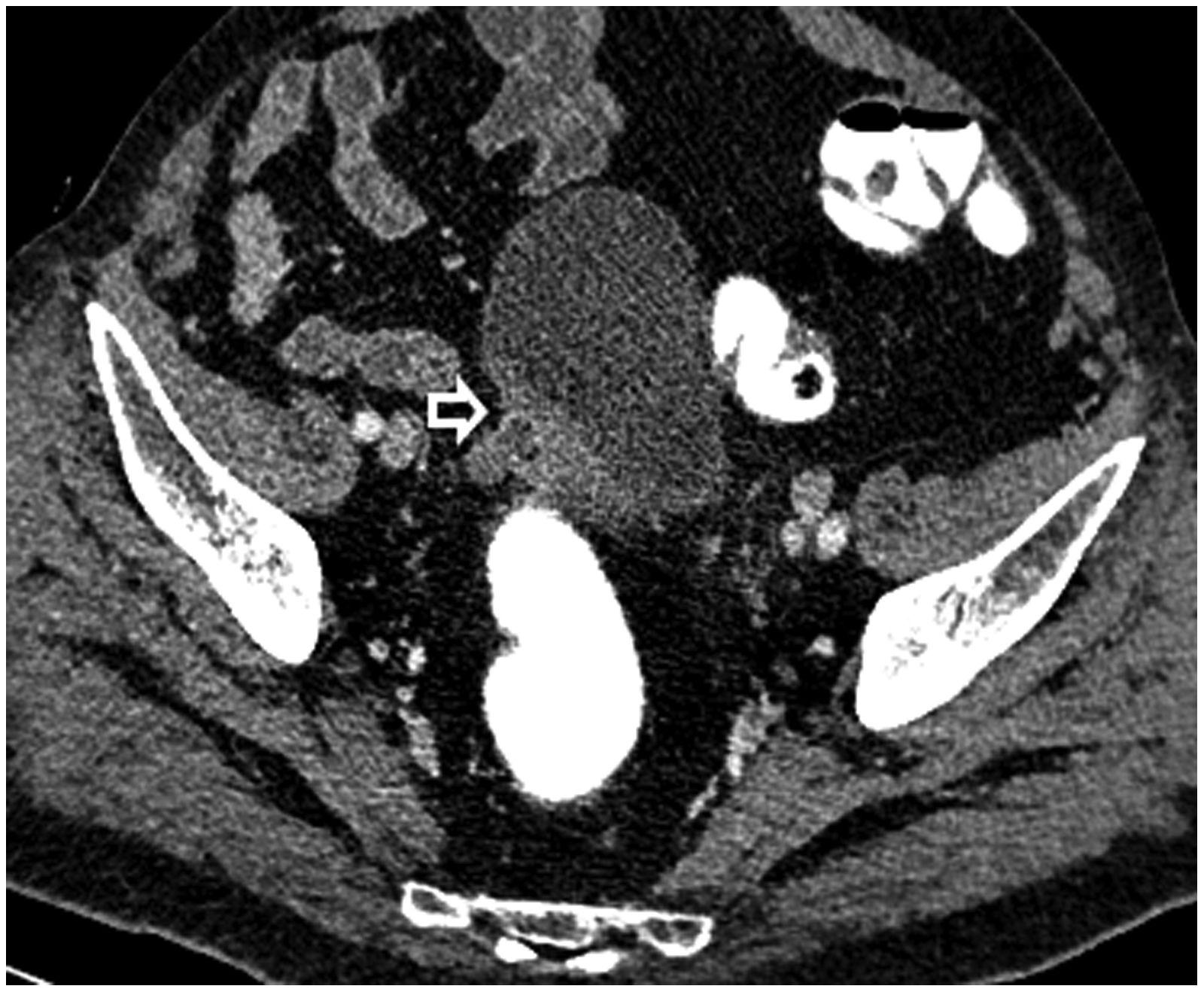
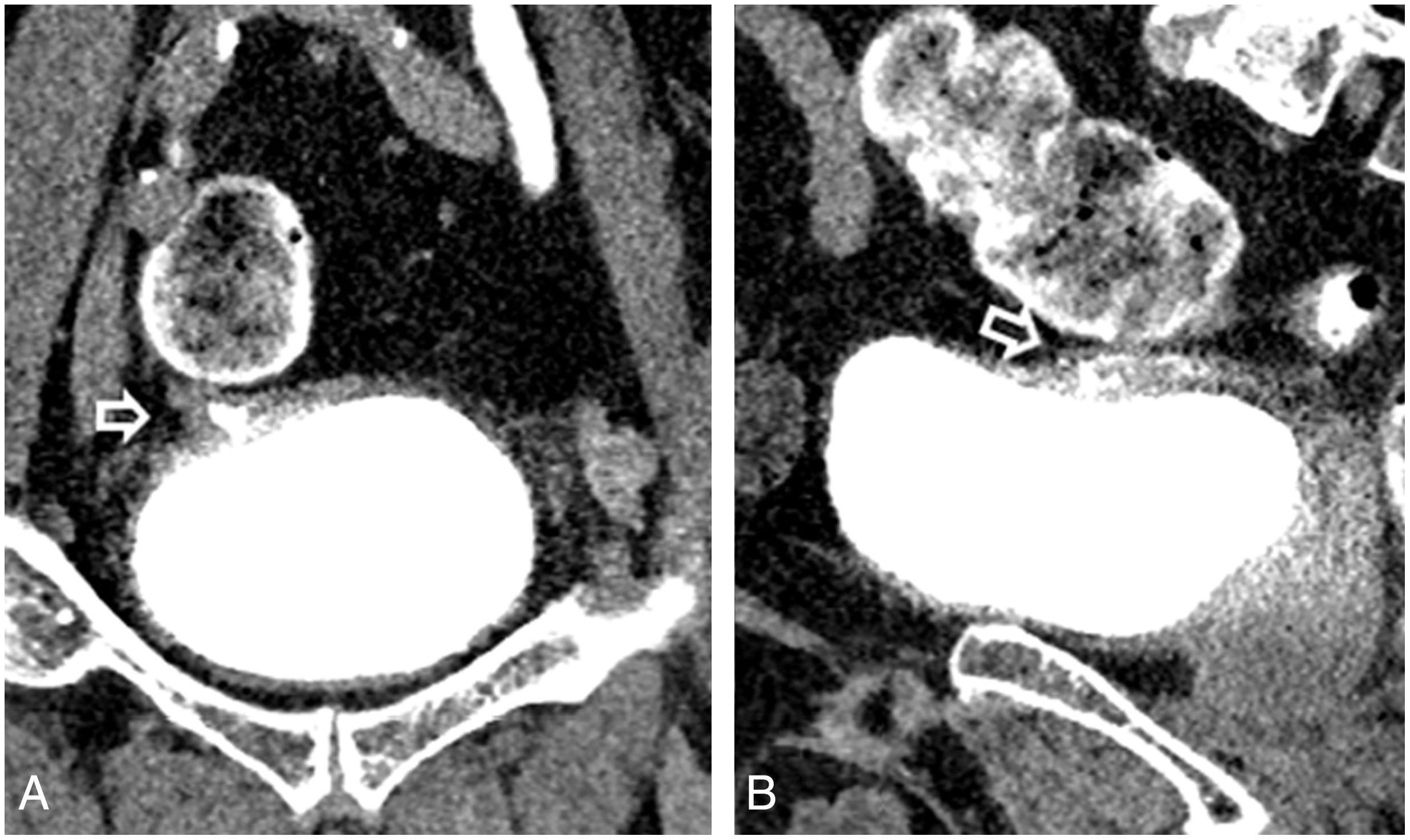
A 65-year-old male patient was admitted to the hospital with persistent dysuria and foul smell in the urine. Laboratory tests revealed leukocytosis and elevated CRP. On contrast-enhanced abdominopelvic CT, the appendix was fixed to the bladder wall and there was a millimetric loculated collection at this level (Fig. 1, white arrow). In the excretory phase images, contrast material was observed in the lumen of the appendix (Fig. 2a and b, white arrow). All findings were interpreted as appendicovesical fistula. Diagnosis confirmed by cystoscopy.


Appendicovesical fistula is a rare cause of abdominal pain. Its uncommon occurrence may cause delay in diagnosis. Although various radiologic modalities are used for diagnosis, CT is considered the most useful radiologic modality.
FundingThe authors received no specific funding for this work.
Conflicts of interest/Competing interestsThe authors declare that they have no conflict of interest.
Consent formConsent form was obtained from the patient for the study.