



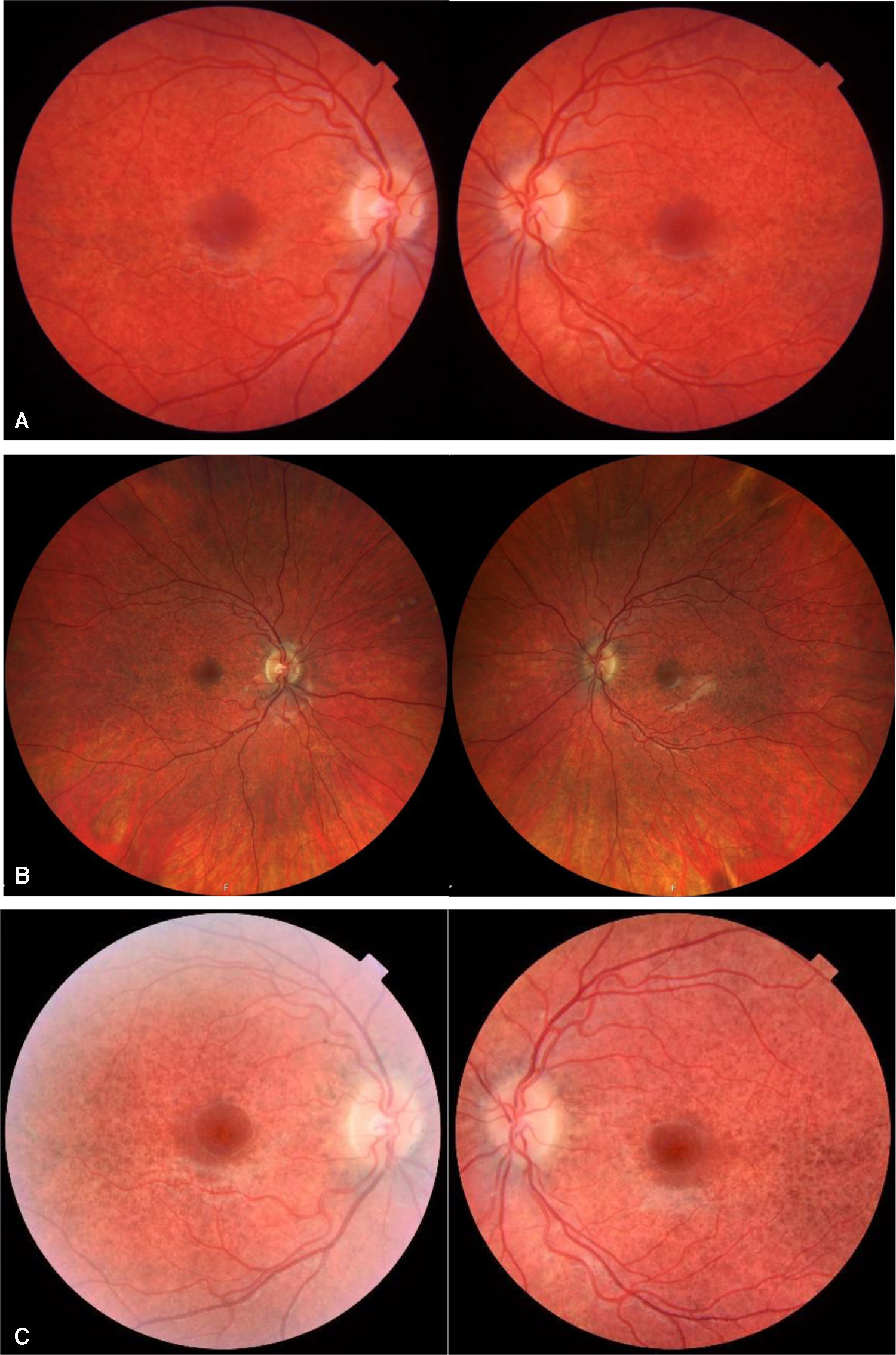


Long-chain 3-hydroxyacyl-CoA dehydrogenase deficiency (LCHAD) is a rare but severe genetic disorder that causes pigmentary chorioretinopathy. We present the case of a 20-year-old female patient diagnosed with LCHAD by neonatal screening with alteration of the retinal pigment epithelium (RPE) since the age of 3 years. Fundus examination showed a salt-and-pepper speckled granular pattern and diffuse peripheral chorioretinal atrophy. The patient is stable, visually asymptomatic and with good systemic control after more than 15 years of follow-up with retinography, optical coherence tomography (OCT), autofluorescence (FAF) and electroretinogram (ERG), essential for control. This case highlights the importance of early diagnosis and treatment to prevent decompensation and improve survival and progression.
El déficit de 3-hidroxiacil-CoA-deshidrogensa de cadena larga (LCHAD) es un trastorno genético poco común pero grave que produce coriorretinopatía pigmentaria. Presentamos el caso de una paciente de 20 años diagnosticada de LCHAD mediante cribado neonatal con alteración del epitelio pigmentario de la retina (EPR) desde los 3 años. En el fondo de ojo presenta un patrón granular de aspecto moteado en sal y pimienta y atrofia coriorretiniana difusa periférica. La paciente y se encuentra estable, asintomática a nivel visual y con un buen control sistémico tras más de 15 años de seguimiento con retinografía, tomografía de coherencia óptica (OCT), autofluorescencia (FAF) y electrorretinograma (ERG), fundamentales para el control. Este caso destaca la importancia del diagnóstico y el tratamiento precoz para prevenir las descompensaciones y mejorar la supervivencia y la progresión.

