



To evaluate the incidence and causes of the need for retreatment after LASIK-induced monovision in patients with myopia and presbyopia without a previous trial of contact lens induced monovision.
DesignRetrospective, observational study.
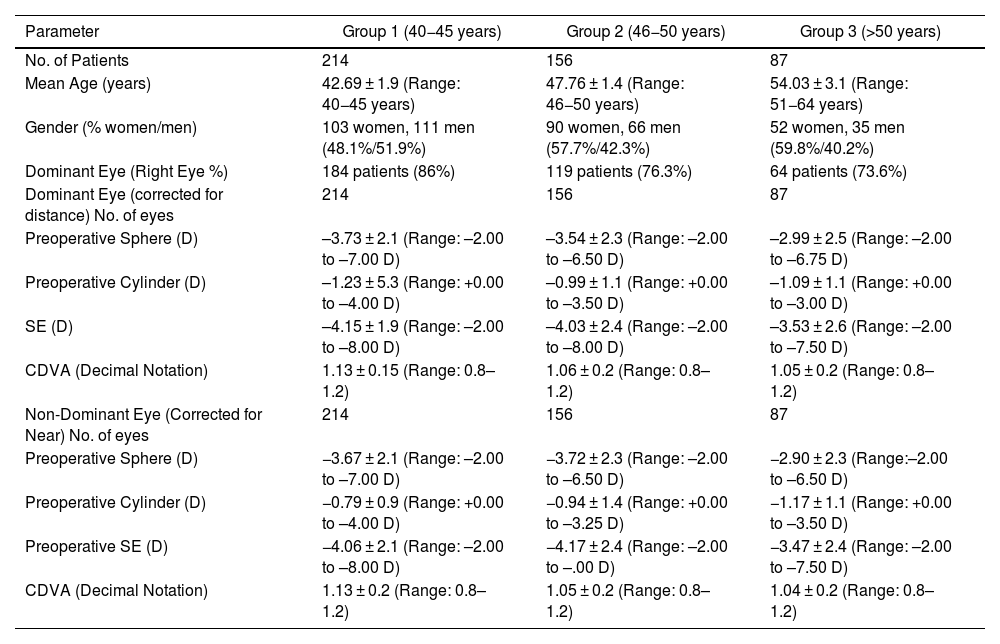
MethodsWe retrospectively studied 914 eyes of 457 consecutive myopic patients with presbyopia scheduled for LASIK-induced monovision (nondominant eye corrected for near). The dominant eye was identified by the finger pointing test and the treatment plan for the nondominant eye ranged from –0.50 to –1.50 diopters based on an age-related nomogram. We evaluated the incidence of enhancements and the causes at 6 months postoperatively. Patients were divided into three groups based on age to evaluate possible differences in the reasons for retreatment among the age groups.
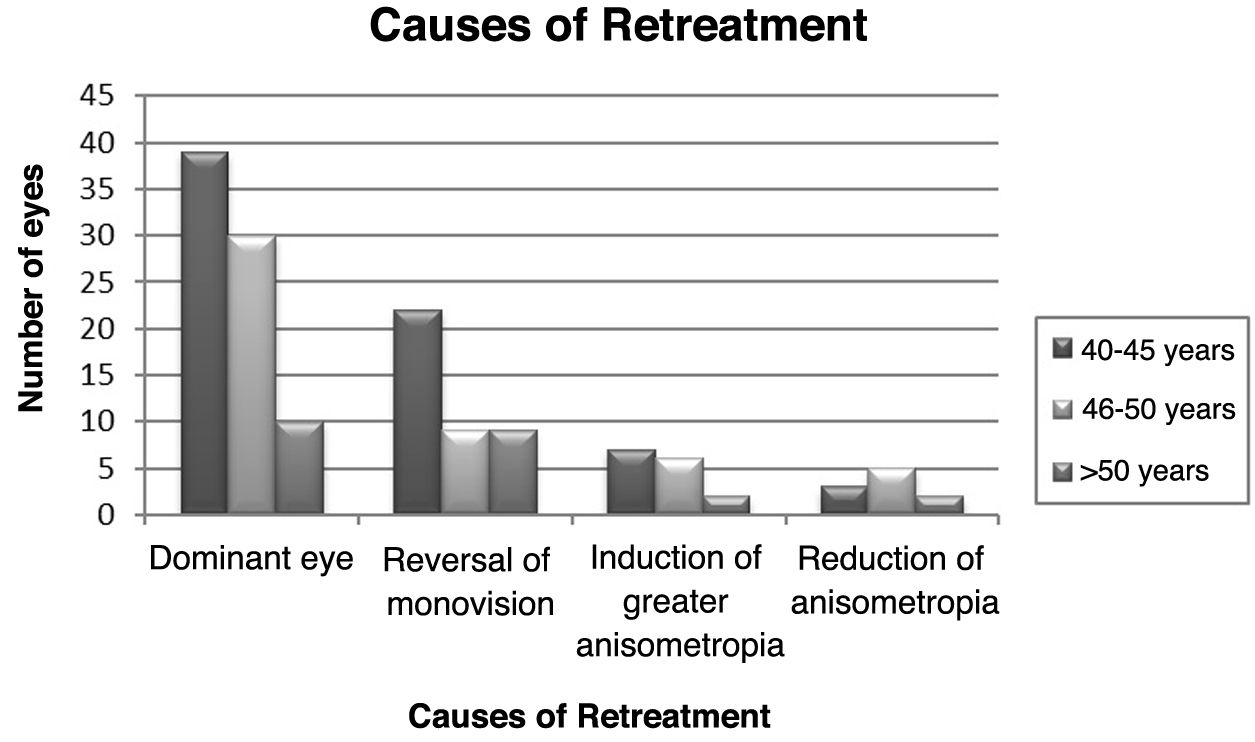
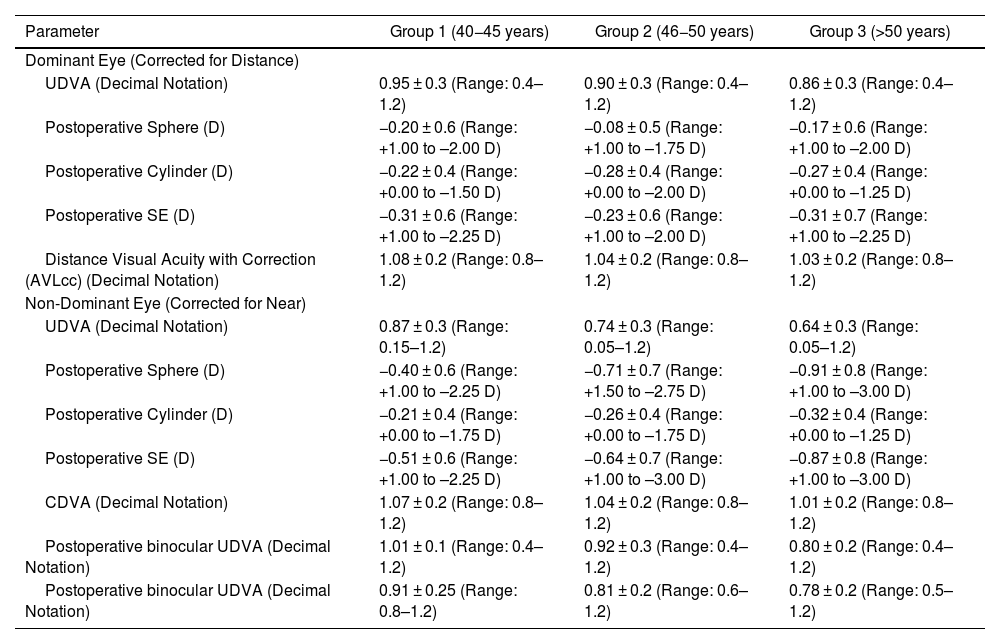
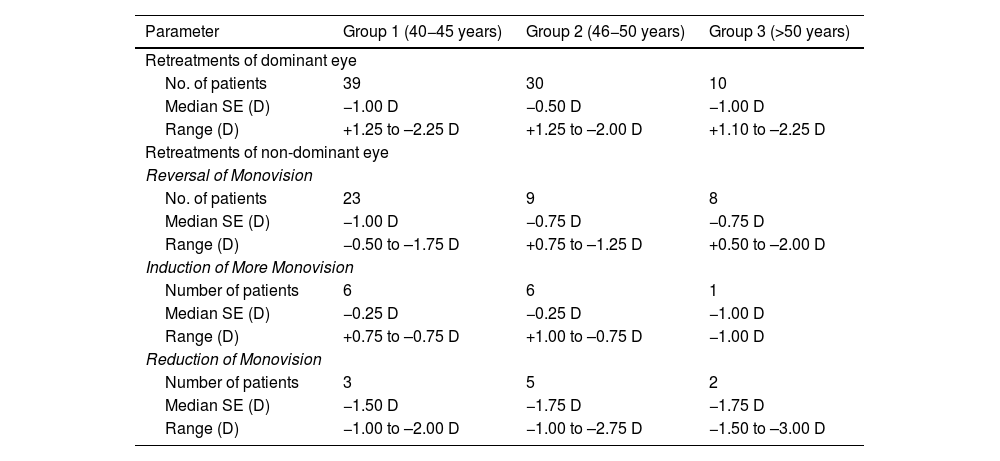
ResultsThe global enhancement rate was 15,8% (144/914 eyes). The incidence of retreatment was significantly higher in the dominant eye (8,6%) than in the nondominant eye (7,1%) (P = .01). The enhancement rate in the nondominant eye were conversion to full distance (8,8% of patients), induction of more monovision (3,2% of patients) and reduction of anisometropia (1,1% of patients). More young patients (aged 40–45 years) wanted to reverse the procedure.
ConclusionsLASIK-induced monovision is a valid option for myopic patients with presbyopia, with a relatively low incidence of enhancements. The low retreatment rate to reverse monovision is a good index of patient tolerance and satisfaction with the results of the procedure. For this reason, a preoperative trial of monovision with contact lenses should not be mandatory before LASIK.
Evaluar la incidencia y las causas de retratamiento tras la monovisión inducida por LASIK en pacientes miopes y présbitas, sin realizar previamente una prueba de tolerancia de la monovisión con lentes de contacto.
DiseñoEstudio retrospectivo, observacional.
MétodosSe evaluaron pacientes consecutivos sometidos a LASIK bilateral asociado a monovisión. En todos los casos se programó una monovisión convencional, de manera que el ojo no dominante quedase miope de entre –0,50 y –1,50 dioptrías, siguiendo un nomograma edad-dependiente. Evaluamos la incidencia de retratamientos y sus causas a los 6 meses postoperatorios. Los pacientes fueron divididos en tres grupos de edad para evaluar posibles diferencias en las causas de retratamiento.
ResultadosLa incidencia global de retratamientos fue del 15,8% (144/914 ojos). La incidencia de retratamientos fue mayor en el ojo dominante (8,6%) que en el ojo no dominante (7,1%) (P = ,01). Un 8,8% de los pacientes solicitaron un retratamiento para revertir la monovisión por intolerancia. Las otras causas de retratamiento en el ojo no dominante fueron: inducir más monovisión en un 3,2% de los pacientes y reducir la monovisión en un 2,2%. En todos los grupos de edad, el retratamiento en el ojo dominante fue la causa más frecuente de retoque. La tasa de reversión de la monovisión fue mayor en el grupo de edad más joven (40−45 años).
ConclusionesLa monovisión inducida por LASIK es una buena opción refractiva para los pacientes miopes y présbitas, con una incidencia relativamente baja de retratamientos. La baja tasa de reversión de la monovisión asociada a LASIK es un indicador de su buena tolerancia, por lo que no estaría justificado realizar de forma rutinaria en todos los pacientes una prueba preoperatoria de tolerancia de la monovisión con lentes de contacto.

