Abstracts of the 2025 Annual Meeting of the ALEH
More infoDespite existing surveillance methods, the diagnosis of hepatocellular carcinoma (HCC) in at-risk populations often occurs in advanced stages of the disease and carries a worse prognosis. AFP and PIVKA-II are two of the tumor biomarkers that have received the most attention for monitoring at-risk patients.
To determine the value of the isolated and combined detection of PIVKA-II and alpha-fetoprotein in the diagnosis of hepatocellular carcinoma in at-risk population.
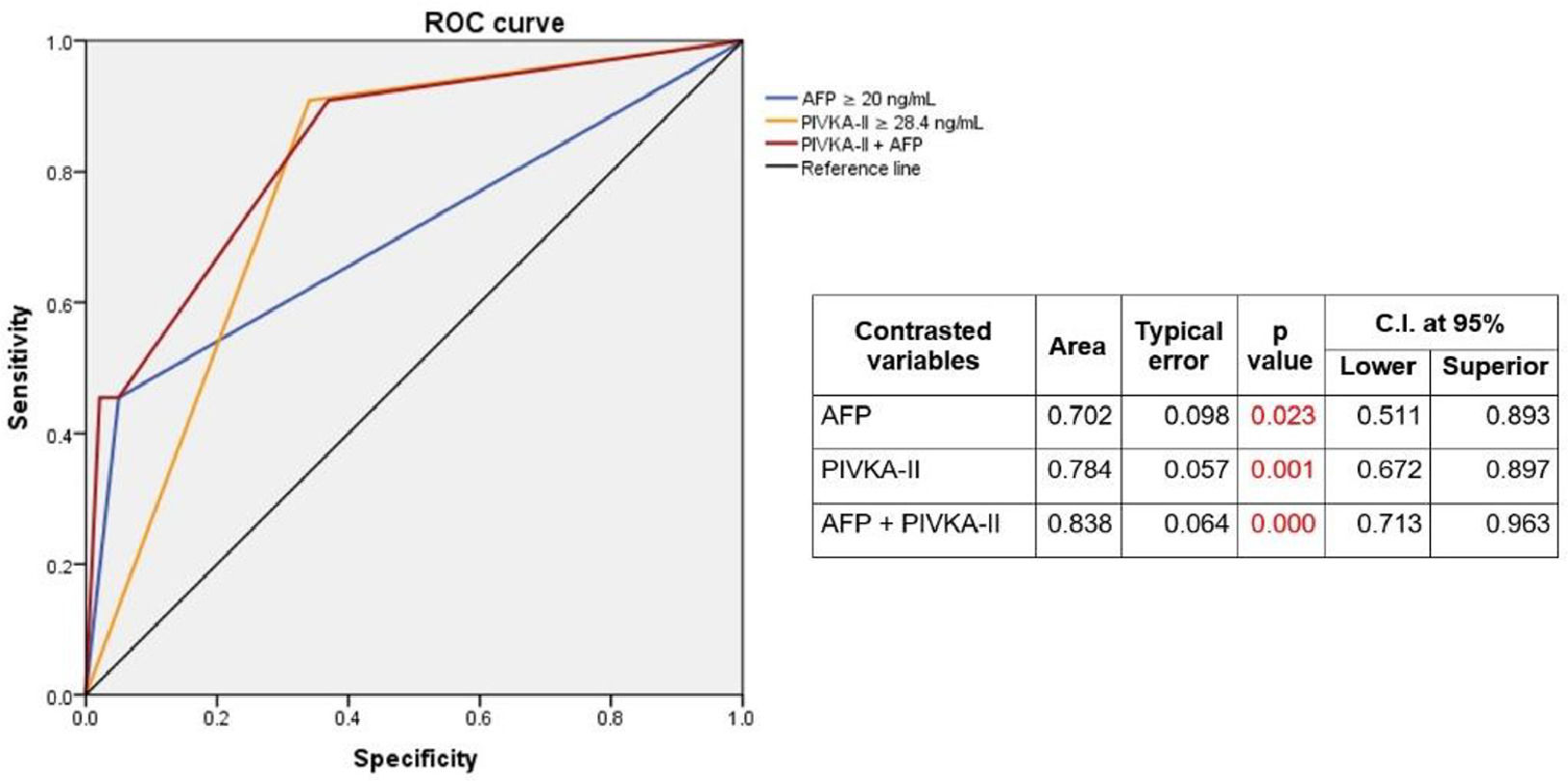
Materials and MethodsA cross-sectional descriptive study with an analytical component was conducted across three tertiary centers between July 2024 and April 2025. A total of 291 patients at risk for HCC were included; 11 were diagnosed with HCC. Independent variables assessed included age, sex, serum alpha-fetoprotein (AFP) and PIVKA-II levels. HCC diagnosis served as the dependent variable. The ROC curve was calculated to determinate the diagnostic usefulness of the isolated AFP, PIVKA-II and the combination of both biomarkers.
ResultsThe mean age was 62 ± 10.3 years, with a predominance of patients aged ≤62. The most common risk group was liver cirrhosis (91.1%), with a slight predominance of females. The area under the curve was similar for AFP and PIVKA-II, confirming the good discriminatory power of both tests, but the combination of these tests was discretely greater than the biomarkers separately.
ConclusionsThe diagnostic performance of both biomarkers (AFP and PIVKA-II) was similar during the evaluation of patients at risk of developing HCC, but the combination of both showed better discriminatory power between patients affected or not by this neoplasia.