Abstracts of the 2025 Annual Meeting of the ALEH
More infoType 2 diabetes mellitus (DM2) prevalent in Mexico (18.3%) related to hepatic steatosis associated with metabolic dysfunction (MASLD), in 30%. Glycosylated hemoglobin (HbA1c) is a key biomarker of glycemic control. The aim of this study was to analyze the association between HbA1c levels and the degree of steatosis and hepatic fibrosis in type 2 diabetes mellitus.
Materials and MethodsThe following study is observational, descriptive and retrospective in 90 patients older than 18 years with DM2, attended in gastroenterology outpatient clinic in a third level center, between February 2024 and February 2025. Hepatic Elastography (FibroScan®) and HbA1c determination were performed at the time of the study. Non-parametric statistics (Kolmogorov-Smirnov, Kruskal-Wallis and Mann-Whitney U with Bonferroni correction) were used.
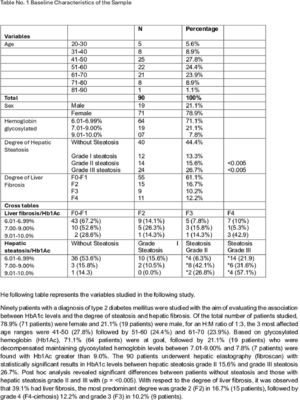
ResultsOf the patients studied, 78.9% were female and 21.1% male, for an H:M ratio of 1:3, the most affected age was between 41-50 (27.8%). 71.1% were at Hb1Ac goals, and 29% decompensated. The 71.1% were in Hb1Ac goals, and 29% were unbalanced. From the hepatic elastography (fibroscan) the results were statistically significant. The post hoc analysis revealed significant differences between patients without steatosis and hepatic steatosis grade II and III with (p = <0.005). According to the grade of hepatic fibrosis 39.1% presented hepatic fibrosis, the most predominant grade was 2 (in 16.7%) Table 1.
ConclusionsWe conclude that the higher the degree of hepatic steatosis, the worse the glycemic control. All patients with DM2 should undergo hepatic elastography since hepatic fibrosis can present with glycosylated hemoglobin in goals and increase in a state of glycemic decompensation.