Abstracts of the 2025 Annual Meeting of the ALEH
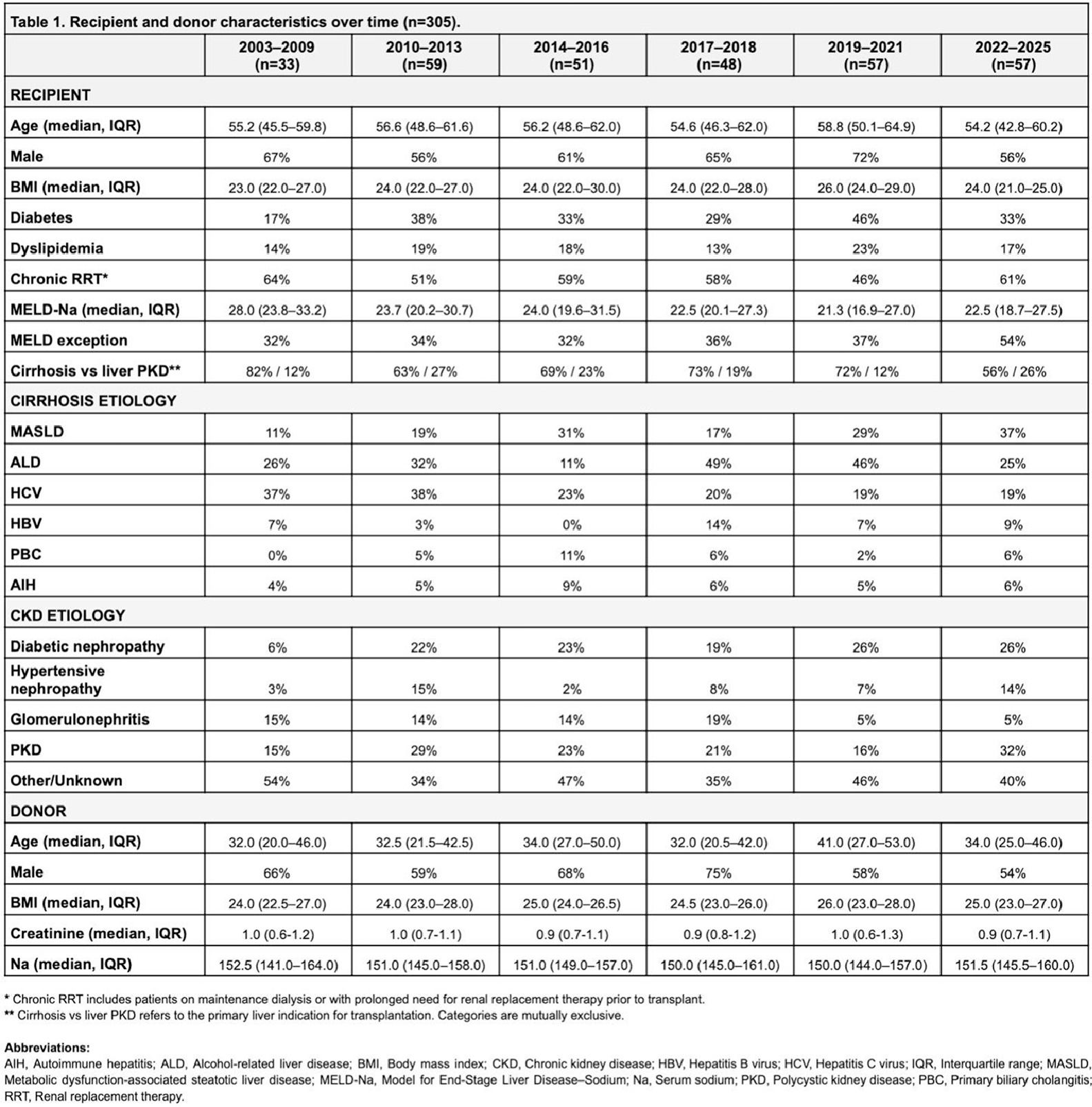
More infoTracking simultaneous liver–kidney transplantation SLKT trends supports clinical decision-making, center-level improvements, and regional policy development. We aimed to describe changes in donor and recipient characteristics, transplant indications, and 1-year outcomes in Latin America from 2003 to 2025.
Materials and MethodsRetrospective cohort study including SLKT recipients from seven Latin American countries. Data were analyzed across six eras: 2003–2009, 2010–2013, 2014–2016, 2017–2018, 2019–2021, and 2022–2025. Outcomes included 1-year patient survival and 1-year renal function (estimated glomerular filtration rate (eGFR) ≥ 45 mL/min/1.73 m2, a surrogate of adequate graft performance linked to favorable long-term outcomes).
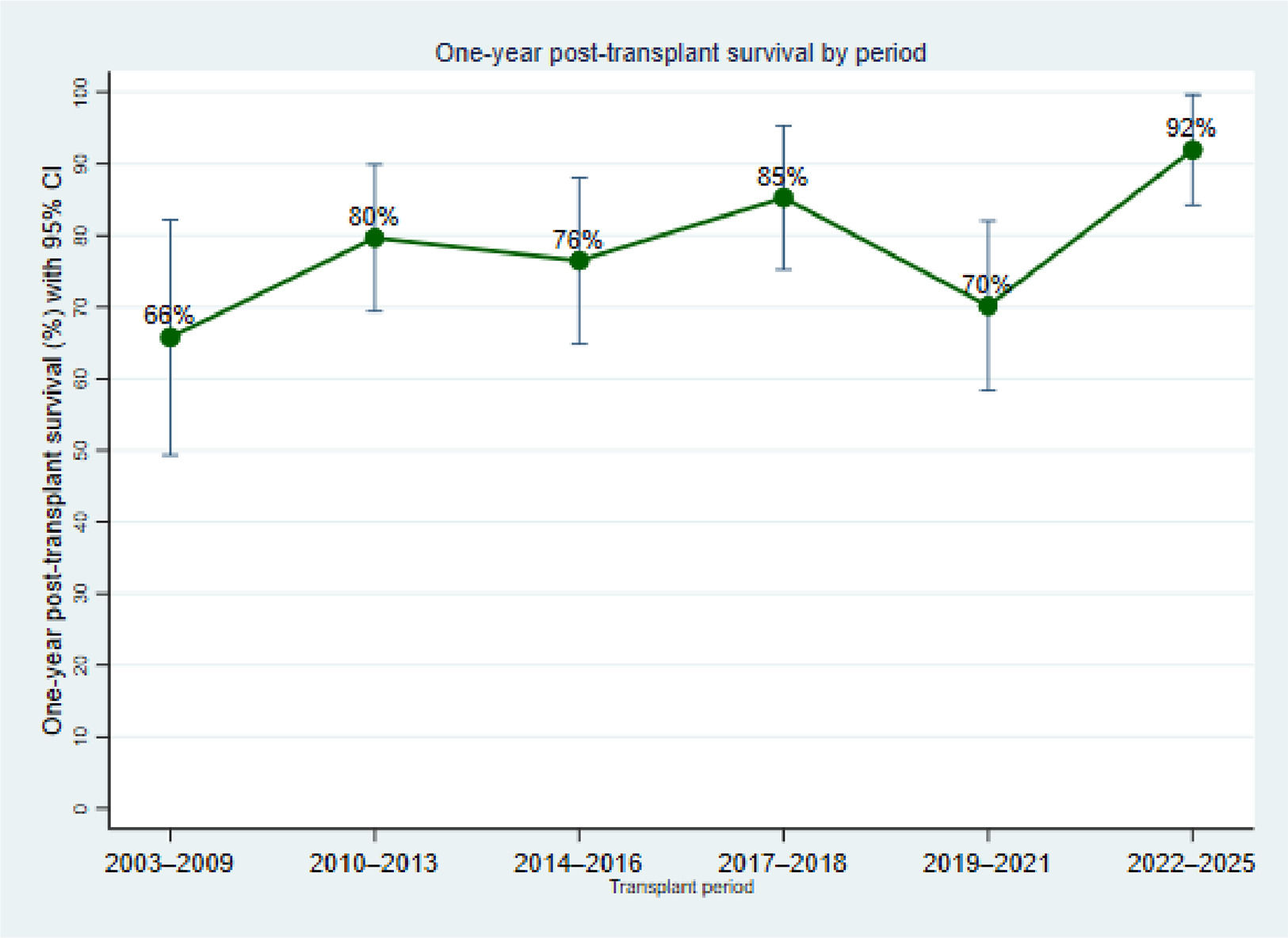
ResultsA total of 305 patients were included. Recipient age and sex remained stable. Diabetes prevalence increased from 6% to 46%; hypertension and dyslipidemia varied minimally. Indications for liver transplantation shifted: cirrhosis declined from 82% to 56%, while polycystic disease rose to 26%. HCV-related cirrhosis fell from 38% to 18%; MASLD increased from 11% to 37%. Alcohol-related cirrhosis fluctuated, peaking at 48%. Diabetes became the leading indication for kidney transplantation, while glomerulonephritis declined. MELD exceptions increased, reaching 50% by 2022–2025. Donor characteristics remained stable. One-year survival improved from 66% (95% CI, 49–82) to 92% (95% CI, 84–100). Approximately 70% of recipients met the threshold of eGFR ≥ 45 across all periods.
ConclusionsDespite a more complex recipient profile and evolving transplant indications, SLKT outcomes in Latin America have shown steady improvement over the past two decades. This progress reflects the growing expertise and coordination within transplant systems, highlighting the need to sustain region-specific data collection efforts.