



Abstracts Asociación Mexicana de Hepatología (AMH) 2024
More infoSpontaneous bacterial peritonitis (SBP) is a serious complication in cirrhotic patients, with high morbidity and mortality. Antimicrobial resistance complicates treatment and increases complications. This study aims to determine resistance patterns in microorganisms in SBP to improve treatment efficacy.
Materials and PatientsA descriptive, observational, and retrospective study on patterns of antimicrobial resistance and susceptibility in patients with spontaneous bacterial peritonitis was conducted at the General Hospital of Mexico “Dr. Eduardo Liceaga” between January 2022 and January 2024. Clinical information was collected from the records of the Gastroenterology Service. Microbiological results were obtained from reports from the Microbiology Service. Patients diagnosed with hepatic cirrhosis and meeting the criteria for SBP were included. Clinical and microbiological data were collected, analyzing variables such as age, sex, etiology of liver disease, and associated decompensations, such as gastrointestinal bleeding and hepatic encephalopathy. Antimicrobial resistance patterns, as well as clinical and microbiological characteristics of patients with SBP, were examined. This analysis aims to contribute to the optimal management of SBP and the development of more effective antimicrobial treatment strategies.
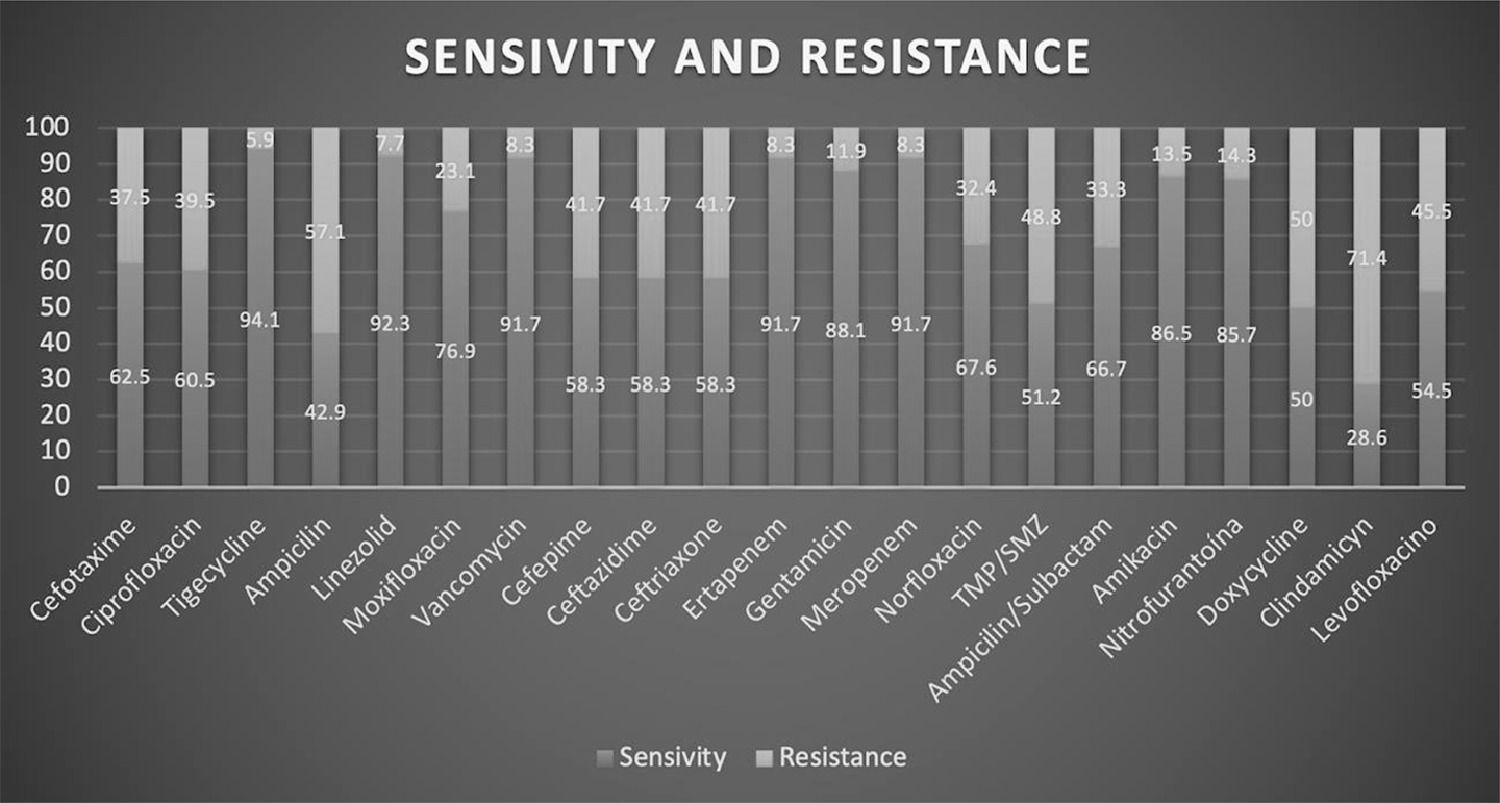
ResultsA total of 48 patients were included, 52.1% were men, with a mean age of 52.4 ± 12.7 years. The predominant etiology of cirrhosis was alcohol, present in 56.3% of cases. Among the isolated bacteria, Escherichia coli (56.25%), Klebsiella pneumoniae (12.5%), Enterococcus faecalis (6.25%), Streptococcus spp. (6.25%), Staphylococcus epidermidis (4.16%), Staphylococcus aureus (4.16%), Enterococcus gallinarum (4.16%), Staphylococcus marcescens (2.08%), Acinetobacter sobria (2.08%), and Staphylococcus haemolyticus (2.08%) were prominent. The sensitivity and resistance table to different antimicrobials are presented in Graph 1.
ConclusionsAntimicrobial resistance is increasing in patients with SBP, leaving few effective alternatives, where cephalosporins and quinolones, recommended treatments, are no longer sufficiently useful, which is dangerous in the context of empirical therapy given the high risk of therapeutic response failure.






