Abstracts of the 2024 Annual Meeting of the ALEH
More infoNo
Introduction and ObjectivesTransjugular intrahepatic portosystemic shunt (TIPS) is a procedure that diverts portal blood flow to the hepatic vein with the aim of reducing portal hypertension, being an alternative for managing its complications, such as variceal gastrointestinal bleeding and ascites, in both cirrhotic and non-cirrhotic patients. Objetives: To characterize patients who underwent TIPS between January 2007 and July 2024 at the Hospital Clínico De la Universidad de Chile
Patients / Materials and MethodsObservational, retrospective cohort study. 39 patients medical records who underwent the procedure during the specified period were reviewed.
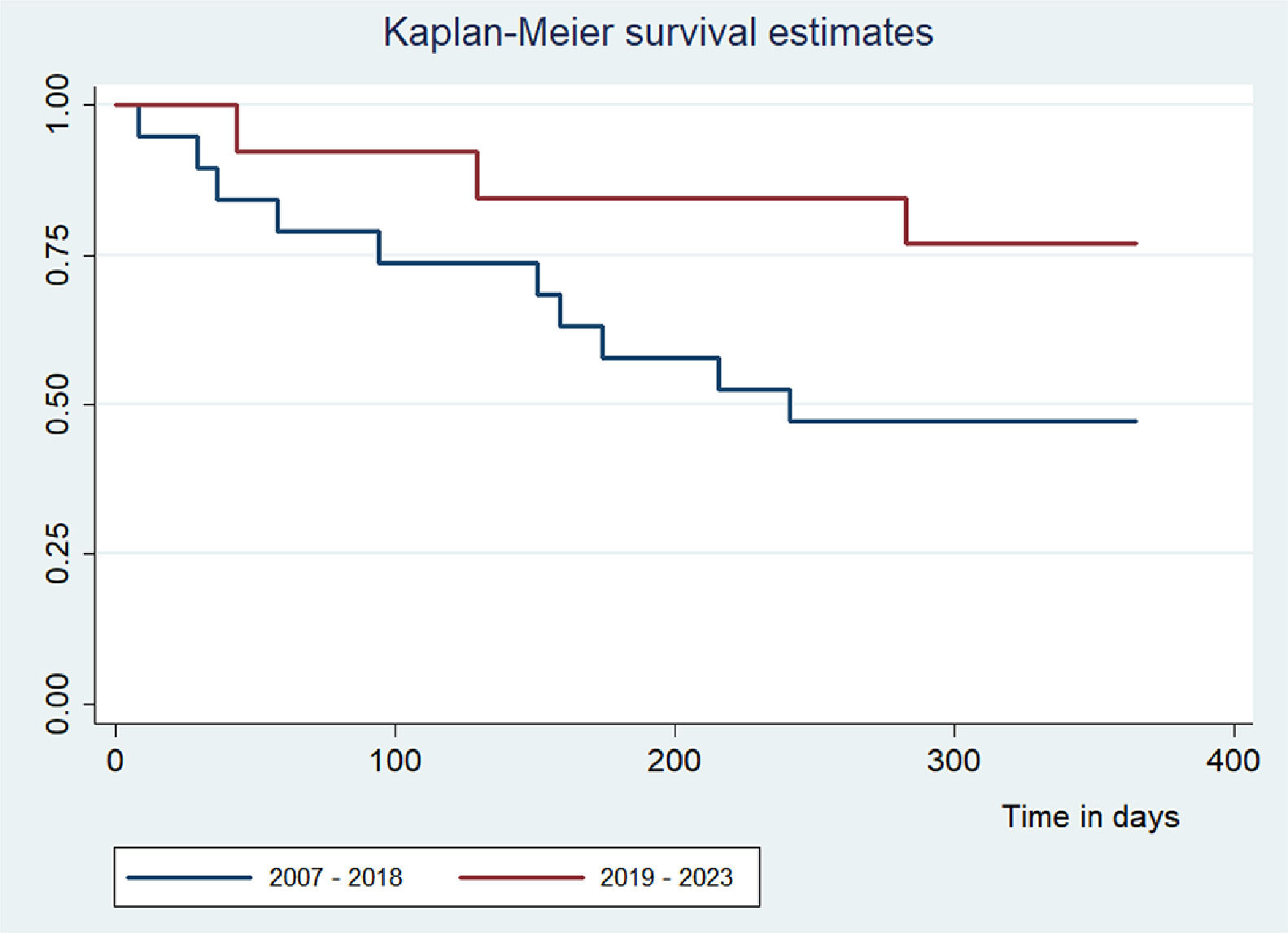
Results and Discussion39 patients were analyzed, 53.8% of whom were men, with an average age of 60.7 years. The procedure was performed in 51% (20/39) of the patients within a period of just 4 years (2019 to 2024). The main indication was secondary to variceal gastrointestinal bleeding (59%), followed by refractory ascites (36%). Additionally, 33.3% presented some degree of portal vein thrombosis, and 33.3% had reported hepatic encephalopathy episodes before the procedure. The average MELD Na score was 15.4. Only three patients experienced hemorrhagic complications related to the procedure, with one resulting in death. 53.8% reported some degree of hepatic encephalopathy after the procedure. One-year survival was analyzed, showing 47.4% in patients whose procedure was performed before 2019 versus 76.9% in the period between 2020 and 2023 (p 0.095). Four patients underwent transplants after TIPS, without complications.
ConclusionsWe have observed a progressive increase in the indication for TIPS over time at our center, with half of the cases concentrated in the last four years. In addition, survival outcomes appear to be better, probably due to improved patient selection and more timely indications. The procedure was safe, with a low rate of acute complications and an incidence of encephalopathy similar to that reported in the literature. Longer-term follow-up will allow us to verify its effectiveness in our population