

Abstracts of the 2024 Annual Meeting of the ALEH
More infoNo
Introduction and ObjectivesCirrhosis is classically classified as compensated or decompensated in relation to the presence of ascites, variceal bleeding or encephalopathy. 5 stages of the course of the disease have been associated with the combination of these decompensations being the most advanced stages associated with higher mortality (60% per year). Acute-on-chronic liver failure (ACLF) can appear at any time during the course of the disease. Trying to understand the clinical course of cirrhosis, the PREDICT study established the CLIF-C AD score as a scale with greater sensitivity (>50 pts) to discriminate patients at high risk of developing ACLF with new trajectories of the course of cirrhosis: Stable and unstable decompensated cirrhosis; and pre-ACLF. Currently, there are no studies in Latin America that characterize the clinical outcomes in relation to the courses proposed by the PREDICT study. Objectives: Describe the demographic, clinical, paraclinical, management and outcomes in adult patients with cirrhosis, who have received medical care at the Cardioinfantil Foundation for any episode of decompensation in the period between 2015-2021
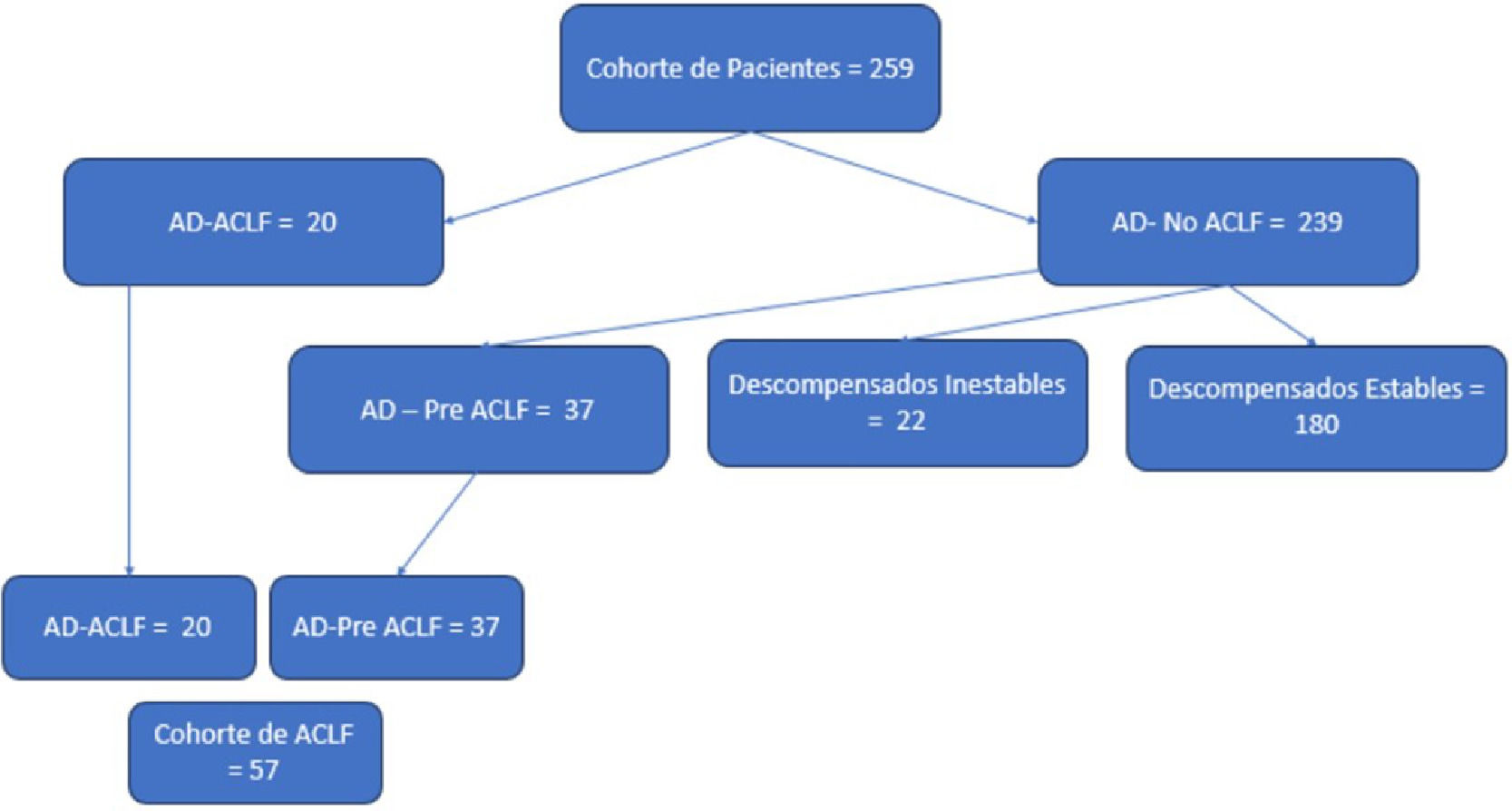
Patients / Materials and MethodsHistorical cohort where exposure was defined as decompensated cirrhotic patients requiring hospital care during the period from 2015 to 2021. Descriptive statistics were used, and flow charts were used to indicate the distribution of patients.
Results and DiscussionInformation was collected from 259 patients, mainly men (45%). Main etiologies of cirrhosis were MASH (18.9%), alcoholic (17%), cryptogenic (13.9%), and autoimmune hepatitis (12%). Patients mainly corresponded to the stable decompensated group (75%). The most frequent decompensation documented on admission was ascites in 66%, followed by hepatic encephalopathy in 41.3%. In the pre-ACLF group, mortality and renal dysfunction were higher.
ConclusionsPatients who present with decompensation of cirrhosis and who during their stay developed an infectious process associated with renal dysfunction and high CLIF C-AD scores are more likely to develop ACLF.