Abstracts of the 2025 Annual Meeting of the ALEH
More infoSevere alcohol-associated hepatitis (sAH) is a life-threatening condition with high short-term mortality. Despite therapeutic advances, long-term effectiveness remains limited. We conducted a systematic review and meta-analysis to evaluate mortality trends in sAH over the past five decades.
Materials and MethodsWe searched PubMed, EMBASE, and Scopus through February 2024 for studies reporting 28-, 60-, and 90-day mortality in sAH. Pooled mortality estimates were calculated using mixed-effects models. Heterogeneity was assessed using the I2 statistic, with subgroup and meta-regression analyses exploring potential modifiers. Bayesian models estimated the posterior probability distribution of mortality.
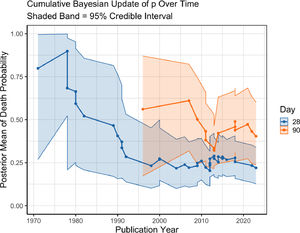
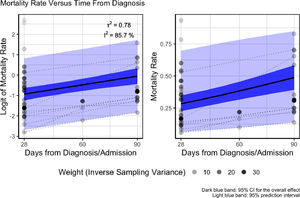
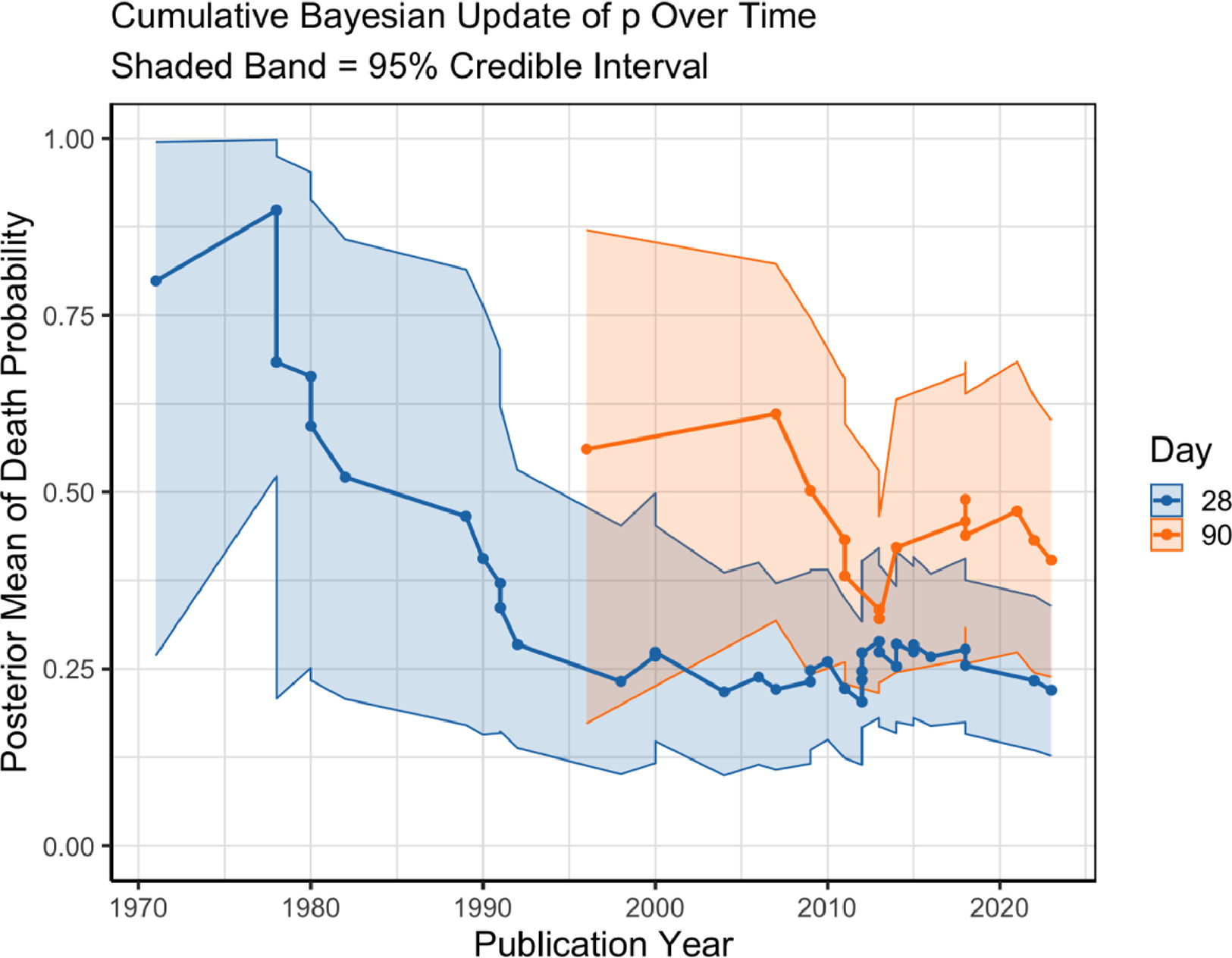
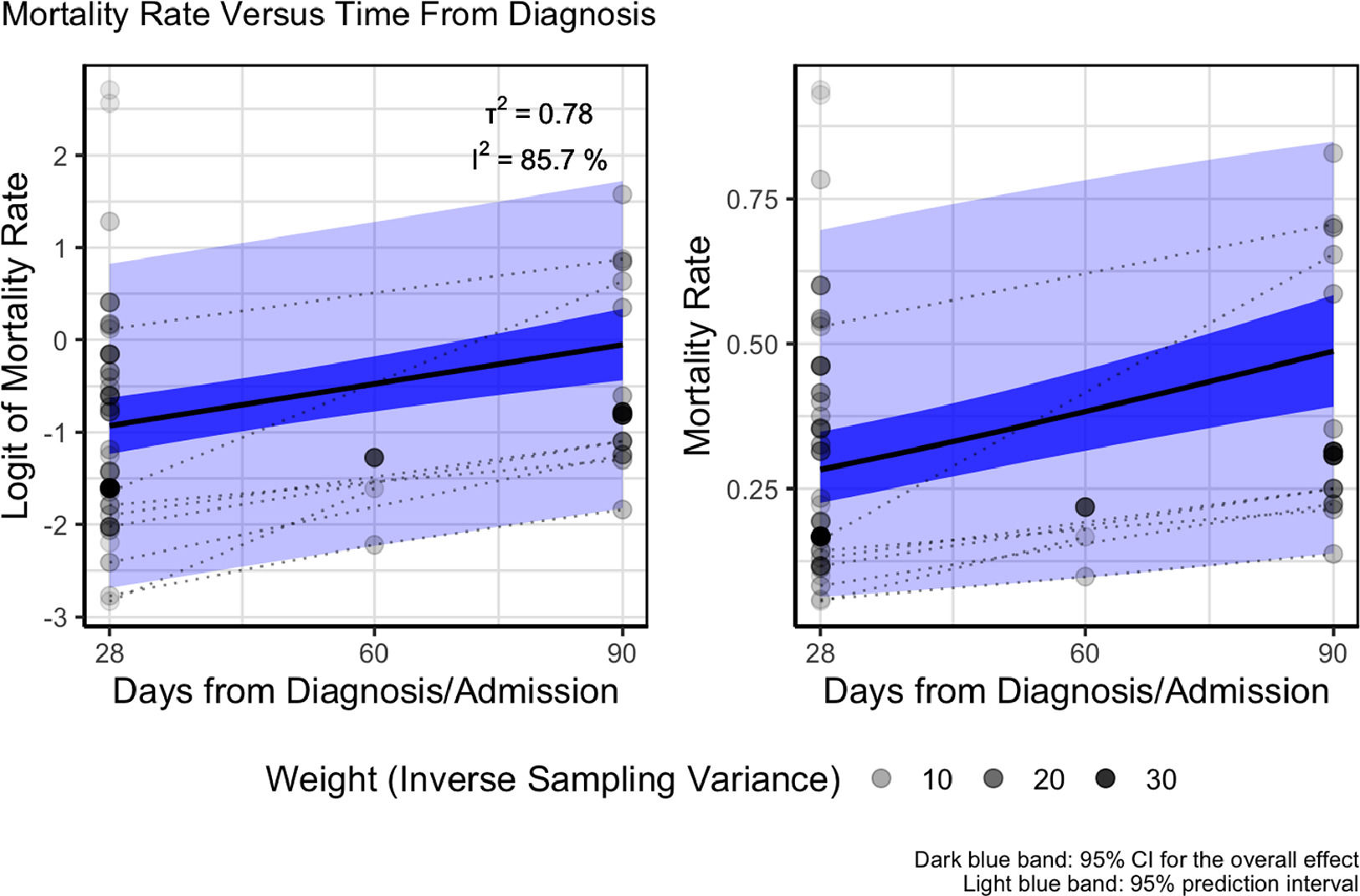
ResultsForty-five studies comprising 5,632 patients were included. Pooled mortality was 28.3% (95% CI: 22.5–34.8%) at 28 days, 38.3% (95% CI: 31.5–45.5%) at 60 days, and 48.7% (95% CI: 39.2–58.3%) at 90 days. Heterogeneity across studies was high (I2 > 80%). Bayesian models suggested a decline in 28-day mortality from over 50% in the 1970s to approximately 25% after 2000; however, no consistent reduction in overall mortality was observed. Meta-regression showed no significant association with sex, age, mDF, or publication year, but higher MELD scores were linked to increased mortality (β = +0.20 per point; 95% CI: +0.01 to +0.39; p = 0.037). The use of corticosteroids, NAC, or G-CSF did not significantly affect mortality.
ConclusionsDespite improved supportive care, short-term mortality in sAH remains high and unchanged over recent decades. These findings underscore the urgent need for effective treatments and support early liver transplant consideration in selected patients.