Abstracts Asociación Mexicana de Hepatología (AMH) 2024
More infoIschemic hepatitis transiently elevates aminotransferases due to reduced oxygen delivery to the liver. The most common cause is heart failure1. Cardiac tamponade is an accumulation of pericardial fluid that can cause hemodynamic compromise2. The association of both is unusual, which is why it is important to identify them.
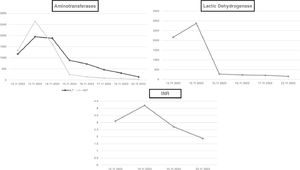
Materials and PatientsA 50-year-old patient with a history of type 2 diabetes, systemic arterial hypertension and chronic kidney disease, presented in November 2023 due to hypotension with data of low output during a hemodialysis session, adding dyspnea on minor exertion and abdominal pain located in the right hypochondrium. Upon admission with hemodynamic instability, it was decided to start vasopressor support. In laboratory studies, it presents elevated aminotransferases (Alanine aminotransferase at 1947 U/L and aspartate aminotransferase at 2649 U/L), lactate at 5 mmol/L, lactic dehydrogenase at 2166 U/L and elevated INR at 3.15. An ultrasound of the liver and bile ducts was performed, reporting parenchyma with increased echogenicity and pericardial effusion. An evaluation was requested by Cardiology, performing a transthoracic echocardiogram, showing severe pericardial effusion with a separation of up to 34 mm in the basal region. Pericardiocentesis was performed with the extraction of 850 milliliters of pericardial fluid. As part of the approach, viral and autoimmune etiology was ruled out as a cause of liver disease. PCR for Mycobacterium tuberculosis in the pericardial fluid was requested with a negative report and no malignancy data in the pericardial effusion approach. Patient with clinical improvement and progressive decrease in transaminase levels until normalization.
ResultsIschemic hepatitis has been associated with cardiovascular diseases. The pathogenesis of ischemic hepatitis appears to occur as a result of two mechanisms, when the liver that is at risk is subsequently exposed to systemic hypoperfusion and ischemia, ultimately resulting in a marked but transient elevation of aminotransferases3. The diagnosis is largely clinical and uses three criteria, a clinical setting of cardiac, circulatory, or respiratory failure, transient increase in serum aminotransferase activity, and exclusion of other causes of liver cell necrosis, especially viral hepatitis or induced drugs hepatitis1. Other abnormal laboratory findings may be found in patients with ischemic hepatitis, such as increased lactic dehydrogenase levels, reduced prothrombin activity, increased serum creatinine, serum bilirubin, and serum lactate levels, due to an abnormal hepatic clearance. Non-invasive imaging options, such as abdominal ultrasound, may aid in the diagnosis of ischemic hepatitis. Dilatation of the inferior vena cava and suprahepatic veins due to passive congestion suggests this. However, the diagnostic utility of ultrasound has not yet been validated1.
ConclusionsIschemic hepatitis is a cause of elevated aminotransferase levels, a consequence of a serious underlying disease that leads to a >50% in-hospital mortality rate3. The only recognized treatment is to correct the predisposing condition. Timely recognition is vital, as delaying diagnosis can worsen outcomes4.
Ethical statement: The standards of the Declaration of Helsinki were taken into account. This study is considered risk-free, following the Regulations of the General Health Law on Health Research, Second Title, Chapter I, Article 17, Section II, published in the Official Gazette on January 6, 1987.
Declaration of interests: None.
Funding: This research did not receive any specific grant from funding agencies in the public, commercial, or not-for-profit sectors.