



Abstracts of the 2025 Annual Meeting of the ALEH
More infoSevere alcohol-related liver disease (ALD) is a life-threatening condition with high short-term mortality, particularly in patients with underlying cirrhosis.
To describe the clinical characteristics and survival outcomes of patients with severe ALD.
Materials and MethodsWe conducted a retrospective study at a referral hospital in Peru from January 2020 to June 2024. Adults with severe alcoholic hepatitis based on NIAAA criteria and presenting with MELD >20 and/or GAHS ≥9 were included. Clinical data including scores (MELD, GAHS, Lille), complications, and management were collected. Survival was analyzed using Kaplan-Meier.
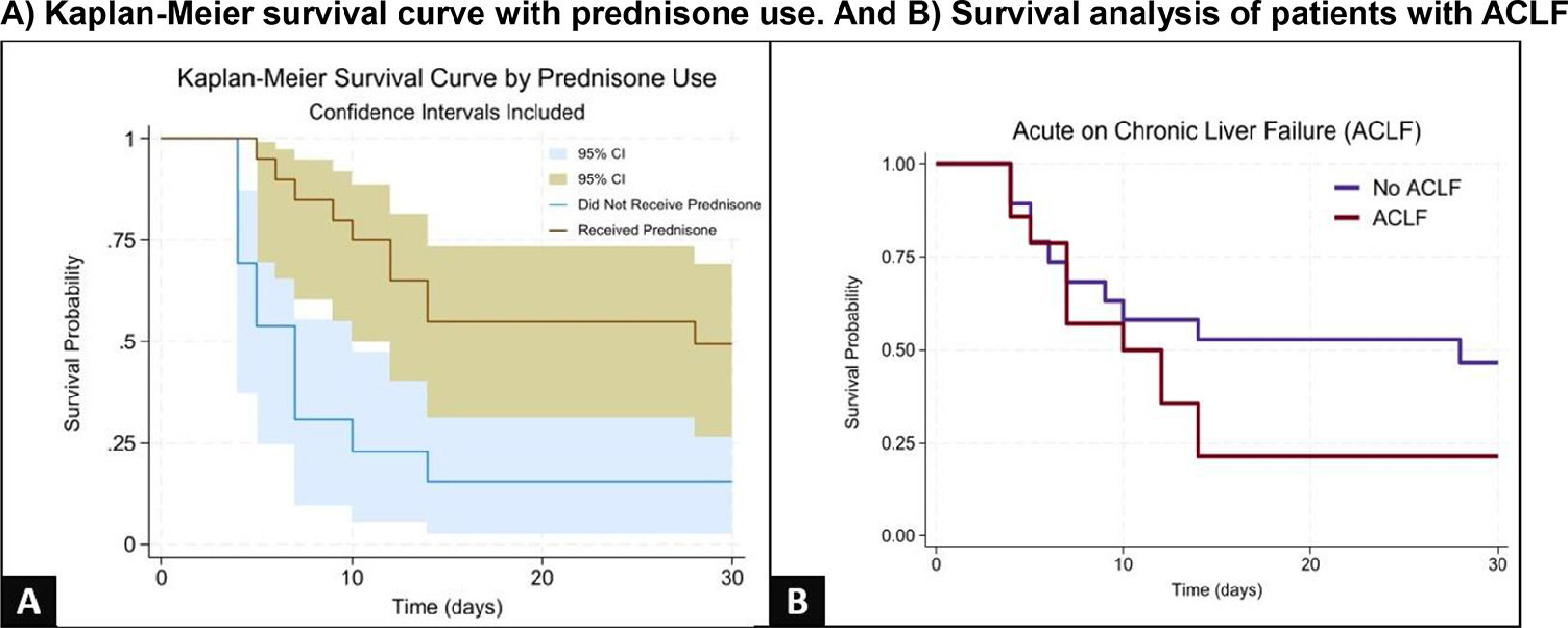
ResultsWe identified 33 cases (29 males, 4 females) with a mean age of 51 ± 10.9 years. Cirrhosis was present in 91% of cases. The mean GAHS was 9.8 ± 1.1, and the median MELD score was 27 (IQR: 22–33.5). Lille score <0.45 on day 7 in 30%. Upper gastrointestinal bleeding occurred in 21%, and 61% developed infections, with pneumonia (54%) and peritonitis (6%) being the most frequent. Twenty-six patients died; the leading cause of death was sepsis (61%), followed by respiratory failure (9%). Patients treated with prednisone (61%) had a 28-day survival probability of 49.5% (95% CI: 26.5%–69%) and a six-month survival of 27.5% (95% CI: 10%–48%). Among patients with ACLF (42%), the 28-day survival probability was 21% (95% CI: 5%–45%).
ConclusionsThis is the largest Latin American series on severe alcoholic hepatitis. Infections and organ failure were frequent. Corticosteroid use improved short-term survival, while ACLF was associated with low survival probability.






