



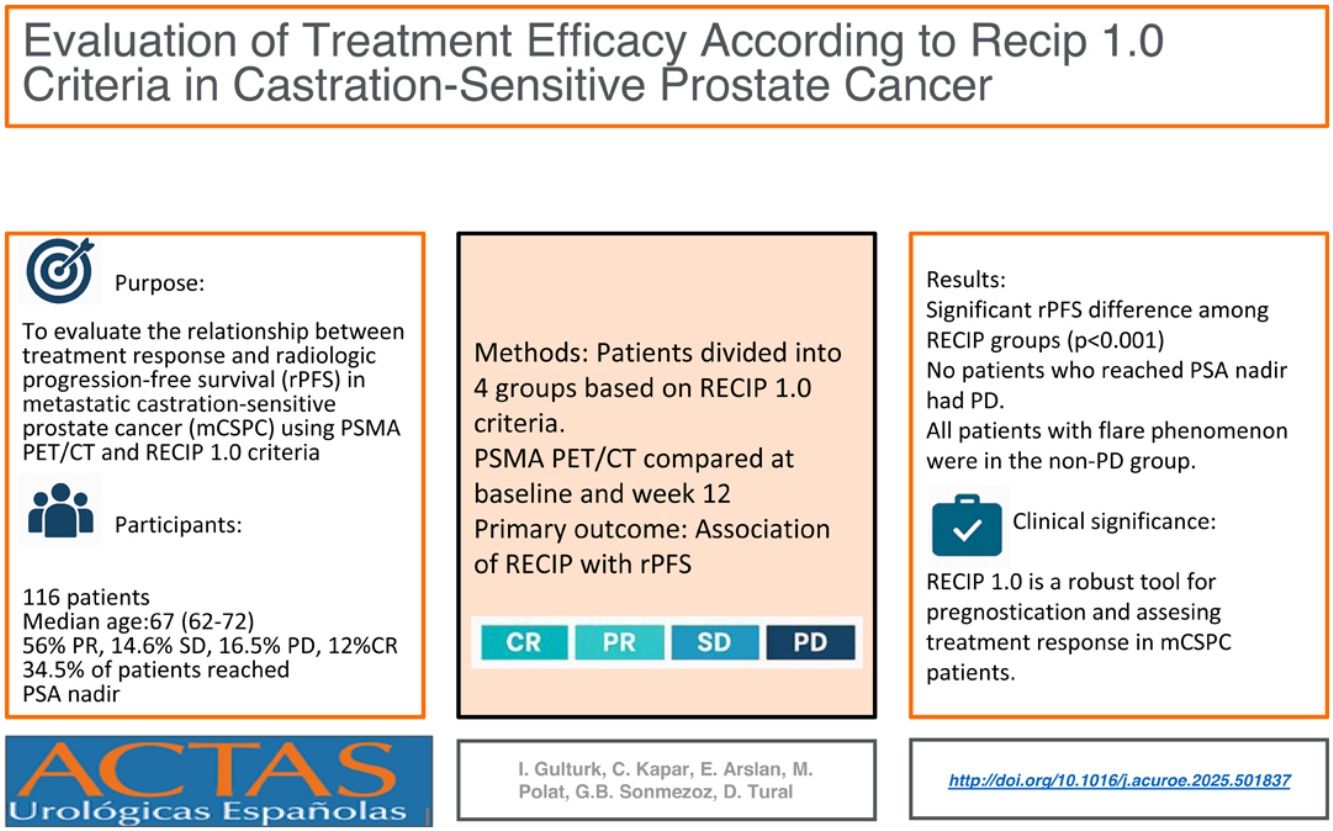
To evaluate the relationship between treatment response and radiological progression-free survival (rPFS) in patients with metastatic castration-sensitive prostate cancer (mCSPC) assessed by PSMA-PET/CT using Response Evaluation Criteria on PSMA (RECIP 1.0) criteria.
MethodsIn this study, 116 patients were analyzed retrospectively. At the beginning of the treatment and week 12 were PSMA PET/CT images evaluated for changes in total tumor volüme and new lesions. Patients were divided into four groups according to RECIP criteria; complete response (CR), partial response (PR), stable disease (SD) and progressive disease (PD). The primary outcome was the correlation of RECIP criteria with rPFS.
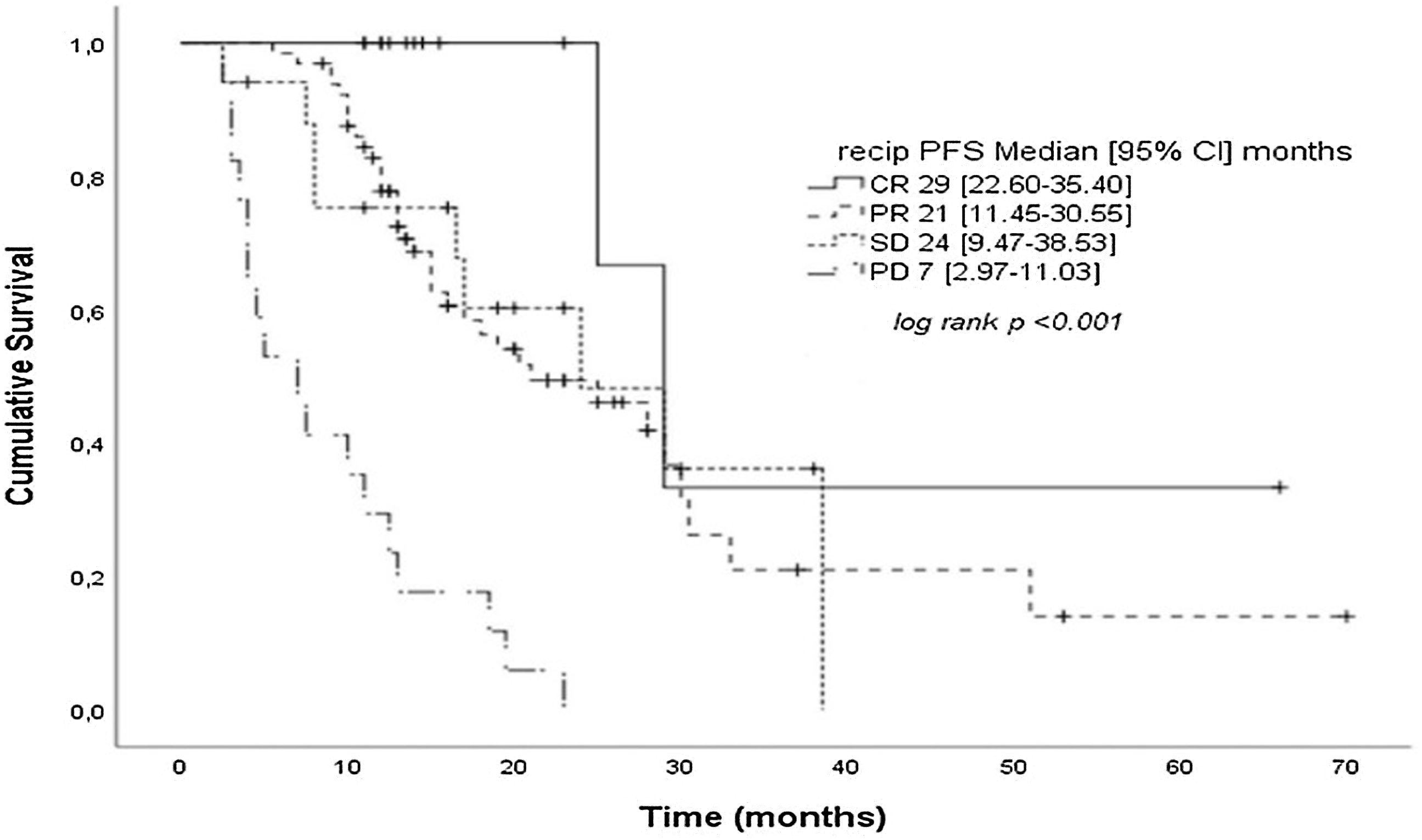
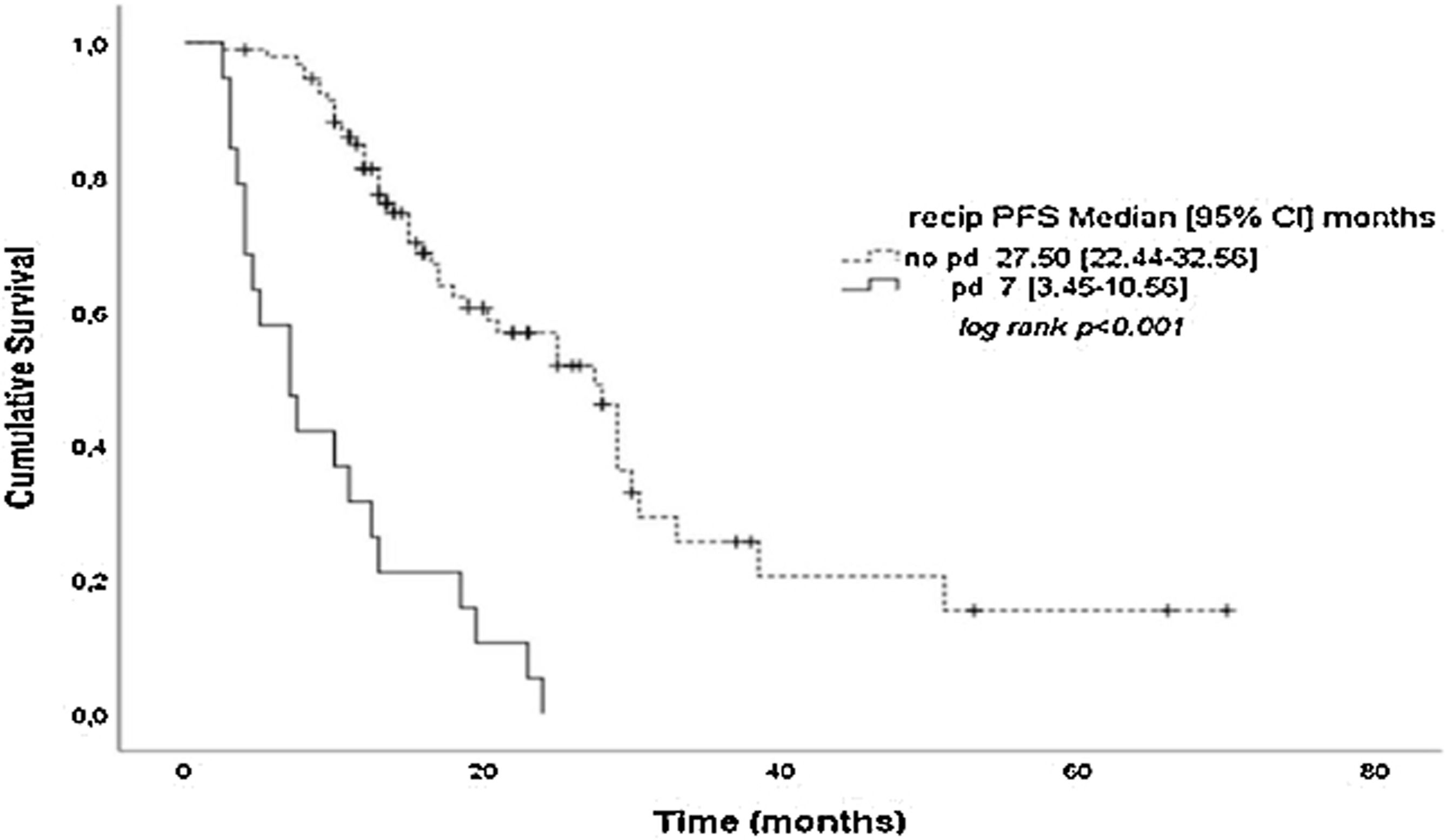
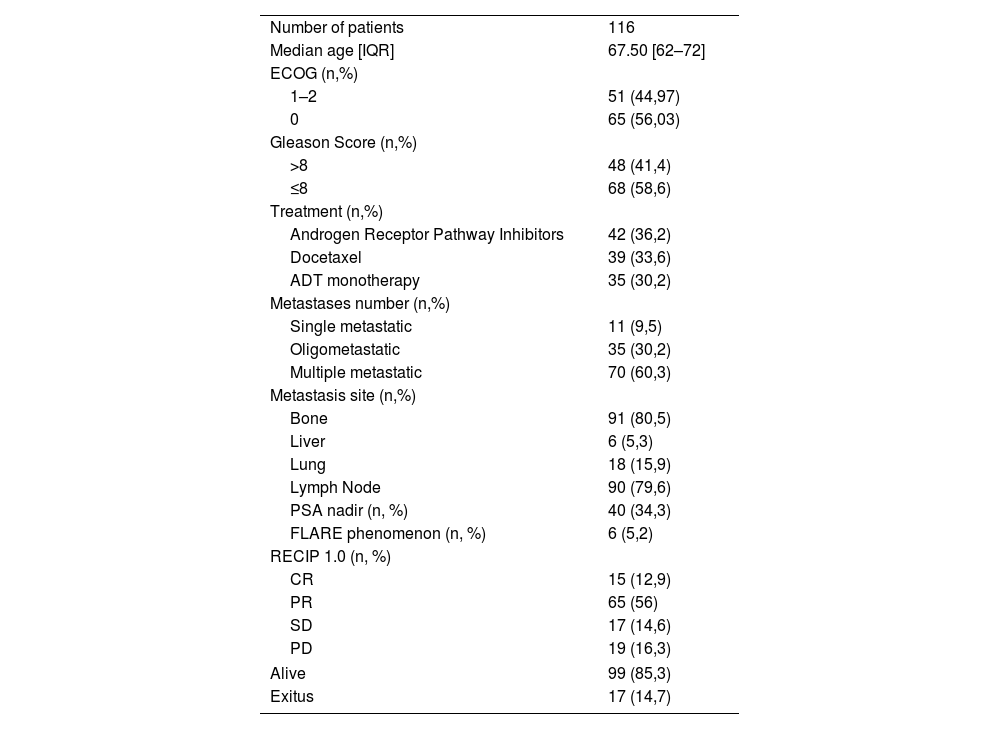
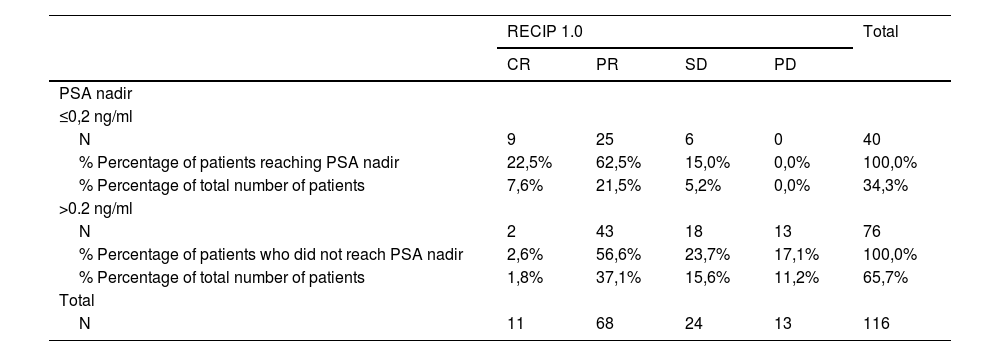
ResultsMean age of the patients was 67 years [IQR: 62–72]. Total of 116 patients; 65 (56%) hadPR, 17 (14,6%) SD, 19 (16,3%) PD, and 15 (12%) CR. rPFS was found to be statistically significantly different among these four groups (p < 0.001). RECIP PD was found to be significantly shorter rPFS compared with non-PD (p < 0.001), with an rPFS of 7 months (95% CI: 3.45–10.56). PSA values were measured at nadir in 40 patients and no patient in this group was evaluated as having PD.
ConclusionRECIP criteria have been shown to have prognostic significance in terms of evaluating treatment response and rPFS in mCSPC patients.
Evaluar la relación entre la respuesta al tratamiento y la supervivencia libre de progresión radiológica (rPFS) en pacientes con cáncer de próstata metastásico sensible a la castración (mCSPC), evaluados mediante PSMA-PET/CT utilizando los criterios Response Evaluation Criteria in PSMA-imaging (RECIP 1.0).
MétodosEn este estudio se analizaron retrospectivamente 116 pacientes. Las imágenes PSMA-PET/CT se evaluaron al inicio del tratamiento y en la semana 12 para detectar cambios en el volumen tumoral total y aparición de nuevas lesiones. Los pacientes se dividieron en cuatro grupos según los criterios RECIP: respuesta completa (CR), respuesta parcial (PR), enfermedad estable (SD) y enfermedad progresiva (PD). El objetivo principal fue la correlación de los criterios RECIP con la rPFS.
ResultadosLa edad media de los pacientes fue de 67 años [RIC: 62-72]. En total, de los 116 pacientes: 65 (56%) presentaron PR, 17 (14,6%) SD, 19 (16,3%) PD y 15 (12%) CR. Se observó que la rPFS fue significativamente diferente entre los cuatro grupos (p < 0,001). Los pacientes clasificados como PD según RECIP presentaron una rPFS significativamente más corta en comparación con los no-PD (p < 0,001), con una rPFS de 7 meses (IC 95%: 3,45–10,56). Se registró el nadir de PSA en 40 pacientes y, en este grupo, ningún paciente fue clasificado como PD.
ConclusiónSe ha demostrado que los criterios RECIP tienen un valor pronóstico significativo en cuanto a la respuesta al tratamiento y la rPFS en pacientes con mCSPC.


