




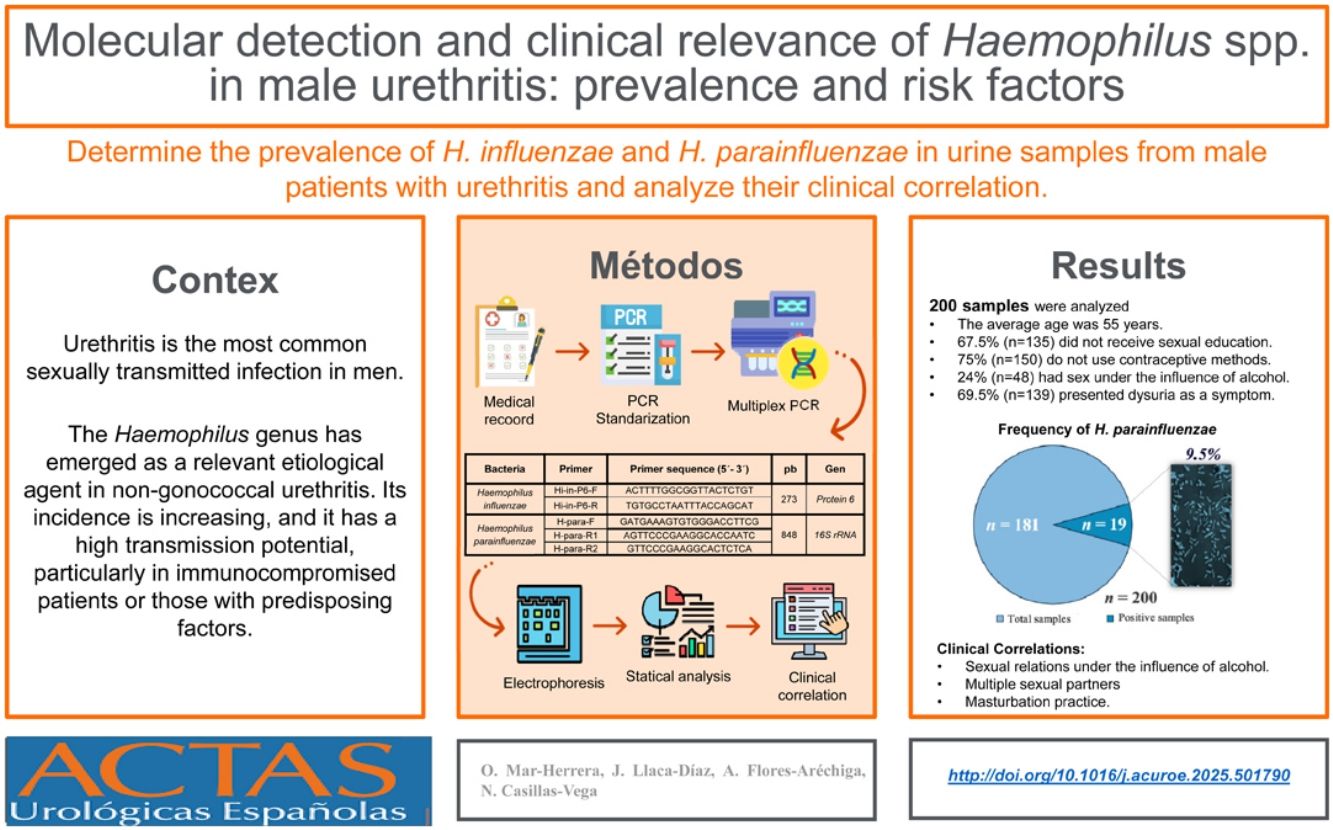


Urethritis is the most common sexually transmitted infection in men. Haemophilus influenzae and Haemophilus parainfluenzae, commensal microorganisms of the respiratory and oral tract, have been proposed as potential etiological agents of non-gonococcal urethritis (NGU). This study aimed to determine the prevalence of these species in urine samples from men with urethritis and analyze their clinical correlation.
MethodsA total of 200 urinary DNA samples from patients diagnosed with urethritis were analyzed. Microorganisms were identified through multiplex PCR, amplifying the P6 and 16S rRNA genes. Associations between risk factors and infection were evaluated by calculating odds ratios (OR) and 95% confidence intervals (CI) using OpenEpi 3.03a.
ResultsThe mean age of the population was 55 years (range 20–95). Among the participants, 32.5% had received prior sexual education, and 75% reported not using contraceptive methods. H. influenzae was not detected in any sample, whereas H. parainfluenzae was present in 9.5% (n = 19) of cases. Significant associations were identified with the absence of formal education, a history of more than ten sexual partners, masturbation, and sexual intercourse under the influence of alcohol and/or drugs.
ConclusionsAlthough H. influenzae and H. parainfluenzae have been rarely identified in urethritis, their high transmissibility and clinical relevance suggest the need for their detection in high-risk populations. Their identification may contribute to improving diagnosis and the implementation of therapeutic strategies.
La uretritis es la infección de transmisión sexual más frecuente en hombres. Haemophilus influenzae y Haemophilus parainfluenzae, microorganismos comensales del tracto respiratorio y oral, han sido propuestos como posibles agentes etiológicos de la uretritis no gonocócica. Este estudio tuvo como objetivo determinar la prevalencia de estas especies en muestras de orina de hombres con uretritis y analizar su correlación clínica.
MétodosSe analizaron 200 muestras de ADN urinario de pacientes diagnosticados con uretritis. La identificación de los microorganismos se realizó mediante PCR múltiple, amplificando los genes P6 y 16S rRNA. Se evaluaron asociaciones entre los factores de riesgo e infección mediante el cálculo de razones de momios (OR) e intervalos de confianza (IC 95%) con OpenEpi 3.03a.
ResultadosLa media de edad de la población fue de 55 años (rango 20–95). El 32.5% de los participantes había recibido educación sexual previa, y el 75% mencionó no utilizar métodos anticonceptivos. H. influenzae no fue detectado en ninguna muestra, mientras que H. parainfluenzae estuvo presente en el 9.5% (n = 19) de los casos. Se identificacon asociaciones significativas con la ausencia de educación formal, un historial de más de diez parejas sexuales, masturbación y relaciones sexuales bajo los efectos del alcohol y/o drogas.
ConclusionesAunque H. influenzae y H. parainfluenzae han sido raramente identificados en uretritis, su elevada transmisibilidad y relevancia clínica sugieren la necesidad de su detección en poblaciones de alto riesgo. Su identificación puede contribuir a mejorar el diagnóstico y la implementación de estrategias terapéuticas.


