



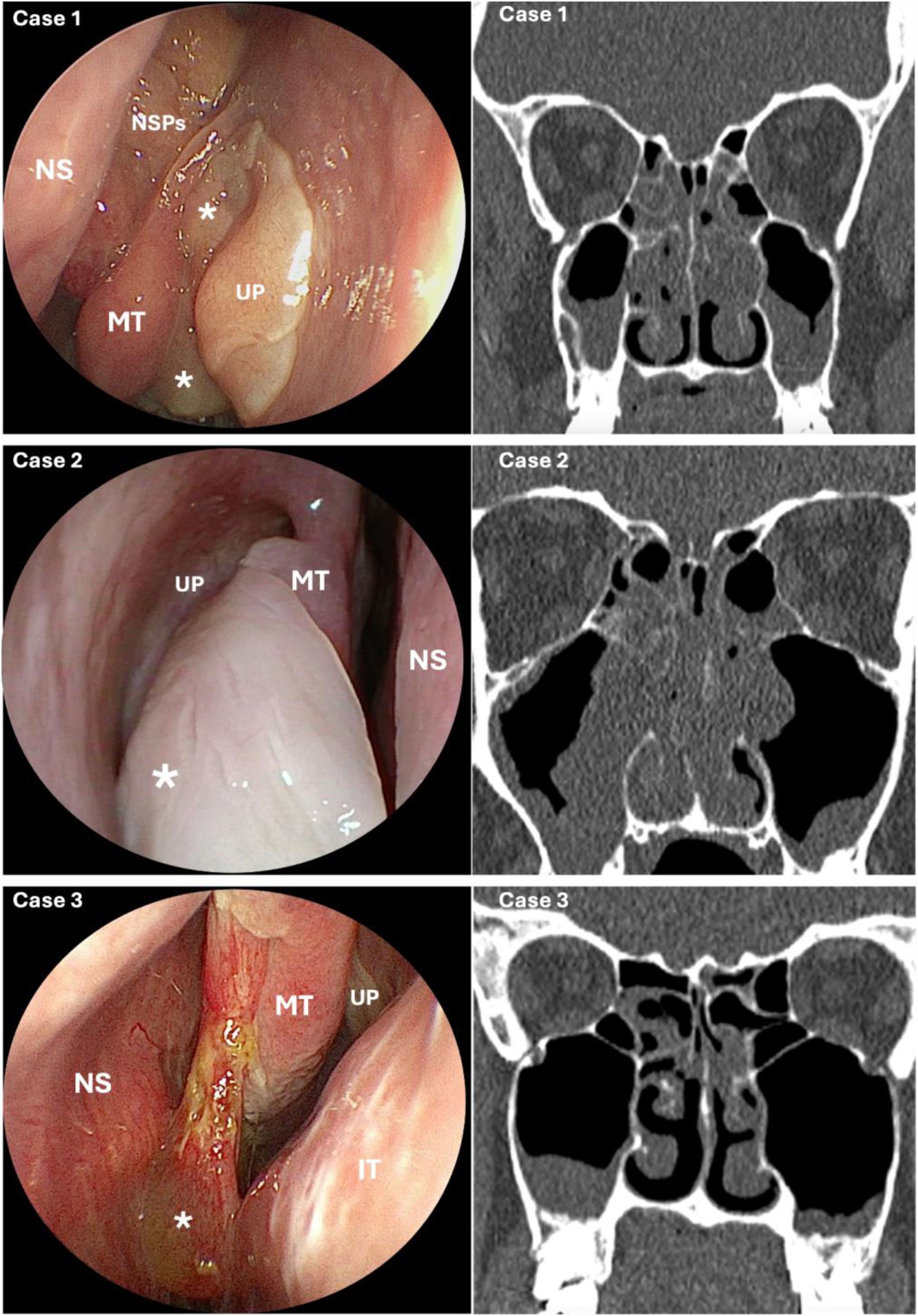
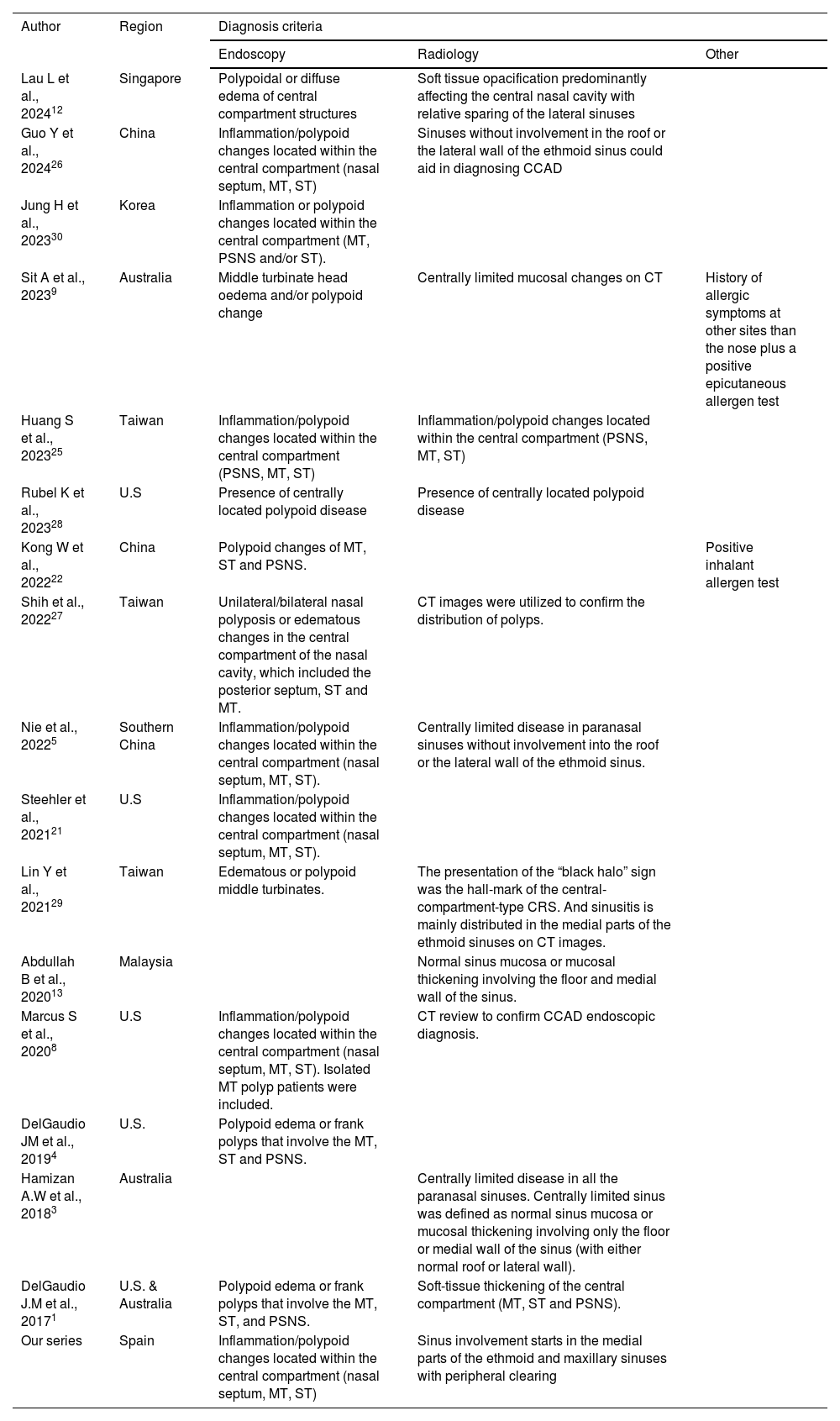
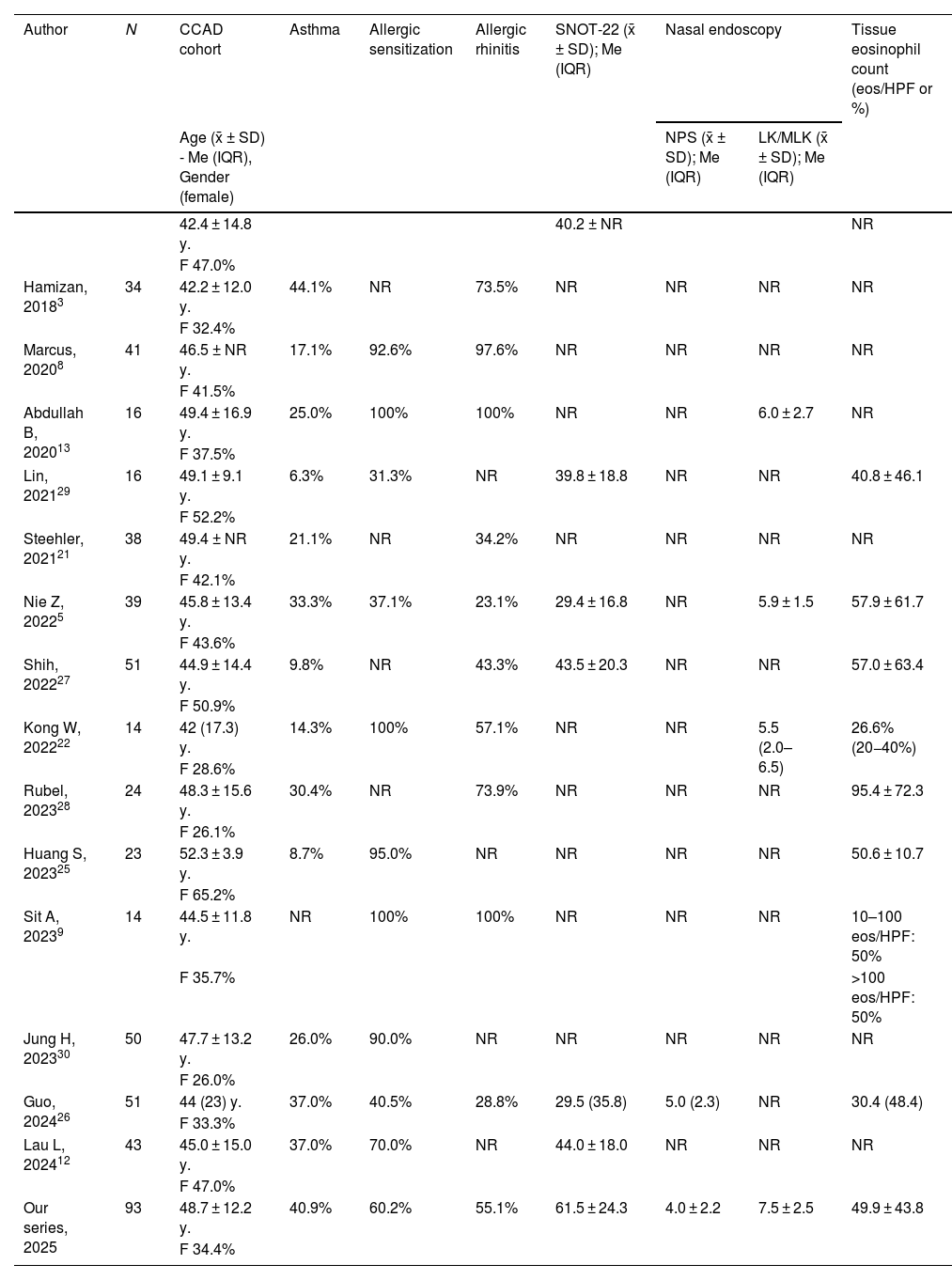
Central compartment atopic disease (CCAD) is an emerging phenotype of type-2 chronic rhinosinusitis (CRS), characterized by inflammation involving the central nasal structures. The absence of standardized diagnostic criteria has hindered its recognition. This study aims to describe the first European cohort of CCAD patients and compare its features with previously published international data.
Materials and methodsA retrospective observational study was conducted including adult patients diagnosed with CCAD at a tertiary rhinology unit (2021–2024), based on predefined endoscopic and radiologic criteria. Demographic, clinical, exploratory, analytical and quality-of-life data were collected. Descriptive statistics were used to characterize the baseline profile of the study population.
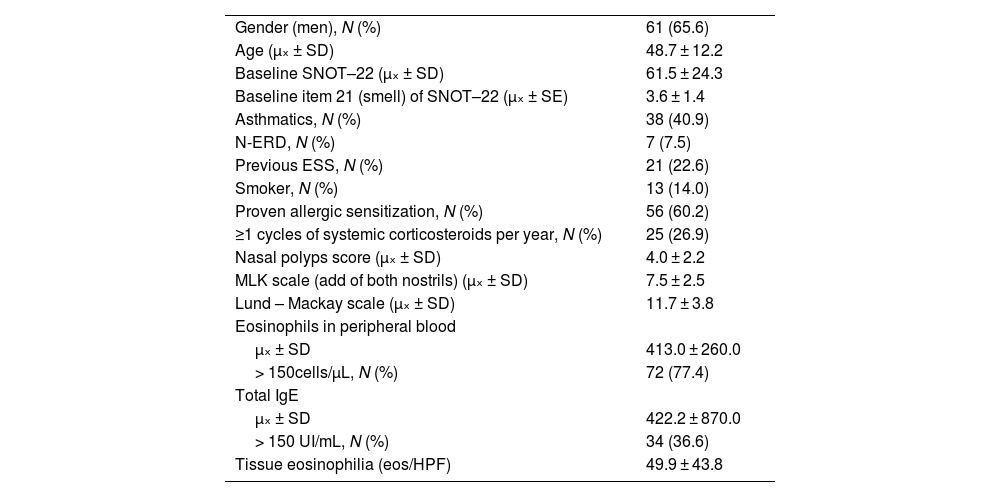
ResultsThe cohort of 93 CCAD patients was predominantly male (65.6%) with a mean age of 48.7 ± 12.2 years. The baseline SNOT-22 score averaged 61.5 ± 24.3, with marked olfactory impairment. Asthma and N-ERD were reported in 40.9% and 7.5% of cases, respectively; allergic sensitization was confirmed in 60.2%. The mean endoscopic scores were 4.0 ± 2.2 for the nasal polyp score and 7.5 ± 2.5 for the modified Lund-Kennedy scale, while the mean CT-scan score was 11.7 ± 3.8. Blood eosinophilia >150 cells/μL was present in 77.4% of patients, and tissue eosinophil counts averaged 49.9 ± 43.8 eosinophils per high-power field.
ConclusionThis study reinforces CCAD as a localized type-2 CRS phenotype with a distinctive atopic signature. Findings underscore the need for standardized diagnostic criteria to improve its recognition and guide more personalized therapeutic strategies.
La enfermedad atópica del compartimento central (CCAD) es un fenotipo emergente de rinosinusitis crónica tipo 2, caracterizado por inflamación y formación de pólipos en las estructuras nasales centrales, como el cornete medio (CM), el cornete superior (CS) y el septo nasal superior (SNS), aunque la ausencia de criterios diagnósticos estandarizados ha dificultado su reconocimiento. Este estudio describe la primera cohorte europea de pacientes con CCAD, comparándose con datos internacionales previamente publicados.
Material y métodosEstudio observacional retrospectivo incluyendo a pacientes con CCAD entre 2021–2024, basado en criterios endoscópicos y radiológicos predefinidos. Se recogieron datos demográficos, clínicos, exploratorios, analíticos y de calidad de vida. Se realizó un análisis descriptivo para caracterizar el perfil basal de la población del estudio.
ResultadosCohorte de 93 pacientes con CCAD predominantemente masculina (65.6%) con edad media de 48.7 ± 12.2 años. La media en el SNOT-22 fue de 61.5 ± 24.3, con alteración olfatoria marcada. Un 40.9% de los pacientes era asmático; la sensibilización alérgica se confirmó en el 60.2%. Las puntuaciones endoscópicas medias para pólipos nasales (NPS) fueron de 4.0 ± 2.2 y 7.5 ± 2.5 para la escala de Lund-Kennedy modificada. La puntuación media radiológica fue de 11.7 ± 3.8 (LMS). Se observó eosinofilia sanguínea en el 77.4% y el recuento tisular promedio fue de 49.9 ± 43.8 eosinófilos por campo de gran aumento.
ConclusiónEste estudio refuerza que la CCAD representa un fenotipo de CRS tipo 2 con perfil atópica determinante. Los hallazgos subrayan la necesidad de establecer criterios diagnósticos estandarizados para mejorar su reconocimiento y orientar estrategias terapéuticas más personalizadas.
