



Tinnitus is the perception of sounds in the absence of an external acoustic signal. Many patients with tinnitus complain of attention and concentration difficulties that affect their daily life activities.
ObjectivesThis study was done to assess the auditory attention ability in normal hearing patients with subjective chronic tinnitus, and to study the relation between auditory attention and the degree of tinnitus handicap and the psychoacoustic characterization of tinnitus.
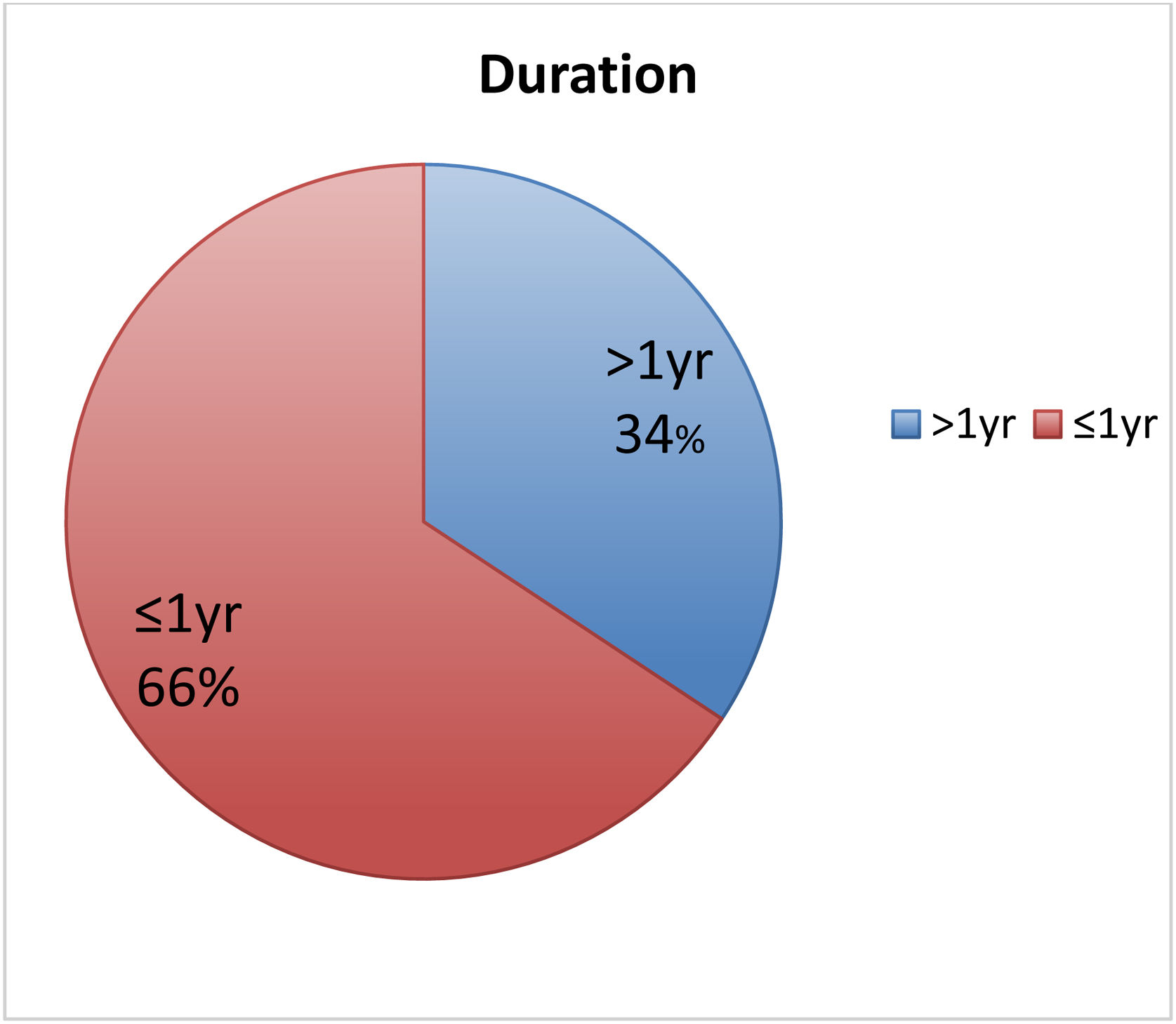
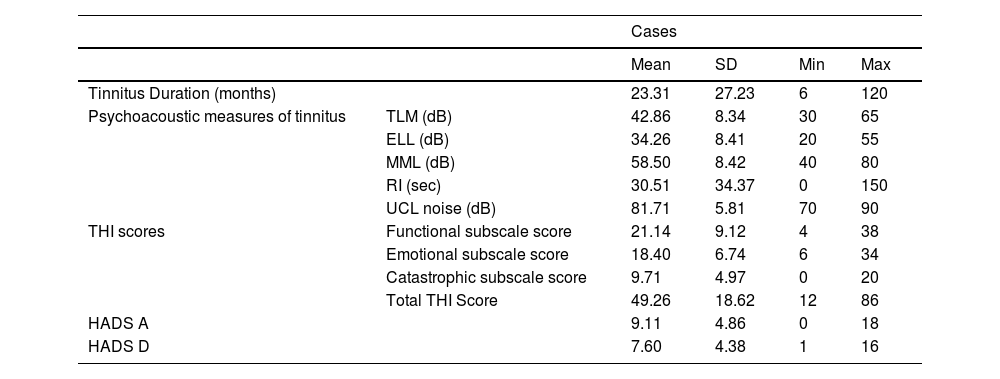
Subjects and methodsThis is a case control study that included 35 normal hearing chronic (>6 months duration) tinnitus patients, between 18–50 years of age, of both genders, compared to 35 normal hearing controls without tinnitus. Tinnitus severity was assessed by the Tinnitus Handicap Inventory, and the Hospital Anxiety and Depression Scale was used to assess the psychological status of the patients. Auditory attention was evaluated by behavioral measures: The vigilance test of the Montreal Cognitive Assessment (VMoCA), the Digit forward span test (DFST), Speech-in-noise (SPIN) test, and the Dichotic digits test (DDT).
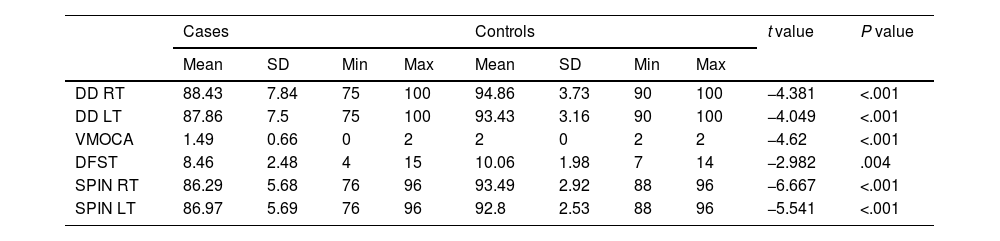
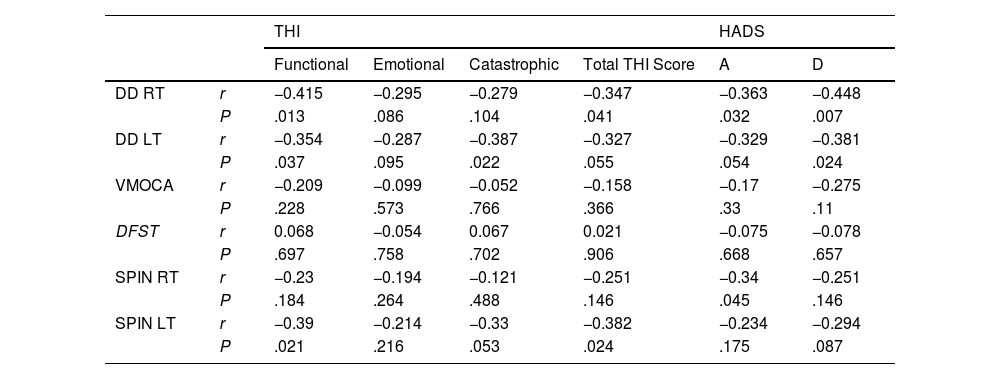
ResultsTinnitus cases in the current study performed significantly worse than their controls on the behavioral measures of auditory attention measured (P value <.05). The vigilance test of the Montreal Cognitive Assessment (VMOCA) was significantly affected with a mean of 1.49 (SD ± 0.66) as compared to controls (Mean: 2 ± 0). There was a statistically significant (P < .05) negative correlation between functional subscale of THI with DDT test right ear (r = −0.415) and left ear (r = −0.354). There was a statistically significant (P < .05) negative correlation between catastrophic subscale of THI with DDT test left ear (r = −0.387). There was a statistically significant (P < .05) negative correlation between total score of THI with DDT test right ear (r = −0.347). Also, there was a statistically significant (P < .05) negative correlation between functional subscale of THI and SPIN test results in the left ear (r = −0.39), and between total score of THI and SPIN test in the left ear (r = −0.382).
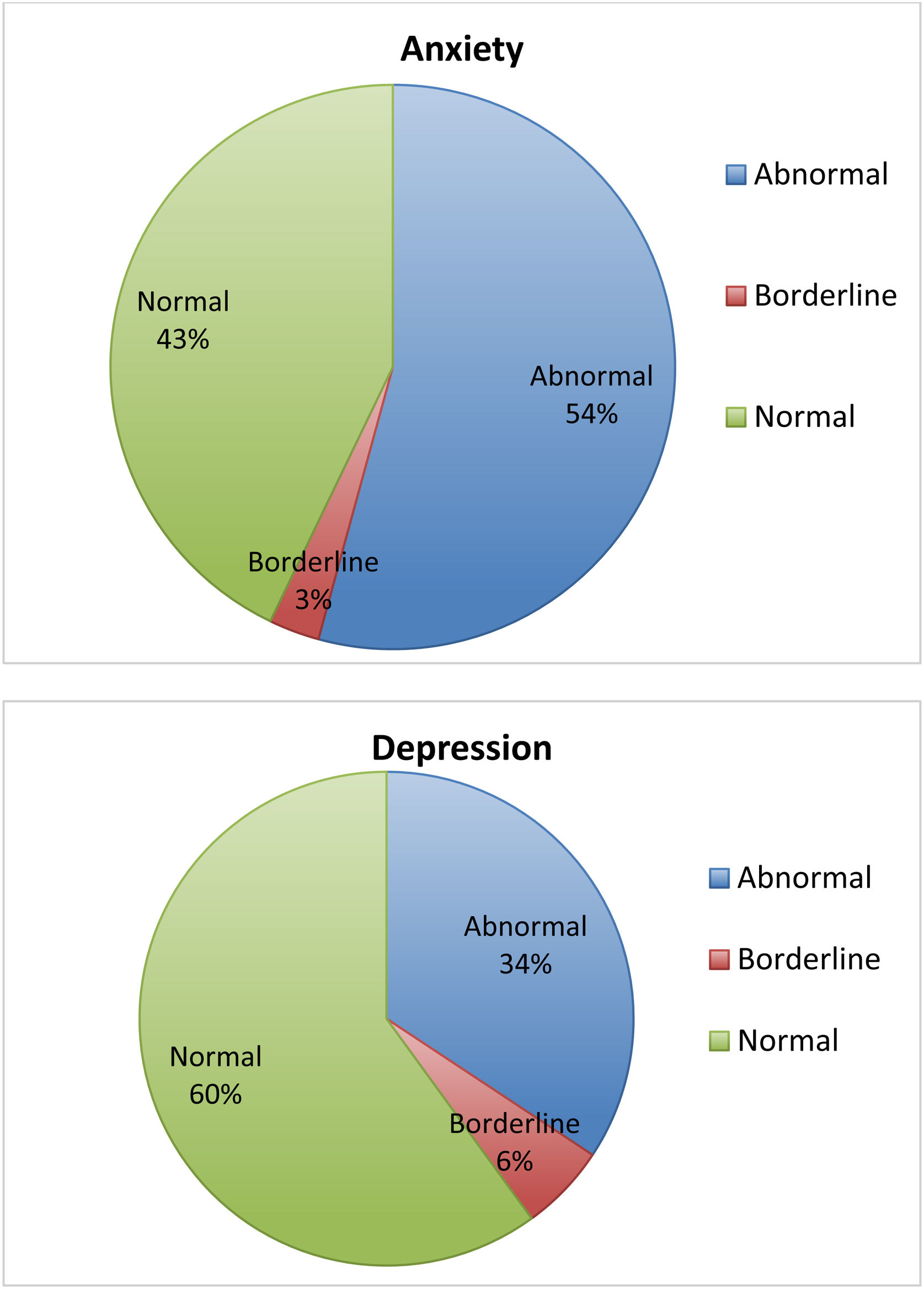
ConclusionChronic tinnitus is linked to anxiety, depression, and impaired auditory attention. These findings suggest that therapies for tinnitus should include cognitive and emotional support.
El tinnitus es la percepción de sonidos en ausencia de una señal acústica externa. Muchos pacientes con tinnitus se quejan de dificultades de atención y concentración que afectan sus actividades cotidianas.
ObjetivosEste estudio se realizó para evaluar la capacidad de atención auditiva en pacientes con audición normal y tinnitus crónico subjetivo, y para estudiar la relación entre la atención auditiva y el grado de discapacidad del tinnitus y la caracterización psicoacústica del tinnitus.
Sujetos y métodosEste fue un estudio de casos y controles que incluyó 35 pacientes con tinnitus crónico (>6 meses de duración) con audición normal, entre 18 y 50 años de edad, de ambos sexos, en comparación con 35 controles con audición normal sin tinnitus. La gravedad del tinnitus se evaluó mediante el Inventario de Incapacidad por Tinnitus, y se utilizó la Escala Hospitalaria de Ansiedad y Depresión para evaluar el estado psicológico de los pacientes. La atención auditiva se evaluó mediante medidas conductuales: la prueba de vigilancia de la Evaluación Cognitiva de Montreal (VMoCA), la prueba de span de dígitos hacia adelante (DFST), la prueba de habla en ruido (SPIN) y la prueba de dígitos dicóticos (DDT).
ResultadosLos casos de tinnitus en el estudio actual se desempeñaron significativamente peor que sus controles en las medidas conductuales de atención auditiva medidas (valor P < ,05). La prueba de vigilancia de la Evaluación Cognitiva de Montreal (VMOCA) se vio afectada significativamente con una media de 1,49 (DE ± 0,66) en comparación con los controles (Media: 2 ± 0). Hubo una correlación negativa estadísticamente significativa (P < ,05) entre la subescala funcional de THI con la prueba DDT del oído derecho (r = −0,415) y el oído izquierdo (r = −0,354). Hubo una correlación negativa estadísticamente significativa (P < ,05) entre la subescala catastrófica de THI con la prueba DDT del oído izquierdo (r = −0,387). Hubo una correlación negativa estadísticamente significativa (P < ,05) entre la puntuación total de THI con la prueba DDT del oído derecho (r = −0,347). Además, hubo una correlación negativa estadísticamente significativa (P < ,05) entre la subescala funcional del THI y los resultados de la prueba SPIN en el oído izquierdo (r = −0,39), y entre la puntuación total del THI y la prueba SPIN en el oído izquierdo (r = −0,382).
ConclusiónEl tinnitus crónico se relaciona con la ansiedad, la depresión y la disminución de la atención auditiva. Estos hallazgos sugieren que las terapias para el tinnitus deben incluir apoyo cognitivo y emocional.
