



In many forensic investigations into cases of cyberbullying and online violence against minors, video footage can serve as crucial evidence, as it allows the identification of the perpetrator's physical features. Although the face is often concealed, other parts of the body are frequently exposed and can be revealing.
ObjectiveThis study analyzes the horizontal linear folds (HLFs) on the dorsal aspect of the proximal interphalangeal joint (PIPJ) of the dorsum of the hands as a unique anatomical feature for human identification with legal value in forensic medicine.
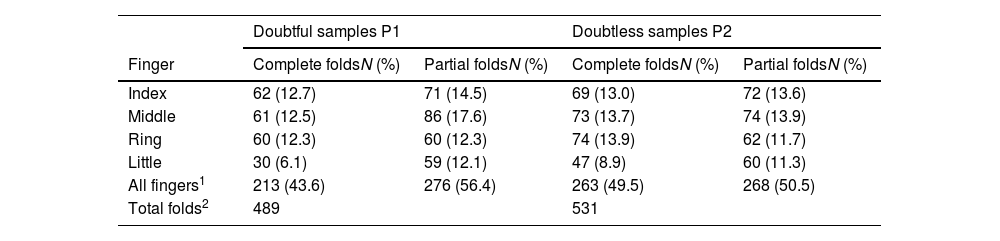
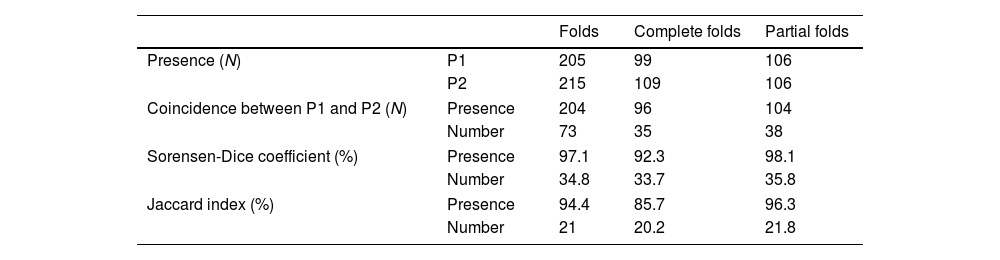
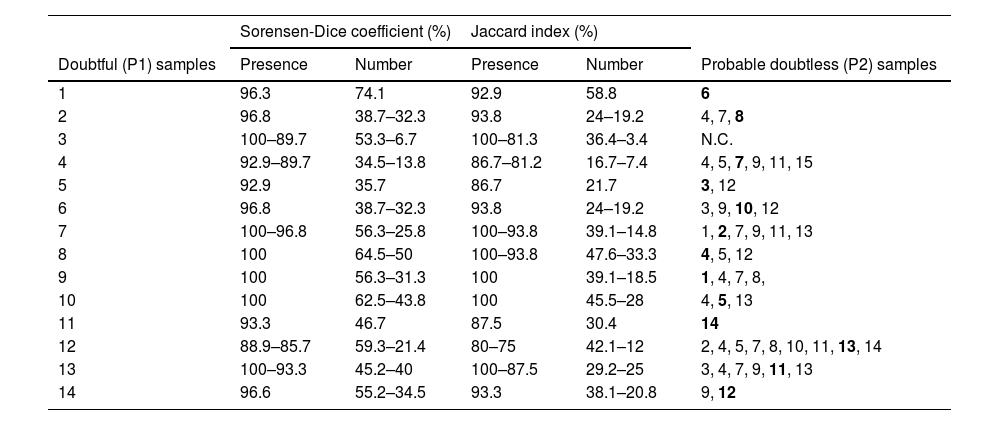
Material and methodsReal and ideal scenarios were performed to obtain doubtful and doubtless images of the dorsal hands by a webcam and a high-resolution camera, respectively. The presence and number of HLF from 112 dorsal PIPJs (4 fingers, 2 hands, 14 individuals) were quantified and statistically compared by analyzing the similarity between sample groups using Sorensen-Dice coefficient and Jaccard index.
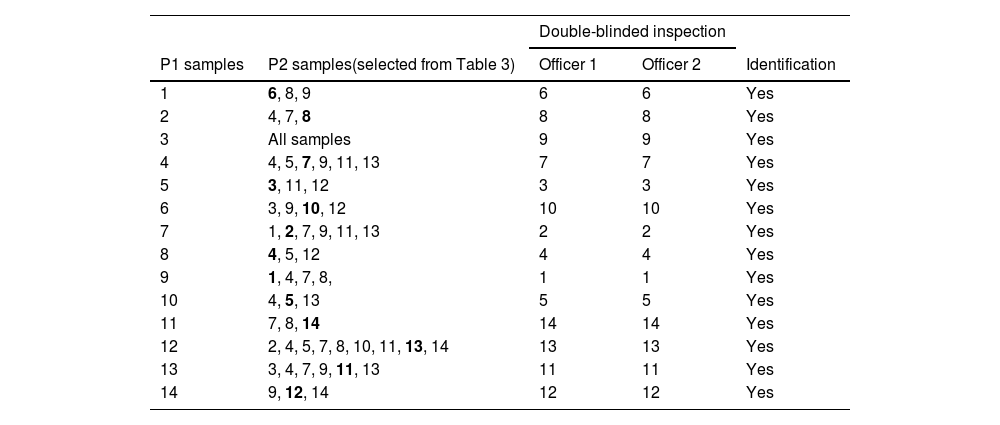
ResultsHLF resulted in a sensitivity (positive identification) of 78.57%, but a specificity (negative identification) of 26.1% (area under ROC curve = 55.3%). Visual inspection of doubtful and doubtless samples achieved a 100% match in human identification.
ConclusionsThe morphological variability and unique pattern of the HLF can be used as a simplified method to delimit human identification in forensic medicine.
En muchas investigaciones forenses sobre casos de ciberacoso y violencia en línea contra niños, niñas y adolescentes, los vídeos pueden representar una evidencia crucial, ya que permiten identificar características físicas del agresor. Aunque este suele ocultar su rostro, a menudo quedan al descubierto otras partes del cuerpo que pueden ser reveladoras.
ObjetivoEste estudio analiza los pliegues lineales horizontales en la cara dorsal de la articulación interfalángica proximal del dorso de las manos como una característica anatómica única para la identificación humana con valor legal en medicina forense.
Material y métodosSe realizaron escenarios reales e ideales para obtener imágenes dubitadas e indubitadas del dorso de las manos mediante una webcam y una cámara de alta resolución, respectivamente. Se cuantificaron la presencia y el número de pliegues lineales horizontales de 112 PIPJ (4 dedos, 2 manos, 14 individuos) y se compararon estadísticamente analizando la similitud entre los grupos de muestras mediante el coeficiente de Sorensen-Dice y el índice de Jaccard.
ResultadosLos pliegues lineales horizontales dieron como resultado una sensibilidad (identificación positiva) del 78,57%, pero una especificidad (identificación negativa) del 26,1% (área bajo la curva ROC = 55,3%). La inspección visual de muestras dubitadas e indubitadas logró una coincidencia del 100% en la identificación humana.
ConclusionesLa variabilidad morfológica y el patrón único de los pliegues lineales horizontales pueden utilizarse como método simplificado para delimitar la identificación humana en medicina forense.