


Currently, the Institutes of Legal Medicine and Forensic Sciences (IMLCF) are in a turbulent environment favoured by the emergence of new challenges and different professional categories and demands, all of this linked to the generational change and the imminent change in the qualification requirements for access to the Corps of Forensic Doctors. Beyond the need for greater resources, the convenience of exploring the capacities of the IMLCF to face these challenges is raised. From the emerging paradigm of robust governance, articulated from four institutional capacities (strategic, management, relational and analytical), a scheme is proposed that allows the articulation of change proposals to promote the systematic reinforcement of the IMLCF.
To do this, an operating model based on flexibility with adaptive capacity must be implemented, but which integrates the essential stability to maintain its basic activities.
It is proposed to plan and give proposals for improvement that help to successfully face the challenge of generational change in forensic medicine professionals taking the IMLCF of Alicante as an example.
En la actualidad los Institutos de Medicina Legal y Ciencias Forenses (IMLCF) se encuentran en un entorno de turbulencia favorecido por la aparición de nuevos retos y distintas categorías profesionales y demandas, todo ello unido al relevo generacional y al inminente cambio en los requisitos de titulación para el acceso al Cuerpo de Médicos Forenses (CMF). Más allá de la necesidad de contar con mayores recursos, se plantea la conveniencia de explorar las capacidades de los IMLCF para afrontar dichos retos. Desde el paradigma emergente de la gobernanza robusta, articulado a partir de cuatro capacidades institucionales (estratégica, de gestión, relacional y analítica) se plantea un esquema que permite articular las propuestas de cambio para propiciar el refuerzo sistemático de los IMLCF.
Para ello debe implementarse un modelo de funcionamiento basado en la flexibilidad con capacidad adaptativa, pero que integre la estabilidad imprescindible para mantener sus actividades básicas.
Se propone planificar y dar propuestas de mejora que ayuden a afrontar con éxito el reto del relevo generacional en los profesionales de la medicina forense tomando como ejemplo el IMLCF de Alicante.
The creation of the Institutes of Legal Medicine and Forensic Sciences (IMLCF) in Spain began in 1985 with the Ley Orgánica del Poder Judicial (Organic Law of the Judiciary).1 The general principles of their structure and organisation were later included in the White Paper on Forensic Medicine promoted by the Ministry of Justice.2 However, it was not until 1996, that it was translated into legislation, with the publication of Royal Decree 386/1996, of 1 March, approving the Regulations of the Institutes of Forensic Medicine.3 The first institute was set up at the end of the last century, and gradually, others were created in the rest of the country; the one in the Community of Madrid was the last to start operating in 2020. This historical introduction is important in order to understand the transformation that forensic medicine in Spain has undergone in the last 30 years, from a dispersed and atomised organisation in groups of forensic centres, with the exception of some provincial capitals, to an organisation with territorial and functional structures made up of institutes. Its main function is still to provide technical advice to the judicial system, but it has developed a multidisciplinary approach (the “forensic-centred model”) and is moving towards functions that go beyond the judicial system,4 in areas such as teaching (with the accreditation of the IMLCF as a teaching unit for specialist health training5), research, or as a source of social and health information, among others. In this context, with the new regulations for the IMLCFs published in 2023,6 we believe it is appropriate to address the challenges in the management of the IMLCFs, including, as in other organisations, particularly in public administration, that of generational change.
Up to now, the IMLCF's management model has basically been a bureaucratic one, which has allowed for stable work in the face of unchanging scenarios, but which is inadequate in the face of new demands. Maintaining this model through inertia, without moving towards new models of public management that offer flexibility, agility, and the search for dynamic solutions to the more than imminent shortage of professionals, for different reasons depending on the professional discipline, will not provide a solution to the enormous difficulties in integrating new professionals.
The multiple interactions in the operating system of the IMLCFs must move towards network governance involving the institutions. These would have to promote the role of the professionals that make them up, raise awareness of their functions, and allow a motivating approach to the different professional disciplines that are part of the IMLCF. This would make their professional performance attractive, which would allow us not only to attract talent but also to stabilise and retain it, preventing it from leaving for other institutions.
The development of this new form of management requires leadership, which is not very well developed in the IMLCFs.
The IMLCFs are made up of different professional groups,6 with different characteristics in terms of their provision systems. In the case of forensic medicine, the challenges to be faced are the generational change due to retirement and the shortage of medical professionals in each specialty, and the access system itself, which is undergoing a process of change.
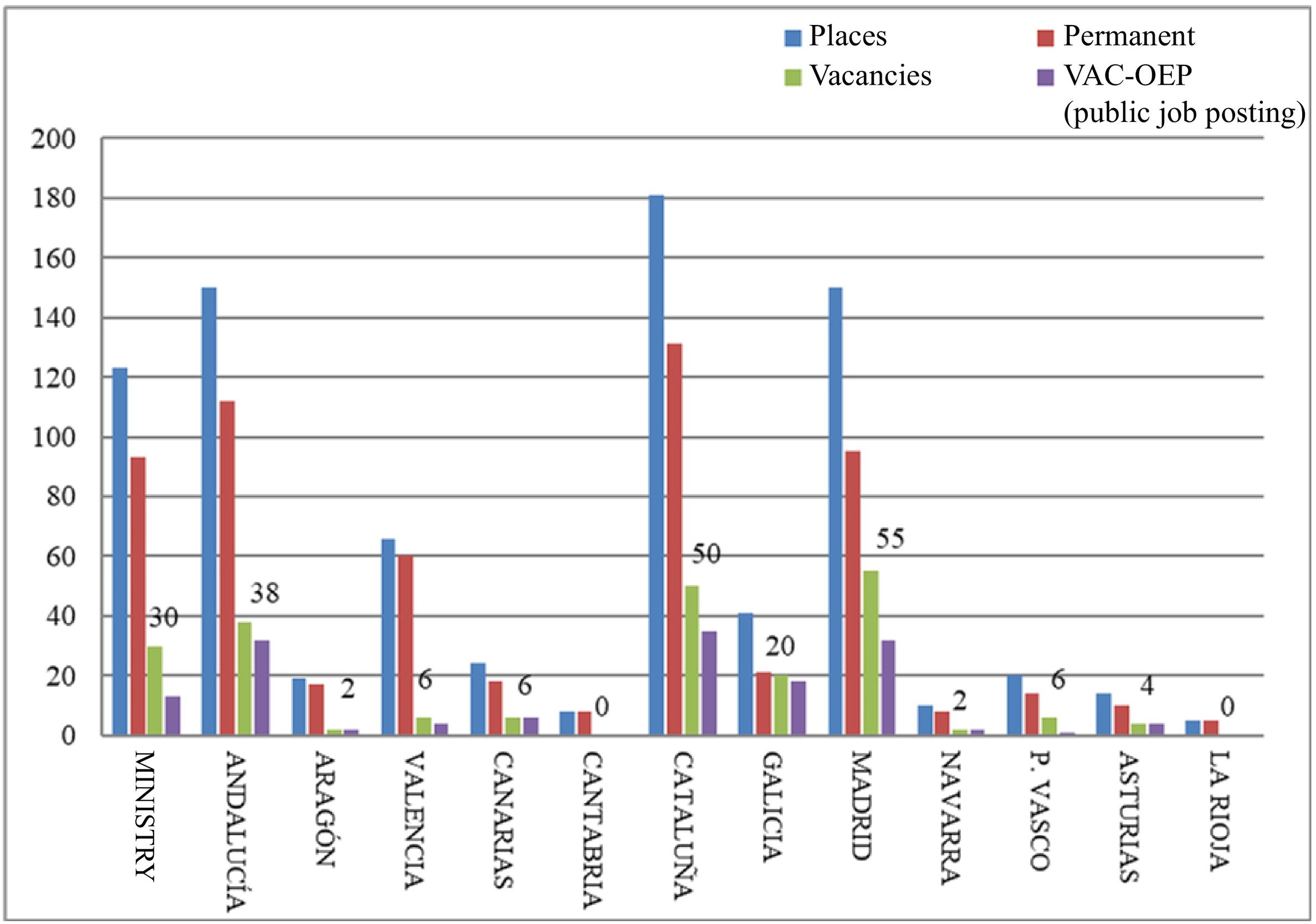
It is necessary to promote strategies that make it possible to focus on institutional capacities at different levels, since it is clear that financial resources alone, although they have allowed the number of posts to increase, are not sufficient if professionals do not fill these posts (Fig. 1).

According to the data of 2024 of the Transparency Portal of the Generalitat Valenciana, the forensic medicine professionals are the oldest among the judicial personnel, with 31.03% over the age of 60.7
Precisely in order to offer a coherent and clear approach to the proposals, it is proposed that they be articulated through the institutional capacities that deploy robust governance.
Based on this approach, the article is divided into four sections. The first introduces the concept of robust governance and the capacities that develop it. This framework is then used to provide a brief diagnosis of the situation in a specific case, that of the IMLCF in Alicante. In the following section, the framework of institutional capacities is used to develop a series of proposals for strengthening them in the same case analysed. The article ends with some concluding remarks.
Robust governance based on institutional capacityIn an environment characterised by instability, poor planning, and crisis as structural features, it is essential to review the organisational model of public administrations and its components, of which human resources management is one of the most critical. With regard to the revision of the organisational model, the first step is to consider the paradigm with which it is associated (bureaucratic, new public management, network governance) and the possibility of proposing new options that allow responses in line with the new scenario. The paradigm of robust governance, resulting from the integration of different components of the previous ones, is an alternative to be considered in order to face the challenges presented.8
Robust governance is based on a reinterpretation of the potential of previous paradigms (such as bureaucratic, managerial, or network governance) to configure new responses to turbulent environments. Robust governance emphasises the ability to balance stability and change. According to Ansell et al. 9: “Robust governance systems must be able to change to preserve their functionality in the face of turbulence (stability requires change); to do so, however, they must provide the scaffolding and infrastructure that helps to support and generate change (change requires stability)’‘. In this sense of the term, stability should not be understood as rigidity, but as the permanence of a function or objective over time, regardless of the challenges that arise. However, the maintenance of this function or objective is not likely to be in its original form, but may be revised, expanded, or redefined according to changing circumstances. Similarly, change should not be conceived as merely reactive or incremental, with the aim of restoring the previous situation, but should be innovative and proactive, with the aim of achieving a flexible adaptation that takes advantage of the opportunities offered by turbulence to review the previous dynamics. In other words, robust governance goes hand in hand with an entrepreneurial character, aimed at exploring unforeseen developments arising from turbulence.10 These are robust responses that require holistic analysis, negotiated knowledge, experimentation, review, and innovation, while providing basic public services in a stable and continuous manner. Public services such as those that must continue to be provided by the IMLCFs, while simultaneously contemplating their transformation.
The use of robust governance in 4 capacities allows the identification of key areas for strengthening institutions such as the IMLCFs to face turbulent environments. The 4 capacities considered are:
- a)
Strategic capacity,11 which refers to the establishment of a medium- and long-term vision that allows the articulation of the set of activities to be developed, beyond the inevitable short-term adjustments that must be made to face specific crises.
- b)
Governance capacity,12 which refers to the organisation's ability to adapt the resources at its disposal - human, material, financial, etc. - in an agile and efficient way to face the new environment.
- c)
Relational capacity,13 which refers to how the organisation articulates a model of relationships of resource exchange and joint action with the network of actors with which it interacts.
- d)
Analytical capacity,14 which refers to how the organisation uses data management and manages information and knowledge both to improve decision-making and for monitoring and subsequent evaluation.
Among the many changes planned in the IMLCFs, it is proposed to focus attention on the challenge of generational renewal and to specify it in the Alicante IMLCF within a framework of robust governance based on the development of institutional capacities.
Addressing the challenge of generational renewal in terms of institutional capacities provides us with a framework that allows us to analyse the initial situation and to make proposals in relation to the different institutional capacities needed to address it satisfactorily. The aim is to provide arguments to help answer the question: what institutional capacities need to be fostered in order to successfully address the process of generational renewal in the IMLCFs in the short term?
Diagnosis of institutional capacitiesThis section provides a brief diagnosis of the Alicante IMLCF, based on the outline of institutional capacities, focusing on the challenge of intergenerational renewal.
Strategic capacityThis capacity relates to the role of the highest public management in terms of leading the process and its implementation in terms of a coherent strategy, involving the management of the organisation. This capacity is linked to the use of data for decision-making and facilitates the development of planning strategies that allow for learning and adaptation.15
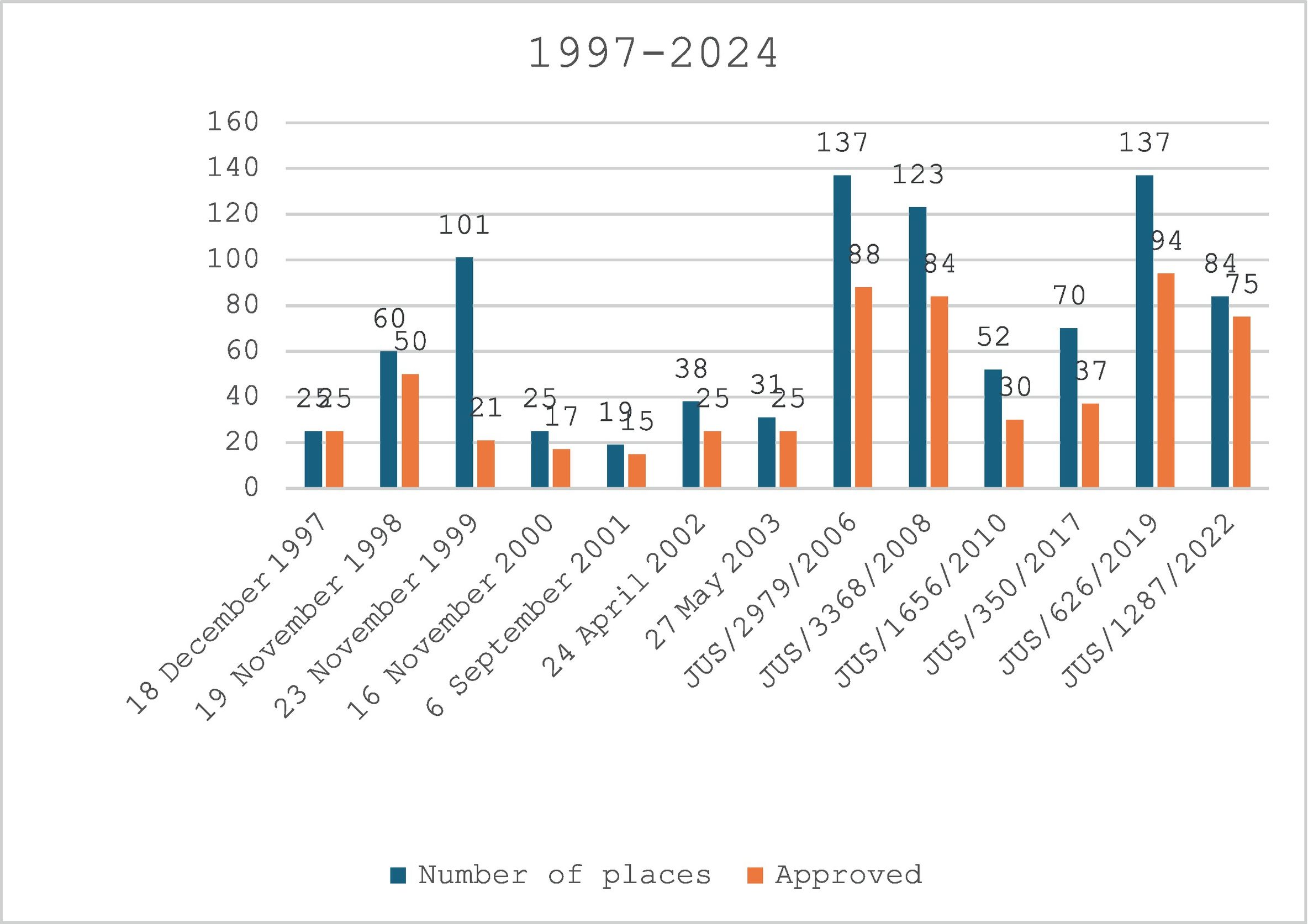
Since 1997, 902 places have been offered in the Corps of Forensic Doctors' (CMF) admission procedures. Three calls (123 places) are still pending. Of the remaining 779 places, 586 applicants (75.22%) passed the process (75.22%) (Fig. 2).

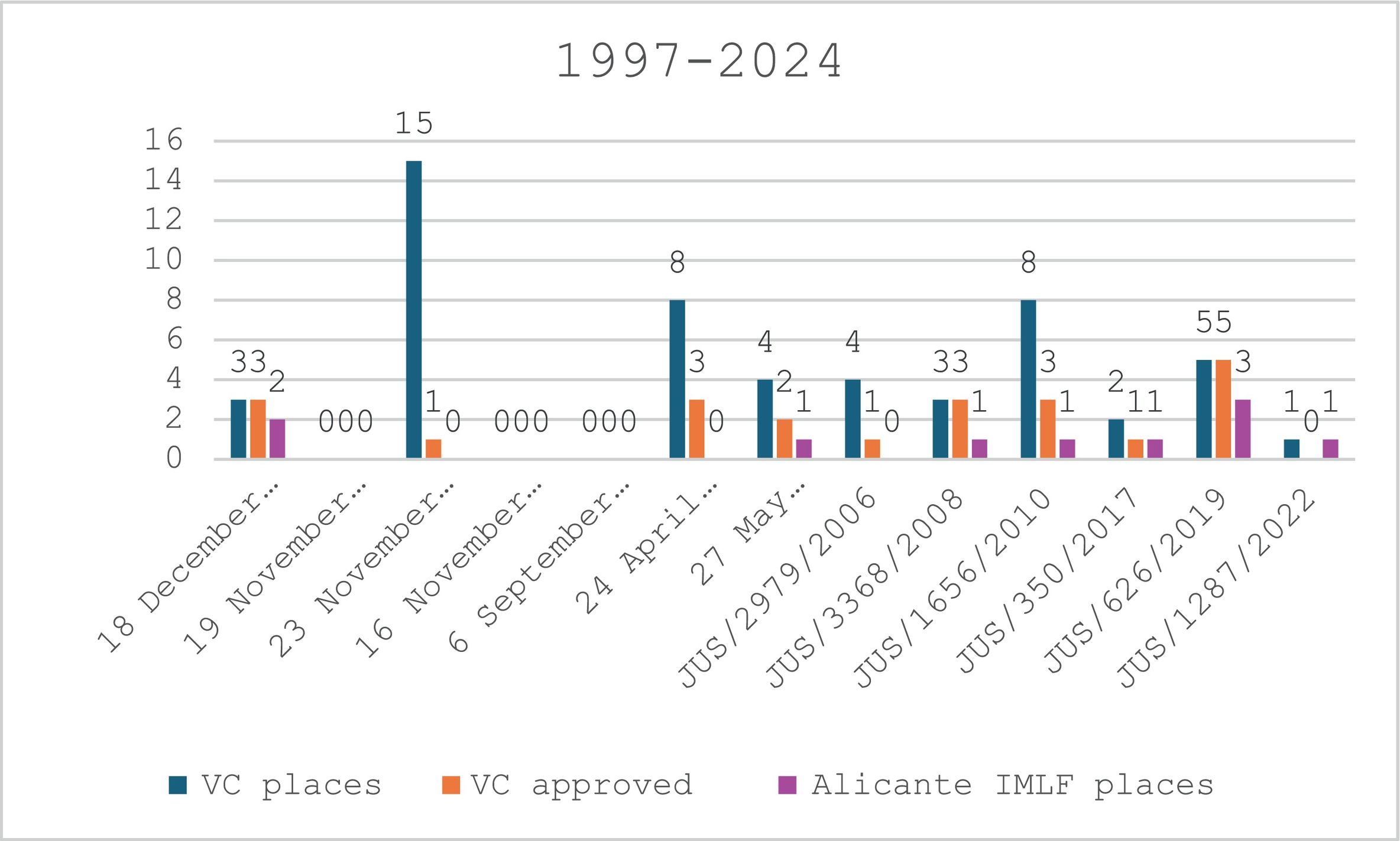
Of these places, a total of 53 were in the Valencian Community (VC) and 22 professionals (41.5%) were accepted. Of these, only 10 in 27 years were granted with Alicante as a first destination (4 of them automatically obtained another destination on secondment) (Fig. 3).

The Alicante IMLCF needs to draw up a strategic plan based on a preliminary analysis of the situation by the management. The plan should address new challenges, including generational change, which is closely linked to the transfer of knowledge between senior and junior professionals.
Career civil servants in the administration of justice are included in the state pension scheme, which means that they are automatically retired at the age of 65, although they can choose to extend their active service until the age of 70 at the latest. They can also take voluntary retirement at the age of 60, provided they have completed 30 years of service. What is needed is a strategy based on an active role that anticipates the scenario that we are approaching unless appropriate solutions are adopted in favour of delaying the retirement age to at least the compulsory age of 65.
The Alicante IMLCF currently has 104 professionals from different disciplines (psychology professionals, social workers, autopsy assistants, laboratory assistants, personnel from the general bodies of the administration of justice and the CMF). The problem of generational change affects forensic medicine professionals. Of a total of 41 posts, 26 are occupied by career civil servants (63.41%) and 15 are occupied by interim staff (36.58%). Of the career civil servants, 13 are men and 13 are women. In management and department and section head positions, 62.5% are men.
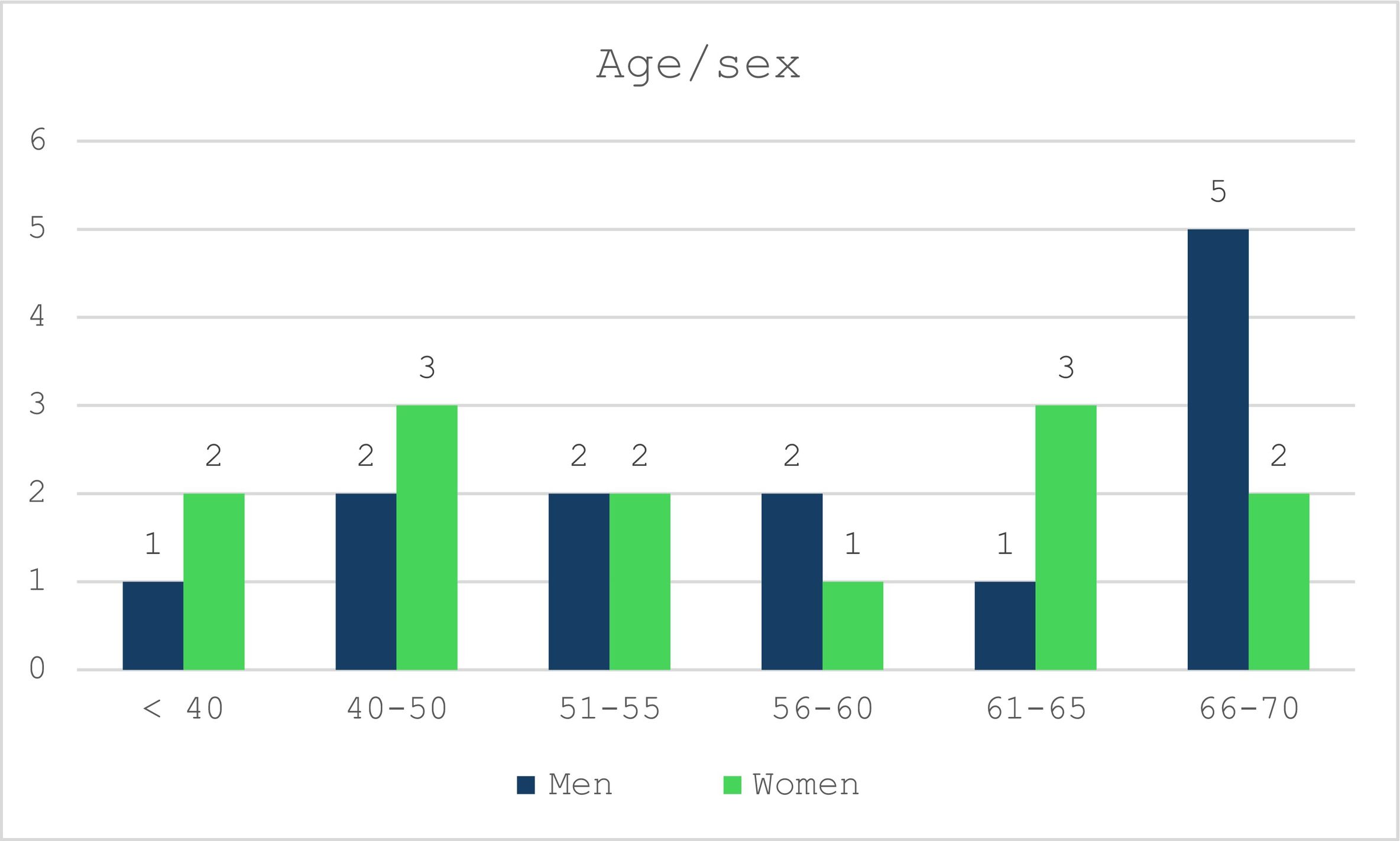
In terms of the current demographic situation of the Institute, the average age of career professionals is 53.63 years, in line with the national average in 2019,16 69% are over 50 and 42% are over 60, well above the national average of 28% in 2019. Twenty-seven percent are over 65, and the retirement age has therefore been extended. The average age is 55.84 for men and 53.74 for women (Fig. 4).
Organisational governance capacity
Royal Decree 704/2020, of 28 July, which establishes access to the title of Specialist in Legal and Forensic Medicine through the residency system,17 aims to improve the practice of medical experts and, therefore, to provide greater rigour to the administration of justice, which must rely in this area on specialist knowledge based on scientific evidence. Similarly, it allows institutes that meet the requirements to be accredited as teaching units to provide specialist training in health sciences.18 The Alicante IMLCF has been accredited to train a specialist in legal and forensic medicine (MLYF) through the residency system.
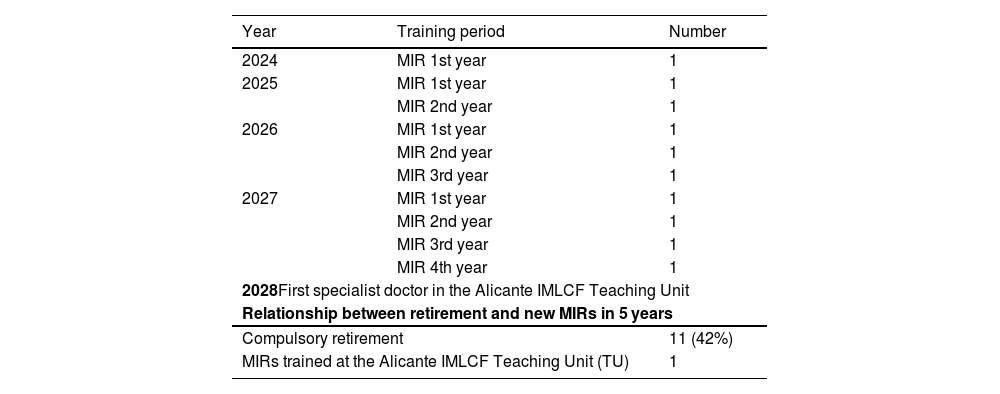
Thus, in 2024, the first resident medical intern (MIR) will have accessed MLYF, whose training will end in 2028. The progression is shown in Table 1.
Chronology of the training of residents in legal and forensic medicine. Institute of Legal Medicine and Forensic Medicine of Alicante.
| Year | Training period | Number |
|---|---|---|
| 2024 | MIR 1st year | 1 |
| 2025 | MIR 1st year | 1 |
| MIR 2nd year | 1 | |
| 2026 | MIR 1st year | 1 |
| MIR 2nd year | 1 | |
| MIR 3rd year | 1 | |
| 2027 | MIR 1st year | 1 |
| MIR 2nd year | 1 | |
| MIR 3rd year | 1 | |
| MIR 4th year | 1 | |
| 2028First specialist doctor in the Alicante IMLCF Teaching Unit | ||
| Relationship between retirement and new MIRs in 5 years | ||
| Compulsory retirement | 11 (42%) | |
| MIRs trained at the Alicante IMLCF Teaching Unit (TU) | 1 | |
MIR: resident medical intern.
Due to circumstances arising from the scarcity of opportunities to enter the specialty, the need to have a minimum of 4 specialists in MLYF in order to be accredited as a teaching unit (TU)18 has become a strategic limitation. This requirement, combined with the fact that most specialists are close to retirement age, could prevent accreditation and thus the training of new specialists. At the Alicante IMLCF, 50% of the specialists in MLYF are already 65 years old and have extended their retirement age.
Relational capacityIts use involves the creation and distribution of information between the actors involved in the network, the coordination of activities, and the sharing of decisions in order to face challenges together.
In 5 years' time, one MIR will have been trained and 3 more will be in training at the Alicante IMLCF. Institutional capacity will need to be developed to motivate them to stay at the Institute after training, with the aim of retaining talent. Adequate development of public investment in the facilities where professional work is carried out will facilitate this recruitment. To this end, it will be essential to strengthen relations with those in charge of the infrastructure departments responsible for the project of the new city of justice in Alicante, where the IMLCF will be located. Adequate provision of these facilities may be the key to attracting and retaining talent.
We will also have to create the conditions that will facilitate the development of the Institute's social projection and the possibility of collaborating with other health institutions (public health, hospitals, etc.), transport, INE (national statistics institute), university, and prison centres, which will allow us to develop the extrajudicial, training, teaching, and research functions of the Institute.
Analytical capacityIt is difficult to manage needs properly without reliable data. The data generated by human resource management processes can be used to identify areas for improvement, both in the definition of posts and in the professional profiles that make up the posts.
The specificities of access to forensic medicine have undergone a significant change in recent years since it is now required by the Ministry to have access to the Corps of Forensic Doctors and to have the MLYF specialisation. This change means that the studies carried out on the supply of specialists have not been as exhaustive as for other specialties, as they have not always been taken into account.
For example, the 2021–2035 report Oferta-Necesidad de Especialistas Médicos (Supply-Need for Medical Specialists)19 by the University of Las Palmas de Gran Canaria only refers to this specialty among the specialties trained at the school (Physical Education and Sports Medicine and MLYF).
Furthermore, the University of Las Palmas de Gran Canaria's 2018–2030 report Estimación de la oferta y demanda de médicos especialistas, España20 shows worrying data on the generational change in forensic medicine: “. ... in other specialities ([...], legal and forensic medicine, [...]), this process will be aggravated in the short term by high retirement rates, with more than 20% being over 60 years of age. However, in some of these specialties, such as internal medicine, there is a clear generational change, with large cohorts of young doctors in the Spanish National Health System (SNS)’‘.
Grijalba et al.5 analysed the number of places available for access to the Corps of Forensic Doctors between 1992 and 2024 and the number of places available for specialists in legal and forensic medicine in the calls for MIR applications, with a total of 1095 places available for access to the CMF (average of 33.18 places/year) and a total of 483 places for access to the specialty via MIR (average of 14.63 places/year), a difference of 612 places (18.54 places/year) in favour of the competitive examination system. In 2019, the Corps of Forensic Doctors comprised 813 career officials with an average age of 53; 67.4% were over 50 and 28% over 60. Most retirements, therefore, are expected in the next decade.
Proposals for actionUsing the strategic capacitiesAction 1The strategic plans of the IMLCF should include a section dedicated exclusively to the expected evolution of the number of professionals in each category of the centre. The planned activity should be linked to the existing risk of staff reduction.
Similarly, the strategic plans should include the rest of the actions anticipated in this study from the rest of the institutional capacities.
These plans should be evaluated periodically in order to adapt them to emerging needs and to assess their level of implementation.
Action 2Guarantee the replacement rate for MIR posts.
Include the supply and demand needs for MLYF specialists in reports on short- and medium-term specialist needs. This action should be managed at national level. Forensic medicine professionals, although they form a national body, have an operating system in many aspects that is governed by the provisions of the autonomous regions. This action should be carried out at national level and in the autonomous regions. The Ministry of Health accredits the TU and the number of posts, and the regional Ministries of Justice/Ministry offer the posts and propose them to the Ministry of Health for accreditation.
Almost one in three forensic doctors will retire in the coming years, a situation that requires adequate planning by the administrations to avoid crisis situations. In this sense, the Ministry of the Presidency, Justice and Relations with the Courts has already begun to address this issue through the Forensic Medicine Council,21 whose plenary session on 30 November 2002 decided to set up a working group to analyse the current situation and propose future measures to meet the needs of specialists in MLYF and of the Corps of Forensic Doctors.
The relational component of this capacity is detailed in Action 5.
Using governance capacitiesAction 3A prior study would be necessary that would allow us to clearly understand the human resources we have, both in terms of structure and management, and in terms of organisation and motivation. For example, the motivations and reasons for forensic medicine specialists not retiring at the age of 60 should be examined. In this sense, experiences such as incentive models in primary care may be of interest, although it needs to be assessed whether they can be extrapolated to the Corps of Forensic Doctors.
Action 4The IMLCFs are managed by forensic doctors who generally lack training in management and leadership. It would be necessary to promote this training through agreements, collaborations, scholarships, or other formulas with different institutions or organisations (IVAP [Valencian Institute of Public Administration], universities, etc.) that provide specific training plans.
The transfer of knowledge between those who currently hold management positions and those who will do so in the near future should be encouraged. The acquisition of management, leadership, team management, and internal and external communication skills is essential in today's environment and training in these areas should be encouraged.
Using relational capacitiesAction 5Increase the number of MIR (Medical Intern Resident) places in MLYF and consequently interact with the Directorate General of Justice to increase the number of places available. At the national level, a strategy should be developed to generate more MIR places in the different calls for applications, which implies coordination with the General Directorate of Professional Regulation of the Ministry of Health (DGOP).
In this sense, it is necessary to develop institutional alliances, both with this DGOP and with the other IMLCFs in the country, with which it would be possible to conduct a joint study of needs.
This action is the relational component of Action 2.
Action 6Temporarily relax the requirements for the accreditation of teaching units, in view of the specific situation arising precisely because MLYF specialists are at an advanced age as a result of the exceptional process (MESTOS 2001). It would also be possible to develop an exceptional process of access to the MLYF specialty, which would imply coordination with the DGOP of the Ministry of Health and the National Commission of the specialty.
Action 7The Alicante IMLCF is currently under construction as part of the new City of Justice complex. It is expected to be completed in 2026. State-of-the-art facilities will motivate new professionals to work at the IMLCF, allowing us to attract and retain talent more easily. It is therefore necessary to establish an adequate flow of communication with the Sub-Directorate of Infrastructures of the Ministry of the Region so that the specific needs of such a unique organisation within the vast organisation of the administration of justice are adequately taken into account.
Another proposal would be to modify the rules for inclusion in the pools of temporary staff in the administration of justice, so as to give appropriate priority or value to specialisation, and even to guarantee their direct inclusion in the pools once the period of specialisation has been completed.
Action 8Raise awareness of the IMLCF among the various professions that may participate in it, e.g. by organising open days in cooperation with professional associations, hospitals, etc.
Using analytical capacitiesAction 9The lack of global data on the situation makes it advisable to propose a scenario analysis to identify possible risks in the short, medium, and long term, and to define preventive measures based on these scenarios.
To this end, studies should be conducted to determine:
- •
What circumstances or changes would allow doctors to remain active until at least the age of 65.
- •
Reports providing data on the MIR training needs in MLYF.
- •
Reports on the current number of specialists in MLYF to ensure accreditation of MLYF teaching units.
The analytical capacity of the IMLCFs as a whole must be placed at the service of the organisations responsible for human resource development studies, both in the health and the justice administrations, to ensure that the situation of forensic specialists is adequately reflected in prospective studies.
The development of data visualisation and analysis tools is suggested for those responsible for staff planning to facilitate the identification of needs and enable informed decisions to be made more quickly and effectively.
ConclusionsThe IMLCF of Alicante faces new challenges and demands from society that must be addressed according to the new models of public management, including the change from the bureaucratic model to a robust governance, which implies the internal adaptation of the IMLCFs to a more open and collaborative model.
In this work, we have focused on the challenge of intergenerational change. Proposals have been made based on the promotion of a public policy based on the robust governance model and focused on strengthening the organisation's institutional capacities.
Ten different actions have been identified, mainly focused on the challenge of generational change, and related to the Institute's organisational and relational management capacities. These range from the development of a clear strategy that will give the organisation both stability and flexibility, to the implementation of various measures that we hope will improve talent retention or increase organisational efficiency. Finally, with the aim of pursuing an evidence-based policy, it is proposed to collect, analyse, and disseminate data on the situation and real needs of MLYF professionals so that they can form part of all the studies on this subject already established in the public administration.
The response to the challenge identified in the Alicante IMLCF, through the robust governance model based on the strengthening of institutional capacities, is considered optimal to ensure the survival of the organisation in a turbulent environment and, above all, to maintain quality standards in the services it provides to citizens.
FundingNo funding was received for this work.
Please cite this article as: Pastor-Bravo M, Salvador-Serna M, Marcos-Ramos R, Barbería-Marcalain E, Grijalba-Mazo M, Bañón-González R, Casado-de Santiago C, Sánchez-Padial A, El reto del relevo generacional desde la gobernanza robusta en los institutos de medicina legal y ciencias forenses de España. Un ejemplo de liderazgo y gestión pública en el Instituto de Medicina Legal y Ciencias Forenses de Alicante. Revista Española de Medicina Legal. 2025. https://doi.org/10.1016/j.reml.2024.10.003.
