




Body mass index (BMI) is a key determinant of cardiovascular risk and may significantly impact postoperative outcomes. This study aimed to evaluate the relationship between BMI and early postoperative complications in patients undergoing cardiac surgery.
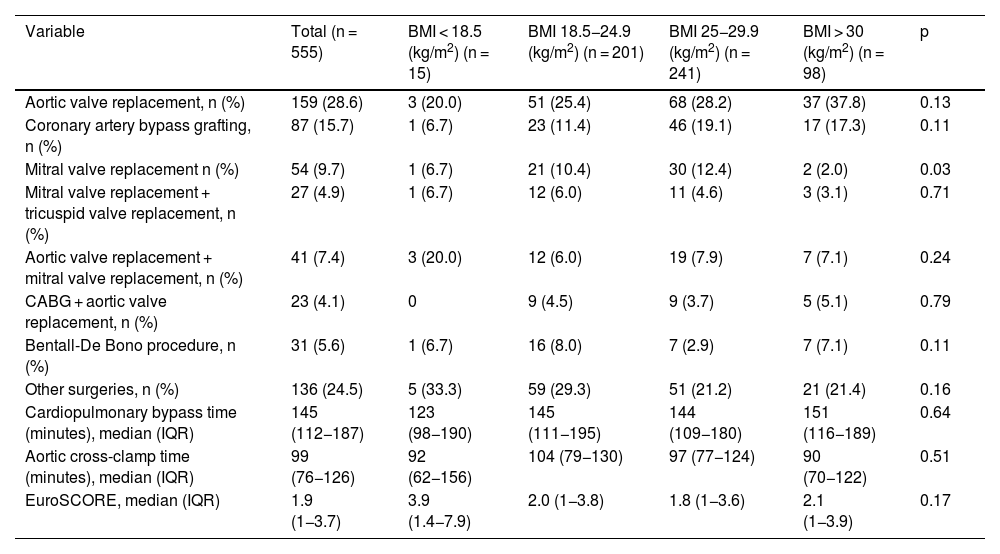
MethodsThis retrospective study analyzed data from 555 patients who underwent cardiac surgery at the National Institute of Cardiology from June 2022 to December 2023. Patients were categorized into 4 BMI groups: underweight, normal weight, overweight, and obese. Data on demographics, surgical procedures, postoperative complications, and hemodynamic parameters were collected and analyzed.
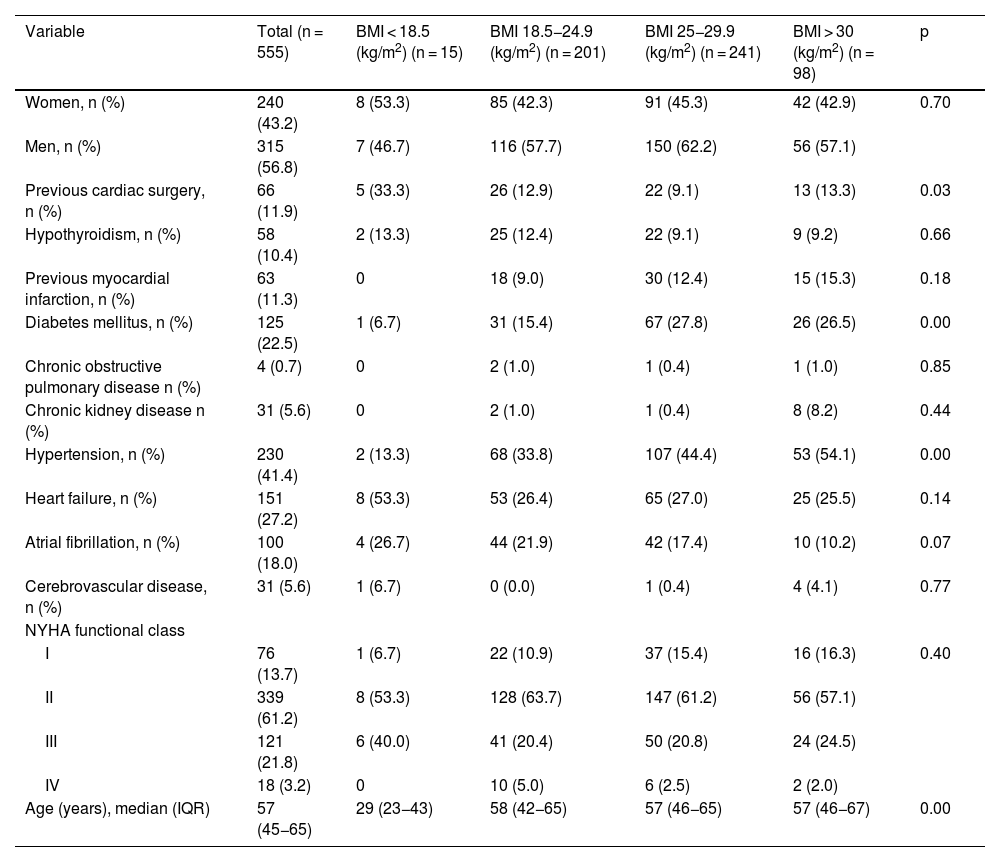
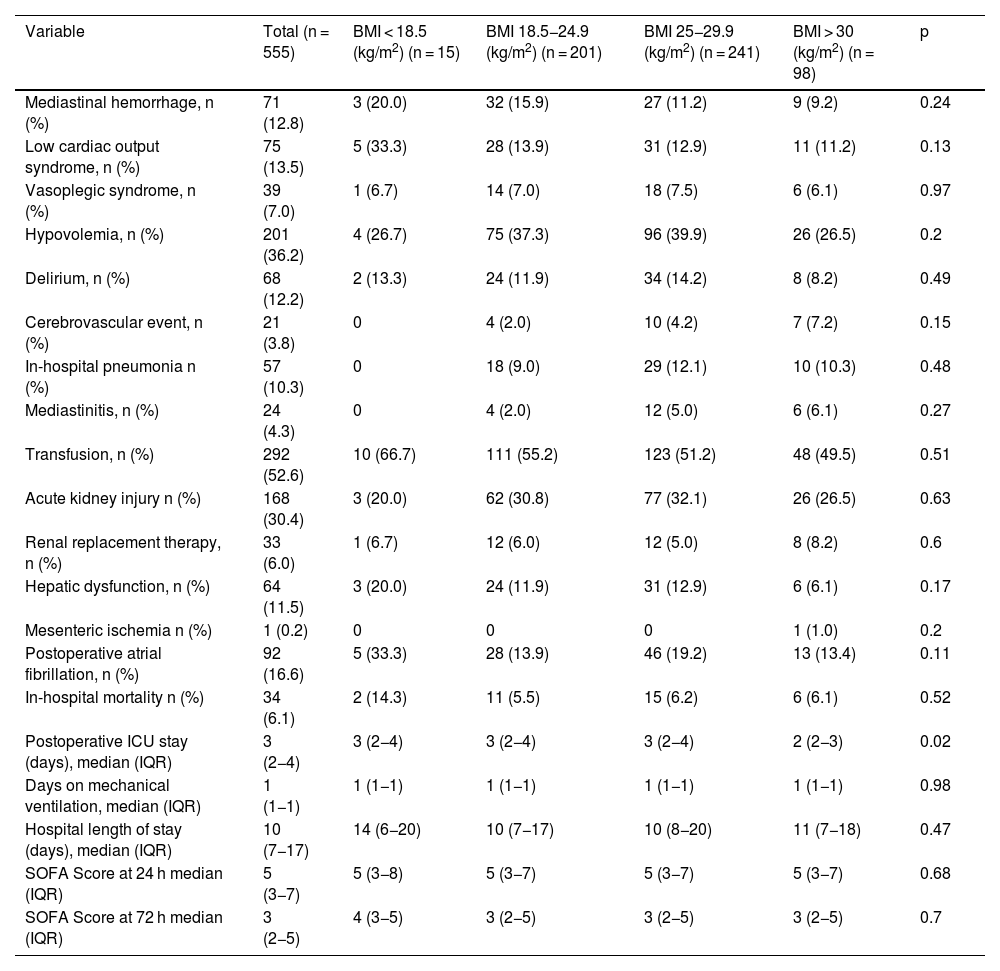
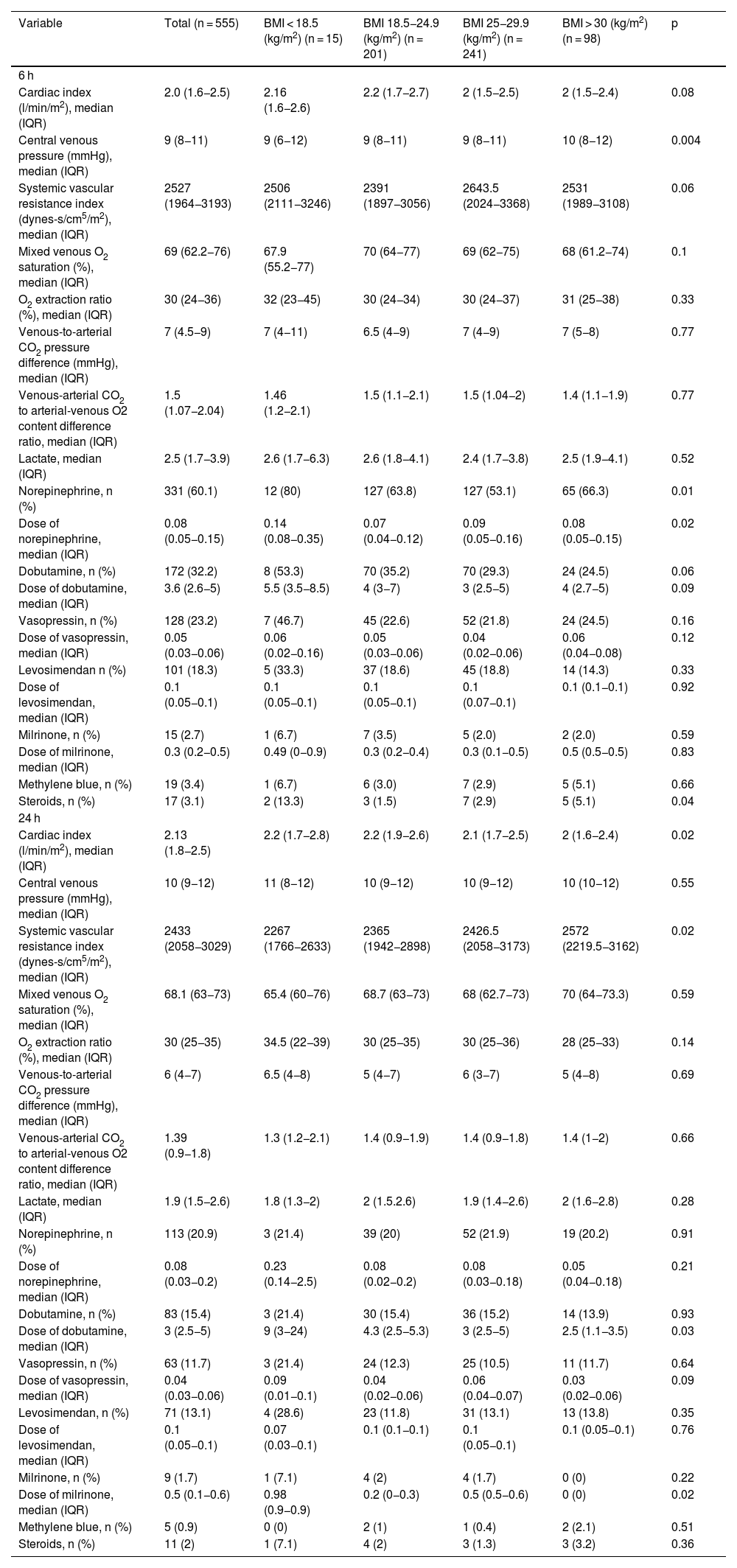
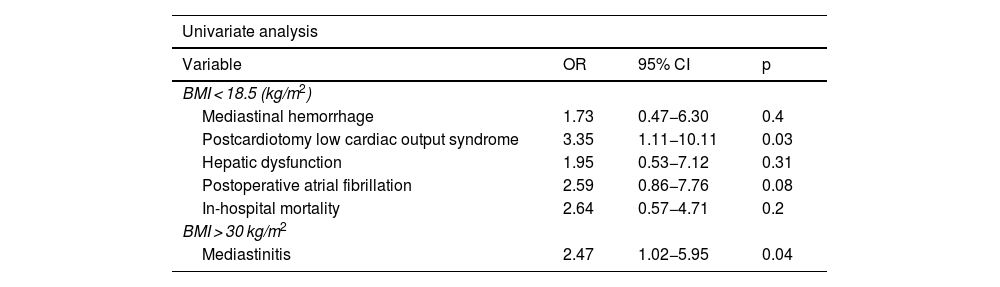
ResultsPreoperative comorbidities, including chronic heart failure and atrial fibrillation, were more common among underweight patients. This group was also at higher risk of postcardiotomy low output syndrome (univariate OR 3.35, p = 0.03), and postoperative atrial fibrillation remained significant in multivariate analysis (OR 1.48, p = 0.01), and required increased vasopressor and inotropic support. Obese patients had a significantly increased risk of postoperative mediastinitis in both univariate (OR 2.47, p = 0.04) and multivariate analyses (OR 2.12, p = 0.03). In-hospital mortality was 14.3 % in underweight vs. 6.1 % in obese patients (p = 0.52).
ConclusionsThis study highlights the significant impact of BMI on postoperative outcomes in cardiac surgery. Underweight patients exhibited higher rates of postoperative complications and mortality, likely due to underlying comorbidities and limited physiological reserves. While obesity is associated with increased cardiovascular risk, our findings suggest a potential "obesity paradox" in this cohort. Further research is needed to elucidate the underlying mechanisms and refine risk stratification models incorporating BMI and other relevant factors.
El índice de masa corporal (IMC) representa un factor determinante en la salud cardiovascular y puede influir significativamente en la evolución postoperatoria. El objetivo de este estudio fue analizar la asociación entre el IMC y los desenlaces tempranos en pacientes sometidos a cirugía cardíaca.
MétodosEste estudio retrospectivo analizó datos de 555 pacientes que se sometieron a cirugía cardíaca en el Instituto Nacional de Cardiología de junio de 2022 a diciembre de 2023. Los pacientes se clasificaron en cuatro grupos de IMC: bajo peso, peso normal, sobrepeso y obesidad. Se recopilaron y analizaron datos demográficos, procedimientos quirúrgicos, complicaciones postoperatorias y parámetros hemodinámicos.
ResultadosLos pacientes con bajo peso presentaron mayor prevalencia de comorbilidades preoperatorias, incluyendo insuficiencia cardiaca crónica y fibrilación auricular. El bajo peso se asoció con un mayor riesgo de síndrome de bajo gasto cardiaco postcardiotomía (análisis univariable OR 3.35, p = 0.03), y la fibrilación auricular postoperatoria se mantuvo significativa en el análisis multivariable (OR 1.48, p = 0.01), requiriendo mayor soporte vasoactivo e inotrópico. Los pacientes obesos mostraron un riesgo significativamente mayor de mediastinitis postoperatoria tanto en el análisis univariable (OR 2.47, p = 0.04) como en el multivariable (OR 2.12, p = 0.03). La mortalidad intrahospitalaria fue de 14.3% en pacientes con bajo peso versus 6.1% en pacientes obesos (p = 0.52).
ConclusionesEste estudio destaca el impacto significativo del IMC en los resultados postoperatorios en la cirugía cardíaca. Los pacientes con bajo peso exhibieron tasas más altas de complicaciones postoperatorias y mortalidad, probablemente debido a comorbilidades subyacentes y reservas fisiológicas limitadas. Si bien la obesidad se asocia con un mayor riesgo cardiovascular, los hallazgos sugieren una posible "paradoja de la obesidad" en esta cohorte. Se necesita más investigación para dilucidar los mecanismos subyacentes y refinar los modelos de estratificación de riesgo que incorporen el IMC y otros factores relevantes.

