

metricas
covid
Radiología (English Edition) Multidetector computed tomography evaluation of candidates for transcatheter aor...
Journal Information
Vol. 60. Issue 1.
Pages 24-38 (January - February 2018)
Visits
31
Vol. 60. Issue 1.
Pages 24-38 (January - February 2018)
Update in Radiology
Multidetector computed tomography evaluation of candidates for transcatheter aortic valve implantation
Evaluación de los pacientes candidatos a implante transcatéter de válvula aórtica mediante tomografía computarizada multidetector
Visits
31
M.E. Guillén Subirán
Corresponding author
eugeniaguillensubiran@gmail.com

Corresponding author.
, L.H. Ros Mendoza, E. Angulo Herviás, D. Yagüe Romeo, M.E. Núñez Motilva
Servicio de Radiodiagnóstico, Hospital Universitario Miguel Servet, Zaragoza, Spain
This item has received
Article information
Abstract
Full Text
Bibliography
Download PDF
Statistics
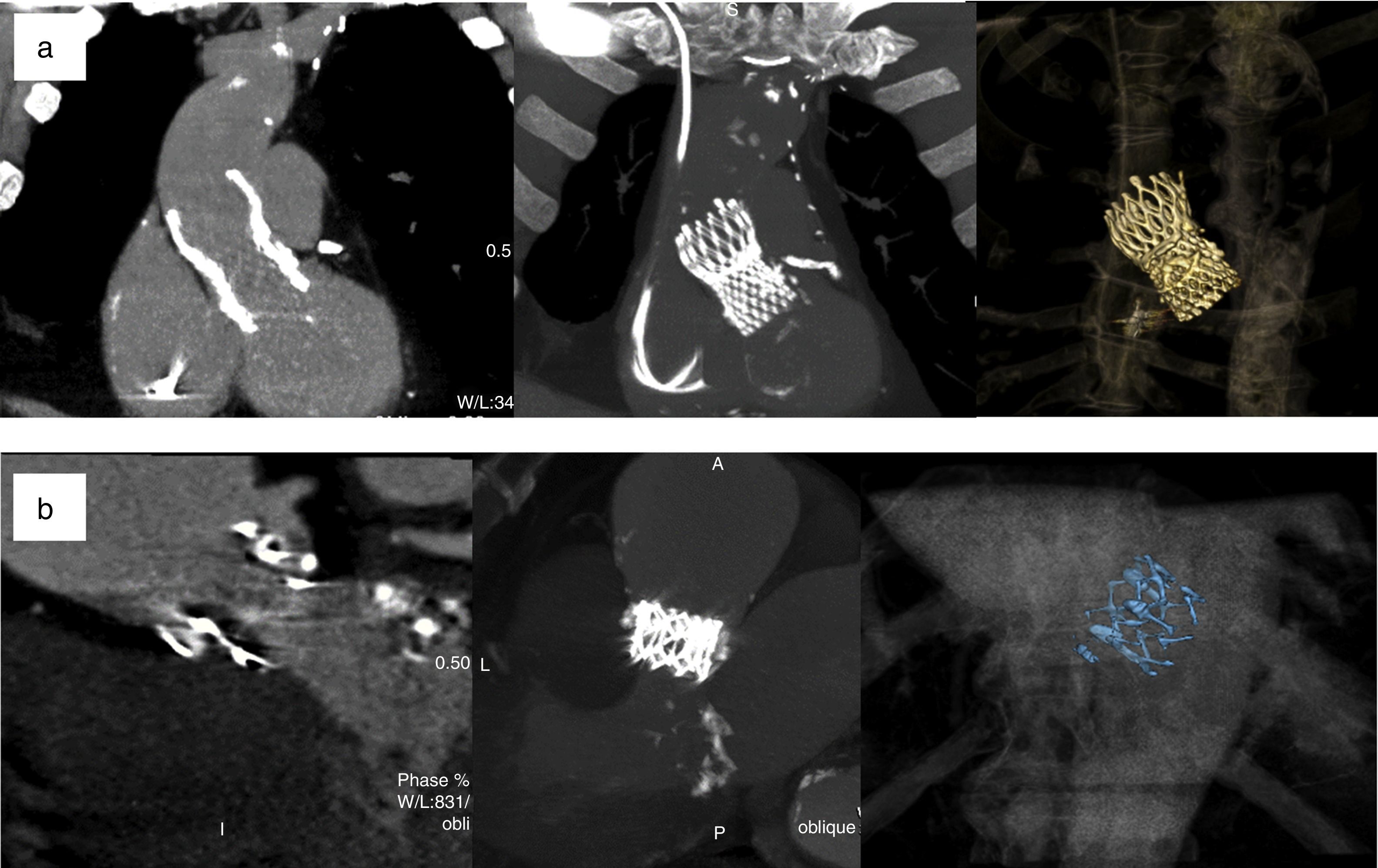
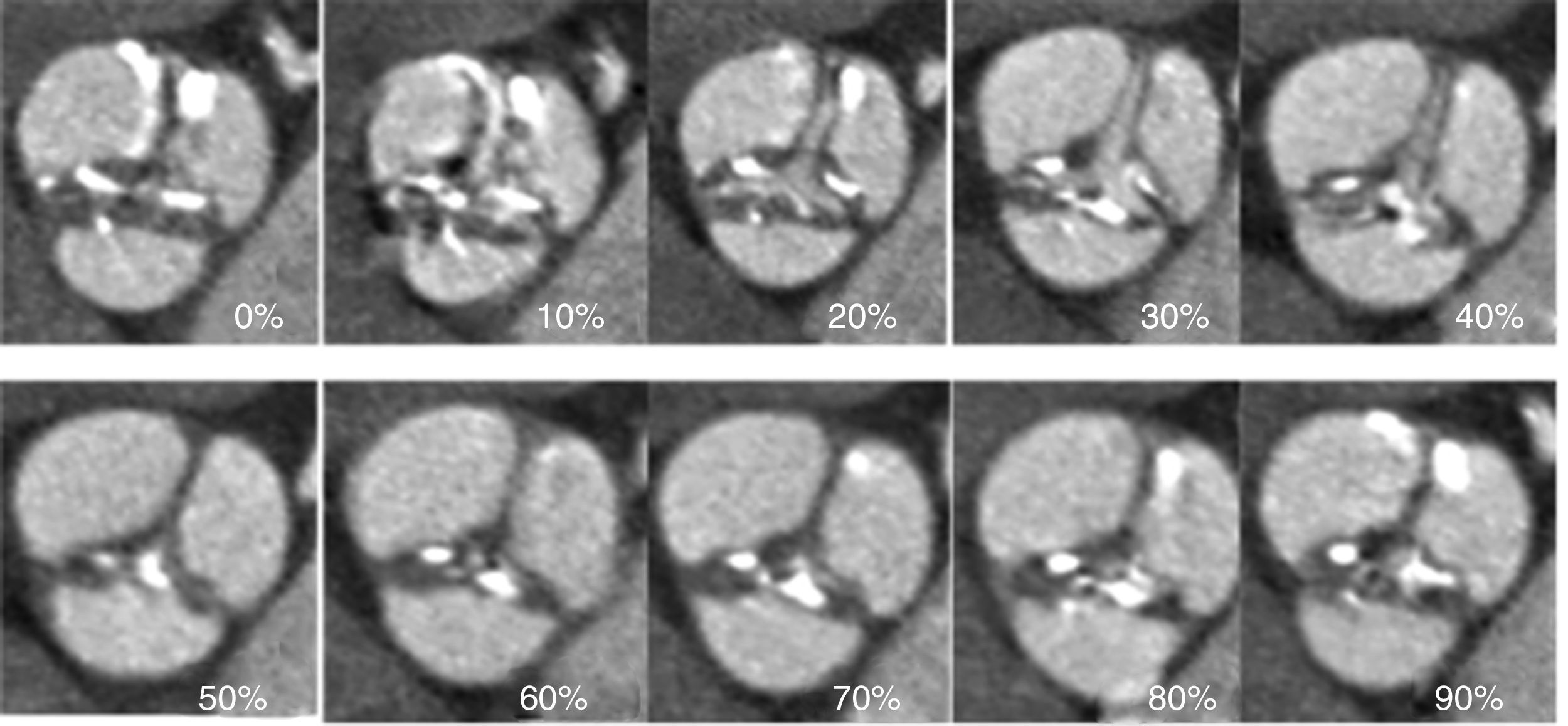
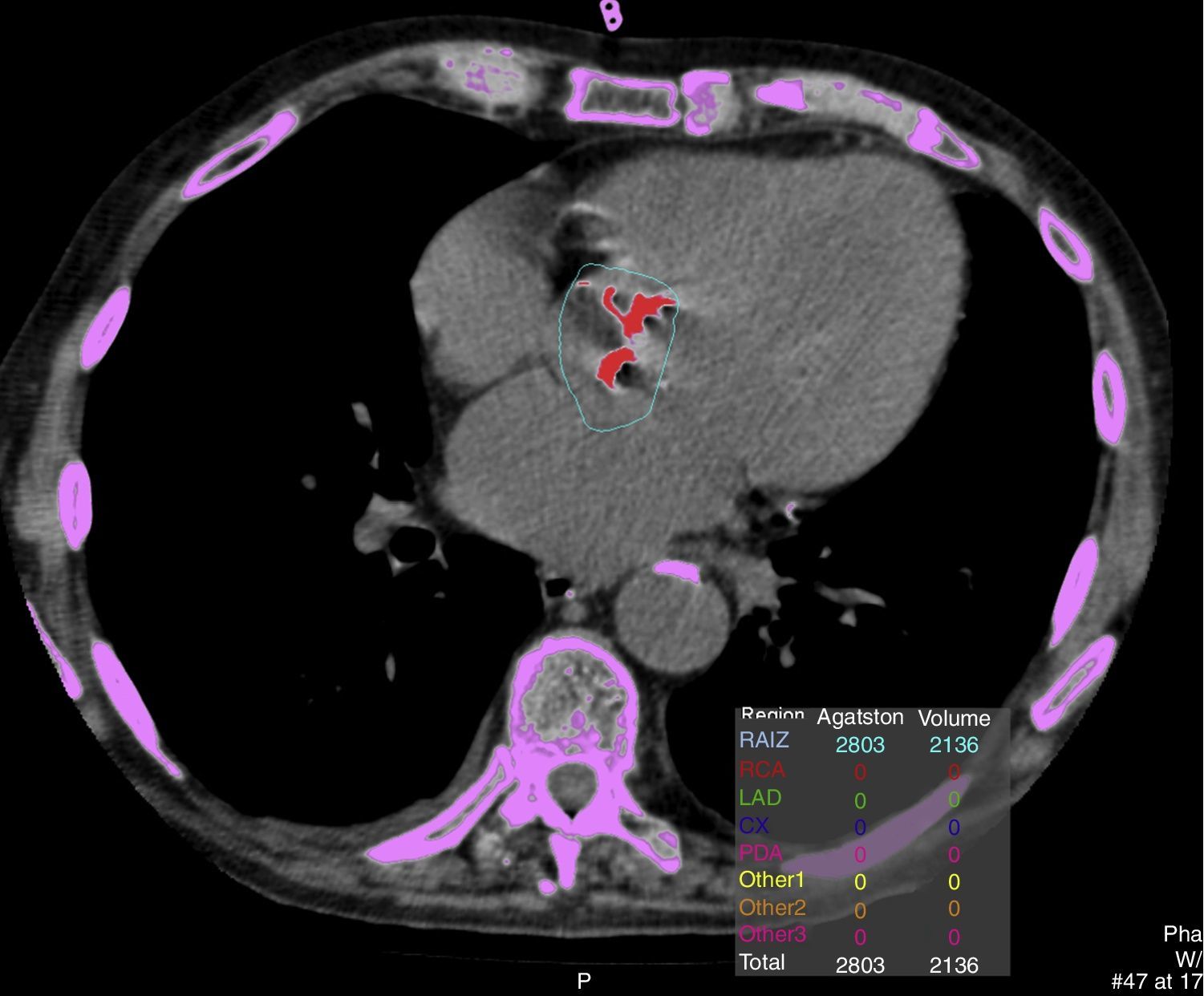
Figures (10)
Show moreShow less
Tables (3)
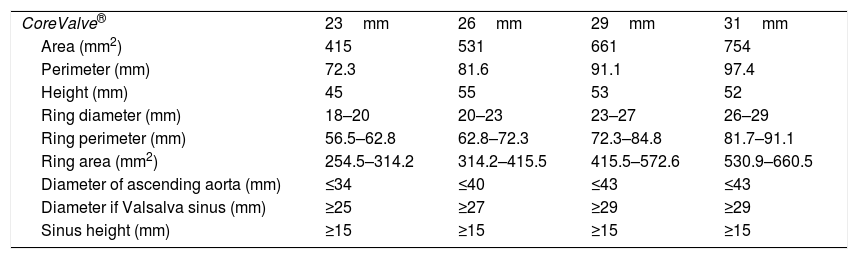
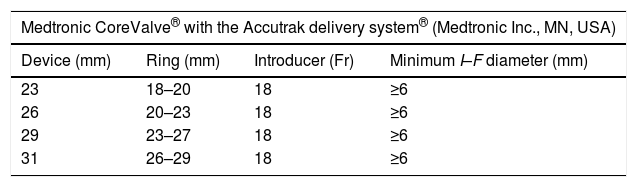
Table 1. Selection of the CoreValve® device and the Edwards Sapien XT® device based on multidetector computed tomography.
Tables
Table 2. Requirements of valve devices in the iliofemoral arterial axes.
Tables
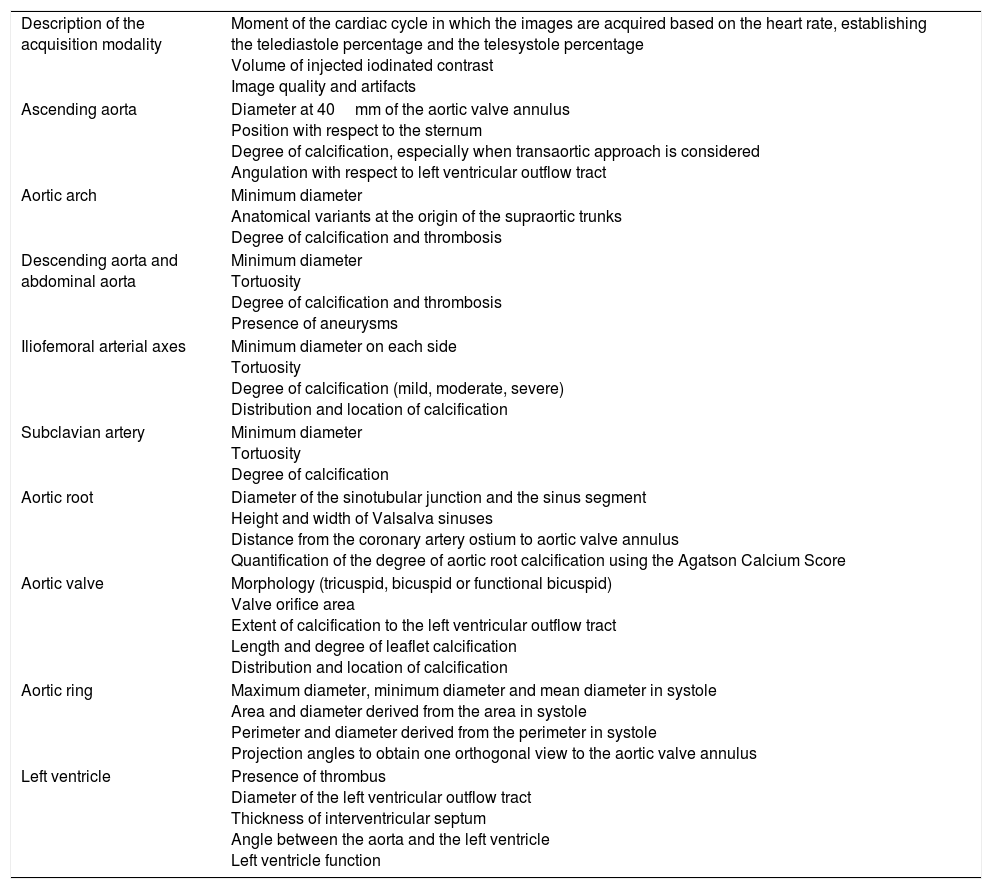
Table 3. Data included in multimodality computed tomography reports of patients eligible for TAVI.
Tables
Show moreShow less
Abstract

In transcatheter aortic valve implantation (TAVI), a biologic valve mounted in a stent is implanted without removing the native valve. This procedure was first done in humans by Alain Cribier in 2002 and was included in clinical guidelines after the multicenter PARTNER (Placement of AoRtic TraNscathetER) randomized clinical trial, which showed that TAVI obtained better outcomes than conservative medical treatment and is an alternative to surgery in patients with high surgical risk.

Candidates for TAVI must be assessed to determine whether the procedure is feasible, because TAVI is not ideal for all patients who are considered inoperable. Multidetector computed tomography plays an important role in the anatomic evaluation of candidates and in guiding the procedure in those who are finally selected.

Keywords:
Aortic valve stenosis
Transcatheter aortic valve replacement
Multidetector computed tomography
Resumen

El implante transcatéter de válvula aórtica, más conocido por su acrónimo en inglés TAVI (Transcatheter Aortic Valve Implantation), consiste en la implantación de una válvula biológica montada en un stent sin retirar la válvula nativa. El primer procedimiento lo realizó Alain Cribier en 2002 y la inclusión de esta técnica en las guías clínicas se produjo gracias al ensayo multicéntrico aleatorizado PARTNER (Placemente of Aortic Transcatheter Valves), que demostró que el TAVI obtiene mejores resultados que el tratamiento médico conservador y que es una alternativa a la cirugía en pacientes con alto riesgo quirúrgico.

Los pacientes candidatos a TAVI deben completar un protocolo de evaluación para valorar si es factible, porque no todos los pacientes rechazados para cirugía son idóneos para TAVI. La tomografía computarizada multidetector desempeña un papel importante en la valoración anatómica de los candidatos, y en los pacientes finalmente seleccionados guía el procedimiento.


Palabras clave:
Estenosis valvular aórtica
Implante transcatéter de válvula aórtica
Tomografía computerizada multidetector

Article

These are the options to access the full texts of the publication Radiología (English Edition)
Subscriber
Subscriber

If you already have your login data, please click here .

If you have forgotten your password you can you can recover it by clicking here and selecting the option “I have forgotten my password”
Purchase
Purchase article

Purchasing article the PDF version will be downloaded

Purchase now
Contact
Phone for subscriptions and reporting of errors
From Monday to Friday from 9 a.m. to 6 p.m. (GMT + 1) except for the months of July and August which will be from 9 a.m. to 3 p.m.
Calls from Spain
932 415 960
Calls from outside Spain
+34 932 415 960
E-mail
Article options
Tools
