


To analyse medical students’ perceptions of the impact of artificial intelligence in radiology.
Material and methodsA structured questionnaire comprising 28 items organised into six sections was distributed to students of medicine in Spain in December 2019.
ResultsA total of 341 students responded. Of these, 27 (7.9%) included radiology among their three main choices for specialization, and 51.9% considered that they clearly understood what artificial intelligence is. The overall rate of correct answers to the objective true-or-false questions about artificial intelligence was 70.7%. Whereas 75.9% expressed their disagreement with the hypothesis that artificial intelligence would replace radiologists, only 41.9% disagreed with the hypothesis that the demand for radiologists would decrease in the future. Only 36.7% expressed concerns about the role of artificial intelligence related to choosing radiology as a specialty. A greater proportion of students in the early years of medical school agreed with statements that radiologists accept artificial-intelligence-related technological changes and work with the industry to apply them as well as with statements about the need to include basic training about artificial intelligence in the medical school curriculum.
ConclusionsThe students surveyed are aware of the impact of artificial intelligence in daily life, but not of the current debate about its potential applications in radiology. In general, they think that artificial intelligence will revolutionise radiology without having an alarming effect on the employability of radiologists. The students surveyed think that it is necessary to provide basic training about artificial intelligence in undergraduate medical school programs.
Analizar la percepción de alumnos de Medicina sobre el impacto de la inteligencia artificial (IA) en radiología.
Material y métodosSe distribuyó una encuesta estructurada en 28 ítems, organizados en seis secciones, entre estudiantes de Medicina españoles durante diciembre de 2019.
ResultadosRespondieron 341 estudiantes, de los que 27 (7,9%) incluyeron la radiología entre sus tres opciones principales para elegir especialidad; el 51,9% consideró que entendía bien qué es la inteligencia artificial. La tasa de acierto global en preguntas objetivas verdadero/falso sobre inteligencia artificial fue del 70,7%, y un 75,9% expresó su desacuerdo con la hipótesis de un reemplazo futuro del radiólogo, mientras que el desacuerdo con una hipotética reducción de la demanda de radiólogos fue menor (41,9%). Solamente el 36,7% mostró preocupación por la inteligencia artificial a la hora de elegir radiología como especialidad. Los estudiantes de cursos inferiores se mostraron más de acuerdo con que los radiólogos acepten los cambios tecnológicos de la inteligencia artificial y trabajen con la industria para su aplicación y con la necesidad de incluir formación básica sobre inteligencia artificial en el currículo de medicina.
ConclusionesLos estudiantes encuestados son conscientes del impacto de la inteligencia artificial en la vida diaria, pero desconocen el debate actual sobre sus potenciales aplicaciones en radiología. En general, piensan que la inteligencia artificial revolucionará la radiología, pero sin un impacto alarmante en la empleabilidad de los radiólogos. Los alumnos encuestados opinan que es necesario proporcionar formación básica sobre inteligencia artificial en pregrado.
Artificial intelligence (AI) is the intervention of advanced computerised systems capable of performing tasks that would normally require the human intellect, such as speech recognition, translation, visual perception, pattern detection or even decision-making.1,2 This new technology has provided a new glossary of terms, increasingly used in medicine and radiology,1,3 such as: "machine learning", the development of algorithms and mathematical models that allow the computer to learn automatically to effectively perform a specific task; "deep learning", techniques based on artificial neural networks, capable of processing data and automatically recognising patterns in biomedical images; or “radiomics”, the extraction of quantitative properties from radiological images, undetectable by the radiologist, which provide useful information for the detection, evaluation and monitoring of diseases. These AI techniques incorporate computer-aided diagnosis (CAD) tools, developed to detect, segment and classify lesions or complex patterns in radiological images, which have obtained promising results when integrated with deep learning (CAD-DL) techniques, providing the radiologist with quantitative characteristics of images of diagnostic interest.4,5 However, the opinion has recently begun to spread that AI can analyse patients' clinical (and radiological) information and make a diagnosis with greater precision than the actual doctors.6 In relation to this last point, a recent debate has emerged involving public opinion and academia about the future of radiology in general and of the radiologist in particular. Although AI has been shown to perform some specific tasks more efficiently, specialists tend to agree that the overall work of the radiologist is far from the point of being replaced.7 Rather, the belief is that the short-medium term model will involve the use of AI to support the radiologist,8,9 as there are currently numerous technical limitations, and even certain threats, such as the impossibility of defining the underlying "thought process" in these complex systems, with the consequent ethical and legal implications.3,10
Opinion surveys have been conducted recently with radiologists and residents on the subject of AI. In general, they believe there are interesting practical advantages in the application of AI and do not think it is going to replace them, although it could worsen their job prospects.11–14 It is also important to know how medical students feel about AI, as they will effectively use it in their clinical practice.15 In some studies, students expressed concern that AI may reduce radiologist employability in the near future,6,16–18 while in others they were not overly concerned about AI replacing the radiologist.19,20 The objective of this study was to analyse the perception of medical students in Spain of the impact of AI in radiology and also to compare the results with those of similar studies carried out in other countries.16–20
Material and methodsSurvey designThe survey (Appendix A) was created from the review of several articles relating to the opinion of medical students about the potential applications of AI, the impact on radiology and medicine and their specialisation preferences.16,19 Twenty-eight items were structured into six sections:
- 1
Personal information: questions on the respondent's demographic data, such as gender, age, medical school, year and speciality preference.
- 2
Previous knowledge of the topic: this included multi-choice questions about knowledge of current AI applications and the current debate around it, a 1–5 Likert scale question (1: strongly disagree; 2: somewhat disagree; 3: neither agree nor disagree; 4: somewhat agree; 5 strongly agree) on their subjective perception of their understanding of the concept of AI and four true/false questions to assess their degree of objective knowledge about AI.
- 3
Perception of the possible applications of AI in radiology: composed of three questions on a 1–5 Likert scale on their degree of agreement with potential applications of AI in radiology.
- 4
Perception of the impact of AI on radiology: made up of nine questions on a 1–5 Likert scale evaluating their degree of agreement on the potential impact that AI may have on the sector and the attitude the main stakeholders should adopt.
- 5
Impact of AI on choosing radiology as a speciality: it included two 1–5 Likert scale questions about concern about AI when choosing radiology as a speciality and whether AI made medicine or radiology more interesting for the respondent. The question in section 1 about the respondent's preference in choosing radiology as a speciality was then repeated to see if exposure to this topic had changed their mind.
- 6
Open comments: space to rate the questionnaire or make suggestions about it.
The survey was intended for medical students, particularly in their final years. A digital version was created using Google Forms (Google LLC, Menlo Park, CA, USA), which was active from 4 to 16 December 2019. It was sent out by email and messaging applications to a network of exchange students comprised of 30 sixth-year students from eight Spanish medical schools, who distributed it among their contacts. An identical survey was also printed and distributed on 14 December 2019 during the preparation classes for the Médico Interno Residente (MIR) [medical resident intern] exam in two academies in Malaga where a large number of sixth-year students were enrolled. All the data collected were recorded anonymously and consent for participation in the study was established by the fact of completing the survey (Appendix A).
Data analysis and statistical methodInitially, the data were organised in an Excel 2007 spreadsheet (Microsoft Inc., Redmond, WA, USA) and were then exported to the statistical program SPSS v25 (IBM Corp., Armonk, NY, USA), where frequency tables were obtained and descriptive statistics were calculated (means, medians, variances, minimums and maximums). In order to compare the results of the Likert scale questions with previous studies, we grouped responses 5 "strongly agree" and 4 "somewhat agree" to express agreement, and responses 1 "strongly disagree" and 2 "somewhat disagree" to express disagreement. Response 3 "neither agree nor disagree" was reserved to express neutrality. Data from various subgroups of respondents were compared according to four dichotomous characteristics: a) male versus female; b) students from the University of Malaga versus other universities; c) first-cycle students (1st–3rd year) versus second-cycle students (4τη–6τη year) and d) sixth-year students versus the rest of the students. The Mann–Whitney U test was used to compare the responses of dichotomous population groups in the questions answered using non-parametric data (Likert scale 1–5) and the analysis of variance (ANOVA) to compare the responses of the three speciality preference subgroups with the statement, "This subject worries me when it comes to choosing radiology as a potential professional career". A probability of error p░<░0.05 was considered statistically significant.
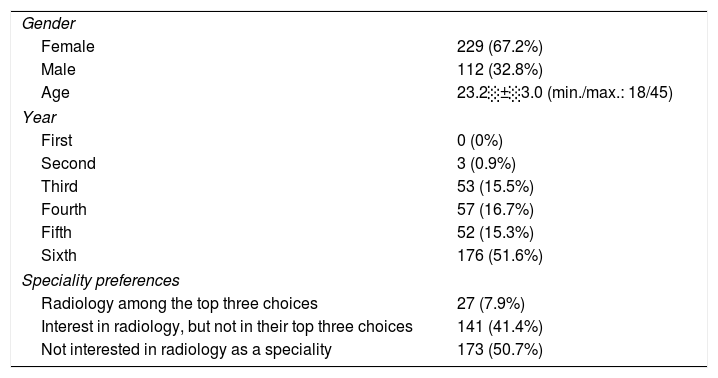
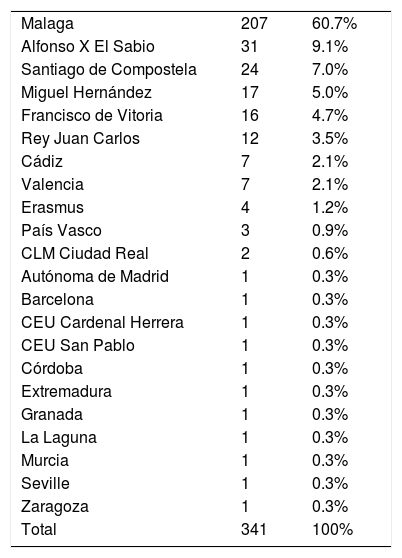
Results341 correctly completed questionnaires were obtained, 232 from the online form and 109 from the printed survey. 229 (67.2%) females and 112 (32.8%) males, aged 23.2░±░3.0 years (mean░±░standard deviation) responded. 207 (60.7%) were studying at the University of Malaga; 130 (38.1%) were studying at 20 other Spanish universities and 4 (1.2%) were Erasmus students in Spain. 56 students (16.4%) were in the first cycle (first to third year) and 285 (83.6%) were in the second cycle (fourth to sixth year), of whom 176 (51.6%) were sixth-year students. 27 students (7.9%) included radiology among their top three medical speciality choices, 141 (41.4%) considered it, albeit not among their top three, and 173 (50.7%) responded that they had no interest in choosing radiology as a speciality. Tables 1 and 2 show these data on personal information in greater detail.
Respondents' demographics and speciality preference.
| Gender | |
| Female | 229 (67.2%) |
| Male | 112 (32.8%) |
| Age | 23.2░±░3.0 (min./max.: 18/45) |
| Year | |
| First | 0 (0%) |
| Second | 3 (0.9%) |
| Third | 53 (15.5%) |
| Fourth | 57 (16.7%) |
| Fifth | 52 (15.3%) |
| Sixth | 176 (51.6%) |
| Speciality preferences | |
| Radiology among the top three choices | 27 (7.9%) |
| Interest in radiology, but not in their top three choices | 141 (41.4%) |
| Not interested in radiology as a speciality | 173 (50.7%) |
Universities of the respondents.
| Malaga | 207 | 60.7% |
| Alfonso X El Sabio | 31 | 9.1% |
| Santiago de Compostela | 24 | 7.0% |
| Miguel Hernández | 17 | 5.0% |
| Francisco de Vitoria | 16 | 4.7% |
| Rey Juan Carlos | 12 | 3.5% |
| Cádiz | 7 | 2.1% |
| Valencia | 7 | 2.1% |
| Erasmus | 4 | 1.2% |
| País Vasco | 3 | 0.9% |
| CLM Ciudad Real | 2 | 0.6% |
| Autónoma de Madrid | 1 | 0.3% |
| Barcelona | 1 | 0.3% |
| CEU Cardenal Herrera | 1 | 0.3% |
| CEU San Pablo | 1 | 0.3% |
| Córdoba | 1 | 0.3% |
| Extremadura | 1 | 0.3% |
| Granada | 1 | 0.3% |
| La Laguna | 1 | 0.3% |
| Murcia | 1 | 0.3% |
| Seville | 1 | 0.3% |
| Zaragoza | 1 | 0.3% |
| Total | 341 | 100% |
The students were asked if they were aware that many applications that we use on a daily basis already use AI, to which 317 (93.0%) responded yes, 22 (6.5%) no and 2 (0.6%) don't know/no response (DK/NR). They were also asked if they were aware of the current debate about AI and its potential applications in radiology; 67 (19.7%) students said yes, 262 (76.8%) no, and 12 (3.5%) DK/NR.
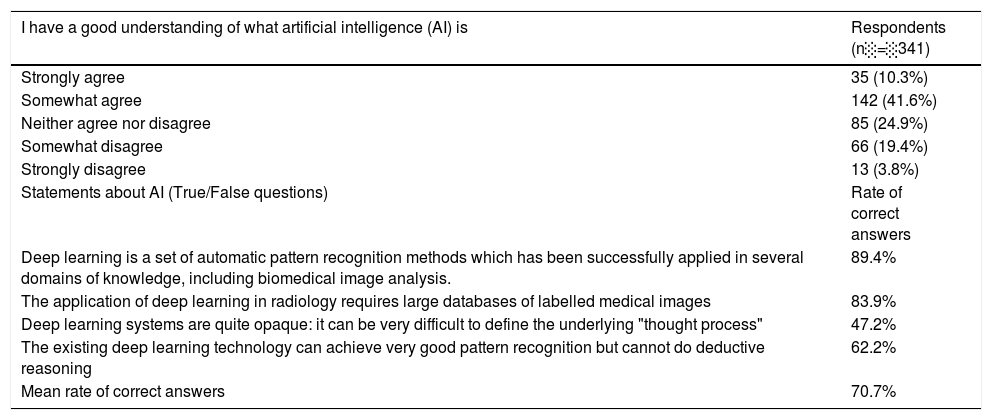
In the second part of this section (Table 3), the students were asked to state their degree of agreement with the following statement, "I have a good understanding of what AI is". 177 respondents (51.9%) agreed with it. The mean score for this question was 3.35░±░1.03. There were only significant differences between the female and male subgroups (3.19░±░1.00 versus 3.69░±░0.99, respectively; p░<░0.001). The overall rate of correct answers in the true/false questions to assess the objective knowledge of the respondents was 0.71░±░0.22. There were no statistically significant differences (Mann–Whitney U test) between any of the subgroups studied except for question number 4, "The existing deep learning technology can achieve very good pattern recognition but cannot do deductive reasoning", in which the mean rate of correct answers for sixth-year students was significantly lower than that of the rest of the students (0.57░±░0.50 versus 0.68░±░0.47; p░=░0.036).
Self-assessment and objective evaluation of knowledge about artificial intelligence and deep learning.
| I have a good understanding of what artificial intelligence (AI) is | Respondents (n░=░341) |
|---|---|
| Strongly agree | 35 (10.3%) |
| Somewhat agree | 142 (41.6%) |
| Neither agree nor disagree | 85 (24.9%) |
| Somewhat disagree | 66 (19.4%) |
| Strongly disagree | 13 (3.8%) |
| Statements about AI (True/False questions) | Rate of correct answers |
| Deep learning is a set of automatic pattern recognition methods which has been successfully applied in several domains of knowledge, including biomedical image analysis. | 89.4% |
| The application of deep learning in radiology requires large databases of labelled medical images | 83.9% |
| Deep learning systems are quite opaque: it can be very difficult to define the underlying "thought process" | 47.2% |
| The existing deep learning technology can achieve very good pattern recognition but cannot do deductive reasoning | 62.2% |
| Mean rate of correct answers | 70.7% |
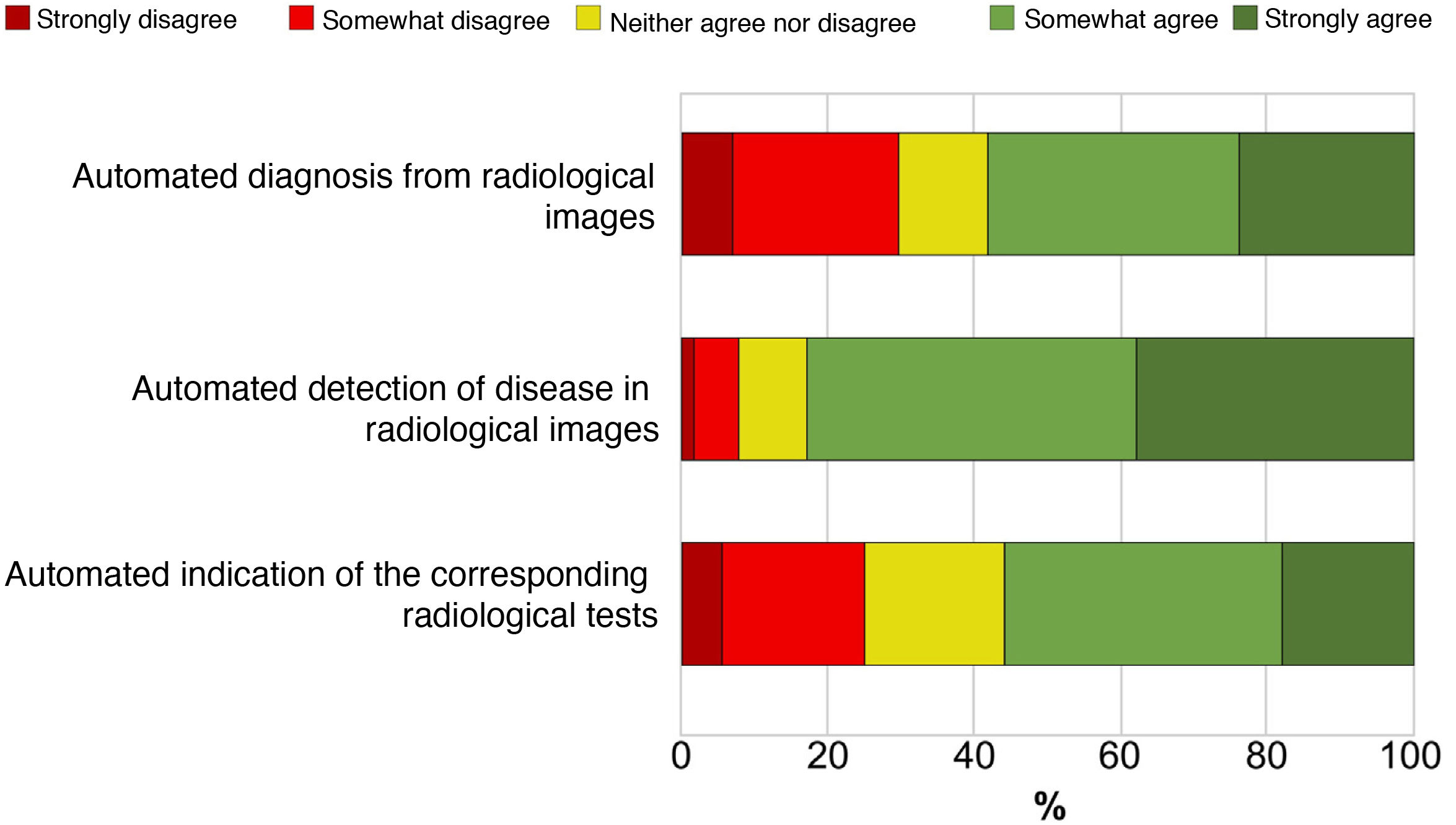
This section (Fig. 1) assessed the respondent's degree of agreement with three statements about potential applications of AI in radiology. The statement that registered the most agreement (83.0%) was "Automated detection of disease in radiological images", followed by "Automated diagnosis from radiological images" (58.4%) and "Automated indication of the corresponding radiological tests" (55.7%). There were no significant differences between any of the subgroups studied, except in this last statement, in which the first-cycle students showed a greater degree of agreement than the second-cycle students (3.79░±░1.11 versus 3.36░±░1.15; p░=░0.009).
Perception of the impact of artificial intelligence on the radiology speciality
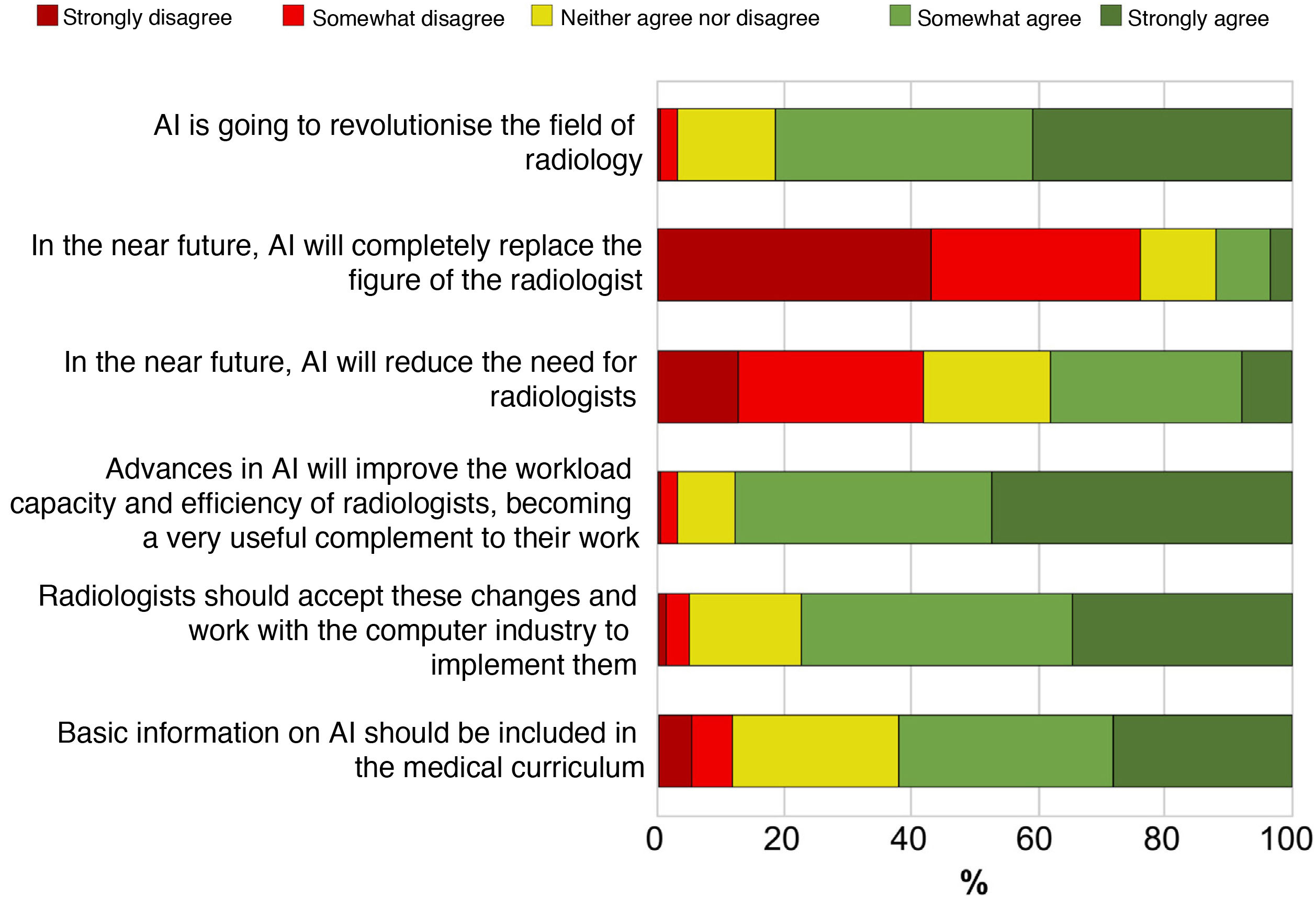
277 respondents (81.2%) agreed with the statement "AI is going to revolutionise the field of radiology". They were asked about the potential impact of AI on the employability of future radiologists. Only 5.6% (19 students) expressed their agreement with the statement "In the near future, AI will completely replace the figure of the radiologist"; while 12.0% (41 students) agreed with the statement "In the near future, AI will reduce the demand for radiologists" (Fig. 2). No significant differences were found in these 3 questions between any of the subgroups studied.

Next, the respondents were asked their opinion on the future relationship of the radiologist with AI through the following 2 statements:
- □
"Advances in AI will improve the workload capacity and efficiency of radiologists, becoming a very useful complement to their work"; 299 (87.7%) respondents expressed their agreement. Only sixth-year students showed a lower degree of agreement than the rest (4.20░±░0.88 versus 4.43░±░0.67; p░=░0.022).
- □
"Radiologists should accept these changes and work with the computer industry to implement them". 263 (77.1%) respondents expressed their agreement. The sixth-year students showed a lower degree of agreement than the rest (3.93░±░0.95 versus 4.18░±░0.83; p░=░0.014) and the second-cycle students a lower degree of agreement than those in the first cycle (4.00░±░0.92 versus 4.32░±░0.74; p░=░0.014).
Lastly, the following statement was put to the: "Basic AI training should be included in the medical curriculum”, and 211 (61.9%) students agreed. As in the previous question, the sixth-year students showed less agreement than the rest (3.59░±░1.10 versus 3.87░±░1.10; p░=░0.006) and the second cycle less than the first cycle (3.67░±░1.09 versus 4.00░±░1.20; p░=░0.011). There were no other significant differences between the remaining subgroups.
Impact of artificial intelligence on the choice of radiology as a medical speciality125 students (36.7%) agreed with the statement "These advances make medicine in general and radiology in particular more attractive or interesting to me", and 94 (27.6%) disagreed. Female students showed a lower degree of agreement than males on this question (2.93░±░1.12 versus 3.24░±░1.13; p░=░0.009). There were no significant differences in the rest of the subgroups studied.
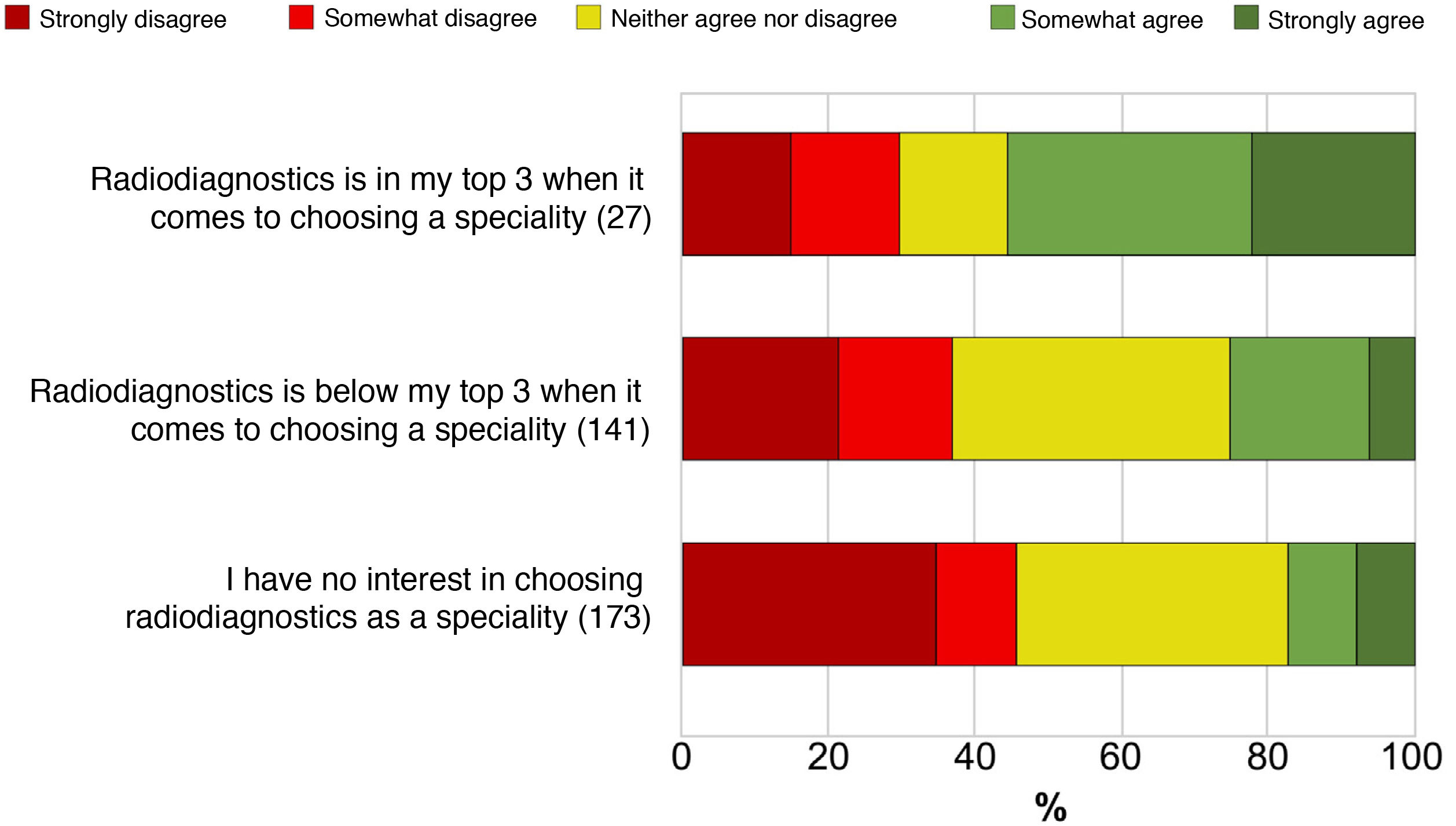
They were then asked to respond to the statement "This issue worries me when it comes to choosing radiology as a potential professional career"; 40.8% disagreed, while 23.8% agreed. There were no significant differences between the subgroups studied. As Fig. 3 shows, the students who most agreed with this statement were those who had radiology among their top three speciality choices (15/27; 55.6%), followed by those who were considering radiology as a speciality, albeit not among their top three (36/141, 25.5%) and those who had no interest in radiology as a speciality (30/173, 17.3%). The difference between the first and last group was statistically significant (p░<░0.001; one-way ANOVA).

Distribution of the percentage of agreement of the students surveyed with the statement "This issue worries me when it comes to choosing radiology as a professional career", according to the preference of choosing radiodiagnostics as a speciality. Number of respondents from each subgroup in brackets.
Finally, they were asked to respecify their speciality preferences after their exposure to the problem. Compared to the initial speciality preferences, the results were slightly different. 25 students (2 students less; 0.58%) chose the option "Radiology is in my top three when it comes to choosing a speciality"; 149 (6 more; 2.3%) chose the option "Radiology is below my top three”; and 167 (6 fewer; 1.7%) the option "I have no interest in choosing radiology as a speciality".
DiscussionThe current strength of AI in radiology lies in applications which have demonstrated clinical utility in the detection, segmentation and classification of lesions. Future prospects focus on improving existing machine learning techniques, which would provide a great opportunity for reducing human intervention, especially in time-consuming conventional imaging tasks.3 To our knowledge, this study includes the first survey on AI conducted among medical students in Spain. The respondents were unaware of the current debate about AI and its potential applications in radiology. In contrast, slightly more than half of the German students in the study by Pinto dos Santos et al.19 were aware of this debate. In our cohort, 51.6% of the students considered that they had a good understanding of the concept of AI. In other studies, 30.8% of German students,19 44.4% of British students in the study by Sit et al.,17 50.0% of Saudi students in the study by Bin Dahmask et al.20 and 78.9% of Canadian students studied by Gong et al.16 agreed with this statement. To contrast this subjective perception with more objective data, we asked four questions about AI, which obtained an overall correct response rate of 71.0%; this was higher than the 45.2% obtained in the Canadian study,16 with 3/5 questions identical to 3/4 in our study.
83.3% of the respondents considered that in the future AI would be able to provide automated disease detection in radiological images and therefore replace the radiologist in the most technical part of their work. However, the degree of agreement that AI could issue automated diagnoses from radiological images or indicate the radiological tests that each patient would need was lower (58.4% and 55.7%, respectively). In this section, our data were very similar to the German study,19 whose figures for agreement with these three statements were 83.7%, 42.2% and 56.7%, respectively. The students see the relatively continuous advance of the current applications of AI in radiology as more likely in the medium term, rather than radiologist tasks such as making diagnoses or prescribing tests being replaced, since for this purpose AI would need to possess a better processing and abstraction capacity than it has at present.
Recent studies surveying European radiologists11,21 have revealed a general climate of uncertainty regarding the potential impact of AI on the radiology profession. The students polled in this study did not anticipate either a replacement of the radiologist or a reduction in the demand for radiologists. The majority (81.2%) agreed that AI will revolutionise radiology, changing the speciality's working model, but without an alarming impact on the employability of radiologists. In line with the data gleaned from German students,19 76.0% of those surveyed rejected the hypothesis of radiologists being replaced by AI, and more than 40% expressed their disagreement with a supposed reduction in the demand for radiologists. Most European radiologists believe that AI will save time and thus help to improve interaction with other clinicians and with patients and that they will have to play a decisive role in the development and validation of AI applications in radiodiagnostics, working with engineers, computer scientists and other professionals in the development of these systems.11 The Spanish students surveyed expressed similar opinions, with more than 87% agreeing that AI will be a very useful complement for radiologists' day-to-day workload, improving their efficiency and work capacity, and over 77% agreeing that radiologists should adapt to the future changes, working with the industry to implement them. A need to train radiologists and residents in the clinical use and technical aspects of AI applications was highlighted.11 However, considering the speed at which technological advances are being applied in clinical practice, basic training on AI needs to be included in the undergraduate curriculum, as stated by a majority of students in this and other similar studies.16–20
The impact of AI on the choice of radiodiagnostics as a speciality is the primary endpoint of studies like this one.16–18,20 In general, radiodiagnostics is a speciality whose full clinical potential is largely under-appreciated by medical students.22 In Spain, this may be due in part to the fact that radiology teaching is highly variable and in some universities it is considered a "minor" subject.23 The truth is that the radiodiagnostics speciality is placed 16th out of the 47 medical specialities chosen in the Spanish MIR exam for medical residents.24 In this study, the percentage of students who would choose radiology as one of their top options for speciality (7.9%) is within the range observed in other countries (between 3.3% and 8.0%).25–27
The Canadian study16 showed that one-sixth of the students who would choose radiology as a speciality might reconsider their choice, concerned about a possible reduction in jobs as radiologists due to AI. The results from Sit et al.17 provide evidence that the advancement of AI is having a detrimental effect on UK students considering diagnostic radiology as a potential speciality. Our results are more similar to those from the study in Germany19; only 36.7% of the respondents considered that advances in AI made medicine or radiology more interesting for them (30.8%–44.5% in the German cohort). Less than 25% of those surveyed expressed concern about AI when choosing radiology as a speciality, and this percentage increased to 55% the greater their interest in the speciality. This contrasted with the Canadian16 and Saudi20 studies, in which 55% and 60% of students respectively were concerned about AI, with these figures decreasing the greater their interest in radiology as a specialty was. No significant changes were found when students respecified their speciality preference at the end of the survey, possibly due to the students' limited exposure to AI.
Differences in perception between subgroupsThe ratio of females to males in this study was 2:1. Unlike in other studies,19 scant differences were found between subgroups. The female students agreed less with the statement "I have a good understanding of what AI is", which does not indicate a poorer knowledge of AI but rather reflects the context of different self-perception of knowledge between females and males28; in fact, there was no difference in the rate of correct answers in the statements on objective knowledge of AI. They also agreed less than the male students with the statement "These advances make medicine in general and radiology in particular more interesting for me". This difference may be due to the prioritisation of other non-technological motivations among females over the attraction of medicine and radiology.29
Various significant differences were found depending on what year the respondents were in. Sixth-year students showed less agreement that AI will improve radiologists' working capacity and efficiency. In a subpopulation more concerned with the imminent end of their degree course, this may denote a certain degree of scepticism that immediate changes in medical practice are going to occur. Two other aspects deserve to be mentioned: the repetition of similar differences between sixth-year students and the rest and between second-cycle and first-cycle students. Younger students were more in agreement with radiologists accepting AI technological changes and working with industry to implement them and with the need to include basic AI training in the medical curriculum.
Limitations and future prospectsThis study has certain limitations which are set out below. Although the sample size is similar to that of other studies,16–20 it only accounts for 0.8% of the approximately 42,000 medical students (7000 per year of study) in Spain.30 It is not a national study. All 44 faculties of medicine in Spain are not represented, and other universities do not have the same weight in the distribution as the University of Malaga (Table 2). This is due to a selection bias related to the survey distribution method. There were no significant differences in any of the sections studied between the students of the University of Malaga (60.7%) and the rest (39.3%), but this may be due to a potential response bias (answering the survey or not doing so may have meant a predisposition and a prior opinion on the subject). There is also a prior information bias. In general, the level to which medical students are informed about AI is low19 and what they know comes more from the media than from the University.31 Only by understanding the fundamentals and how AI works can we have an informed opinion of its impact on radiology practice in the future.
We believe it is necessary to carry out a new study, with a larger, more representative sample of undergraduate students, taking the current one as a starting point, but including new questions on practical, clinical, ethical and legal aspects. At the same time, AI training needs to be included in medical undergraduate courses to provide a better understanding of this subject and potential aid for choosing radiodiagnostics as a speciality.20 There are strategic problems in a curriculum which at times does not have room for basic radiology content,32 but an alternative could be to provide extracurricular training online and, why not, linked to a new survey.
ConclusionsThe respondents are aware of the impact of AI on day-to-day life but they are unfamiliar with the current debate about its potential applications in radiology. As a rule, they think that AI will revolutionise radiology, but without an alarming impact on radiologists' employability. Only one quarter stated that they felt concerned about AI when it came to choosing a speciality, although this proportion rose to just over half among those who included radiodiagnostics among their top three choices. The students surveyed believe that it is necessary to provide basic undergraduate training in AI.
Authorship- 1
Responsible for the integrity of the study: GCG and FSP.
- 2
Study conception: FSP.
- 3
Study design: GCG and FSP.
- 4
Data collection: GCG.
- 5
Data analysis and interpretation: GCG and FSP.
- 6
Statistical processing: GCG, FSP.
- 7
Literature search: GCG and FSP.
- 8
Drafting of the article: GCG and FSP.
- 9
Critical review of the manuscript with intellectually relevant contributions: GCG and FSP.
- 10
Approval of the final version: GCG and FSP.
The authors declare that they have no conflicts of interest.
The authors would like to express their gratitude to the students who participated voluntarily in this study.
The following is Supplementary data to this article:


