

metricas
covid
Radiología (English Edition) Imaging findings for severe traumatic brain injury
Journal Information
Vol. 67. Issue 3.
Pages 331-342 (May - June 2025)
Visits
46
Vol. 67. Issue 3.
Pages 331-342 (May - June 2025)
Update in Radiology
Imaging findings for severe traumatic brain injury
Hallazgos de imagen en el traumatismo craneoencefálico grave
Visits
46
A. Hilario
Corresponding author
amayahilario@yahoo.es

Corresponding author.
, E. Salvador, Z.H. Chen, A. Cárdenas, J. Romero, A. Ramos
Servicio de Radiodiagnóstico, Sección de Neurorradiología, Hospital Universitario 12 de Octubre, Madrid, Spain
This item has received
Article information
Abstract
Full Text
Bibliography
Download PDF
Statistics
Figures (10)
Show moreShow less
Tables (1)
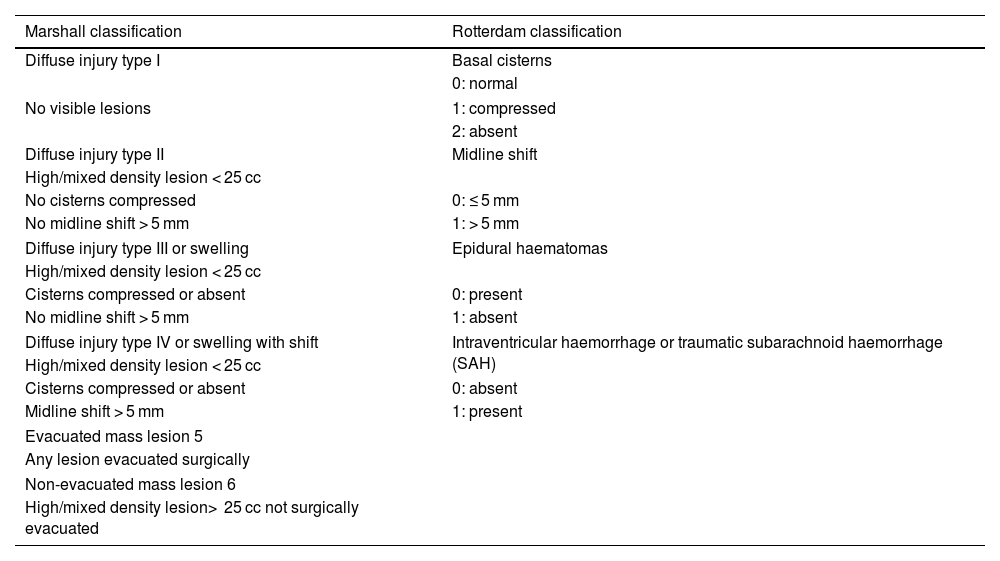
Table 1. Marshall and Rotterdam classifications of CT findings in severe trauma.
Tables
Abstract

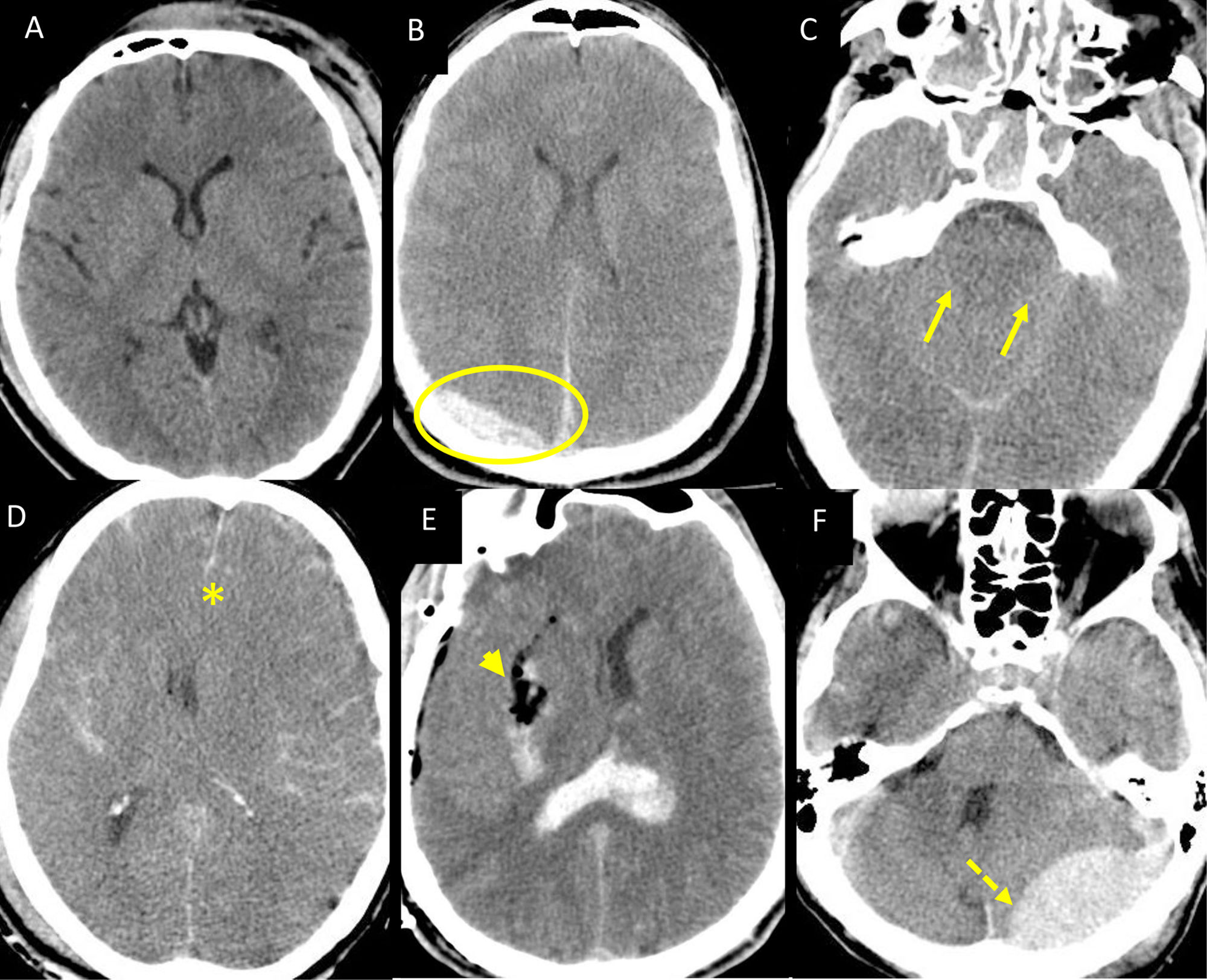
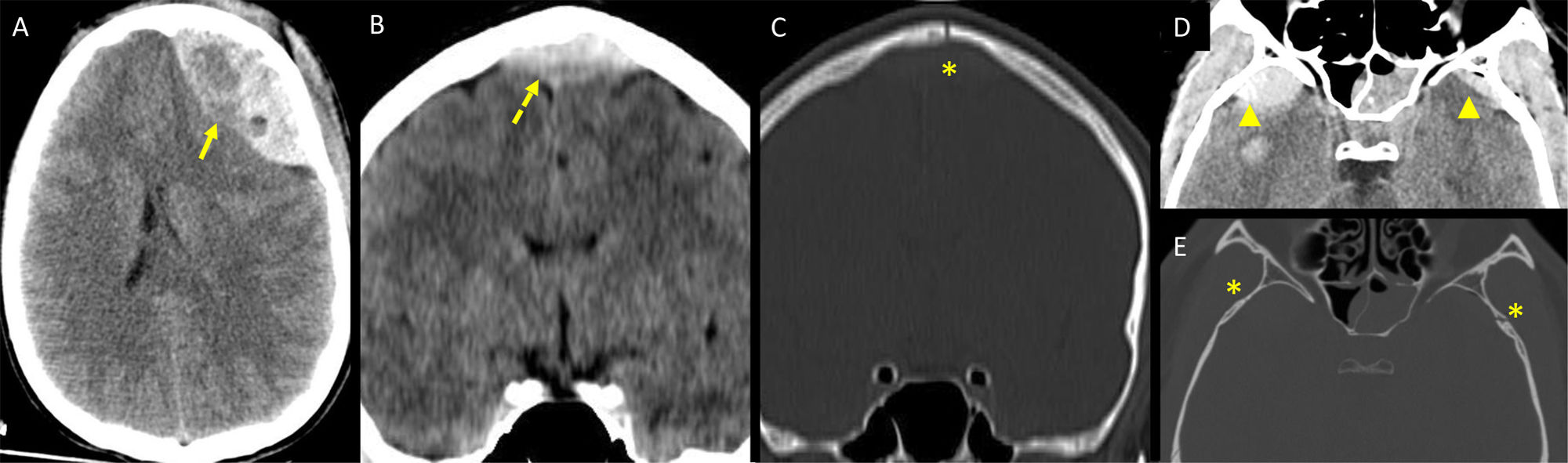
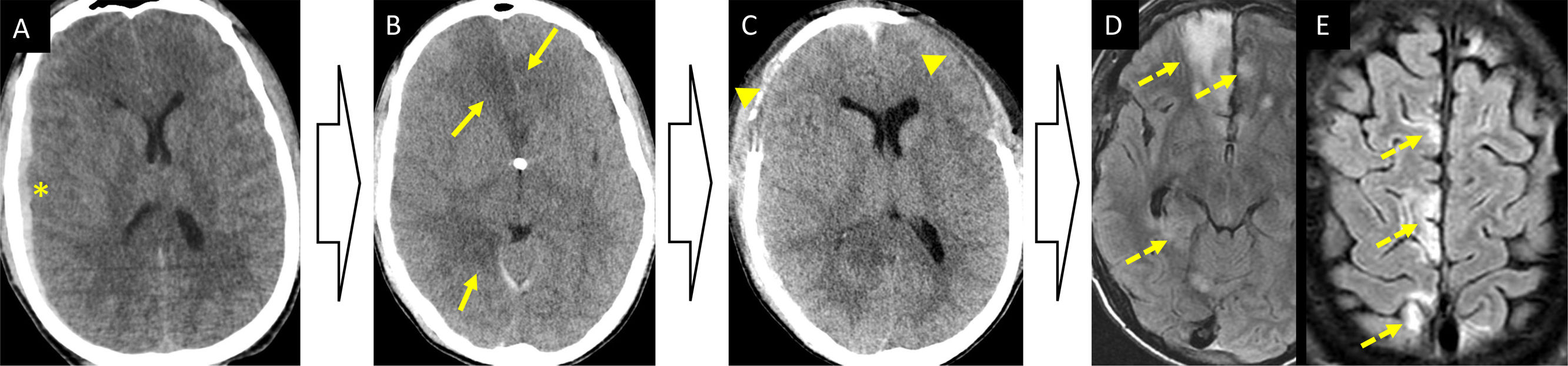
Traumatic brain injury (TBI) is the leading cause of morbidity and mortality in young patients. The Marshall classification predicts six-month mortality and divides severe TBI patients into six groups based on CT findings in the acute phase of trauma. MRI also has prognostic value because it detects 30% more traumatic lesions, especially brainstem injury and diffuse axonal injury. Diffuse axonal injury occurs in three different anatomical areas, graded according to severity, and the greater the trauma, the deeper the brain involvement extends. Traumatic brainstem injuries with the worst prognosis are those of posterior location, with bilateral or haemorrhagic involvement. This article analyses the prognostic value of CT and MRI in the assessment of severe TBI and describes the main intracranial traumatic injuries.

Keywords:
Traumatic brain haemorrhage
Subarachnoid haemorrhage
Diffuse axonal injury
Prognosis
Brain contusion
Computed tomography
Resumen

El traumatismo craneoencefálico (TCE) es la principal causa de morbimortalidad en jóvenes. La clasificación de Marshall predice mortalidad a 6 meses y divide a los pacientes con TCE grave en 6 grupos en función de los hallazgos de la TC en la fase aguda del trauma. La RM tiene valor pronóstico ya que detecta un 30% más de lesiones traumáticas, sobre todo lesiones del tronco cerebral y lesión axonal difusa. La lesión axonal difusa asienta en 3 áreas anatómicas diferentes, su gradación varía en función de la severidad, y la afectación cerebral se extiende de manera progresiva, en zonas más profundas cuanto mayor es el trauma. Las lesiones traumáticas del tronco cerebral que asocian peor pronóstico son aquellas de localización posterior, con afectación bilateral o hemorrágicas. Este artículo analiza el valor pronóstico de la TC y RM en la valoración del TCE grave, y describe las principales lesiones traumáticas intracraneales.


Palabras clave:
Hemorragia cerebral traumática
Hemorragia subaracnoidea
Lesión axonal difusa
Pronóstico
Contusiones
Tomografía computarizada

Article

These are the options to access the full texts of the publication Radiología (English Edition)
Subscriber
Subscriber

If you already have your login data, please click here .

If you have forgotten your password you can you can recover it by clicking here and selecting the option “I have forgotten my password”
Purchase
Purchase article

Purchasing article the PDF version will be downloaded

Purchase now
Contact
Phone for subscriptions and reporting of errors
From Monday to Friday from 9 a.m. to 6 p.m. (GMT + 1) except for the months of July and August which will be from 9 a.m. to 3 p.m.
Calls from Spain
932 415 960
Calls from outside Spain
+34 932 415 960
E-mail
Article options
Tools