


The Global HPP Registry, an observational, prospective, multinational registry of patients with hypophosphatasia (HPP) (NCT02306720; EUPAS13514), was initiated in 2015. The aim of this study is to assess the symptomatology and impact of the disease in patients included in the national registry.
MethodsBaseline characteristics of patients included in the Registry by national centres were analysed (5/11/2015–4/03/2024).
ResultsOf the 83 patients, 16 (19.3%) were under 18 years of age and 67 (80.7%) were adults. Median time to diagnosis was 4.8 (minimum: 0; maximum: 49.9) years. In paediatric patients, median age at symptom onset was 4 (minimum: 1.2; maximum: 11.8) years and the most prevalent symptoms were dental (37.5%), neurological (25%), and skeletal (18.8%). 23.7% of adults started with HPP-related symptoms before the age of 18 years and the most frequent symptoms were pain (64.2%), dental (50.7%), and skeletal (32.8%). Heterozygous ALPL variants were found in 96.3% of patients and the most frequent were c.343_348dup, c.334 G > C, and c.407 G > A. In adult patients, patient-reported outcomes (median [Q1; Q3]) on the quality of life questionnaire (SF-36v2) (scales 0–100) were 44.8 (34.5;50.2) for the physical component and 50.4 (38.9;56.5) for the mental component.
ConclusionsThere is a significant delay in the diagnosis of HPP. The most frequent manifestations were dental in paediatric patients and pain in adults, with a relevant impact on quality of life.
En 2015 se inició el Global HPP Registry, un registro observacional, prospectivo y multinacional de pacientes con hipofosfatasia (HPP) (NCT02306720; EUPAS13514). El objetivo de este estudio es evaluar la sintomatología e impacto de la enfermedad en los pacientes incluidos en el registro nacional.
MétodosSe analizaron las características basales de los pacientes incluidos en el Registro por los centros nacionales (5/11/2015-4/03/2024).
ResultadosDe los 83 pacientes, 16 (19,3%) eran menores de 18 años y 67 (80,7%) adultos. El tiempo (mediana) hasta el diagnóstico fue 4,8 (mínimo: 0; máximo: 49,9) años. En los pacientes pediátricos, la edad (mediana) al inicio de síntomas fue 4 (mínimo: 1,2; máximo: 11,8) años y los más prevalentes fueron dentales (37,5%), neurológicos (25%) y esqueléticos (18,8%). El 23,7% de adultos comenzó con síntomas relacionados con HPP antes de los 18 años y los más frecuentes fueron el dolor (64,2%), los dentales (50,7%) y esqueléticos (32,8%). El 96,3% de pacientes mostraron variantes enALPL en heterocigosis y las más frecuentes fueron c.343_348dup, c.334 G > C y c.407 G > A. En pacientes adultos, los resultados informados por el paciente (mediana [Q1; Q3]) en el cuestionario para la valoración de la calidad de vida (SF-36v2) (escalas de 0–100) fueron 44,8 (34,5;50,2) para el componente físico y 50,4 (38,9;56,5) para el mental.
ConclusionesExiste un retraso significativo en el diagnóstico de la HPP. Las manifestaciones más frecuentes fueron dentales en pacientes pediátricos y el dolor en adultos, con un impacto relevante en la calidad de vida.

Hypophosphatasia (HPP) is a bone mineral metabolism disorder characterised by low levels of alkaline phosphatase (ALP) due to pathogenic variants in the ALPL gene (1p36.1-p34), which encodes tissue-nonspecific alkaline phosphatase (TNAP), expressed mainly in bone, liver and kidney.1 This enzyme is primarily expressed in bone, liver, and kidney, and plays a crucial role in the development and maintenance of mineralised bone tissue, as well as in calcium and phosphate metabolism. The phenotypic spectrum of HPP is variable. More severe forms and a poorer prognosis have been described in early-onset forms, generally during the perinatal and infant stages (before 6 months of age) (OMIM #241500),2 with the possible presence of seizures, respiratory failure secondary to chest wall malformations and rickets.3,4 Infantile-juvenile HPP presents after 6 months of life as a continuum of the infantile form (OMIM #241510).5 Other manifestations of the disease include early tooth loss, osteomalacia, pseudofractures of the femur, stress fractures of the metatarsals, musculoskeletal pain, and muscle weakness. In adults (OMIM #146300),6 the disease has been less characterised, as the symptoms are generally milder than those observed in paediatric patients.7 However, a high disease burden may still be observed,8 and HPP-related symptoms may change over time.9
In order to improve disease characterisation, the Global HPP Registry was established in 2015 as a prospective, multinational, observational study (NCT02306720; EUPAS13526), sponsored by Alexion, AstraZeneca Rare Disease (Boston, MA, USA), and overseen by a scientific committee of HPP experts. The registry collects data on diagnosis, clinical course, symptoms, and disease burden in patients of all ages with HPP under conditions of routine clinical practice. The aim of this study is to describe the sociodemographic characteristics, clinical manifestations, impact on pain, quality of life, and disability associated with the disease in the Spanish cohort of patients with HPP included in the Global HPP Registry.
MethodsThe characteristics of patients with HPP recorded at the time of their enrolment in the Global HPP Registry were analysed. The study was conducted in accordance with the ethical principles of the Declaration of Helsinki and Good Clinical Practice guidelines and was approved by the ethics committee (or local equivalent) of the participating centres. Prior to participation, all patients and/or their parents/legal guardians provided written informed consent.
PatientsData were analysed from patients of any age with a diagnosis of HPP, according to the registry criteria (low ALP levels for age and sex and/or at least one pathogenic variant in ALPL), who were part of the Spanish cohort of the Global HPP Registry and enrolled between 5 November 2015 and 4 March 2024. All results presented refer exclusively to patients who had not received enzyme replacement therapy.
Data collection and processingData were obtained from routine clinical practice and entered into an electronic case report form (eCRF). Following data review, additional information was requested from the participating centres in order to ensure the highest possible consistency and completeness of the data collected.
VariablesThe following variables collected during the initial registry visit were analysed: 1) Date of enrolment and sociodemographic characteristics (age at enrolment, sex, race, and ethnicity); 2) molecular study (number of patients with ALPL variants, total number and type of variants, and their pathogenicity, according to the guidelines of the American College of Medical Genetics and Genomics [ACMG]11); 3) variables related to delayed diagnosis (age of onset of the first manifestation, age at diagnosis, and time elapsed until diagnosis); 4) clinical manifestations characteristic of HPP categorised according to the following organ systems: pain (chronic bone and muscle pain, generalised body pain, and fibromyalgia), dental, skeletal, rheumatic (calcific periarthritis, pseudogout, chondrocalcinosis, ectopic calcifications), renal, neurological, constitutional/metabolic, muscular, and respiratory symptoms and signs (see Supplementary material 1 for more information related to HPP manifestations included in each organ or body system); 5) history of medications related to skeletal involvement (bisphosphonates, parathyroid hormone [PTH] analogues, vitamin D) and analgesics; 6) patient-reported outcomes (PROs) in adults (≥18 years), using the Brief Pain Inventory Short Form (BPI), the Health Assessment Questionnaire Disability Index (HAQ-DI), and the 36-Item Short-Form Health Survey Version 2 (SF-36-v2). See Supplementary material 2 for more details on PROs and questionnaires used.
Statistical methodsA descriptive cross-sectional study of the baseline characteristics and medical history of patients with HPP was conducted based on age group at enrolment (paediatric: < 18 years; adult: ≥ 18 years). Quantitative variables are presented as mean (standard deviation [SD]) and median (minimum [min] and maximum [max] or interquartile range [Q1;Q3]), while categorical variables are expressed as frequencies and percentages.
ResultsBaseline demographic characteristicsThe study population included 83 patients, of whom 16 (19.3%) were paediatric and 67 (80.7%) adult. The median age at enrolment (min; max) for paediatric patients was 10.2 (4.3; 17.2) years. The majority of children were male (56.3%), while in the adult group there was a predominance of females (70.1%). The median age at enrolment for adult patients was 50 (19.5; 75.7) years. Genetic analysis was available for 82 patients (16 paediatric and 66 adult), revealing a total of 85 variants. Baseline demographic characteristics are shown in Table 1. The distribution of participating centres by autonomous community was: 4 in Catalonia (40%), 4 in the Community of Madrid (40%), 1 in Navarre (10%), and 1 in the Balearic Islands (10%).
Demographic characteristics of the patients analysed.
| Total (n = 83) | Paediatric age (<; 18 years) (n = 16) | Adult age (≥18 years) (n = 67) | |
|---|---|---|---|
| Age at diagnosis, years | n = 82 | n = 16 | n = 66 |
| Mean (SD) | 38.7 (19.9) | 8.9 (4.3) | 45.8 (15.3) |
| Median (min; max) | 40.3 (2;75.2) | 9.8 (2;15.8) | 46.4 (18.7;75.2) |
| Age at enrolment, years | n = 83 | n = 16 | n = 67 |
| Mean (SD) | 40.8 (20.0) | 10.3 (4.0) | 48 (14.5) |
| Median (min; max) | 42.7 (4.3;75.7) | 10.2 (4.3;17.2) | 50 (19.5; 75.7) |
| Sex, n (%) | n = 83 | n = 16 | n = 67 |
| Female | 54 (65.1%) | 7 (43.8%) | 47 (70.1%) |
| Male | 29 (34.9%) | 9 (56.3%) | 20 (29.9%) |
| Race, n (%) | n = 83 | n = 16 | n = 67 |
| White | 80 (96.4%) | 15 (93.8%) | 65 (97.0%) |
| Black | 1 (1.2%) | 0% | 1 (1.5%) |
| Asian | 1 (1.2%) | 1 (6.3%) | 0% |
| Native Hawaiian or Other Pacific Islander | 1 (1.2%) | 0% | 1 (1.5%) |
ALPL: tissue-nonspecific alkaline phosphatase gene; HPP: hypophosphatasia; SD: standard deviation.
The number of affected organ systems per patient was (median [min; max]) one (1; 5) in children and two (1; 5) in adults. Chronological data regarding symptom onset, diagnosis, and main clinical manifestations in each subgroup are detailed in Tables 2 and 3, respectively.
Chronological variables related to symptom onset and diagnosis.
| Total (n = 83) | Paediatric age (<;18 years) (n = 16) | Adult age (≥18 years) (n = 67) | |
|---|---|---|---|
| Stage of first manifestation, n (%) | n = 83 | n = 16 | n = 67 |
| Perinatal/Infantile | 1 (1.2%) | 0 (0%) | 1 (1.5%) |
| Childhood/Juvenile | 15 (18.1%) | 9 (56.3%) | 6 (9.0%) |
| Paediatric (specific stage unknown) | 14 (16.9%) | 7 (43.8%) | 7 (10.4%) |
| Adult | 45 (54.2%) | 0 (0%) | 45 (67.2%) |
| Before or after the age of 18 | 8 (9.6%) | 0 (0%) | 8 (11.9%) |
| Age at first manifestation, years | n = 44 | n = 8 | n = 36 |
| Mean (SD) | 27.5 (19.2) | 4.3 (3.4) | 32.7 (17.3) |
| Median (min;max) | 27 (0;70) | 4 (1.2;11.8) | 30 (0;70) |
| Time to diagnosisa, years | n = 59 | n = 8 | n = 51 |
| Mean (SD) | 8.2 (10.6) | 4.1 (2.2) | 9 (11.5) |
| Median (min;max) | 4.8 (0;49.9) | 4.6 (0.9;6.5) | 5.1 (0;49.9) |
HPP: patients with hypophosphatasia; max: maximum; min: minimum; SD: standard deviation.
Baseline clinical manifestations related to HPP.
| Type of signs/symptoms | Total (n = 83) | Paediatric age (<;18 years) (n = 16) | Adult age (≥18 years) (n = 67) | Adulthood (≥18 years) | Adulthood (≥18 years) |
|---|---|---|---|---|---|
| Paediatric onset (n = 14) | Early adulthood (n = 45) | ||||
| Pain-related, n (%) | 45 (54.2%) | 2 (12.5%) | 43 (64.2%) | 9 (64.3%) | 29 (64.4%) |
| Chronic bone pain | 39 (47.0%) | 2 (12.5%) | 37 (55.2%) | 6 (42.9%) | 27 (60.0%) |
| Generalised body pain | 9 (10.8%) | 0 (0%) | 9 (13.4%) | 2 (14.3%) | 6 (13.3%) |
| Fibromyalgia | 3 (3.6%) | 0 (0%) | 3 (4.5%) | 2 (14.3%) | 1 (2.2%) |
| Chronic muscle pain | 14 (16.9%) | 0 (0%) | 14 (20.9%) | 4 (28.6%) | 9 (20.0%) |
| Dental, n (%) | 40 (48.2%) | 6 (37.5%) | 34 (50.7%) | 10 (71.4%) | 20 (44.4%) |
| Premature loss of deciduous teetha | 8 (9.6%) | 3 (18.8%) | 5 (7.5%) | 5 (35.7%) | 0 (0%) |
| Othersb | 36 (43.4%) | 3 (18.8%) | 33 (49.3%) | 9 (64.3%) | 20 (44.4%) |
| Skeletal, n (%) | 25 (30.1%) | 3 (18.8%) | 22 (32.8%) | 6 (42.9%) | 13 (28.9%) |
| Rickets (by X-ray) | 0 (0%) | 0 (0%) | 0 (0%) | 0 (0%) | 0 (0%) |
| Osteomalacia (by biopsy) | 1 (1.2%) | 0 (0%) | 1 (1.5%) | 0 (0%) | 1 (2.2%) |
| Chronic inflammation/bone marrow oedema | 12 (14.5%) | 0 (0%) | 12 (17.9%) | 2 (14.3%) | 7 (15.6%) |
| Bone deformity | 8 (9.6%) | 2 (12.5%) | 6 (9.0%) | 3 (21.4%) | 3 (6.7%) |
| Fractures/pseudofractures due to any cause, n (%)/No. of fractures | 24 (28.9%)/33 | 1 (6.3%)/3 | 23 (34.3%)/30 | 4 (28.6%)/4 | 19 (42.2%)/26 |
| Recurrent fractures and fractures with difficult healing/pseudofractures | 6 (7.2%) | 1 (6.3%) | 5 (7.5%) | 2 (14.3%) | 3 (6.7%) |
| Rheumatological, n (%) | 16 (19.3%) | 0 (0%) | 16 (23.9%) | 3 (21.4%) | 13 (28.9%) |
| Calcific periarthritis | 10 (12.0%) | 0 (0%) | 10 (14.9%) | 3 (21.4%) | 7 (15.6%) |
| Pseudogout | 1 (1.2%) | 0 (0%) | 1 (1.5%) | 0 (0%) | 1 (2.2%) |
| Chondrocalcinosis | 5 (6.0%) | 0 (0%) | 5 (7.5%) | 0 (0%) | 5 (11.1%) |
| Ectopic calcifications | 3 (3.6%) | 0 (0%) | 3 (4.5%) | 0 (0%) | 3 (6.7%) |
| Renal, n (%) | 10 (12.0%) | 0 | 10 (14.9%) | 2 (14.3%) | 7 (15.6%) |
| Hypercalcaemia/hypercalciuria/hyperphosphataemia | 8 (9.6%) | 0 (0%) | 8 (12.0%) | 2 (14.3%) | 5 (11.0%) |
| Hyperphosphataemia alone | 5 (6.0%) | 0 (0%) | 5 (7.5%) | 1 (7%) | 4 (8.9%) |
| Hyperphosphataemia and hypercalciuria | 1 (1.2%) | 0 (0%) | 1 (1.5%) | 0 (0%) | 0 (0%) |
| Hypercalcaemia and hypercalciuria | 1 (1.2%) | 0 (0%) | 1 (1.5%) | 1 (7.0%) | 0 (0%) |
| Hypercalciuria alone | 1 (1.2%) | 0 (0%) | 1 (1.5%) | 0 (0%) | 1 (2.2%) |
| Nephrocalcinosis | 2 (2.4%) | 0 (0%) | 2 (3.0%) | 0 (0%) | 2 (4.4%) |
| Kidney stones | 4 (4.8%) | 0 (0%) | 4 (6.0%) | 0 (0%) | 4 (8.9%) |
| Neurological, n (%) | 5 (6.0%) | 4 (25.0%) | 1 (1.5%) | 1 (7.1%) | 0 (0%) |
| Seizures | 1 (1.2%) | 1 (6.3%) | 0 (0%) | 0 (0%) | 0 (0%) |
| Craniosynostosis | 1 (1.2%) | 0 (0%) | 1 (1.5%) | 1 (7.1%) | 0 (0%) |
| Increased intracranial pressure | 0 (0%) | 0 (0%) | 0 (0%) | 0 (0%) | 0 (0%) |
| Cognitive delay/developmental delay | 4 (4.8%) | 3 (18.8%) | 1 (1.5%) | 1 (7.1%) | 0 (0%) |
| Constitutional/metabolic, n (%) | 4 (4.8%) | 2 (12.5%) | 2 (3.0%) | 0 (0%) | 1 (2.2%) |
| Growth failure | 1 (1.2%) | 1 (6.3%) | 0 (0%) | 0 (0%) | 0 (0%) |
| Fatigue | 3 (3.6%) | 1 (6.3%) | 2 (3.0%) | 0 (0%) | 1 (2.2%) |
| Muscular, n (%) | 3 (3.6%) | 1 (6.3%) | 2 (3.0%) | 2 (14.3%) | 0 (0%) |
| Delayed gross motor skills | 1 (1.2%) | 0 (0%) | 1 (1.5%) | 1 (7.1%) | 0 (0%) |
| Weakness | 1 (1.2%) | 0 (0%) | 1 (1.5%) | 1 (7.1%) | 0 (0%) |
| Abnormal gaitc | 1 (1.2%) | 1 (6.3%) | 0 (0%) | 0 (0%) | 0 (0%) |
| Respiratory, n (%) | 3 (3.6%) | 0 | 3 (4.5%) | 2 (14.3%) | 0 (0%) |
| Respiratory failure | 1 (1.2%) | 0 (0%) | 1 (1.5%) | 1 (7.1%) | 0 (0%) |
| Pneumonia | 2 (2.4%) | 0 (0%) | 2 (3.0%) | 1 (7.1%) | 0 (0%) |
| No. of signs/symptoms per patientd | |||||
| Mean (SD) | 2.53 (1.81) | 1.5 (1.17) | 2.74 (1.85) | 3.5 (2.70) | 2.6 (1.60) |
| Median (min;max) | 2 (1;9) | 1 (1;5) | 2 (1;9) | 2 (1;9) | 2 (1;7) |
| No. of body systems affected per patiente | |||||
| Mean (SD) | 2.07 (1.20) | 1.5 (1.20) | 2.20 (1.20) | 2.70 (1.40) | 2.00 (1.00) |
| Median (min;max) | 2 (1;5) | 1 (1;5) | 2 (1;5) | 2 (1;5) | 2 (1;4) |
| Signs/symptoms most affected in order of frequency | Dental | Pain | Dental | Pain | |
| Neurological | Dental | Pain | Dental | ||
| Skeletal | Skeletal | Skeletal | Skeletal | ||
HPP: patients with hypophosphatasia; max: maximum; min: minimum; SD: standard deviation.
Includes loss of permanent dentition, poor dentition, hypodontia, dental implants, dental bridges, and dentures.
The number of patients in the included groups (total population, paediatric patients, adults, adults with Pediatric-onset forms, and adults with adult-onset forms) for whom the number of signs and symptoms and the number of affected body systems per patient is available is n = 73, n = 12, n = 61, n = 13, and n = 41.
In the paediatric group, half of the patients presented with symptoms during the infantile-juvenile stage (56.3%), at a median age (min; max) of 4 (1.2; 11.8) years. The median age at diagnosis was 9.8 (2; 15.8) years, with a diagnostic delay of 4.6 (0.9; 6.5) years. Dental manifestations were the most common (37.5%), with premature loss of deciduous teeth observed in 18.8%. Neurological symptoms (25.0%) were the second most common (18.8% had cognitive or developmental delay, and 6.3% experienced seizures), followed by skeletal symptoms (18.8%), including bone deformities (12.5%) and recurrent fractures (6.3%). Chronic bone pain and constitutional symptoms (such as failure to thrive and fatigue) were reported in 12.5% of paediatric patients, and one child presented with abnormal gait. No respiratory, renal, or rheumatological complications were observed. Regarding treatment, 3 (18.8%) paediatric patients received vitamin D supplements, while none had been treated with bisphosphonates or PTH analogues. One patient required first-line analgesia.
Among adult patients, the age at first symptom onset was (median [min; max]) 30 (0; 70) years. The median age at diagnosis was 46.4 (18.7; 75.2) years, with a diagnostic delay of 5.1 (0; 49.9) years. Of those with known age at symptom onset, 23.7% reported initial HPP-related symptoms before 18 years of age, and 76.3% in adulthood. The most common clinical manifestation in this group was pain (64.2%), which was chronic in half of the cases and generalised in 13.4%. The second most common manifestation was dental (50.7%): 49.3% experienced loss of permanent teeth, poor dentition, or hypodontia, or required implants, bridges, or removable prostheses. Additionally, 7.5% reported premature loss of deciduous teeth. Skeletal signs and symptoms were present in 32.8% of adults, making them the third most common manifestation. Fractures or pseudofractures of any cause were reported in one-third of patients, with recurrent and poorly healing fractures in 7.5%. Chronic bone marrow oedema confirmed by MRI was found in 17.9%, bone deformities in 9%, and one patient was diagnosed with osteomalacia by bone biopsy. Rheumatological manifestations were observed in one-quarter of adults, with calcifying periarthritis (14.9%) and chondrocalcinosis (7.5%) being the most common. Less common manifestations included renal (14.9%), respiratory (4.5%), muscular (3%), constitutional (3%), and neurological (1.5%) symptoms. Among adults, 2 patients had received bisphosphonates prior to HPP diagnosis, and 3 had been treated with PTH analogues. A total of 70.1% required analgesic medication, with opioids used in 13.4%.
The adult group was classified according to the onset of symptoms (Table 3). The age (median [min; max]) of those who began in paediatric age (n = 6) was 10.4 (0; 16.6) years, and that of those who began with symptoms at an age ≥ 18 years (n = 30) was 36.1 (min: 18; max: 70) years. The prevalence of dental and skeletal manifestations was higher in the first group than in the second (71.4% vs. 44.4% and 42.9% vs. 28.9%), with more recurrent fractures and pseudofractures in the paediatric onset group (14.3% vs. 6.7%). However, the prevalence of pain was similar in both groups (64.3% vs. 64.4%). Adults whose symptoms began in childhood exhibited neurological, muscular and respiratory symptoms that were not observed in the other group. In contrast, adults whose symptoms began in adulthood exhibited constitutional or metabolic symptoms that were not observed in those whose symptoms began in childhood. On average, two body systems were affected per patient in both groups.
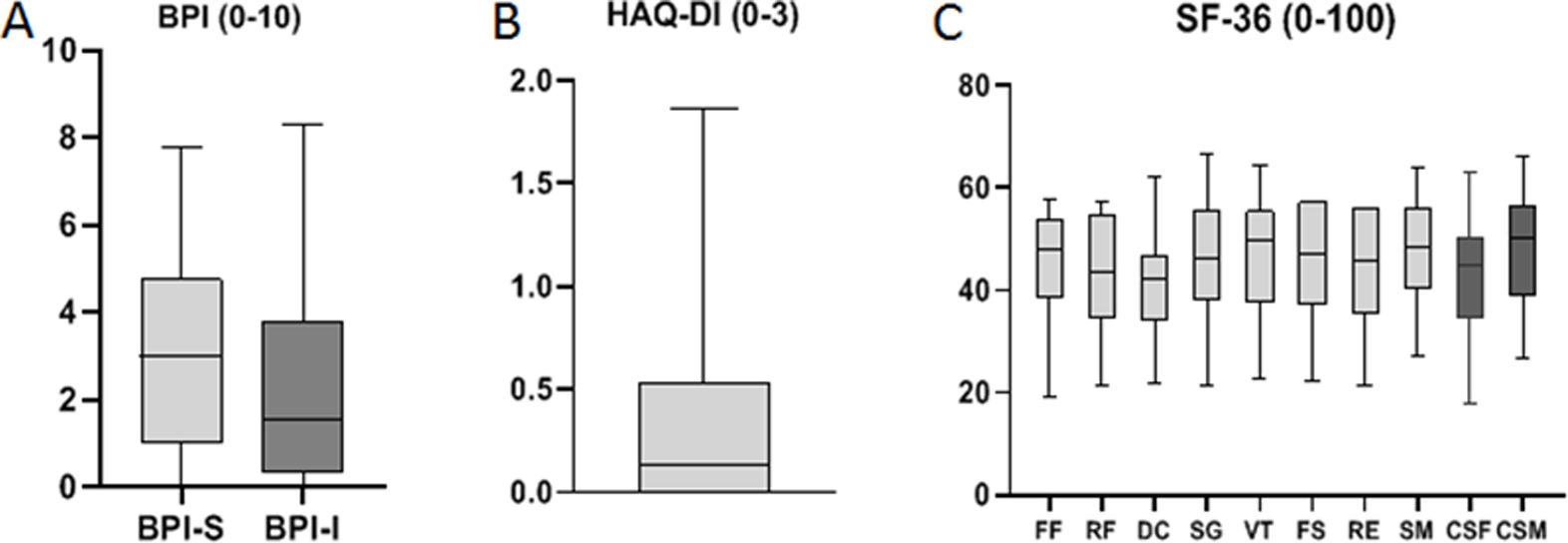
Patient-reported outcomes and disease burdenThe PROs analysed for this publication are limited to the adult population. At the enrolment visit, the BPI (0–10 scale, where lower scores indicate less pain and interference with daily function) showed a median pain severity score (BPI-S) of 3 (Q1; Q3: 0.9; 4.8) and a mean (±SD) of 3 ± 2.4. The median score for pain interference (BPI-I) was 1.6 (Q1: 0.3; Q3: 4), with a mean of 2.4 ± 2.5. The HAQ-DI score (0–3 scale, where higher scores indicate greater disability) had a median of 0.13 (0; 0.6) and a mean of 0.3 ± 0.5. The SF-36v2 (0–100 scale, where lower scores indicate poorer health status) showed a median Physical Component Summary (PCS) score of 44.8 (34.5; 50.2), with a mean of 43.2 ± 11.4, and a Mental Component Summary (MCS) score of 50.4 (38.9; 56.5), with a mean of 47.7 ± 10.3. Baseline results of the BPI, HAQ-DI, and SF-36v2 questionnaires are shown in Fig. 1.
Questionnaires on pain (BPI), disability (HAQ-DI) and quality of life (SF-36v2) in the adult population with HPP.
A) Median score (minimum, maximum and interquartile range) at the baseline visit on the Brief Pain Inventory (BPI) Short Form that assesses pain severity (BPI-S) and interference (BPI-I) (scale of 0–10, where a lower score indicates less pain/interference with daily activities). The BPI-S score was available in 56 patients and the BPI-I score in 54 patients. B) Health Assessment Questionnaire Disability Index (HAQ-DI) score on a scale of 0–3 (lower score indicates less disability). BPI and HAQ-DI were collected in patients ≥ 18 years of age. The HAQ-DI score was available in 59 patients. C) Median score (minimum, maximum, and interquartile range) at the baseline visit on the Health-Related Quality of Life or Perceived Health Questionnaire (36-Item Short Form Survey Instrument [SF-36v2]). Scale 0–100, lower score indicates poorer health status. The eight health domains (light grey) are added together to calculate the physical component summary (PCS) (light grey) and mental component summary (MCS) (dark grey) scores. Data were collected from patients ≥ 18 years of age. HAQ-DI scores were available for 59 patients.
PCS: physical component summary; MCS: mental component summary; BP: bodily pain; PF: physical functioning; SF: social functioning; ER: emotional role; PR: physical role; GH: general health perception; MH: mental health; VT: vitality.
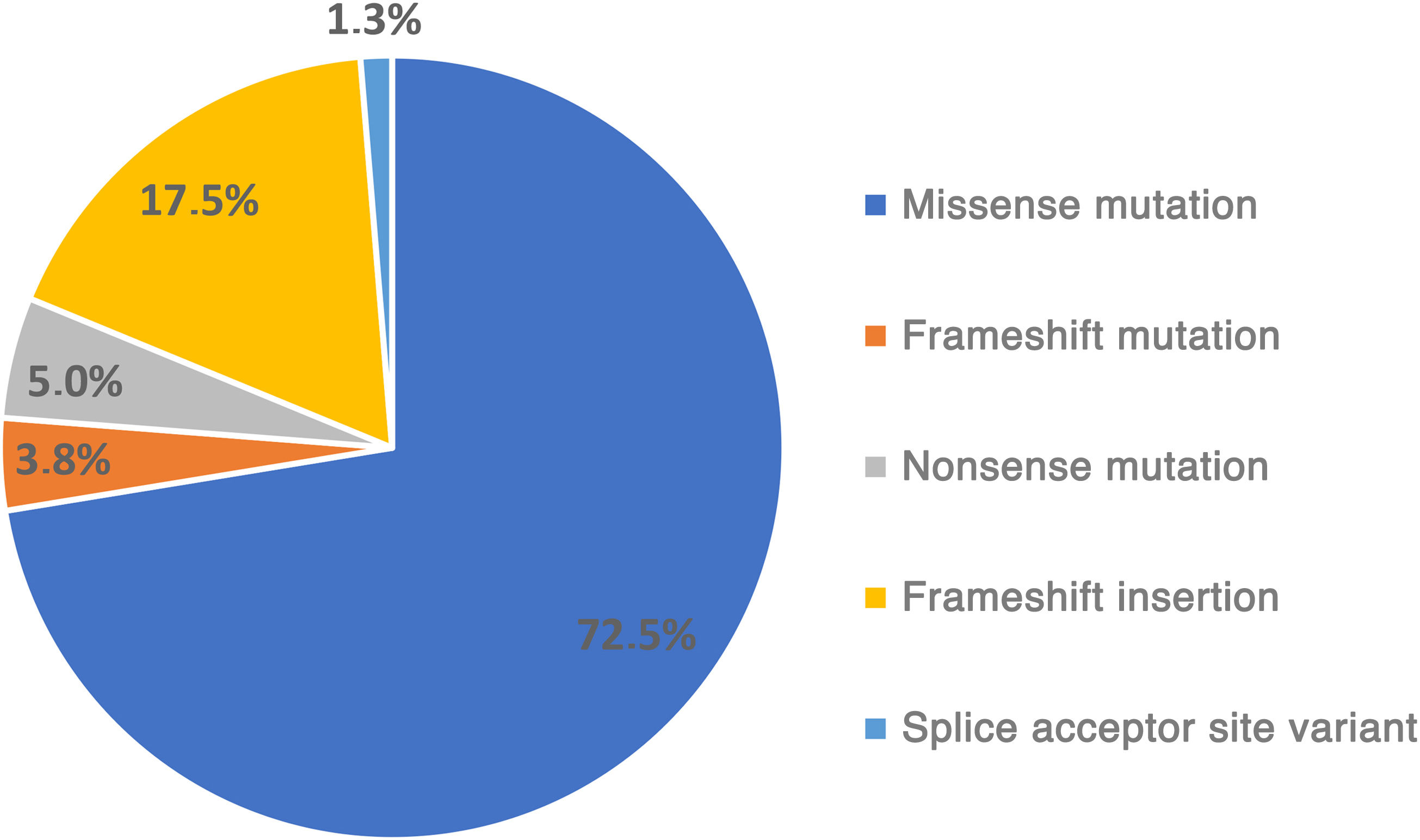
In the group of patients under 18 years of age, 15/16 (93.8%) patients showed heterozygous ALPL variants and one patient (6.2%) showed compound heterozygous variants. In adults, 64/66 (97%) showed heterozygous ALPL variants, one patient showed a homozygous variant (1.5%) and another a compound heterozygous variant (1.5%). A total of 85 variants were identified (94.1% disease-causing and 5.9% of uncertain significance), most of which were missense mutations (82.4% in children and 70.6% in adults). Fig. 2 shows the type and frequency of disease-causing ALPL variants, and Table 4 lists the variants identified in the study population.
Genetic variants in ALPL in the study population.
| Total (N = 83) | Paediatric age (<;18 years) (n = 16) | Adult age (≥18 years) (n = 67) | |
|---|---|---|---|
| Patients with identified variants/total variants | 82/85 | 16/17 | 66/68 |
| Disease-causing variants (P/PP): No. of patients/total variants | 77/80 | 14/15 | 63/65 |
| c.343_348dup | 11 (13.3%)/11 (6.6%) | 0%/0% | 11 (16.4%)/11 (8.2%) |
| c.334 G >C | 8 (9.6%)/8 (4.8%) | 4 (25.0%)/4 (12.5%) | 4 (6.0%)/4 (3.0%) |
| c.407 G >A | 7 (8.4%)/7 (4.2%) | 2 (12.5%)/2 (6.3%) | 5 (7.5%) / 5 (3.7%) |
| c.382 G >A | 5 (6%)/6 (3.6%) | 0%/0% | 5 (7.5%)/6 (4.5%) |
| c.991 G >A | 4 (4.8%)/4 (2.4%) | 1 (6.3%)/1 (3.1%) | 3 (4.5%)/3 (2.2%) |
| c.188_205dup | 3 (3.6%)/3 (1.8%) | 0%/0% | 3 (4.5%)/3 (2.2%) |
| c.871 G >A | 3 (3.6%)/3 (1.8%) | 0% / 0% | 3 (4.5%)/3 (2.2%) |
| c.1175 G >T | 2 (2.4%)/2 (1.2%) | 1 (6.3%)/1 (3.1%) | 1 (1.5%)/1 (0.7%) |
| c.1282C >T | 2 (2.4%)/2 (1.2%) | 1 (6.3%)/1 (3.1%) | 1 (1.5%)/1 (0.7%) |
| c.1292 T >A | 2 (2.4%)/2 (1.2%) | 2 (12.5%)/2 (6.3%) | 0%/0% |
| c.1426 G >A | 2 (2.4%)/2 (1.2%) | 0%/0% | 2 (3.0%)/2 (1.5%) |
| c.1471 G >A | 2 (2.4%)/2 (1.2%) | 0%/0% | 2 (3.0%)/2 (1.5%) |
| c.497C >T | 2 (2.4%)/2 (1.2%) | 0%/0% | 2 (3.0%)/2 (1.5%) |
| c.567_568insT | 2 (2.4%)/2 (1.2%) | 1 (6.3%)/1 (3.1%) | 1 (1.5%)/1 (0.7%) |
| c.571 G >A | 2 (2.4%)/2 (1.2%) | 0%/0% | 2 (3.0%)/2 (1.5%) |
| c.1120 G >A | 1 (1.2%)/1 (0.6%) | 0% / 0% | 1 (1.5%)/1 (0.7%) |
| c.1133A >G | 1 (1.2%)/1 (0.6%) | 0% / 0% | 1 (1.5%)/1 (0.7%) |
| c.1159 G >A | 1 (1.2%)/1 (0.6%) | 0%/0% | 1 (1.5%)/1 (0.7%) |
| c.1175 G >C | 1 (1.2%)/1 (0.6%) | 0% / 0% | 1 (1.5%)/1 (0.7%) |
| c.1276 G >A | 1 (1.2%)/1 (0.6%) | 0% / 0% | 1 (1.5%)/1 (0.7%) |
| c.1277 G >A | 1 (1.2%)/1 (0.6%) | 0%/0% | 1 (1.5%)/1 (0.7%) |
| c.1283 G >A | 1 (1.2%)/1 (0.6%) | 0%/0% | 1 (1.5%)/1 (0.7%) |
| c.1348C >T | 1 (1.2%)/1 (0.6%) | 0%/0% | 1 (1.5%)/1 (0.7%) |
| c.1366 G >A | 1 (1.2%)/1 (0.6%) | 0%/0% | 1 (1.5%)/1 (0.7%) |
| c.1451 T >C | 1 (1.2%)/1 (0.6%) | 0%/0% | 1 (1.5%)/1 (0.7%) |
| c.388dup | 1 (1.2%)/1 (0.6%) | 0%/0% | 1 (1.5%)/1 (0.7%) |
| c.406C >T | 1 (1.2%)/1 (0.6%) | 1 (6.3%)/1 (3.1%) | 0%/0% |
| c.454C >T | 1 (1.2%)/1 (0.6%) | 0%/0% | 1 (1.5%)/1 (0.7%) |
| c.473-2A >G | 1 (1.2%)/1 (0.6%) | 0%/0% | 1 (1.5%)/1 (0.7%) |
| c.542C >T | 1 (1.2%)/1 (0.6%) | 1 (6.3%)/1 (3.1%) | 0%/0% |
| c.551 G >A | 1 (1.2%)/1 (0.6%) | 0%/0% | 1 (1.5%)/1 (0.7%) |
| c.619C >G | 1 (1.2%)/1 (0.6%) | 0%/0% | 1 (1.5%)/1 (0.7%) |
| c.659 G >C | 1 (1.2%)/1 (0.6%) | 1 (6.3%)/ 1 (3.1%) | 1 (1.5%)/1 (0.7%) |
| c.659 G >T | 1 (1.2%)/1 (0.6%) | 0% / 0% | 1 (1.5%) / 1 (0.7%) |
| c.809 G >A | 1 (1.2%)/1 (0.6%) | 0%/0% | 1 (1.5%)/1 (0.7%) |
| c.871 G >T | 1 (1.2%)/1 (0.6%) | 0% / 0% | 1 (1.5%)/1 (0.7%) |
| c.892 G >A | 1 (1.2%)/1 (0.6%) | 0% / 0% | 1 (1.5%)/1 (0.7%) |
| Variants of uncertain significance (VUS): No. of patients / total variants | 5/5 | 2/2 | 3/3 |
| c.1033 G >C | 2 (2.4%)/2 (1.2%) | 0%/0% | 2 (3%)/2 (1.5%) |
| c.217_219del | 1 (1.2%)/1 (0.6%) | 1 (6.3%)/1 (3.1%) | 0% / 0% |
| c.380C >T | 1 (1.2%)/1 (0.6%) | 1 (6.3%)/1 (3.1%) | 0%/0% |
| c.547 G >A | 1 (1.2%)/1 (0.6%) | 0%/0% | 1 (1.5%)/1 (0.7%) |
P: pathogenic; PP: probably pathogenic.
The Global HPP Registry represents the largest compilation of data from patients with hypophosphatasia (HPP) derived from routine clinical practice. This article provides a detailed analysis of the paediatric and adult patients from Spanish centres included in the registry, reflecting the wide spectrum of clinical manifestations associated with the disease. HPP can affect multiple organ systems and impose a substantial disease burden, leading to higher scores on disability indices and a reduced quality of life.
As is often observed in other rare diseases, a significant diagnostic delay was also identified in the Spanish HPP registry. In the national paediatric cohort, the time to diagnosis was 4.6 years, which is longer than that reported by Högler et al. for patients under one week of age (0.1 months; range: 0–11.5 years) and for those older than one year (8.5 months; range: 0–10.7 years).10
The most common clinical manifestations in paediatric patients were dental, neurological and skeletal. In the Global HPP Registry,10 paediatric patients (n = 121) had an earlier onset of symptoms, and dental manifestations were also the most prevalent (48.2%), compared with 37.5% in the Spanish cohort. Dental symptoms in HPP may include premature exfoliation, structural tooth abnormalities, enamel hypoplasia, severe caries, alveolar bone loss, and enlarged pulp chambers. Although deciduous teeth are most commonly affected, permanent dentition may also be compromised, highlighting the need for early dental assessments and interventions.7 Skeletal manifestations were the second most common in the Global HPP Registry (44.2%), with a higher prevalence of bone deformities (32.5% vs. 12.5%) and rickets (18.3% vs. 0%) compared with the national data. However, the prevalence of recurrent and poorly healing fractures was similar across both cohorts. Neurological symptoms were also common, both in the international and Spanish cohorts, particularly developmental delay, cognitive impairment, and seizures.10 No Spanish paediatric patients developed respiratory, renal, or rheumatological complications, in contrast with the international cohort, where 18.6%, 23.5%, and 21% of children, respectively, were affected—18.6% of whom required respiratory support.10 Overall, these findings suggest that the Spanish paediatric cohort presented with later symptom onset and milder manifestations compared with the Global HPP Registry, potentially contributing to the longer diagnostic delay observed.10
In adults, symptom onset occurred primarily in adulthood (≥18 years) in 76.3% of cases. These results are consistent with previous series reporting symptom onset in midlife.12 However, the proportion of adult-onset cases in the international cohort (n = 304) was lower (44.6%). Recall bias, lack of disease awareness, and underrecognition of milder features may mean that some adult-onset cases were in fact undiagnosed paediatric forms. Nevertheless, previous studies have not found differences in disease burden based on age at symptom onset, highlighting the limitations of current nosological classifications.8
The diagnostic delay among adults in the Spanish registry reached 5.1 years, possibly due to the high proportion of adult-onset cases. The most common clinical manifestations in adults, in descending order, were musculoskeletal pain (64.2%), dental signs and symptoms (50.7%), and skeletal involvement (32.8%). These findings were similar to those reported in the Global HPP Registry (67.3%, 54.3%, and 43.3%, respectively).8 International studies in adults with HPP report a high prevalence of pain, ranging from 41% to 95%.10,12–14 Data from Spanish series also showed a significant prevalence, ranging from 52.2%15 to 79.5%.16 In the medical records of patients in the Global HPP Registry, pain was also a common complaint, with the proportion of adults receiving analgesics being three times higher than that of paediatric patients, possibly due to greater difficulties in expressing pain in childhood and underestimation of its severity by parents and doctors.10
Furthermore, a survey conducted by Weber et al. found that 76% of adult patients experienced pain severe enough to limit daily activities.13 Previous studies have demonstrated the impact of pain on physical function and quality of life.10,13,17 In the present study, the impact of pain, as measured by the BPI-SF, was modest and similar to findings by Seefried et al.8 However, disability scores were notably higher than the general population mean of 0.25.18 Regarding quality of life (SF-36v2), mean domain scores in the Spanish cohort were below the general population average,19 in line with data from the Global HPP Registry, where Dahir et al. reported a high disease burden in adults, independent of symptom onset age or the presence of overt skeletal involvement.20 Likewise, a national study by Santurtún et al. found lower scores in bodily pain and other quality of life domains (SF-36v2) in patients with low ALP levels compared to healthy controls.21
With regard to dental involvement, the second most common manifestation, a similar prevalence has also been observed in both Spanish studies (28.6–46%)15,16,22 and international studies (14-47%).12,14,23 These symptoms may often go unnoticed in clinical practice, although many patients recall dental problems beginning in childhood. Therefore, these features should be carefully considered during the diagnostic process.17
Recurrent stress fractures in the metatarsals and pseudofractures of the femur are classic skeletal manifestations of HPP.24 In the Spanish registry, 34.3% of adults had a history of fractures or pseudofractures. Notably, two patients had received bisphosphonates before diagnosis. Spanish studies have found similar fracture prevalence rates of around 40% in adults with HPP,16,22 with multiple fractures in 5% of cases.16 International cohorts reported fracture prevalence between 39–54%, with multiple fractures in 15.8–36%.12,14 In the Global HPP Registry, Högler et al. found that 36.5% of adults had recurrent or poorly healing fractures and that 17.6% had been prescribed bisphosphonates, likely before diagnosis.10 These findings underscore the importance of monitoring ALP levels and considering HPP as a potential diagnosis before initiating bisphosphonate therapy in the presence of this biochemical abnormality.25,26
Rheumatological manifestations, such as calcific periarthritis and chondrocalcinosis, were more prevalent in adults in the Spanish cohort (23.9%) than in the international cohort (13.3%).8 Periarticular calcifications have also been reported in adult HPP case series.12,16,27,28 In addition, the presence of chondrocalcinosis has been observed in other cohorts of patients with HPP with a variable frequency of 5–40%.12,14,16,22,29 Renal (14.9% vs. 15%) and respiratory (4.5% vs. 4%) involvement were similar between the Spanish and international cohorts. In contrast, neurological (1.5%), muscular (3%), and constitutional (3%) symptoms were less common in the Spanish cohort compared to those presented by adults in the Global HPP Registry (11.4, 28.7 and 33.2%, respectively). These discrepancies do not appear to be explained by demographic or biochemical differences, such as ALP levels, which were similar across both cohorts.8 However, the clinical assessment of patients and the results obtained may be influenced by the variability of medical and/or surgical specialties that treated the patients.
Dental and skeletal manifestations such as fractures were more common in adults with childhood-onset HPP, though they were also notably prevalent in adult-onset cases. Pain affected nearly two-thirds of patients in both groups, and the median number of affected systems was two in each group. These findings align with data from the Global HPP Registry, where adults with HPP frequently experienced pain and a high disease burden regardless of symptom onset age,8,20 The severity of these symptoms has been associated with the need for enzyme replacement therapy.20
The most common ALPL variants in our cohort were c.343_348dup, c.334 G > C, c.407 G > A, c.382 G > A, and c.991 G > A (Table 4). In contrast, the most prevalent variant in the Global HPP Registry was c.571 G > A—also present in two Spanish patients—followed by c.1250A > G and c.1159del, which were not detected in our cohort. Similarly, most variants were missense mutations, the most common type according to the ALPL gene variant database from Johannes Kepler University Faculty of Medicine 2024.30 A large proportion of patients in the Spanish registry showed heterozygous ALPL variants. In this regard, it should be noted that genetic status could influence the clinical differences observed in the paediatric cohort between the Global HPP Registry, with more severe childhood forms and a higher prevalence of patients with two variants in the ALPL gene, compared to the national registry.10 These differences, however, were not observed in adults. The spectrum of the disease in heterozygous individuals remains a relevant issue, and genotype-phenotype correlation studies may be useful in further investigating this aspect.
As limitations, this study may be subject to certain selection biases due to the nature of participating centres, which may have a specific interest in HPP research. Additionally, as a multicentre registry involving various medical specialties, differences in clinical practice across centres and/or among professionals with diverse training backgrounds may have affected data consistency. Recall bias may also have influenced the collection of historical data. Moreover, the exclusion of patients who died before enrolment may lead to an underestimation of disease severity within the paediatric subgroup, and the lower representation of adult male patients may have affected characterisation of the male population. Furthermore, access to individual genetic results was not available, which limits the ability to explore genotype–phenotype correlations within our cohort. It should be noted that this correlation is particularly challenging in HPP, which is characterised by high clinical heterogeneity, even among members of the same family carrying identical ALPL variants.31,32 This variability may also be influenced by other genes, epigenetic mechanisms, and environmental factors that can modulate disease expression.33
Among the main strengths of this study are the robust methodology employed and the inclusion of patients with a confirmed diagnosis of HPP, most of whom had genetic confirmation. The study design and relatively large sample size, considering the rarity of the disease, allowed for systematic and consistent data collection, contributing to a deeper understanding of HPP in both adult and paediatric populations. Moreover, future analyses of longitudinal data from the national registry will provide valuable insights into the clinical progression and potential complications associated with HPP.
ConclusionsThe national HPP registry serves as a valuable tool to better characterise the natural history of the disease in Spain. The findings confirm a significant diagnostic delay and highlight that HPP is a systemic condition with a wide range of clinical manifestations. Dental and skeletal signs are the most prominent, along with neurological symptoms in paediatric patients and pain in adults. The disease burden, reflected by its impact on disability indices and quality of life, underscores the need to implement strategies for earlier diagnosis to enable appropriate disease management.
Ethical considerationsThe protocol for the Global HPP Registry was approved by the institutional review board (or equivalent) in each participating country and conducted in accordance with the ethical principles of the Declaration of Helsinki and Good Clinical Practice guidelines, in line with European regulations on medicinal products. All patients or their parents/legal guardians provided written informed consent and agreed to the publication of their medical data included in the registry.
Generative AI statement in scientific writingNo AI tools were used in the writing or editing of this article.
FundingThis study, as well as the Global HPP Registry, is sponsored by Alexion, AstraZeneca Rare Disease, Boston MA, USA. Alexion Pharma Spain S.L. (AstraZeneca Rare Disease Unit) has funded the medical writing of this publication.
Carolina Tornero has received a research grant from Alexion and honoraria from Amgen, Alexion, Abbvie, Theramex, UCB, and Gedeon-Richter.
Gabriel Ángel Martos-Moreno has served as a consultant and received honoraria from Alexion, AstraZeneca Rare Disease; he is also a member of the Scientific Advisory Board of the Global HPP Registry.
Núria Guañabens has received honoraria from Amgen, Theramex, Gedeon-Richter, and UCB.
Helena Flórez has received personal fees from Amgen, Theramex, UCB, Rubió, STADA, Grünenthal, and Gedeon-Richter.
Anna Ribera is employed in the Rare Diseases Unit at AstraZeneca.
Pilar Aguado has received a research grant from Alexion and personal fees from Abbvie, Alexion, Amgen, Faes, Gedeon-Richter, GP-Pharm, Kyowa Kirin, Lilly, Rubió, UCB, and Theramex.
The authors would like to thank the patients, their families, the investigators and the staff at the various hospitals participating in the Global HPP Registry. Special thanks to Dr. Garzón (Hospital Universitario 12 de Octubre, Madrid), Dr. Malouf (Hospital de la Santa Creu i Sant Pau, Barcelona), Dr. Bou (Hospital Sant Joan de Déu, Esplugues de Llobregat, Barcelona), Dr. Camins (Hospital General de Granollers, Barcelona), Dr. Cacheda (Hospital de Son Llàtzer, Palma, Mallorca), Dr. Manrique (Complejo Hospitalario de Navarra, Pamplona), and Dr. Ceñal (Hospital Universitario de Móstoles, Madrid), for contributing patient data to the Global HPP Registry.
Medical writing support for the manuscript was provided by Fernando Sánchez Barbero of Content Ed Net (Madrid, Spain) and funded by Alexion, AstraZeneca Rare Disease, Boston, MA, USA.


