




Recent studies have shown that about 10% of adults aged 20–40 years in the general population have reduced spirometric values, and that this is associated with a greater risk of respiratory and non-respiratory diseases and early mortality at 20 years of follow-up. Thirty years ago, the IBERPOC study identified a very high prevalence (18%) of chronic obstructive pulmonary disease (COPD) in the Osona region (Catalonia, Spain) in people older than 40 years of age.
ObjectiveTo investigate the current prevalence of spirometric alterations, clinical manifestations and risk factors in adults aged 18–50 years in Osona.
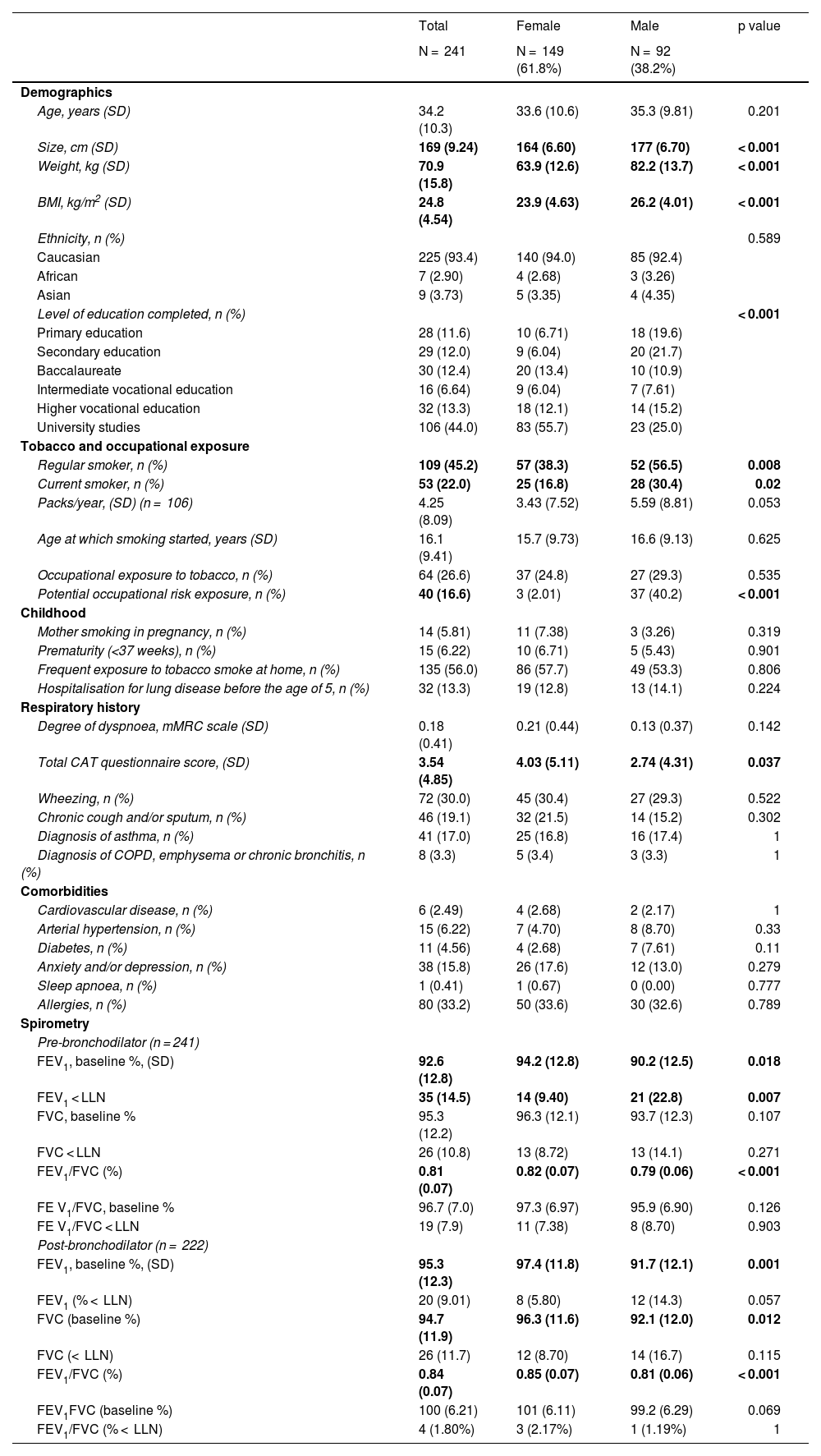
Methods241 participants living in Osona were prospectively included (149 women (61,8%) and 92 men (38,2%)), with a mean age of 34,2 ± 10,3 years, living in Osona.
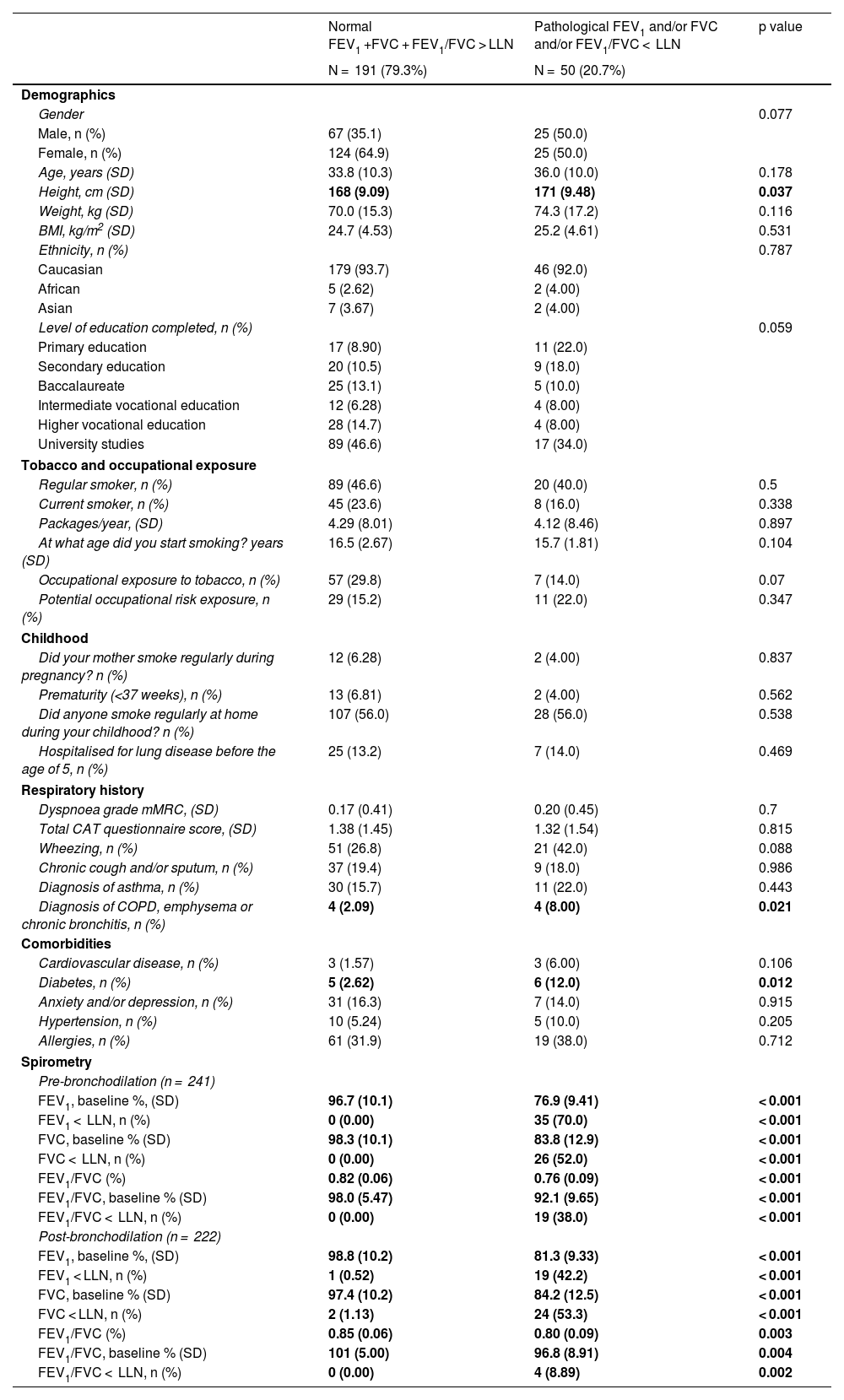
ResultsResults showed that: (1) the prevalence of spirometric abnormalities before bronchodilation (1, 10,8% FVC and 7,9% FEV1/FVC), particularly in males who also smoked more and more often worked in potentially risk labours; (2) 20–30% of participants referred respiratory symptoms, particularly in females; (3) the comparison between participants with normal or abnormal spirometry showed that the latter did not have a higher smoking exposure or early life-events but had been diagnosed of COPD, asthma or diabetes more frequently.
Conclusions20.7% of young adults in Osona have abnormal spirometric values, similarly to the results of the IBERPOC study more than 30 years ago. The investigation of its origin merits a larger study that includes environmental, genetic and epigenetic measurements.
Estudios recientes indican que alrededor del 10% de adultos de 20–40 años de edad en la población general muestran valores espirométricos inferiores a lo normal, y que ello se asocia a mayor riesgo de enfermedades respiratorias y no respiratorias, así como a mortalidad prematura a los 20 años de seguimiento. Hace 30 años el estudio IBERPOC identificó una prevalencia muy elevada (18%) de enfermedad pulmonar obstructiva crónica (EPOC) en la comarca de Osona (Cataluña) en personas mayores de 40 años.
ObjetivoInvestigar la prevalencia de alteraciones espirométricas, manifestaciones clínicas y factores de riesgo en población joven (18–50 años) en Osona en la actualidad.
MétodoSe incluyeron prospectivamente 241 participantes (149 mujeres (61,8%) y 92 varones (38,2%)), con una edad media de 34,2 ± 10,3 años sin diferencias entre géneros, residentes en Osona.
Resultados(1) El 20.7% de la población estudiada presentaba a alteraciones espirométricas pre-broncodilatación (1, 10,8% FVC y 7,9% FEV1/FVC), siendo más frecuentes en varones que fumaban más y estaban más expuestos a profesiones de riesgo potencial; (2) el 20–30% de los participantes refería síntomas respiratorios especialmente mujeres; (3) la comparación entre participantes con espirometría normal o patológica mostro que estos últimos no tenían mayor exposición al tabaco ni más eventos en la infancia, pero si habían sido diagnosticados de asma, EPOC o diabetes, con mayor frecuencia.
ConclusiónEl 20.7% de la población joven en Osona muestra alteraciones espirométricas, cifra similar a la del estudio IBERPOC hace 30 años. Determinar su origen merece un estudio más amplio que incluya factores ambientales, genéticos y epigenéticos.

