


Today, primary care professionals’ (PCPs) perspectives on hospital quality are unknown when evaluating hospital quality priorities. The aims of the present study were to identify key healthcare quality attributes from PCPs’ perspective, to validate an instrument that measures PCPs’ experiences of healthcare quality multidimensionally and to define hospital quality priorities based on PCPs’ experiences.
Material and methodsFocus groups with PCPs were conducted to identify quality attributes through a qualitative in-depth analysis. A multicentre study of 18 hospitals was used to quantitatively assess construct, discriminant and criterion validity of the FlaQuM-Quickscan, an instrument that measures ‘Healthcare quality for patients and kin’ (part 1) and ‘Healthcare quality for professionals’ (part 2). To set quality priorities, scores on quality domains were analyzed descriptively and between-hospital variation was examined by evaluating differences in hospitals’ mean scores on the quality domains using one-way Analysis of Variance (ANOVA).
ResultsIdentified key attributes largely corresponded with Lachman's multidimensional quality model. Including ‘Communication’ as a new quality domain was recommended. The FlaQuM-Quickscan was completed by 550 PCPs. Confirmatory factor analyses showed reasonable to good fit, except for the Root Mean Square Error of Approximation (RMSEA) in part 2. The ‘Equity’ domain scored the highest in parts 1 and 2. Domains ‘Kin-centred care’ and ‘Accessibility and timeliness’ scored the lowest in part 1 and ‘Resilience’ and ‘Partnership and co-production’ in part 2. Significant variation in hospitals’ mean scores was observed for eleven domains in part 1 and sixteen domains in part 2.
ConclusionsThe results gained a better understanding of PCPs’ perspective on quality. The FlaQuM-Quickscan is a valid instrument to measure PCPs’ experiences of hospital quality. Identified priorities indicate that hospital management should focus on multifaceted quality strategies, including technical domains, person-and kin-centredness, core values and catalysts.
En la actualidad, se desconocen las perspectivas de los profesionales de atención primaria (APP) sobre la calidad hospitalaria a la hora de evaluar las prioridades de la calidad hospitalaria. El objetivo del estudio fue identificar los atributos de calidad de la atención sanitaria desde la perspectiva de los médicos de atención primaria, validar un instrumento que mide las experiencias multidimensionales de los APP sobre la calidad de la atención sanitaria y definir las prioridades de calidad hospitalaria basándonos en las experiencias de los APP.
Material y métodosSe llevaron a cabo grupos focales con APP para identificar atributos de calidad mediante un análisis cualitativo en profundidad. Se utilizó un estudio multicéntrico de 18 hospitales para evaluar cuantitativamente la validez de construcción, discriminante y de criterio del FlaQuM-Quickscan, un instrumento que mide «Calidad de atención médica para pacientes y familiares» (parte 1) y «Calidad de atención médica para profesionales» (parte 2). Para establecer las prioridades de calidad, se analizaron descriptivamente las puntuaciones en los dominios de calidad, y se examinó la variación entre hospitales evaluando las diferencias en las puntuaciones medias de los hospitales en los dominios de calidad mediante Analysis of Variance (ANOVA) unidireccional.
ResultadosLos atributos clave identificados coincidieron en gran medida con el modelo de calidad multidimensional de Lachman. Se recomendó incluir «Comunicación» como un nuevo dominio de calidad. El FlaQuM-Quickscan fue completado por 550 APP. Los análisis factoriales confirmatorios mostraron un ajuste razonable a bueno, excepto para el Root Mean Square Error of Approximation (RMSEA) en parte 2. El dominio «Equidad» obtuvo la puntuación más alta en parte 1 y 2. Los dominios «Atención centrada en la familia» y «Accesibilidad y oportunidad» obtuvieron las puntuaciones más bajas en la parte 1 y «Resiliencia» y «Colaboración y coproducción» en la parte 2. Se observó una variación significativa en las puntuaciones medias de los hospitales en once dominios en la parte 1 y dieciséis dominios en la parte 2.
ConclusionesLos resultados proporcionaron una mejor comprensión de la perspectiva de los APP sobre la calidad. El FlaQuM-Quickscan es un instrumento válido para medir las experiencias de los APP en cuanto a la calidad hospitalaria. Las prioridades identificadas indican que la gestión hospitalaria debería centrarse en estrategias de calidad multifacéticas, que incluyan dominios técnicos, centrados en la persona y en la familia, valores fundamentales y catalizadores.
In the pursuit of excellence in healthcare, ensuring high-quality care has become an essential objective for healthcare systems worldwide. Currently, quality improvement efforts are mainly driven to enhance patient outcomes. Recently, Lachman et al. proposed a new, multidimensional definition of healthcare quality.1 Next to technical domains, this state-of-the-art definition embraces interpersonal characteristics of quality2 and recognizes the importance of partnership and co-production.3 Within this context, co-production with all stakeholders, i.e. patients, kin, hospitals and primary care, has been promoted by expanding ‘patient-centred’ to ‘person-centred’ care.3 This expansion is in line with the definition of integrated care, which focuses on overcoming fragmentation through better collaboration of system levels to improve outcomes and satisfaction.4,5 Although primary care professionals (PCPs) are usually patients’ and kin's first confidant before and after their hospital admission and play a pivotal role in patients’ outcome after discharge, they do not use hospital quality indicators consistently.6 Moreover, little research has been paid on how to actively involve PCPs in hospital quality improvement.7,8 As the lack of knowledge sharing between hospitals and primary care has been identified as a major cause of ineffective and unsafe care,9,10 efforts to improve quality should focus on involvement, integration11 and collaboration between hospitals and primary care.5,12
Currently, Flemish (Belgian) hospitals are implementing a new model towards sustainable quality management, hereinafter referred to as Flanders Quality Model (FlaQuM), that encompasses three pillars: (1) “thinking” based on a quality vision model1; (2) “doing” by focusing on the implementation of a co-creation roadmap13 and (3) “learning” from social capital in inter-hospital collaboratives (https://flaqum.org/english/). To measure stakeholders’ experiences based on Lachman's aforementioned multidimensional definition of quality (pillar 1),1 the FlaQuM-Quickscan is developed and validated from patients’, kin's and professionals’ perspective.14,15 Consequently, evaluation of quality priorities in current hospital management is based on a non-comprehensive view on quality because PCPs’ perspective has not yet been integrated.16 Hospitals can benefit from PCPs’ experiences to drive future quality improvement strategies.11 By examining PCPs’ perspective on healthcare quality, valuable insights can be gained into attributes they consider essential for delivering high-quality care and in-hospital quality priorities can be evaluated from a holistic approach. Therefore, the objectives of this study were: to identify key healthcare quality attributes from PCPs’ perspective; to validate an instrument, i.e. the FlaQuM-Quickscan, which measures experiences of healthcare quality multidimensionally by PCPs. And finally, to define hospital quality priorities based on PCPs’ experiences.
Material and methodsObjective 1: Identifying key healthcare quality attributesKey healthcare quality attributes were identified through a qualitative design with the focus group technique. Focus groups were conducted with PCPs to gain insights into their experiential knowledge, without having previous knowledge about Lachman's multidimensional quality model.1 The method to conduct focus groups and perform the data-analysis was similar to focus groups with patients and kin conducted by our research team.17 Via the regional community network, a call was made for PCPs. Two focus groups, with a mean duration of two hours, took place in October 2021. Two postdoctoral fellows (EMC and AJ) moderated the focus groups supported by a semi-structured guide, which started with the question: ‘Which are the attributes that positively or negatively affect healthcare quality?’. Participants noted keywords independently on three green cards and red cards, for negatively and positively influencing attributes, respectively. After clustering keywords on a blackboard, open-ended questions were used to stimulate the in-depth group discussion. An observer (FC) took notes. Focus groups were audio-recorded and transcribed verbatim. The classical content analysis described by Morgan18 was used to inductively derive attributes from keywords and interview transcripts and to compare those deductively to Lachman's multidimensional quality model.1
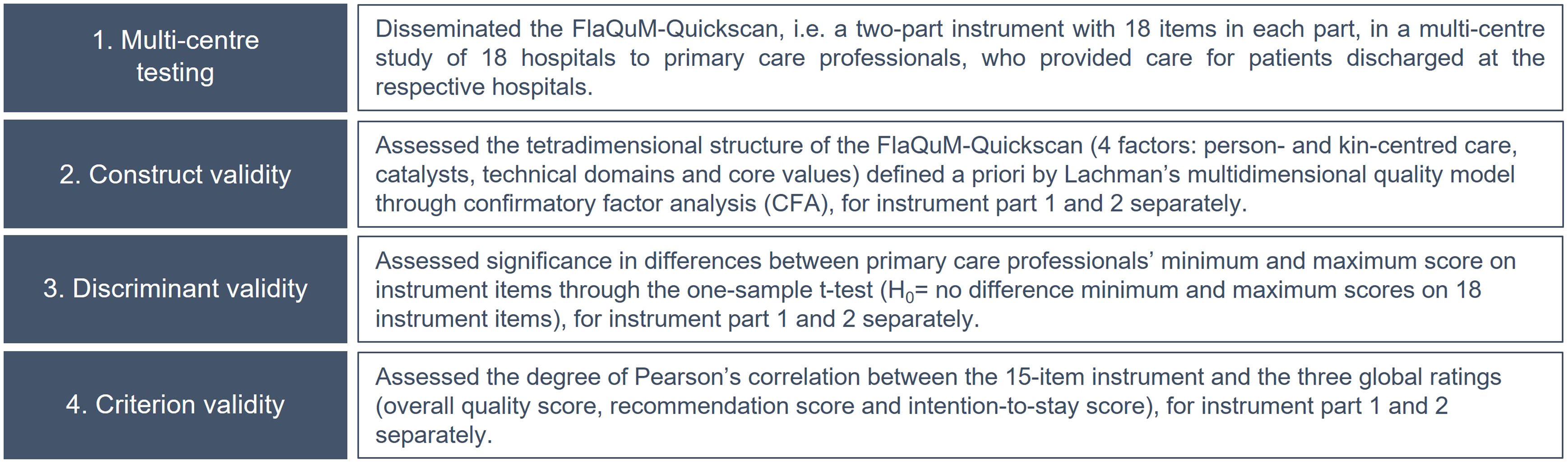
Objective 2: Validating the FlaQuM-QuickscanValidation steps of the FlaQuM-Quickscan (Appendix B) started with a multicentre study of 18 Flemish (Belgian) hospitals, which are members of FlaQuM-consortium, to test the construct, discriminant and criterion validity (Fig. 1). The instrument contains two parts. The first part explores perspectives on ‘Healthcare quality for patients and kin’, i.e. how professionals care for patients and their kin, while the second part focuses on ‘Healthcare quality for professionals’, i.e. how the organization cares for their professionals.15 PCPs, who provided care for patients discharged at the respective hospital, were asked to complete both instrument parts. Each instrument part contains 15 items, measuring domains of the multidimensional quality model,1 three global ratings and sociodemographic questions (gender and age). The 15 items reflecting the quality domains were divided into four subscales: person- and kin-centred care (2 items), catalysts (3 items), technical domains (6 items) and core values (4 items). Each item is rated on a 11-point Likert-type scale reflecting the respondent's level of disagreement or agreement with the item statement [score from “0” (strongly disagree) to “10” (strongly agree)] (Appendix B). Participating hospitals distributed the electronic, Dutch-language instrument to PCPs via mail between May 2021 and June 2022. Only fully completed instruments were included in this study. A minimum sample size of 360 PCPs was considered acceptable for testing the psychometric properties.19
To assess construct validity, confirmatory factor analysis (CFA) was performed to evaluate the tetradimensional structure of the FlaQuM-Quickscan (person- and kin-centred care, catalysts, technical domains and core values) defined a priori by the multidimensional quality model. We assessed whether the hypothesized subscales of part 1 and 2 are conceptualized as such by PCPs. Model fit was assessed by conducting single-group CFA to investigate whether the established dimensionality of the instrument parts fit the respondents. Model fit evaluation was based on international recognized cut-off criteria20 and Chen's21 allowed changes in fit indices when studying invariance for the Comparative Fit Index (CFI) (ranges between 0 and 1; reasonable if >.90 and very good if >.95), the Tucker–Lewis index (TLI)22 (ranges between 0 and 1; reasonable if >.90 and very good if >.95), and the Root Mean Square Error of Approximation (RMSEA)23 (ranges between 0 and 1; good fit if <.1). Mplus version 7.1 was used to estimate factor analytic models.24
To assess discriminant validity, i.e. the extent to which an item is novel and not simply a reflection of some other construct,19 respondents’ differences between minimum and maximum scores on items of both instrument parts are analyzed. Significance in differences was studied by one-sample t-test. Our null hypothesis is that there is no difference between the minimum and maximum scores on the 18 instrument items, meaning that respondents do not distinguish experiences between dimensions and perceive quality as a unidimensional construct. Nevertheless, in Lachman's model, quality is described as a multidimensional construct.
To assess criterion validity, which is defined as the degree of a relationship between a given test score and performance on another measure,19 the degree of Pearson's correlation between the 15-item instrument and three global ratings (overall quality score, recommendation score and intention-to-stay score) is determined for each instrument part. Coefficients exceeding r=0.3 were considered as meaningful.25 Scores on global ratings were treated as a substitute for a gold standard with which the instrument items were correlated, as no other instrument was available to measure PCP's experiences of in-hospital quality. Analyses were generated using the SAS software, Version 9.4 of the SAS System for Windows. Significance for all analyses in this study was determined at an alpha-level of p<0.05.
Objective 3: Defining in-hospital quality prioritiesThe multicentre data was used to set priorities based on PCPs’ experiences of hospital quality which are measured by the FlaQuM-Quickscan. Descriptive analyses are performed for each of the 15 quality domains and three global ratings, including mean, percentage distribution of scores and percentage of scores between 0–5 and between 8–10. Hospital quality priorities were defined by examining boxplots with an interquartile range, mean and median. Outliers were excluded in the presentation of results. Between-hospital variation was examined by hospitals’ mean scores on quality domains of both instrument parts. Only hospitals with at least 10 respondents were included (n=15 hospitals). Differences in hospitals’ mean scores on quality domains were studied by one-way ANOVA. Analyses were generated using the SAS software, Version 9.4 of the SAS System for Windows. Significance for all analyses in this study was determined at an alpha-level of p<0.05.
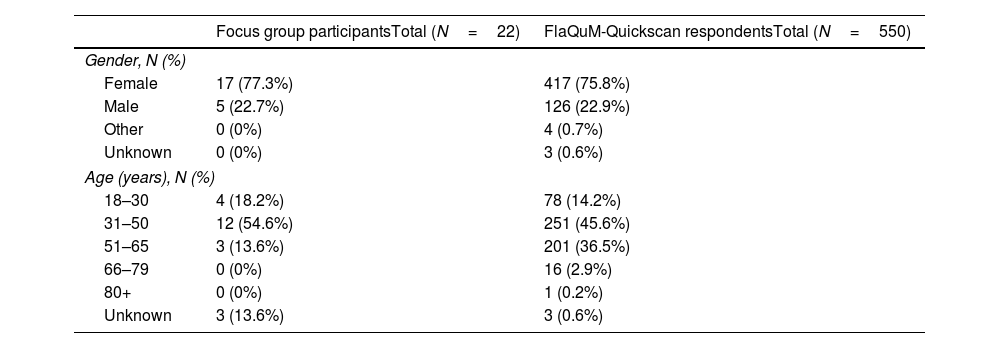
ResultsIn total, 22 PCPs participated in two focus groups and 550 PCPs completed the FlaQuM-Quickscan (Table 1).
Characteristics of focus group participants and FlaQuM-Quickscan respondents.
| Focus group participantsTotal (N=22) | FlaQuM-Quickscan respondentsTotal (N=550) | |
|---|---|---|
| Gender, N (%) | ||
| Female | 17 (77.3%) | 417 (75.8%) |
| Male | 5 (22.7%) | 126 (22.9%) |
| Other | 0 (0%) | 4 (0.7%) |
| Unknown | 0 (0%) | 3 (0.6%) |
| Age (years), N (%) | ||
| 18–30 | 4 (18.2%) | 78 (14.2%) |
| 31–50 | 12 (54.6%) | 251 (45.6%) |
| 51–65 | 3 (13.6%) | 201 (36.5%) |
| 66–79 | 0 (0%) | 16 (2.9%) |
| 80+ | 0 (0%) | 1 (0.2%) |
| Unknown | 3 (13.6%) | 3 (0.6%) |
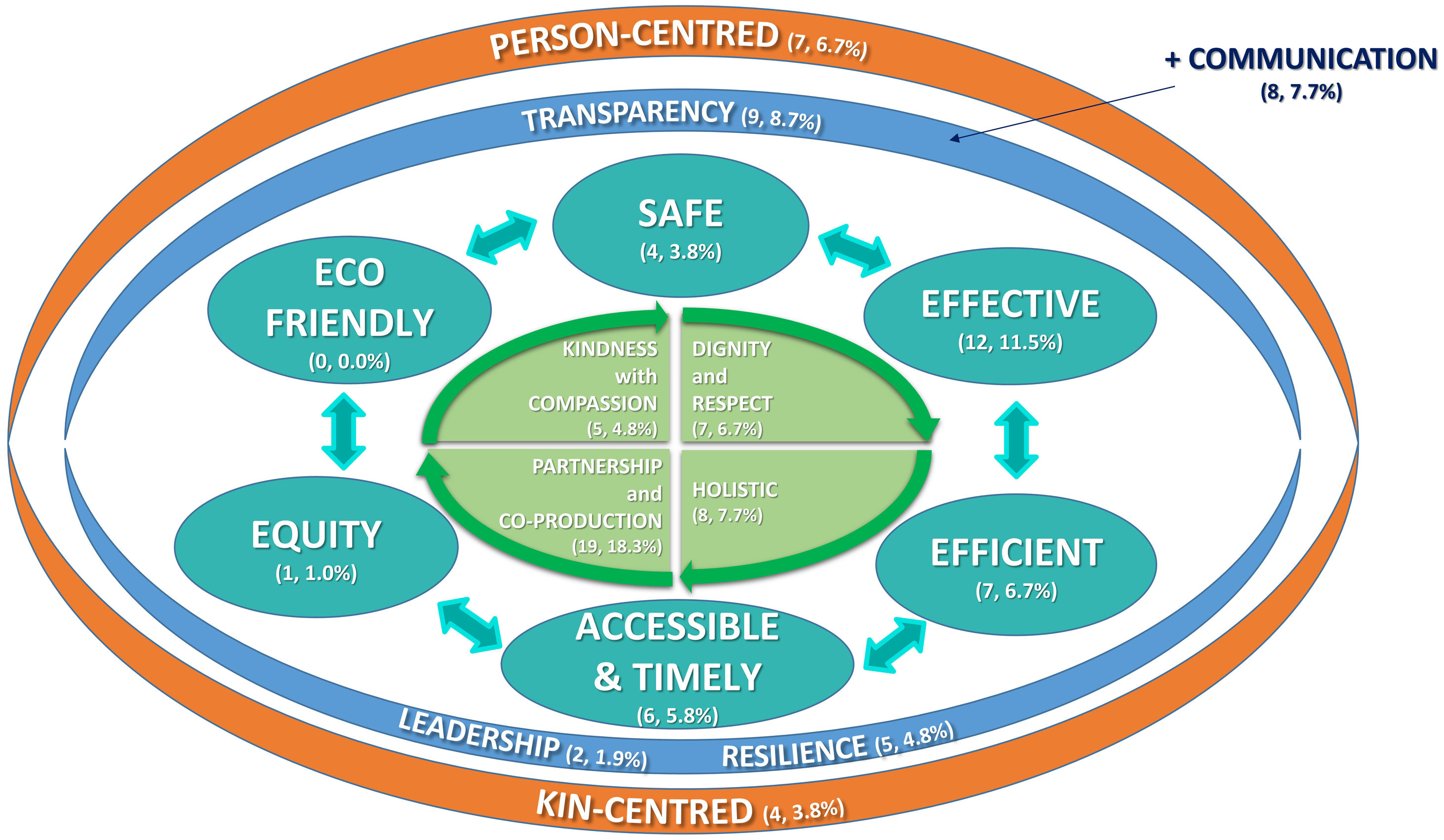
During focus groups, 56 green cards and 48 red ones, were collected. In phase 1, 37 (35.6%) cards were classified in the 15 aforementioned domains based on definitions of Lachman's multidimensional quality model (Appendix B). In phase 2, 44 cards (42.3%) or 81 cards (77.9%) in total were classified after reading verbatim transcripts of focus groups. Peer review discussions with our research team led to the expansion of Lachman's model with a new domain ‘Communication’. During phase 3, 23 cards (22.1%) were classified.
Identified key quality attributes relevant to PCPs are deductively compared to Lachman's multidimensional quality model. Cards were mainly classified in domains ‘Partnership and Co-Production’ (18.3%), ‘Effectiveness’ (11.5%) and ‘Transparency’ (8.7%). ‘Equity’ was only mentioned once and ‘Eco-friendly’ was not mentioned (Fig. 2).
Objective 2: Validating the FlaQuM-QuickscanDescriptive resultsFor part 1, the item with the lowest mean was the same as the one with the highest percentage of scores between 0 and 5 (‘Kin-centredness’) and vice versa for the highest average and highest percentage of scores between 8 and 10 (‘Equity’). For part 2, the item with the lowest mean was the same as the one with the highest percentage of scores between 0 and 5 (‘Resilience’) and vice versa for the highest mean and highest percentage of scores between 8 and 10 (‘Equity’) (Appendix B).
Construct validityFor part 1, the CFA with 4 factors showed very good to reasonable fit (CFI=0.948, TLI=0.935 and RMSEA=0.095). For part 2, the model fits the data well for two indices (CFI=0.930 and TLI=0.912) and poor for one index (RMSEA=0.119).
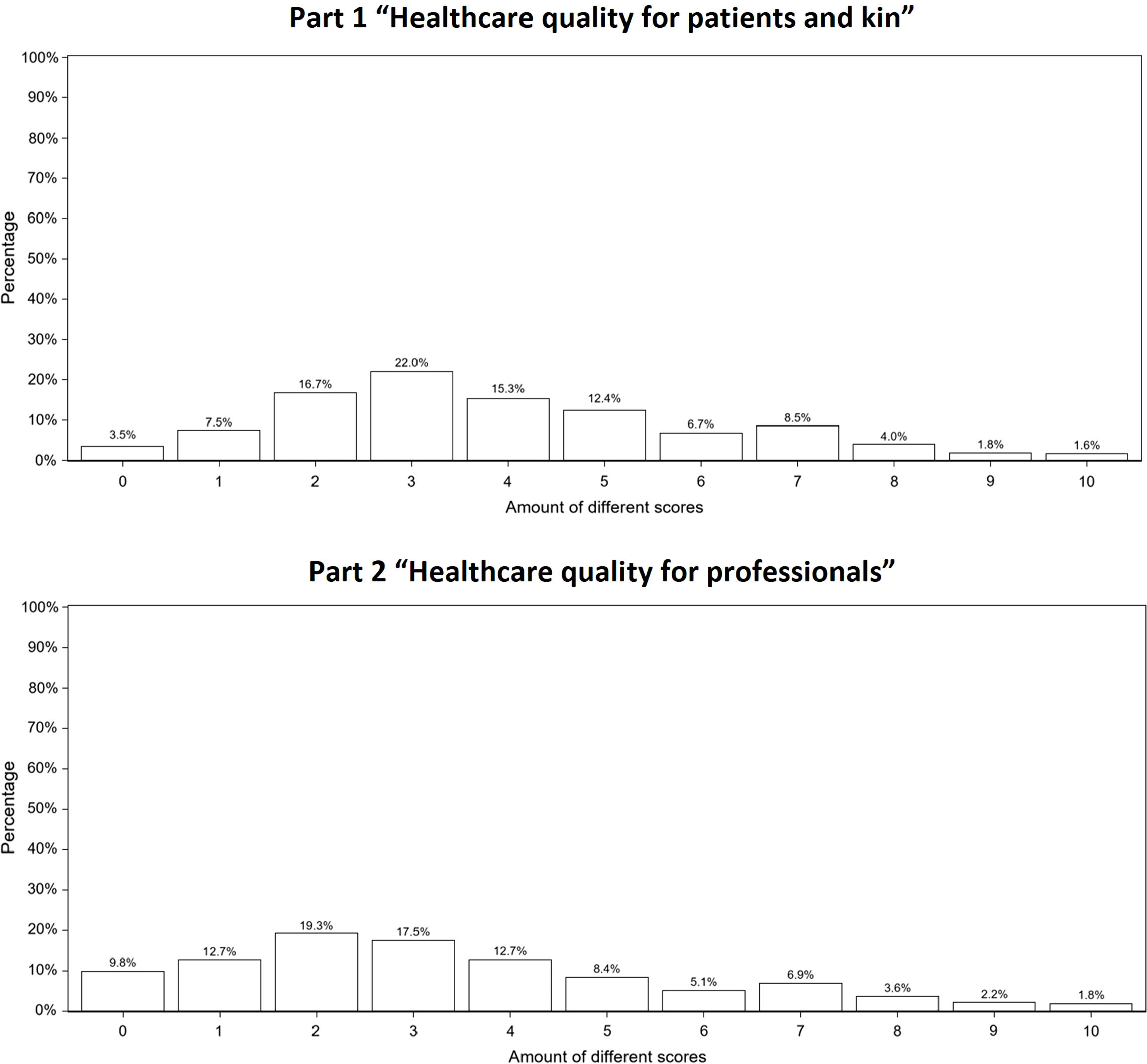
Discriminant validityThis intrapersonal variation, i.e. the variation between respondents’ minimum and maximum scores, showed that 72.3% and 58.2% of PCPs scored domains with a minimum difference of 3 points on the 11-point Likert-type scale in part 1 and part 2, respectively (Fig. 3). Based on the one-sample t-test, we rejected our null hypothesis for both instrument parts, meaning that PCPs differentiate experiences across quality domains (p<0.001).
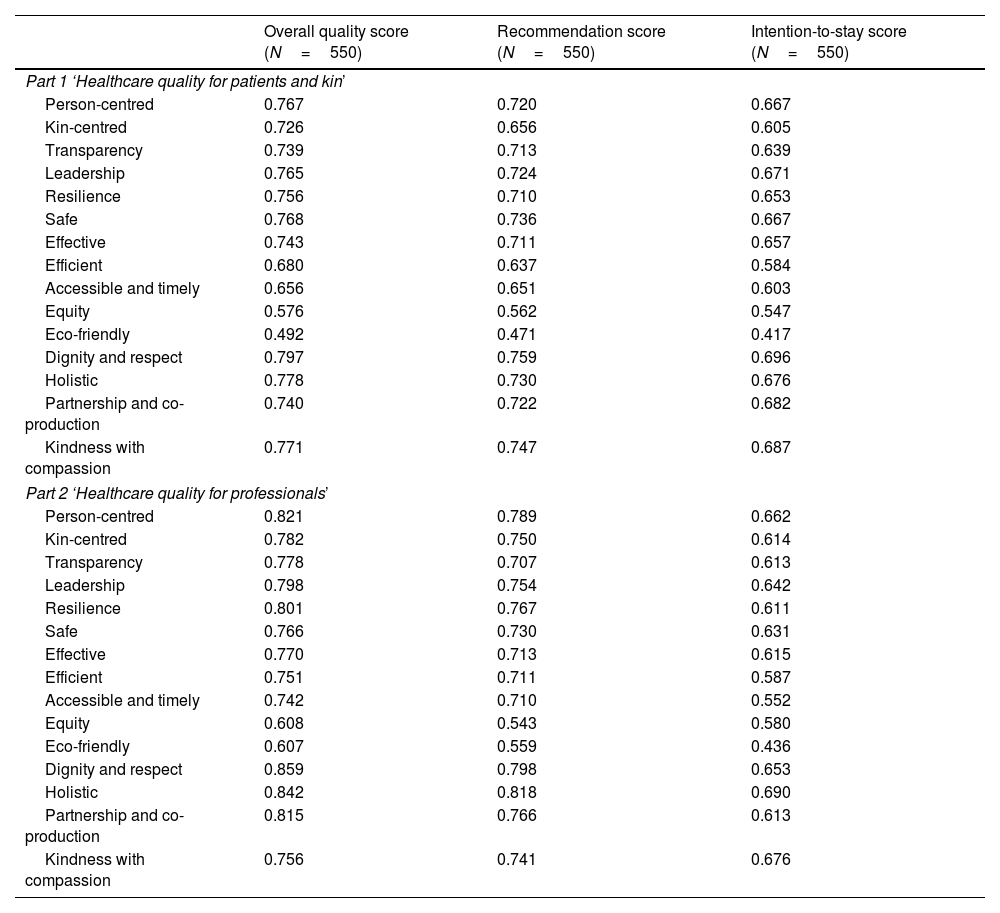
Criterion validityAll coefficients were statistically significant. ‘Eco-friendliness’ has the lowest association with global ratings in both instrument parts, except for the association between ‘Equity’ and the recommendation score in part 2. ‘Dignity and respect’ has the highest associations with global ratings in part 1 and with the overall quality score in part 2. ‘Holistic care’ has the highest association with the recommendation score and intention-to-stay score in part 2 (Table 2).
Item-to-global-ratings correlations.
| Overall quality score (N=550) | Recommendation score (N=550) | Intention-to-stay score (N=550) | |
|---|---|---|---|
| Part 1 ‘Healthcare quality for patients and kin’ | |||
| Person-centred | 0.767 | 0.720 | 0.667 |
| Kin-centred | 0.726 | 0.656 | 0.605 |
| Transparency | 0.739 | 0.713 | 0.639 |
| Leadership | 0.765 | 0.724 | 0.671 |
| Resilience | 0.756 | 0.710 | 0.653 |
| Safe | 0.768 | 0.736 | 0.667 |
| Effective | 0.743 | 0.711 | 0.657 |
| Efficient | 0.680 | 0.637 | 0.584 |
| Accessible and timely | 0.656 | 0.651 | 0.603 |
| Equity | 0.576 | 0.562 | 0.547 |
| Eco-friendly | 0.492 | 0.471 | 0.417 |
| Dignity and respect | 0.797 | 0.759 | 0.696 |
| Holistic | 0.778 | 0.730 | 0.676 |
| Partnership and co-production | 0.740 | 0.722 | 0.682 |
| Kindness with compassion | 0.771 | 0.747 | 0.687 |
| Part 2 ‘Healthcare quality for professionals’ | |||
| Person-centred | 0.821 | 0.789 | 0.662 |
| Kin-centred | 0.782 | 0.750 | 0.614 |
| Transparency | 0.778 | 0.707 | 0.613 |
| Leadership | 0.798 | 0.754 | 0.642 |
| Resilience | 0.801 | 0.767 | 0.611 |
| Safe | 0.766 | 0.730 | 0.631 |
| Effective | 0.770 | 0.713 | 0.615 |
| Efficient | 0.751 | 0.711 | 0.587 |
| Accessible and timely | 0.742 | 0.710 | 0.552 |
| Equity | 0.608 | 0.543 | 0.580 |
| Eco-friendly | 0.607 | 0.559 | 0.436 |
| Dignity and respect | 0.859 | 0.798 | 0.653 |
| Holistic | 0.842 | 0.818 | 0.690 |
| Partnership and co-production | 0.815 | 0.766 | 0.613 |
| Kindness with compassion | 0.756 | 0.741 | 0.676 |
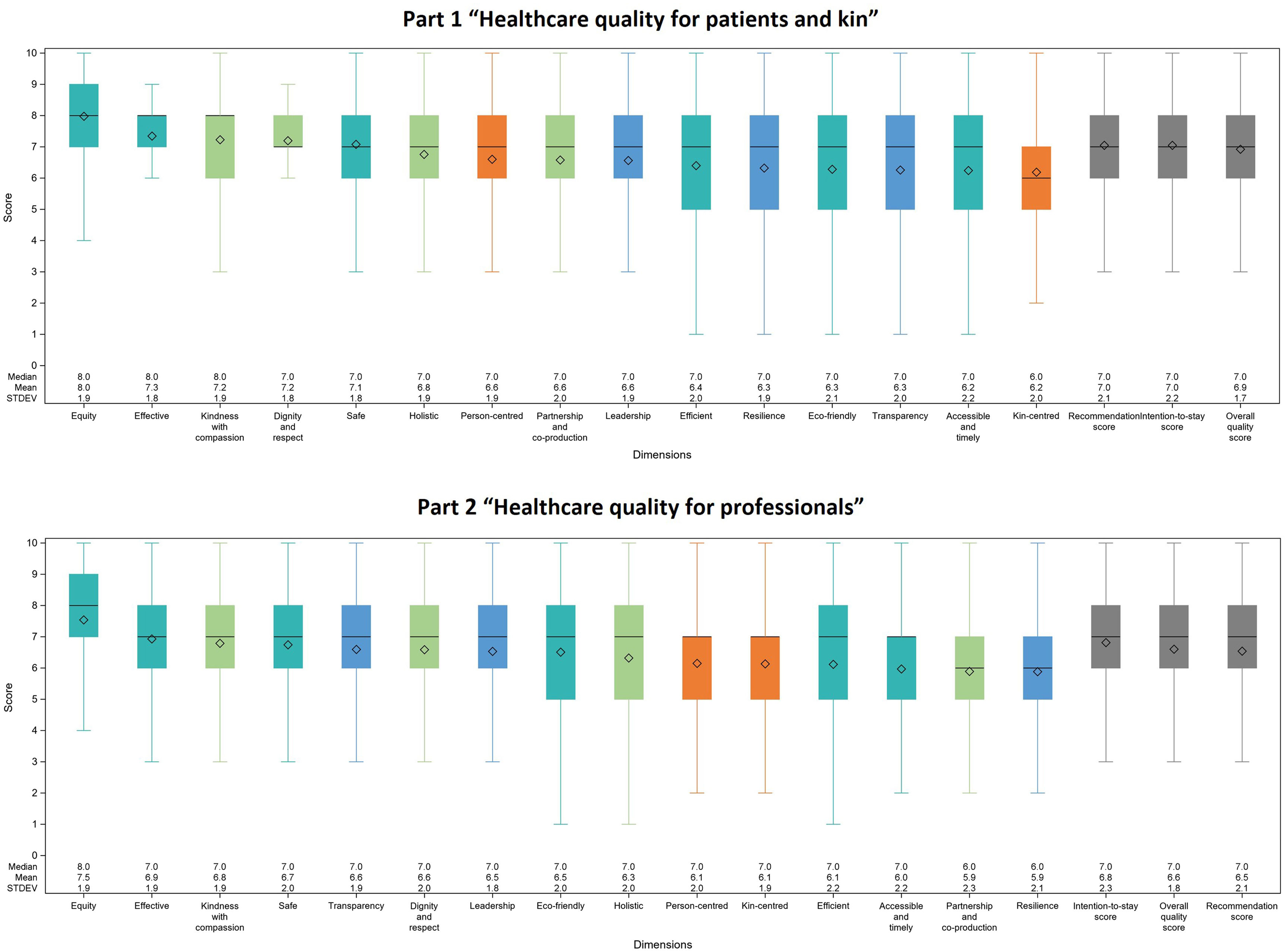
In part 1, domains ‘Equity’ (mean=8.0), ‘Effectiveness’ (mean=7.3), ‘Kindness with compassion’ (mean=7.2) and ‘Dignity and respect’ (mean=7.2) scored the best. Domains ‘Kin-centredness’ (mean=6.2), ‘Accessibility and timeliness’ (mean=6.2), ‘Transparency’ (mean=6.3), ‘Eco-friendliness’ (mean=6.3) and ‘Resilience’ (mean=6.3) showed the largest potential gain (lowest means). In part 2, domains ‘Equity’ (mean=7.5), ‘Effectiveness’ (mean=6.9) and ‘Kindness with compassion’ (mean=6.8) scored the best. Domains ‘Resilience’ (mean=5.9), ‘Partnership and co-production’ (mean=5.9) and ‘Accessibility and Timeliness’ (mean=6.0) showed the largest potential gain (lowest means) (Fig. 4).
Boxplots of scores on each instrument part of the FlaQuM-Quickscan that contains 15 items reflecting quality domains (person- and kin-centred care: orange, catalysts: blue, technical domains: turquoise, core values: green) according to Lachman's multidimensional quality model1 and global ratings (grey). Boxplots of quality domains are ranked from left to right based on the mean of each domain. –=median, ◊=mean. Outliers are not included in this visualization.
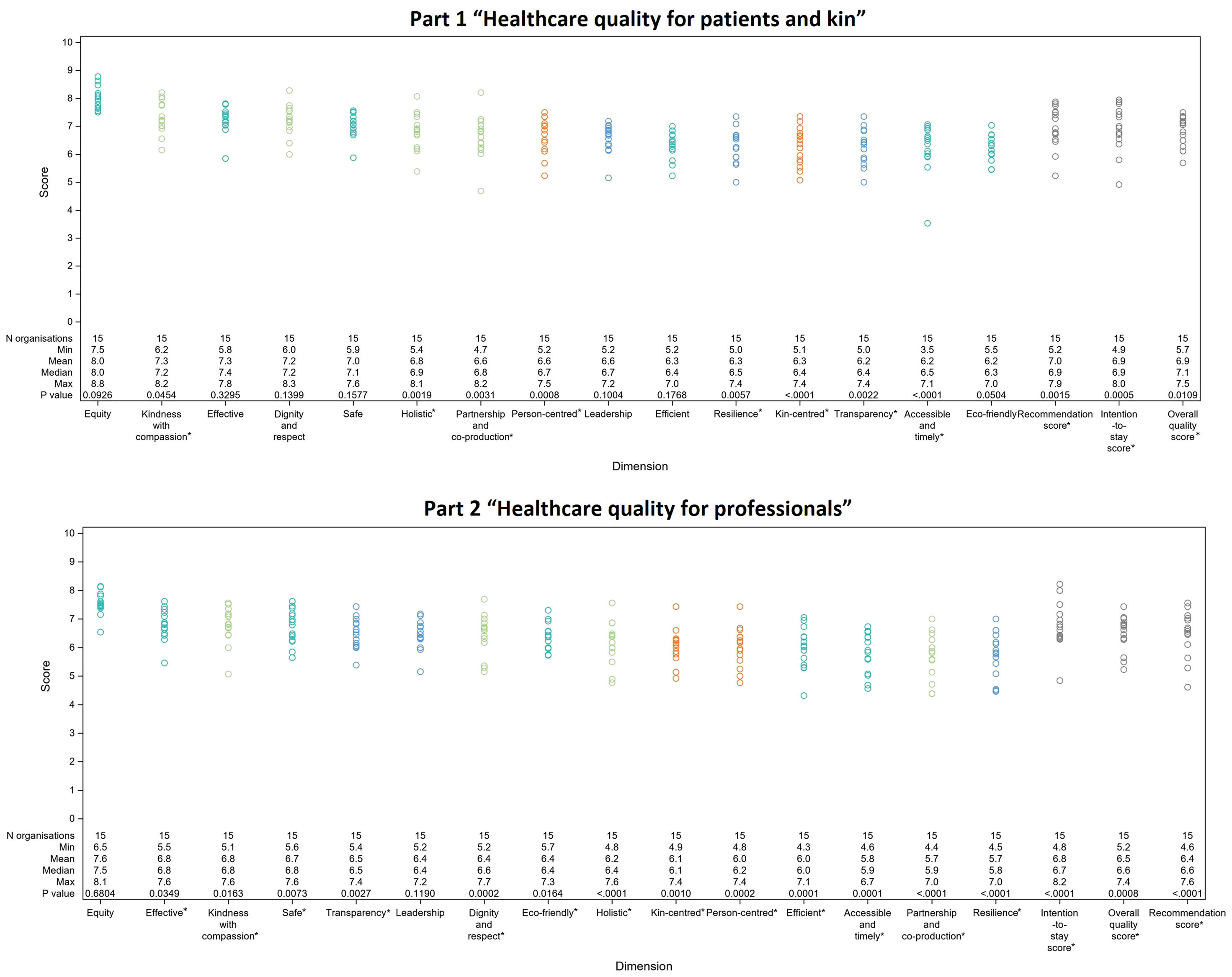
Variation between hospitals’ mean scores for each domain is presented in Fig. 5. In part 1, the largest variation between hospitals is shown for domains ‘Accessibility and Timeliness’ (max–min difference=3.6), ‘Partnership and co-production’ (max–min difference=3.5) and ‘Holistic care’ (max–min difference=2.7); the smallest variation for domains ‘Equity’ (max–min difference=1.3), ‘Eco-friendliness’ (max–min difference=1.5) and ‘Safety’ (max–min difference=1.7). In part 2, the largest variation between hospitals is shown for domains ‘Holistic care’ (max–min difference=2.8), ‘Efficiency’ (max–min difference=2.8), ‘Person-centredness’ (max–min difference=2.6) and ‘Partnership and co-production’ (max–min difference=2.6); the smallest variation for domains ‘Equity’ (max–min difference=1.6) and ‘Eco-friendliness’ (max–min difference=1.6). Significant variation in hospitals’ mean scores is observed for eleven domains in part 1 and for sixteen domains in part 2.
Variation of hospitals’ mean scores on each instrument part of the FlaQuM-Quickscan that contains 15 items reflecting quality domains (person- and kin-centred care: orange, catalysts: blue, technical domains: turquoise, core values: green) according to Lachman's multidimensional quality model1 and global ratings (grey). Boxplots of quality domains are ranked from left to right based on the mean of each domain. Each dot represents one hospital with at least 10 respondents. *One-way ANOVA was used to evaluate whether differences in hospitals’ mean scores on quality domains were statistically significant, p<0.05.
This study identified key healthcare quality attributes relevant to PCPs, validated the FlaQuM-Quickscan from PCPs’ experiences, and defined in-hospital quality priorities based on PCPs’ experiences. In objective 1, focus groups with PCPs resulted in the inductive identification of quality attributes, which subsequently confirmed Lachman's multidimensional quality model deductively.1 PCPs were strong advocates of domains ‘Partnership and co-production’, ‘Effectiveness’ and ‘Transparency’. These findings are supported by evidence that emphasized PCPs’ personality as a determinant of quality.26 Interestingly, PCPs paid more attention to transparency as a key quality attribute compared to patients and kin17 and similarly to them, identified ‘Communication’ from an interdisciplinary and transmural approach as a new quality domain. The latter confirms studies that highlighted the importance of communication in care according to patients and professionals.9,17,27 So, Lachman's model can be extended to include the domain ‘Communication’. Although ‘Equity’ and ‘Eco-friendliness’ were not identified as quality domains, this should not be interpreted as an indication that these domains are not important in quality management. In our view, it is more likely that PCPs didn’t consider them as being a feature of quality in the strict sense. Nevertheless, the World Health Organization calls attention for equality as a common challenge in healthcare.11,28 Moreover, in light of the current changing worldview of climate change, hospitals are recommended to raise awareness about the importance of eco-friendliness in hospitals.29 To summarize, identified quality attributes reveal that PCPs perceive quality as a multidimensional concept in which technical dimensions of quality, person- and kin-centredness, core values of care and catalysts are central.
As the FlaQuM-Quickscan was validated from patients’, kin's and in-hospital professionals’ perspectives,15 objective 2 in this study focused on the validation of the instrument from PCPs’ perspective. The construct validity, which assessed the hypotheses to divide each instrument part in four subscales, as a priori defined in Lachman's model,1 was confirmed in our analyses by two fit indices. Nevertheless, the fit indices are less excellent compared to validation results from patients’, kin's and in-hospital professionals’ perspectives.15 The discriminant validity demonstrated that PCPs are able to differentiate experiences between items and thus experience quality as a multidimensional concept. Similarly to results of research with patients, kin and in-hospital professionals,15 strong correlations between the majority of instrument items, especially the core values, and the overall quality assessment were demonstrated in terms of criterion validity. Therefore, the FlaQuM-Quickscan is a validated instrument to measure experiences of PCPs. By extending the validation of the FlaQuM-Quickscan from PCPs’ perspective, hospital management and policymakers can truly integrate experiences from all kind of stakeholders, i.e. patients/kin and professionals, and include PCPs’ experiences in strategic quality approaches.16
In objective 3, mean scores of domains and between-hospital variation were used to set priorities for hospital management. Priority setting can be supported by the correlation of the overall quality score with quality domains, which are visualized in an overview (Appendix B). This overview demonstrates that priorities are multidimensional. According to perspectives of patients, kin and professionals,14 ‘Dignity and respect’ showed the highest correlation with the overall quality score. Similarly, domains ‘Holistic care’, ‘Kindness with compassion’, ‘Partnership and co-production’ showed also a high correlation with this overall score and a significant variation between hospitals’ scores, highlighting their ability to learn from each other. Based on these correlations, ‘Eco-friendliness’ is not prioritized, but there is an opportunity for improvement given the low mean score. So, in addition to technical domains and person-centeredness, hospital management should consider core values, catalysts and kin-centeredness in their quality management systems. This multidimensionality is reflected in previous research, in which communication, coordination and transparency are prioritised.9 By integrating feedback from PCPs, patients, kin and professionals, hospitals can develop a shared quality vision and an action plan with relevant strategies in their practice.13 Using the FlaQuM-Quickscan as an integrated care intervention enables the successful transformation to more integrated care systems by identifying potential problems in progress, by focusing on collaboration between healthcare systems levels and by monitoring changes in experiences as part of integration efforts.4,5 Moreover, benchmarking reports are the basis for inter-hospital improvement collaboratives, where hospitals can learn from each other and share best practices to improve care for patients/kin and professionals. Learning can start at domains with statistically significant variation between hospitals. Correlations of domains with the recommendation and intention-to-stay score can be used by hospitals’ human resources department to refine organizational action plans. In conclusion, the FlaQuM-Quickscan supports the value-driven movement towards integrated care systems by involving both hospitals and PCPs and by enhancing collaboration between hospitals.
This study is the first to measure PCPs’ experiences of hospital quality and use them in prioritization. This study is strengthened by a mixed-methods design consisting of focus groups and a validated instrument that combined qualitative and quantitative perspectives of PCPs. A mean average of 11 focus group participants represents the ideal size in line with recommendations.18 The sample of PCPs that completed the FlaQuM-Quickscan consisted of a female/male ratio that is similar to other healthcare studies.9,28 However, because more than half of the sample were female aged 50 years or younger, a possible sampling bias is observed. The results of the RMSEA in FlaQuM-Quickscan part 2 may be caused by small degrees of freedom and a smaller sample size30 or because healthcare professionals are more able to score healthcare quality for patients and kin (part 1) than how a hospital cares for its professionals (part 2). Future quantitative and qualitative research with a larger sample size is recommended to validate the FlaQuM-Quickscan across gender, age and professional groups, such as general practitioners and home nurses. The FlaQuM-Quickscan is only distributed to Dutch-speaking respondents and no cultural or social determinants were surveyed. In future research, the FlaQuM-Quickscan will be translated into other languages and expanded with socio-economic determinants.
ConclusionThe identified key attributes of healthcare quality from PCPs’ perspective largely correspond with those of Lachman's multidimensional quality model. PCPs identified ‘Communication’ as an essential quality domain that should not be missing from theoretical quality models. In our multi-centre study, the FlaQuM-Quickscan is considered as valid to measure PCPs’ experiences of hospital quality. The validation of the FlaQuM-Quickscan from PCPs’ experiences strengthens the integration of different perspectives in quality management and reinforces a holistic, well-informed approach towards quality. Interpretation of PCPs’ experiences based on correlations of overall quality scores with quality domains, differences in mean scores on domains and the variation between hospitals’ mean scores, revealed that hospital management should prioritize technical domains, person-and kin-centredness, core values and catalysts in their future, integrated quality management system.
Ethics and other permissionsApproval was obtained from all local ethics committees of participating hospitals. Focus group participants were provided information about the study and were informed that the focus groups would be audio recorded, that their anonymity would be assured and that they could withdraw from the study at any time without further explanation. All FlaQuM-Quickscan respondents provided informed consent.
Data availability statementThe datasets generated during and analyzed during the current study are not publicly available due to containing information that could compromise the privacy of research participants but are available from the corresponding author on reasonable request and with permission of all local ethics committees of participating hospitals.
FundingThis work was supported by the FlaQuM-Consortium; by The Sint-Trudo hospital research chair ‘Towards a sustainable quality management system’ [grant number not applicable]; and by The Zorgnet-Icuro research chair ‘Future of Hospital quality’ [grant number not applicable] to the Leuven Institute for Healthcare Policy, KU Leuven.
Conflict of interestNo competing interests to declare.
We want to thank all professionals who participated in the focus groups and the FlaQuM-Quickscan. We also thank the FlaQuM-Consortium for supporting the acquisition of data and the collaboration.
Baeyens, Ann. MSc. Department of Quality Management, OLV Ziekenhuis Aalst-Asse-Ninove, Belgium. Ann.baeyens1@olvz-aalst.be
De Medts, Mieke. MSc. Department of Quality Management, Nationaal MS Centrum VZW, Belgium. Mieke.demedts@mscenter.be
De Sutter, Kathleen. MSc. Department of Quality Management, Ziekenhuis Oost-Limburg, Genk, Belgium. Kathleen.desutter@zol.be
De Troy, Elke. MSc. Department of Quality Management, Jessa Ziekenhuis, Hasselt, Belgium. Elke.detroy@jessazh.be
Donvil, Nina. MSc. Department of Quality Management, Universitair Psychiatrisch Centrum KU Leuven, Belgium. Nina.donvil@upckuleuven.be
Gibri, Mounia. MSc. Department of Quality Management, Universitair Ziekenhuis Antwerpen, Antwerpen, Belgium. Mounia.gibri@uza.be
Gielissen, Nicole. MD. MSc. Department of Quality Management, Regionaal Ziekenhuis Heilig Hart Tienen, Tienen, Belgium. Nicole.gielissen@rztienen.be
Hans, Guy. PhD. Department of Quality Management, Universitair Ziekenhuis Antwerpen, Antwerpen, Belgium. Guy.hans@uza.be
Hoebrekx, Lieven. MSc. Department of Quality Management, Algemeen Ziekenhuis Diest, Belgium. Lieven.hoebrekx@azdiest.be
Loubele, Sarah. PhD. Department of Quality Management, Ziekenhuis Oost-Limburg, Genk, Belgium. Sarah.Loubele@zol.be
Muller, Kristin. MSc. Department of Quality Management, Imeldaziekenhuis, Belgium. Kristin.muller@imelda.be
Pennewaert, Karolien. BSc. Department of Quality Management, Revalidatieziekenhuis Inkendaal, Belgium. Karolien.Pennewaert@inkendaal.be
Theunissen, Birte. MSc. Department of Quality Management, Nationaal MS Centrum VZW, Melsbroek, Belgium. Birte.Theunissen@mscenter.be
Van Giel, Ines. MSc. Department of Quality Management, Algemeen Ziekenhuis West, Belgium. Ines.vangiel@azwest.be
Van Zele, Els. PhD. Department of Quality Management, Ziekenhuis Netwerk Antwerpen, Belgium. Els.vanzele@zna.be
Vanachter, Koen. MSc. Department of Quality Management, Regionaal Ziekenhuis Heilig Hart Leuven, Leuven, Belgium. Koen.vanachter@hhleuven.be
Vanderoost, Jef. PhD. Department of Quality Management, University Hospitals Leuven, Belgium. Jef.vanderoost@uzleuven.be
Vanrenterghem, Dirk, MSc. Department of Quality Management, Jan Yperman Ziekenhuis, Ieper, Belgium. Dirk.vanrenterghem@yperman.net
Vanspauwen, Lotte. MSc. Department of Quality Management, University Hospitals Leuven, Belgium. Lotte.vanspauwen@uzleuven.be
Vanstraelen, Nele. MSc. Department of Quality Management, Jessa Ziekenhuis, Belgium. Nele.vanstraelen@jessazh.be
Verhaeghe, Jeroen. MSc. Department of Quality Management, Algemeen Ziekenhuis Damiaan, Oostende, Belgium. Jverhaeghe@azdamiaan.be
Verheyden, Gerda. MSc. Department of Quality Management, GasthuisZusters Antwerpen, Antwerpen, Belgium. Gerda.verheyden@gza.be
Vlayen, Joan. MD. Department of Quality Management, Sint-Trudo Ziekenhuis, Sint-Truiden, Belgium. Joan.vlayen@stzh.be
Wijnen, Sofie. MSc. Department of Quality Management, Algemeen Ziekenhuis Vesalius, Belgium. Sofie.wijnen@azvesalius.be



